Bernard Drainville

Drainville blames teachers union for CDN Bedford scandal

By Dan Laxer
The Suburban

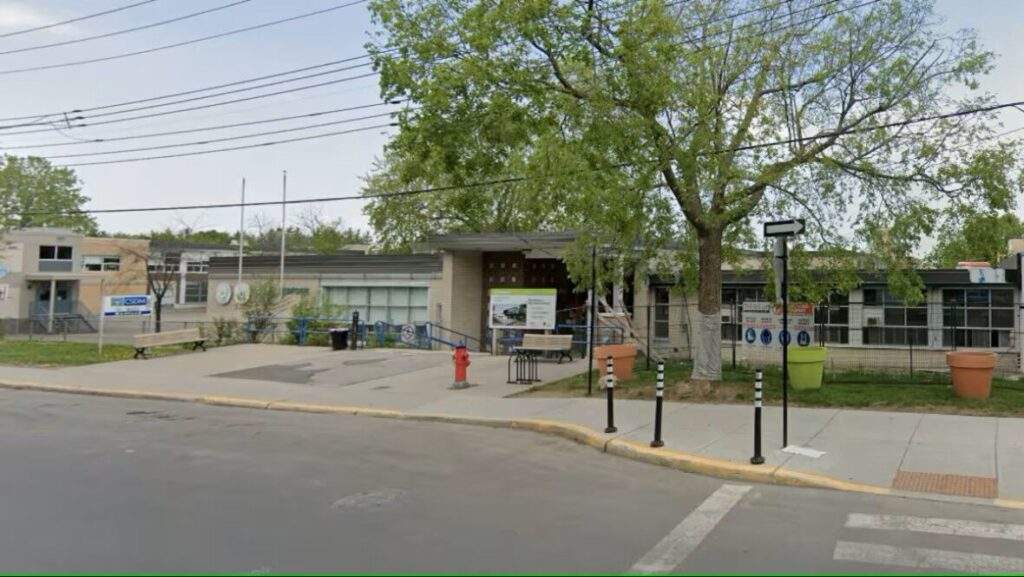
Education Minister Bernard Drainville is putting at least some of the blame for the École Bedford scandal at the feet of the Alliance des professeures et professeurs de Montréal, the teachers’ union that is a part of the Fédération autonome de l’enseignement.

Drainville intimated last week that the union’s “attitude and behaviour” have contributed to the abuses at École Bedford that brought it and other schools to the attention of the National Assembly last fall providing justification, as far as the Coalition Avenir Québec government is concerned, for strengthening the secularism bill.

The incident at Bedford sparked an investigation, last December, into it and sixteen other schools for contravening the secularism law. At École Bedford, eleven teachers were suspended for creating a toxic climate. There were allegations of psychological and physical abuse, that religious education and “Islamic concepts” were being imposed on the students, with teachers disregarding science, separating genders, banning girls from sports, etc.

Drainville specifically called out FAE President Melanie Hubert, saying that the union ignored complaints by teachers at École Bedford regarding the situation that was then unfolding.

Hubert says Drainville is out of line.

She says that it is not the union’s place to deal with supervising staff, which is the responsibility of management, adding that the union does not have direct interaction with school service centres.

At the time of the scandal, Liberal MNA Marwah Rizqy called for CSSDM Director-General Isabelle Gélinas to step down.

Last August the Alliance and the FAE joined the English Montreal School Board’s challenge of Quebec’s secularism law, Bill 21. The FAE said, at the time, that it was against the government’s pre-emptive use of the Notwithstanding Clause, that the law infringes on rights and freedoms guaranteed in the charter.

Drainville took umbrage to the union joining the challenge, saying Hubert did not have member support to do so. Hubert disagrees, saying her mandate from members to challenge Bill 21 goes back to 2013. The FAE maintains that the law has led to discriminatory practices when hiring, and is an attack on the teaching profession. n

Drainville blames teachers union for CDN Bedford scandal Read More »

CDN schools among 17 investigated for Bill 21 violations

By Dan Laxer
The Suburban

Quebec Education Minister Bernard Drainville has announced that the Ministry will launch an investigation into 17 schools in Quebec, including three in Montreal. Those three are already the subject of recently announced audits.

The Montreal-area schools being investigated are École La Voie, a high school in Cote des Neiges; École Bienville, an elementary school in St. Michel; and École Saint-Pascal-Baylon, also in Cote des Neiges.

The schools are being singled out for their apparent non-compliance with the province’s Secularism Law, commonly known as Bill 21. It is the intention of Education Minister Bernard Drainville to legislate further if necessary in order to reinforce secularism in schools.

Drainville said the investigation is being launched following complaints by citizens. As in the case of École Bedford, there have been complaints in these three schools about issues like toxic climate, quality of education, or, “behaviours that could potentially threaten the physical or psychological safety of the students.”

The findings of a report into École Bedford found that a “dominant clan” of teachers said to be of Maghrebi descent was ignoring the province’s secularism law, introducing “Islamic religious concepts” into the school, among other disturbing allegations. Similar concerns have been raised about École La Voie, École Bienville, and École Saint-Pascal-Baylon.

All of the schools being investigated are part of the French system, subject to the service centres created after the government abolished French school boards. The Centre de Services Scolaire de Montréal came under scrutiny in recent months after a journalist and Liberal MNA Marwah Rizqy exposed similar issues at École Bedford. Eleven teachers were dismissed in the wake of the Bedford scandal. Rizqy had also called for director-general Isabelle Gelinas to step down. The MNA, the Official Opposition Critic for Education, ended up asking for police protection due to threats she received following the incident at Bedford.

“The nature of the allegations (in the current investigation),” reads a press release issued by the Ministry of Education, “is cause for concern, and an in-depth investigation is needed to shed light on the conditions prevailing in these schools.” The ministry says the “audits” will be kept private for now, but a final report is expected out in January.

Quebec schools “must offer (children) a safe and healthy environment,” Drainville said in a statement. “We will not compromise on this. Since the publication of the report on Bedford School, I have acted on the facts. This is what I will continue to do when problematic situations are reported to us.”

The Minister added that the CSSDM is cooperating with the government “to support students throughout this process, to ensure their well-being, safety, and academic success.” n

CDN schools among 17 investigated for Bill 21 violations Read More »

School boards to seek injunction against spending restrictions

School boards to seek injunction against spending restrictions

Ruby Pratka
Local Journalism initiative reporter

editor@qctonline.com

The organization representing Quebec’s nine English school boards may take the Quebec govern- ment to court if it doesn’t loosen restrictions on how the boards can allocate funding.

Earlier this summer, the Quebec government announced $570 million in across-the-board cuts to fund- ing for schools. On July 19, amid a growing public outcry, Education Minister Bernard Drainville announced that the government would reallocate $540 million to be distributed among French-language school service centres, English boards and eligible private schools, on the condition that the institutions “show that efforts are being made to reduce administrative costs, and ensure the money goes to student services only.” School boards have been told they cannot dip into surplus funds or run budget deficits in order to further cushion the impact of the cuts.

“It is misleading when the government announces that the cuts are being walked back,” Quebec English School Boards Association (QESBA) president Joe Ortona told the QCT. “They maintained the cuts and then said, ‘We’ll put new money into education, but in order for you to be eligible for this money, there are hurdles in place that are difficult for school boards to meet.’ The government has been clear that we’re not allowed to use our own surplus money which we have accumulated through our own careful management … which is absurd.”

QESBA intends to mandate law firm Power Law to “challenge the validity” of the budgetary restrictions and request an injunction blocking their application. The Central Québec School Board (CQSB) has passed a resolution supporting QESBA’s decision.

QESBA and its nine member boards, including the CQSB, are currently in a drawn-out court battle with the Quebec government over Bill 40, the 2020 law which transformed French-language school boards into government-run service centres; if fully applied to English boards, it would legislate them out of existence. In April of this year, a Quebec appeals court panel upheld an earlier Superior Court ruling that found that abolishing elected school boards and replacing them with service centres would infringe on the English-speaking community’s Charter right to manage its own schools. Ortona and Jean Robert, the chair of the CQSB Council of Commissioners, argue that the legal precedent in that case — over which the Quebec government intends to appeal to the Supreme Court — strengthens the school boards’ case for an injunction blocking spending restrictions.

“If we accept [these restrictions], we are accepting that we don’t have a say in what happens in our schools,” Robert said. “The fact that there were adjustments [to the cuts initially announced] doesn’t change our resolve to say that the Constitution protects us.”

Ortona said there has been no communication or collaboration from Drainville’s office regarding the school boards’ concerns. “We have made it very clear that these cuts with the hurdles and parameters are unconstitutional and a violation of the Bill 40 judgment that says the government cannot micromanage our finances,” said Ortona. “He has not acknowledged these letters – we have received no reply of any kind. Their mind is made up – they have made it clear that they are not allowing us to use surplus money. We have been clear that that is unconstitutional.”

Ortona said the most recent cuts would still require boards to make difficult decisions about “sports programs, music programs, child psychologists, speech therapists, childcare workers, cutting teacher positions and overcrowding classrooms.”

Robert said CQSB personnel are still figuring out how the cuts may affect services. “You could not ask for a worse time for us to redo all of this work,” he said. “If we had access to our surplus, we would say we’ll give ourselves time to make the changes next year, but now we’re being asked to make changes [for a second time] while everyone is on holiday … and that is unreasonable.”

Education Ministry spokesperson Bryan St-Louis said the financial statements of school  school boards and service centres have been consolidated with those of the government. Consequently, “any surplus or deficit incurred by a school board affects the government’s financial position. ”

“The [previous] surplus appropriation rule was intended to allow a service centre or board to run a deficit up to the permitted appropriation limit, without having to apply to the ministry,” he explained. “For the 2025-2026 school year, it was decided to review the appropriation rule in order to limit the increase in education portfolio spending, in line with the budgetary context.”

School boards to seek injunction against spending restrictions Read More »

Drainville walks back education cuts, warns against ‘open bar’

Drainville walks back education budget cuts, warns against ‘open bar’

Ruby Pratka, Local Journalism Initiative reporter

editor@qctonline.com

Weeks after asking school boards and service centres to slash their budgets by as much as $570 million, Education Minister Bernard Drainville has reversed course. On July 16, in a post on social media, he announced that the Coalition Avenir Québec (CAQ) government had set aside up to $540 million to fund student services.

School boards and service centres will still have to find up to $30 million in savings, and work within spending restrictions imposed by the ministry. “Let’s be clear, this is not an open bar,” Drainville wrote. “Of the $540 million announced today, $425 million will go into a dedicated fund. To have the right [to receive money from this fund], every school service centre must show that it is making efforts to reduce administrative costs, as well as ensuring that the money goes to fund student services only. Accountability will be demanded.”

Although Drainville’s announcement made no mention of English-language school boards, officials from the Ministry of Education and Higher Learning (MEES) and the Quebec English School Boards Association (QESBA) both later confirmed that the announcement also applied to school boards; MEES spokesperson Bryan St-Louis also said $29.5 million of the $540 million was set aside for private schools.

The announcement has left school boards and teachers’ unions scrambling to adapt to a radical funding overhaul, for the second time in two months, at the height of summer vacation.

“Everyone’s on vacation, everyone’s scrambling and making a plan to fill these positions,” said Steven Le Sueur, president of the Quebec Provincial Association of Teachers (QPAT), the union federation representing teachers at English-language public schools. “Some cuts are still going to happen. We haven’t seen the details. I’d like to say we’ll know more before the start of the school year, but we don’t have that information.

“We’re happy [the cuts initially announced] have been retracted, but we’re not jump- ing up and down about it,” he added. “There are still so many issues with workload and class size, and it’s definitely not helping [from a recruitment standpoint] when it’s in the news that they’re cutting $570 million.”

“The additional funding from the ministry is certainly welcome news. We are presently crunching numbers,” said Jean Robert, chair of the Council of Commissioners of the Central Québec School Board, in a brief email exchange with the QCT. “I am convinced that the minister understood his original proposed cuts would directly affect services to our students.” Robert and QESBA communications director Kim Hamilton said they would know more later this summer about how the funding would be divided and distributed between boards and service centres; St-Louis later said the funds would be distributed between school boards, service centres and eligible private schools, pro-rated to student numbers.

The about-face came a week after a National Assembly petition against cuts to education, sponsored by Parti Québécois MNA Pascal Bérubé and heavily promoted by QESBA and by unions and parents’ groups on both sides of the language barrier, began making headlines (see story in last week’s edition on QCT website). As of this writing, it had received nearly 159,000 signatures. It can still be signed on the National Assembly website until Sept. 15. “We’re pleasantly pleased the public outrage worked, but there are still cuts to be made and services will still be affected,” said Le Sueur.

Drainville walks back education cuts, warns against ‘open bar’ Read More »

Petition against education cuts crosses language divide

Petition against education cuts crosses linguistic divide

Ruby Pratka

Local Journalism 

Initiative reporter

editor@qctonline.com

The Parti Québécois (PQ) and the Quebec English School Boards Association (QESBA) may seem like unlikely allies, but they have joined forces to denounce the Coalition Avenir Québec (CAQ) government’s belt-tightening on education funding. Along with former leaders of French-language school boards, unions and parents’ groups on both sides of the linguistic divide, PQ MNA Pascal Bérubé and the school boards’ association, of which the Central Québec School Board (CQSB) is a member, are joining forces to back a National Assembly petition against cuts to education. 

Last month, the Ministry of Education imposed at least $510 million in across-the-board cuts to the public school system; Education Minister Bernard Drainville said at the time that the ministry’s expenses had grown an “unsustainable” seven per cent per year since 2018. Next school year’s increase has been capped at 1.8 per cent – below the rate of inflation – as part of a wider effort to rein in the deficit. Furthermore, autonomous English school boards, which have more control over how funding is allocated than their government-run French-language counterparts, have been told they can’t run deficits or dip into surpluses to cushion the impact of funding cuts. Drainville has encouraged school boards and service centres to “respect the budgets without touching student services … to the extent possible” although school board and union representatives have argued this is impossible. 

The petition on the National Assembly website calls on Drainville to walk back the budgetary restrictions to avoid affecting student services. As of this writing, it has nearly 157,000 signatures.  

Steven Le Sueur is the president of the Quebec Provincial Association of Teachers (QPAT), the union federation representing teachers at English-language public schools. He said the petition was initially drawn up by the Fédération des syndicats de l’enseignement (FSE), the largest federation of teachers’ unions in the province, which encouraged QPAT to get on board. 

“It is important to get the public involved to denounce what’s going on,” he told the QCT. “Our students with special needs and at-risk students will suffer the most. The ‘extra’ services which we may have had in the past will be disappearing. This is not going to attract more teachers to the profession and it may drive some of our younger teachers away.” 

Le Sueur said promoting the petition in both languages is “sending a strong message that the government is hurting the system, both the English and French system.” 

QESBA president Joe Ortona echoed several of Le Sueur’s arguments. “Balancing the budget, with the [funding] the government is giving us, means slashing all sorts of programs that go beyond the bare minimum – music, art, extracurriculars, programs for gifted kids, extra support for kids with special needs, breakfast, tutoring.” 

Ortona, who has served on the English Montreal School Board (EMSB) since 2014, said he has “never seen anything that remotely resembles” the cuts Drainville has told boards to brace for. “The government is claiming the budget is going up, but they aren’t taking into account inflation or the impact of the collective agreements [signed with teachers’ unions after the 2023 strikes]. At the end of the day … we wind up with less than what we had before. We pride ourselves on the quality of education we provide, but if the government doesn’t fund us, there is no way we can provide those services. 

“A decade ago [when the previous Liberal government announced cuts to education] we were in a recession. We are nowhere near that now. We’re in this situation because the government has mismanaged a billion dollars on SAAQClic, Northvolt, $7 million for the L.A. Kings, $10 billion for the third link, and the kids are paying the price,” he argued. He added that the campaign against the planned cuts would be stronger if French-language school boards, which were converted into service centres in 2020, still had the same autonomy as their English counterparts, which have kept their independence through a long and still unresolved court challenge. “The only [school officials] who can speak out publicly are the elected officials on the English side.” 

Le Sueur and Ortona called on parents, graduates and other concerned voters to sign the petition and lobby their MNAs to oppose the looming cuts. “I​ am hopeful [the government] will look at this and try to appease the population and backtrack a little, or a lot – there is an election coming up,” Le Sueur said. 

The QCT asked the Ministry of Education about options available for English school boards to cushion the impact of the cuts, but did not receive a response by press time.

Petition against education cuts crosses language divide Read More »

CDN school sees teachers investigated for bullying

By Dan Laxer
The Suburban

A Montreal school finds itself in the news for all the wrong reasons.

Eleven teachers from Bedford Elementary School are under investigation after reports surfaced of psychological and physical abuse. At a news conference responding to the allegations, Education Minister Bernard Drainville enumerated some of the incidents that his ministry will be looking into.

“Refusing to recognize that autism exists, refusing to teach sexual education or science, having a student lose consciousness and instead of helping, you start praying?”

Other allegations include bullying, physical and psychological abuse, yelling, pushing, intimidation, and other forms of discipline that would seem to be of an older era, and not acceptable today.

The French public school in Côte des Neiges falls under the purview of the Centre de services scolaire de Montréal (CSSDM). Most of the students come from the area’s cultural communities.

Drainville said that the interests and needs of the students must always take precedence. The reports show that Bedford School is not living up to that expectation. The ministry is sending two representatives to the school charged with re-establishing an environment conducive to the students’ needs and safety.

Aside from the 11 teachers at Bedford, the Education Ministry is looking into three other schools within the CSSDM: Bienville, Saint-Pascal-Baylong, and La Voie High School.

Drainville confirmed that these kinds of allegations go back to the 2016-17 school year. He said in an interview that it is incomprehensible that concerns had not been raised before. n

CDN school sees teachers investigated for bullying Read More »

Scroll to Top