Cathy Fox

Hospital Foundation modernizes bylaws, backs nursing future

Cathy Fox
Local Journalism Initiative

SHAWVILLE – The Pontiac Hospital Foundation (PHF) held its annual general meeting, September 12 at the Pontiac Community Hospital, unveiling major updates to bylaws that haven’t been reviewed since their creation more than 50 years ago.

One of the most significant changes was eliminating membership fees as a requirement for serving on the board, a practice members confirmed had not been applied in recent years. Language in the bylaws was also modernized with inclusive pronouns, and conditions for removing uncooperative board members were updated to allow more timely responses.

Other key revisions included:

  • Expanding the number of board directors from 9 to 13, with only one position reserved for a practitioner with active Pontiac hospital privileges.
  • Eliminating the category of auxiliary members.
  • Replacing the Executive Director position with that of Secretary-Treasurer, with duties that may be delegated to hospital staff.
  • Electing the president, vice-president, and secretary-treasurer from within the board itself.

Despite reporting a $109,000 deficit, the foundation reassured attendees the shortfall will be balanced by the end of the fiscal year in March. Spending totalling $152,276.84, went toward essential equipment funded through community fundraising, including an emergency sterilization system for power outages, oncology chairs, an extra-long hospital bed, and an emergency locking system for the dementia unit.

A significant long-term investment of $20,000 per year promises a good return: four annual bursaries of $5,000 each for four nursing students. In return, recipients must commit to working one year at the hospital for every year of funding received. “Keeping trained nurses is the biggest challenge in the Pontiac, with higher wages available just across the river. This should help fill that need,” explained Dr. Thomas O’Neill.

Danielle Romain, head of the Family Medicine Group (GMF), shared positive feedback from a recent visit by McGill University representatives for student trainees that do four-week rotations under local doctors. Each year, up to 45 medical trainees—including interns and medical students—are housed near the hospital and supervised by the GMF. The group also oversees nine private doctors, clinics and ensures access to care for “orphan” patients without a family physician. Thanks to recent efforts, many clinics have begun accepting new patients on a shared-appointment model.

Three new board positions are now open to community members who are not hospital employees. Candidates should be active volunteers and non-partisan.

Photo: PHF Board of Directors, from left: Nicole Boucher-Larivière, Leanne Gray, Mike Rusenstrom, Elaine Lang, Dr. Thomas O’Neill, Sylvia Poisson Hodgins, Richard Grimard, Pat Moffat, Danielle Romain, and Allan Dean (President). (CF)

Hospital Foundation modernizes bylaws, backs nursing future Read More »

Shawville arena faces $17M repair bill

Cathy Fox
Local Journalism Initiative

SHAWVILLE – The Shawville Council held a public information session September 18 at the Shawville RA Centre to gather feedback on next steps following a new report on the condition of the arena. The engineering firm JL Richards & Associates, with costing by Hanscombe, delivered the latest assessment on June 23.

The purpose of the session was “to present the arena’s condition, costs, and decisions to date; summarize the renovations prefeasibility findings; and outline next steps.” The sobering report estimated $16.87 million in repairs would be needed just to bring the facility up to code, based on a visual inspection rather than a full structural review.

The main concern raised by both patrons and council was the arena floor, which is 20 years past its service life, along with the pipes embedded beneath it. The ice-making equipment, including condensers and the compressor room, is also deteriorating. Repairs last season alone cost $40,000, with more breakdowns expected.

Other issues include fire safety, accessibility to bleachers, washrooms, and upstairs rooms, as well as improvements needed for heat retention, ventilation, dehumidification, lighting, and increased electrical capacity with Hydro-Québec.

Funding remains a major challenge. Shawville currently spends 8.5% of its municipal budget on the arena, limiting other recreation projects. The annual deficit between revenues and operating costs stands at $177,000 and continues to grow. Some argued Shawville should carry the load because of its central location and business tax revenues, while others suggested user fees for out-of-town adult league players.

Megan Derouin of Parents’ Voice recommended expanding daytime rentals to groups such as daycares and seniors’ clubs, and improving online booking. Kathy Murray received strong support for creating an independent committee to coordinate municipalities, service clubs, and government grants in pursuit of keeping the arena open. Councillor Katie Sharpe supported moving quickly on these ideas before the current council’s term ends October 1.

Some questioned the accuracy of the cost estimates, noting grant applications must be based on licensed contractor rates while much local work is often done by volunteers at lower cost. Residents agreed the arena must remain open during any renovations, while long-term planning for a new facility should begin. Construction of a new arena is considered less costly than extensive renovations, but new recreation grants will not be available until at least 2027–28.

In the meantime, council has invested in quality equipment, including the purchase of a new Zamboni this year. With community support and targeted repairs, many hope the arena can continue serving the region well into the future.

Photo – Shawville council members discuss the future of the arena at a special meeting held September 18 at the RA Centre.

Shawville arena faces $17M repair bill Read More »

Toller steps down, Landry steps up in warden race

Sophie Demers & Cathy Fox

LOCAL JOURNALISM INITIATIVE

MRC PONTIAC – Jane Toller announced on July 24 at a press conference in Spruceholme Inn that she will not seek re-election as warden this November.

Standing in the living room of her ancestral home, framed by portraits of her great-grandfather George Bryson — warden in 1862 — and his wife Robina, Toller reflected on her eight years in office. She highlighted achievements such as improved internet access, the upcoming 2026 satellite cellular coverage, reopening of the Rapides-des-Joachims mill and the Pontiac abattoir, growth in agro-tourism, composting and recycling initiatives, increased tourism marketing, and municipal street revitalizations.

She acknowledged challenges including floods, wildfires, the COVID-19 shutdowns, and ongoing healthcare issues. Citing family priorities, including seven new grandchildren, growing business commitments, and her pursuit of a Doctorate in Theological Studies, Toller said it was a difficult decision to “pass the torch.” She will not endorse any candidate but remains committed to projects such as the Pontiac pool. The deadline for nominations is October 3.

Campbell’s Bay councillor Jean-Pierre Landry officially announced his candidacy for the warden’s seat. “Not much has been happening in Pontiac, especially in the last eight years. There is room for change,” said Landry, adding that his retirement allows him the time to pursue ideas he wants to implement at the MRC.

A resident since 1967, Landry attended École secondaire Sieur-de-Coulonge and earned a bachelor’s degree in industrial relations from the Université du Québec en Outaouais, along with a DEP in Pulp and Paper and Firefighter 1 certification. He worked 33 years in the Quebec public service at Service Québec and has served multiple terms as a Campbell’s Bay councillor.

Landry is active on local boards, including l’Office d’Habitation du Pontiac, and has decades of election experience, most recently training electoral staff. His priorities include economic development, better communications, infrastructure improvements, road and bike path upgrades, and stronger support for local organizations. He also wants to explore agricultural niches and biomass opportunities, lamenting the stalled biorefinery project that he believes could have “put us on the map.”

Landry joins fellow Campbell’s Bay councillor Josey Bouchard in the race for the warden’s seat. Bouchard announced her candidacy earlier in July.

Toller steps down, Landry steps up in warden race Read More »

Portage invests in backyard composting with “Earth Machines”

CATHY FOX
LOCAL JOURNALISM INITIATIVE

PORTAGE-DU-FORT – In a move toward sustainability, the municipality is distributing backyard composters — known as “earth machines” — to all residents, including some local businesses. The initiative, spearheaded by Mayor Lynne Cameron and Director General Lisa Dagenais, is designed to reduce waste, lower municipal garbage costs, and empower residents to create nutrient-rich compost for their gardens.

Mayor Cameron said the decision was guided by the town’s small population and strong local interest in composting. “Many residents were concerned about losing their at-home compost to door-to-door pick-up,” she explained. “This approach keeps it local and useful.”

The program is fully reimbursed by the provincial government, according to Dagenais, meaning there’s no cost to the municipality or its residents. “It’s a win-win,” she said. Since compostable materials make up the heaviest portion of household waste, removing them from the garbage stream should significantly lower the cost of waste transport — currently $300 per ton — so residents should also see a reduction in garbage-related taxes.

The “earth machines” resemble large, black plastic rain barrels, with a screw-top lid, slotted sides for air flow, and a hatch at the base for removing finished compost. Residents are encouraged to layer green (nitrogen-rich) waste like fruit and vegetable scraps with brown (carbon-rich) materials such as dried leaves, weeds, or straw. Stirring the mixture occasionally introduces oxygen, which accelerates decomposition. After a few months, the resulting compost can be used to fertilize garden beds.

A resident’s story

Longtime resident Jackie McCallum relies on her homemade compost to maintain a thriving garden that overflows with perennials, herbs, berries, and edible plants — much of it grown in upcycled containers.

“I’m steadfastly organic,” McCallum says proudly, pointing out her tireless methods: companion planting, attracting beneficial insects and birds, and hand-picking pests. Her approach to pest control includes identifying bugs through online searches and creating natural sprays made with soap, hot pepper, or garlic.

McCallum has also joined a local volunteer committee to support others in making the switch to home composting. Her composting setup, which closely resembles the new earth machines, includes a series of large, covered bins behind her shed where she composts everything but meat, bones, and fat. She stirs the contents regularly and ensures all bins are covered and secured to prevent pests. Some bins are used to store weeds to dry and age before layering them with fresh kitchen waste in the main bin. In fall, she spreads the finished compost across her garden beds, replenishing the containers with autumn cleanup waste to begin the cycle again.

Her gardening roots run deep — she got her start as a child helping her grandmother weed the family’s homestead garden. These days, you’re likely to find her among her plants, hand-picking pests, prepping preserves, or crafting herbal mixes to share with friends and family.

Portage invests in backyard composting with “Earth Machines” Read More »

Milfoil threat leads packed Otter Lake meeting on environmental issues

Cathy Fox

Local Journalism Initiative

OTTER LAKE — A large crowd gathered at the RA Hall, June 7, for a public information session hosted by the Municipality of Otter Lake. The event, sponsored by the Greater Otter Lake Residents’ Association (GORA), featured presentations by Councillor Robin Zacharias, Mayor Jennifer Quaile, and guest speaker Rui Medeiros of the Petit Lac Cayamant Association. Topics included radon gas, waste management and Eurasian milfoil in local waterways.

Zacharias spoke about radon gas, referencing information from the Government of Canada’s official resources. He stressed the importance of testing buildings for radon and urged residents to use certified professionals for any necessary remediation.

On the topic of waste management, Zacharias presented statistics showing significant changes in garbage hauling costs—rising from $83,000 in 2018 to $137,000 in 2024. The municipality saw the need to separate compost from garbage, which adds substantial weight and contributes to methane emissions and odours at the landfill. Separating compost is both an environmental and financial necessity: it costs $200 per ton to
process compost versus $300 per ton to haul it to the landfill.

Residents were encouraged to recycle more effectively, with handouts distributed at the session. Since January 2025, Otter Lake has enforced a clear garbage bag rule to ensure recyclable and compostable materials are properly sorted. New provincial regulations now allow a broader range of plastics to be recycled—provided they are clean—and materials will be traceable back to manufacturers to ensure compliance. Similarly, new fees on bottles and cans aim to improve recycling rates by returning materials to producers.

Local waste management data shows a consistent reduction in garbage production and
an increase in recycling and composting; however, officials estimate 10% of residents haven’t fully embraced the changes. Residents can use the Ça va où ? website (https://cavaouwebapp.recyc-quebec.gouv.qc.ca/) to check how various items should be disposed of.

The most pressing issue discussed was the spread of Eurasian milfoil, an aggressive invasive aquatic plant now found in six outlying lakes and four main lakes in the Otter Lake area. Biologist Annie Parent and the Agence Bassin Versant des Sept (ABV7) conducted a special analysis of the situation. The invasive plant not only crowds out native species and depletes oxygen levels but also poses risks to recreational activities like boating, swimming, and fishing.

Officials outlined a multi-step plan to combat the spread of milfoil: public education, mandatory boat washing, boat traffic control, shoreline management, obtaining necessary permits from Quebec’s Ministry of the Environment (MEV), and pursuing an operation for long-term eradication. The municipality installed a high-temperature boat washing station at the municipal garage, designed to eliminate both Eurasian milfoil and zebra mussels. The wash is free for local residents, while non-residents pay a $10 fee. A secondary, shorter wash is available for non-motorized boats and trailers.

To support enforcement, 29 red buoys have been placed throughout the main lake and its three connecting bodies of water; four mark areas of dense infestation and are accompanied by warning signs. A $300 fine for non-compliance with boat washing rules is expected to be enforced soon.

In addition, a new bylaw prohibits rental cottages within 50 metres of the shoreline, making it easier to monitor boaters. All property owners are encouraged to use the main public launch at Farm Lake.

Quaile reported the municipality is in the final stages of securing a permit from the MEV to initiate a long-term eradication program. The first phase—to take place by spring 2026—will involve smothering dense patches of milfoil with a specialized tarp costing $50,000, which can be reused in other affected areas. Funding applications are currently underway.

Medeiros spoke about a successful milfoil control initiative at Petit Lac Cayamant using divers to hand-pick the plant, and reassured attendees that waterways will remain open. Both Medeiros and Quaile emphasized the importance of community involvement and one-on-one conversations between neighbours to raise awareness and ensure the success of the control measures.

Photo – Otter Lake Mayor Jennifer Quaile at the boat washing station. (CF)

Milfoil threat leads packed Otter Lake meeting on environmental issues Read More »

Otter Lake Community Assembly formulates action plans

CATHY FOX
LOCAL JOURNALISM INITIATIVE

OTTER LAKE – The Otter Lake Community Assembly met for their first working session on May 10 at the Otter Lake RA Centre. The grassroots effort to foster greater community collaboration and engagement was spearheaded by local resident Thomas Villeneuve. With a vision rooted in inclusivity and consensus-based decision-making, Villeneuve invited neighbours to participate in public sessions to share their hopes, concerns, and ideas for the community’s future.

Villeneuve believes that by forming a community group committed to consensus, residents can ensure all voices are heard and decisions are well-explained before any proposal reaches municipal council. This approach, he hopes, will reduce frustration often expressed at council meetings, where residents sometimes feel excluded from the decision-making process.

Villeneuve acknowledges some initiatives may overlap with existing community service clubs. However, he sees the group’s role as complementary — helping these clubs become more visible and accessible while strengthening the fabric of community involvement.

Villeneuve and fellow organizer Kris Lafleur introduced a method for selecting three projects from a list of five categories. This follows an earlier brainstorming session which produced over 80 creative suggestions when participants were encouraged to “dream big”, and their ideas were posted across five project boards, categorized by theme and interest.

Attendees first reviewed the bulletin boards. The room was then reconfigured into a large circle, promoting open dialogue. Each participant voiced their primary interests and listed the skills they could contribute to each project. This collective skill inventory helped determine which initiatives were most feasible.

The final projects decided on were a tree giveaway, a community garden, and a collaborative group to support the municipality’s 150th anniversary committee. The community assembly itself is intended to dissolve once working groups for each chosen project are formed, allowing residents to shift from planning to action.

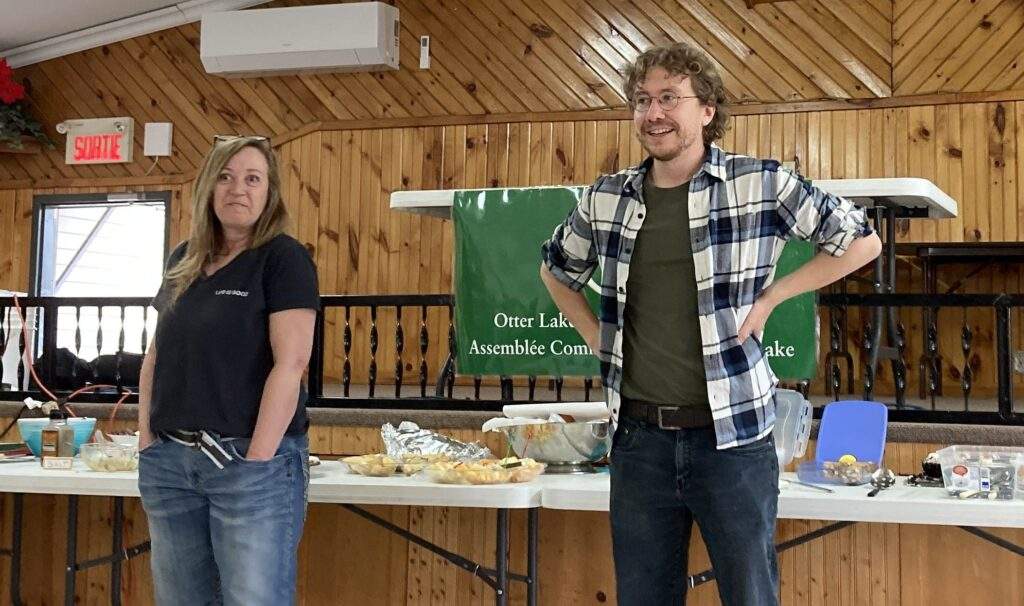
Photo – Otter Lake Community Assembly organizers Kris Lafleur (left) and Thomas Villeneuve at the organization’s first meeting, May 10, at the Otter Lake RA Centre. (CF)

Otter Lake Community Assembly formulates action plans Read More »

From campaign tips to council truths: Women share the path to politics

Cathy Fox
LOCAL JOURNALISM INITIATIVE

MRC PONTIAC – Two events held in late April shed light on the path to entering municipal politics, offering both campaign advice and insight from officials currently in office.

The first session, held April 26, was hosted by Shawville mayoral candidate Linda Davis. Joined by Otter Lake Mayor Terry Lafleur and Rapides-des-Joachims Mayor Doug Rousselle, the trio shared their experiences with an audience of about 20 attendees. Topics included the nomination process, campaign budgeting, understanding municipal structures, and how to navigate local issues and media.

Davis, who has previously run for council, said she was motivated to organize the session to demystify the process. “A lot of people assume you need to have a background in politics to run, but that’s not true,” she said. “We need more people with diverse experiences at the council table.”

Rousselle emphasized the importance of good communication and accountability. “Residents don’t expect you to solve every issue, but they do expect honesty and follow-through,” he said.

Lafleur encouraged participants not to let fear hold them back. “I was terrified the first time I ran,” she admitted. “But you learn, and you realize you’re not doing it alone. Staff, councillors, and community members are there to support you.”

A second session, held April 29 in Fort-Coulonge, was hosted by MRC Pontiac and the Table de développement social du Pontiac. This workshop was geared specifically toward women interested in running in the 2025 municipal elections.

Organizers said they hope to see an increase in women elected to council seats across the MRC. Currently, only 5 of 18 mayors in the MRC are women. The workshop featured an all-women panel of elected officials including Otter Lake councillor Jennifer Dupuis, Rapides-des-Joachims Mayor Doug Rousselle, Mansfield councillor Chantal Lair, and Waltham Mayor Odette Godin.

Each panellist shared her journey into politics, the challenges faced, and what keeps them motivated. They also answered questions from participants, who ranged in age from 20 to 60.

“You don’t have to know everything,” said Lair. “But you do have to be willing to listen and learn.”

Godin added that the work can be demanding, but incredibly rewarding. “Seeing projects completed, hearing people say thank you—it makes it all worth it.”

Organizers say more sessions may be planned leading up to the November 2025 elections.

Photo – From left: Jennifer Dupuis, Odette Godin, Doug Rousselle, Chantal Lair, and Linda Davis participated in local workshops encouraging political engagement, particularly among women. (CF)

From campaign tips to council truths: Women share the path to politics Read More »

Pontiac entrepreneurs prep for interprovincial trade

Cathy Fox
Local Journalism Initiative

SHAWVILLE – The Pontiac Community Futures Development Corporation (SADC) and MRC Pontiac hosted an information session on Thursday, April 17, at Café 349 in Shawville, featuring a presentation from the Gatineau-based organization Export Outaouais (EO). The event attracted several business owners interested in expanding their operations, especially in light of the anticipated removal of interprovincial trade barriers.

“All political parties support this initiative, so it’s just a matter of waiting for the new funding guidelines to come down from provincial headquarters before announcements can be made to the local municipalities,” said Rhonda Perry of the SADC.

Two local entrepreneurs with a strong interest were Robert Hodgins, owner of Clean Sip—who noted that 90% of his market is in the U.S.—and Gema Villavicencio, owner of Pure Conscience Farm, who is exploring marketing opportunities in Ontario.

The first presentation, by export advisor Safa Saki, outlined EO’s services, which include in-depth analysis and guidance for businesses aiming to grow beyond their current markets.

The second presentation, by Jean-François Normande of Desjardins Enterprises, emphasized the value of financial support, particularly when entering foreign markets with varying degrees of risk. One tool discussed was “factoring,” a form of insurance that protects sellers against non-payment. In this model, the seller assigns collection responsibilities to Desjardins, which pays out 90% of the invoice value upfront. Once the buyer pays, Desjardins transfers the remaining 10%, minus a fee, to the seller. It’s a form of reverse escrow, where the seller is protected and the buyer can be confident they’ll receive what they paid for.

After the formal presentations, attendees mingled, networked, and exchanged ideas—often the most productive part of such events. A sign near the exit announced: “A grant for agricultural businesses is coming soon. Get ready now.” This upcoming funding may be accessed through EO or independently.

For more information on navigating tariffs and accessing export resources, another event sponsor, Canada Economic Development for Quebec Regions, offers support online at: https://www.canada.ca/en/economic-development-quebec-regions.html.

Photo – Export Outaouais advisor Safa Saki explains the organization’s services at an event at Café 349, April 17. (CF)

Pontiac entrepreneurs prep for interprovincial trade Read More »

Environmental organizations weigh in on nuclear waste map project

Cathy Fox & Deborah Powell
LOCAL JOURNALISM INITIATIVE

OTTAWA — Ottawa Riverkeeper has been contracted by the Canadian Nuclear Safety Commission (CNSC) and Environment Canada (ECCC) to gather feedback on an interactive map that forms part of the Regional Information and Monitoring Network (RIMNet). The initiative, launched in response to public concern over environmental monitoring in the Ottawa River watershed, aims to improve information sharing, document the environmental aspects of nuclear facilities and activities, and build trust with Indigenous communities and the public.

According to the government website, the project will also help CNSC and ECCC integrate existing data and, with consent, include Indigenous knowledge.

The first of two Zoom workshops, held March 18 and 25, began with presentations by environmental advocates. Ole Hendrickson of Concerned Citizens of Renfrew County outlined the history of nuclear weapons and power development along the Ottawa River, recommending the CBC GEM documentary Atomic Reaction for further context. He highlighted areas marked A through J on the map that are currently used for nuclear waste storage.

Brennian Lloyd from Northwatch presented “Burying Uncertainty, Transporting Risks, Trafficking Trouble—How Does it Look for the Ottawa Valley?” She focused on Canada’s Adaptive Phased Management (APM) approach, which calls for isolating used nuclear fuel in deep geological repositories. Lloyd raised concerns about the lack of detail on how waste would be extracted and transported, and the absence of testing related to transport safety, especially for first responders. She noted Canada’s 2020 Emergency Responders Guidebook claims minimal risk without offering a technical basis.

Roseanne van Shie, a member of the Kebaowek First Nation’s environmental consultation team, expressed disappointment that previous concerns raised by Indigenous groups remain unaddressed, despite being invited to participate in the project.

The second workshop, led by ECCC representatives, included an overview of project goals and a hands-on demonstration of the RIMNet interactive map. This first phase of the project focuses on compiling data on current and proposed nuclear facilities within the watershed to improve public understanding, build trust, and promote transparency in environmental reviews.

Participants were invited to suggest ways to improve the map’s accessibility and usefulness. Suggestions included ensuring the data reflects cultural, health, and environmental concerns; adding monitoring sites to better trace water flow impacts; linking to studies on pollutants; providing threshold guidelines; and including a simple legend and downloadable resources.

While designed to support transparency and public understanding, organizers clarified the map is not intended to serve as an active monitoring or regulatory tool.

The workshops provided a framework for continued work in phase one of the three-phase project. ECCC plans to host another public consultation to gather feedback on site improvements before moving to the next phase. A report on phase one is available at open.canada.ca.

Environmental organizations weigh in on nuclear waste map project Read More »

Business ‘speed dating’ event promotes collaboration in the Pontiac

CATHY FOX
LOCAL JOURNALISM INITIATIVE

MANSFIELD – Magnum Outfitters in Davidson was the setting for a networking event on Thursday, April 4, where about 30 business owners gathered alongside representatives from the Pontiac SADC, the Chamber of Commerce, and the MRC. The event focused on fostering collaboration and strengthening local business ties.

Rhonda Perry, Director General of the SADC, opened the evening by highlighting that all three organizations share a common goal: supporting businesses as they navigate an ever-changing economic landscape. She noted that, in keeping with this year’s theme of collaboration, the event was designed to help local businesses discover each other’s potential and source products and services locally. Perry emphasized that buying local—and Canadian—is more important than ever.

Brittany Morin, business advisor and marketing and communications officer at the SADC, came up with the idea of adapting the concept of speed dating to business networking. The format allowed participants to quickly get to know one another and explore potential partnerships.

Trefor Munn-Venn, secretary of the Pontiac Chamber of Commerce, saw the event as a valuable opportunity for business owners to share not just what they’re working on, but also their future goals—topics that don’t always come up in traditional business settings.

The event followed a recent presentation hosted by the same agencies on how small businesses can navigate tariffs. Munn-Venn mentioned that a report is being prepared, compiling findings from that session. It will include insights from Pedro Antunes, Chief Economist at the Conference Board of Canada, and local entrepreneurs, offering practical strategies for responding to trade challenges.

The evening was lively, with conversation flowing as business owners rotated every five minutes from table to table. At each station, a representative remained seated, offering services related to one of five sectors: events, services, trade, tourism, and hospitality. Service Canada and the host agencies were among the providers present.

Two bulletin boards were set up at the end of the night—one for products and the other for services—to collect post-it notes about unmet needs. These notes will be followed up on by the appropriate agency.

Céline Morin, owner of Morin et Fils Construction, said that she saw the event as a great opportunity to attract new contracts. But as a mother, she was most excited about making connections that could lead to local job opportunities for her sons, who are still studying at CEGEP.

Photo – Entrepreneurs were seated opposite suppliers rotating every five minutes to make new connections and learn about each other’s offers at a business “speed meet” event held April 4 in Davidson.(CF)

Business ‘speed dating’ event promotes collaboration in the Pontiac Read More »

Shawville council approves housing project, eyes arena budget concerns

Cathy Fox
LOCAL JOURNALISM INITIATIVE

SHAWVILLE – Shawville’s council meeting on March 11 was well attended by residents questioning the “acceptance of a housing project in the urban perimeter of Shawville,” as described on the agenda.

John-Dale Rd housing project
The housing project in question is the proposed John-Dale Rd development of four new apartment buildings by Les Maisons PAJ. Public consultations were held on the proposal on February 3 and March 3. Residents have expressed concerns surrounding safety, population growth, and aesthetics.

Mayoral hopeful Linda Davis asked whether alternative locations were properly explored given the condition imposed by Maisons PAJ requiring the land seller provide infrastructure such as sewer, water and roadways. She also questioned the “affordability” of the $1,400 a month rent, which Canada Mortgage and Housing Corporation (CMHC) says must be less than 30% of the area’s average estimated income to be considered affordable.

The funding guidelines for affordable housing under CMHC’s New Construction–Community Housing (AHF) program, which the developers have applied for, requires 30%, or one in three units, to be considered “affordable.” Reduced-rate one-bedroom units will be priced at $900 a month, compared to $1,050 for other one-bedrooms, $1,250 for two bedrooms, and $1,500 for three. Eco building standards are expected to reduce the average price of utilities by 40% compared to similar, older units.

AHF requires one in five units to be accessible, and the builders confirmed there will be one ground-level, one-bedroom unit in each building that satisfies accessibility standards. However, they won’t be wheelchair adapted unless a prearranged, long-term lease commitment is made with the tenant.

Other attendees expressed concerns about increased population creating infrastructure safety issues and overcrowding the already limited parks, as well as the buildings’ aesthetics not matching the charm of Shawville’s brick houses.

Some residents said they were happy to have more housing options in a limited market and that a population increase will positively impact businesses and provide additional tax revenue to fund public services, roads and parks.

Rick Valin asked whether a referendum could be held given that an informal door-to-door survey of his immediate neighbours found all were opposed to the project except one. Mayor Bill McCleary said a referendum required a vote at the previous meeting to set aside funding and allow a nine-month processing delay.

Council unanimously approved the zoning change to move the project ahead and the change will now be presented to the MRC for approval.

Arena costs
Rink maintenance costs were discussed. Shawville carries the bulk of the financial burden, including the $25,000 annual lease (from the Pontiac Agricultural Society), in addition to paying the utilities, insurance and rink upkeep. Zamboni breakdowns are common, so council hopes that nearby municipalities like Clarendon, Bristol and Pontiac will contribute given that they use the arena the most according to recent enrollment figures. Councillor Richard Armitage affirmed arena costs have risen from $200,000 to over $300,000 annually, accounting for over 85% of Shawville’s total recreation budget.

Shawville council approves housing project, eyes arena budget concerns Read More »

Residents rally for reassessment support in Danford Lake

Cathy Fox
LOCAL JOURNALISM INITIATIVE

ALLEYN-ET-CAWOOD – Local residents filled Bethany Hall in Alleyn-et-Cawood on March 15 to hear expert evaluator Charles Lepoutre explain the municipal tax assessment appeal process. An additional 743 people joined via Facebook Live.

The session was organized by the municipality and the Evaluation Task Force to offer residents a legal way to lessen the tax burden of increased property evaluations following a municipal reassessment that took into account unusually high selling prices and sale rates during COVID.

In recent months, Alleyn-et-Cawood has urged the MRC and other government bodies to eliminate the use of the comparative factor in evaluations. The comparative factor is an adjustment applied to municipal property assessments to align them with current market values between official assessment periods; however, this process isn’t perfect and can sometimes inflate property values unfairly.

Lepoutre provided the official form for requesting a reassessment and explained how to complete it. He stressed that residents should avoid comparing their property to their neighbours’ as an argument for revaluation. Instead, they should focus on aspects of their own property that may have been overlooked in the original assessment.

Lepoutre outlined five main reasons to request a reassessment: the property’s overall value isn’t in line with market trends; the land value is inaccurate; factors affecting the land’s value weren’t properly considered; the building’s value doesn’t reflect market trends; or key aspects of the building’s value were overlooked.

He advised residents that requests would receive a written response from the MRC between September 1 and October 1. Lepoutre warned that pursuing a negative result isn’t advisable unless there’s a difference of at least $350,000 in figures, given the associated evaluation and legal fees.

Lepoutre concluded by offering individual advice to residents about whether a reassessment would be worthwhile in their specific cases.

Photo – Expert evaluator Charles Lapoutre explains how to request a property reassessment at an info session held March 15 in Danford Lake. (CF)

Residents rally for reassessment support in Danford Lake Read More »

Flood forecasting: Inside Ontario Power Generation’s tools and tactics

Cathy Fox
Local Journalism Initiative

OTTAWA VALLEY – Ontario Power Generation (OPG) held a public Zoom presentation on the Ottawa watershed, revealing the tools they use to monitor and manage flood levels. The watershed, shared by Quebec and Ontario, is twice the size of New Brunswick. Six hydroelectric generating stations on the Ottawa River are managed by a control centre
in Cornwall, Ontario.

The control centre operates 24/7, using real-time data from the stations. About 300 employees oversee operations, with six to eight employees on the road to respond to emergencies. Each station employs 20 to 30 full-time staff trained to respond to alerts.
A variety of measuring tools ensure continuous data transmission to the central hub
in Cornwall.

Through illustrated charts, OPG explained the limited ability to prevent flooding when high water volumes occur due to precipitation and temperature. Large reservoirs capable of storing significant water volumes are located upstream, while many water sources feed into the river further downstream. There is no suitable location for a reservoir lower down the river. Natural constrictions and shallower areas also contribute to water backups and faster flooding.

Although OPG can mitigate flooding effects during typical spring freshets, they can only provide a short window of warning for high water levels—usually about 12 hours. However, they can predict extreme events using historical data to help communities be more proactive. Recent data shows that the last six years of wet conditions followed a 20-year dry period. OPG anticipates either extreme due to a similar trend observed from the 1920s to the 1930s. Despite this, the likelihood of severe flooding is estimated at just one per cent, or one in 100.

During the presentation, a participant expressed disappointment that no solutions were offered for dealing with previous flood damages. OPG suggested using flood maps and data available on the Ottawa River Regulation Planning Board (ORRPB) website to assess local risks. They also recommended following building guidelines in flood zones and restoring wetlands as natural buffers to absorb excess water.

In Quebec, the Ministry of the Environment oversees waterway protection, while the Sécurité Civile et Centre des Opérations Gouvernementales provides citizen guidance.

OPG referred to a related slideshow, Ottawa River Overview of Management, available
on YouTube from March 2022. For updates during high water events, visit OPG.ca
or the ORRPB at www.ottawariver.ca.

Flood forecasting: Inside Ontario Power Generation’s tools and tactics Read More »

Education, health, and agriculture spotlighted at info day

Cathy Fox
Local Journalism Initiative

SHAWVILLE – The Pontiac Women’s Institute hosted an information day and lunch at the Shawville United Church Hall, February 19, with a number of presentations touching on education, agriculture, health and community.

Luke McLaren, vice-principal at Pontiac High School (PHS) in Shawville, spoke about several new projects at the school: renewing the agriculture program, adding small livestock production to the usual greenhouse training, and expanding the outdoor education program thanks to a $10,000 grant for buying canoes and a transport vehicle. McLaren concluded
by recounting the history of vocational education. About a third of the school’s students
are enrolled in the welding program, which has greatly reduced dropout rates.

Next, Sue Page introduced PHS welding teacher, Megan Tubman, who has helped the program obtain numerous awards and grants from the Canadian Welding Bureau.

Serena Larivière elaborated on three new programs created by the local health
network, CISSSO: “ALLO” provides assistance in healthcare settings for non Francophones; 811 is a free telephone-based health consultation service offering health advice, mental health and social support; and a program to alert the public to the dangers of ‘vaping’
and help them quit.

Veronique Lamoureaux, CISSSO community health worker, described the Beacon program, which provides training for people to be on the lookout for those who may not be able
to express their needs or know where to get help. They are presently offering two classes in Campbell’s Bay.

Shanna Armstrong and Maryse Vallière Murray from the MRC Pontiac detailed the
progress of the AgriSaveur program to have local products transformed and marketed locally. This includes buying the abattoir in Shawville and having a co-op run it and establishing a rental-based commercial kitchen in Shawville.

The day ended with an in-depth description of the scope of the 4-H Club by provincial president and local Shawville resident, Gillian MacDougall.

Photo – The executive board of the Pontiac Women’s institute at the information day,
held February 19 in Shawville. (CF)

Education, health, and agriculture spotlighted at info day Read More »

Nuclear dump: Kebaowek wins right to meaningful consultation

CATHY FOX
LOCAL JOURNALISM INITIATIVE

OTTAWA – A Federal Court ruling on February 19 found that the Canadian Nuclear Safety Commission (CNSC) failed to properly consult Indigenous communities before issuing a permit to construct a Near Surface Disposal Facility (NSDF) at Canadian Nuclear Laboratories’ (CNL) Chalk River property. The decision is the first of three judicial reviews related to the CNSC’s approval of the project.

The court determined that the CNSC did not uphold its duty to consult in line with the United Nations Declaration on the Rights of Indigenous Peoples (UNDRIP) and failed to consider UNDRIP in its decision-making process. As a result, both the CNSC and CNL must revise their consultation and decision-making procedures to include Indigenous laws, knowledge, and processes. They are required to reach an agreement with Kebaowek First Nation by September 30, 2026. Once this process is completed, the CNSC must reassess whether its duty to consult and accommodate has been fulfilled, following the principles of Free, Prior, and Informed Consent (FPIC).

Kebaowek First Nation has been a leading voice in opposing the NSDF project, which has faced widespread resistance from other Indigenous groups, environmental organizations, municipalities, and concerned citizens. Opponents argue that the site’s location, just one kilometre from the Ottawa River, poses risks to water security, ecosystems, and public health.

The ruling reinforces that FPIC is now an immediate legal standard that must be respected. It is expected to impact other legal challenges filed by Indigenous communities concerning the NSDF and similar projects.

“This victory is not just for Kebaowek; it’s for all First Nations asserting their rights, for the millions of people who rely on the Ottawa River for drinking water, and for future generations who deserve a safe and healthy environment,” said Chief Lance Hammond of Kebaowek First Nation. The First Nation intends to request that the CNSC halt any further work on the project until the consultation process is completed.

In response to the court’s decision, the CNSC issued a statement: “We will carefully review this decision and continue consultations with Kebaowek First Nation to fully implement UNDRIP, particularly the FPIC standard, in a robust way. We remain committed to upholding our responsibilities under UNDRIP and to continuously improving our practices.”

CNL also responded, stating: “CNL respects the court’s decision and is taking time to review and assess next steps. In the meantime, the historic low-level radioactive waste at the Chalk River site is being safely stored on a temporary basis, with ongoing monitoring. We remain committed to minimizing the environmental impact of Canada’s legacy nuclear responsibilities. We strongly believe in the scientific validity of our proposal, which is based on nearly ten years of study, federal and provincial review, and engagement with Indigenous communities, the public, and other stakeholders.”

The Federal Court’s decision marks a significant moment in the legal landscape surrounding Indigenous consultation and environmental management in Canada.

Nuclear dump: Kebaowek wins right to meaningful consultation Read More »

MRC Pontiac commits $100K: Samonix brings Atlantic salmon to the Pontiac

CATHY FOX
LOCAL JOURNALISM INITIATIVE

CAMPBELL’S BAY – About 40 people attended a meeting at the Campbell’s Bay RA Hall, February 13, where Samonix presented its plans to create a land-based aquaculture business in the Pontiac dedicated to eco-responsible Atlantic Salmon farming.

Rémi Bertrand, senior director of development, introduced the members of Samonix. Colleen Larrivière, mayor of Litchfield, expressed support for the project, which promises to create over 100 full-time jobs, with more than half earning $65 thousand annually, as well as temporary work for 500 employees during the two-year construction phase.

Inspired by a desire to increase local, eco-responsible salmon availability, President Mathieu Farley hopes to provide up to 12 thousand tons of salmon per year to a regional market of 80 million people. He intends to fund the $300 million project without federal or provincial investments, although he has obtained about $200,000 in start-up financial support from various government agencies. The MRC Pontiac has committed $100,000, to be repaid if the business is successful, and only released once required permits are received.

Farley has partnered with two large corporations – Smogenlax from Sweden and Smart Salmon Norway – who have similar projects on the go in France and Poland (Proximal). Samonix is currently seeking expertise from aquaculture engineering companies like Sorensen in New Brunswick and Aquamoaf in Israel for recirculating aquaculture systems in order to provide the best outcome for the salmon and the least negative impact on the environment.

Technical Director Fred Brisco showed what the facility will look like and how it will operate. They’ve discovered a method to satisfy Environment Ministry standards for salt-based chloride releases into local water bodies; there is continued dialogue with Ottawa Riverkeeper and the Conseil Régional de l’Environnement et du Développement Durable de l’Outaouais (CREDDO).

The bulk of attendees’ questions related to the effluent’s effects on the river, how chloride releases will be monitored, especially during the winter, and if testing will be done further down river. Others expressed fears related to spills and the quality of the salmon with a potential nuclear waste dump upstream and existing mercury levels in the river. Many were skeptical about the likelihood of securing funding for the project without government involvement, given the business will require hundreds of millions of dollars annually until their anticipated full operation at the end of 2029.

Photo – Samonix Senior Director of Development Rémi Bertrand (standing) introduces the company while President Mathieu Farley (left) and Senior Technical Director Fred Brisco (centre) look on. (CW)

MRC Pontiac commits $100K: Samonix brings Atlantic salmon to the Pontiac Read More »

Nuclear dump: final legal challenge hits Federal Court

CATHY FOX
LOCAL JOURNALISM INITIATIVE

OTTAWA – The final legal challenge against the proposed Near Surface Disposal Facility (NSDF) at Chalk River was heard in Federal Court on February 5 and 6. Kebaowek First Nation, Concerned Citizens of Renfrew County and Area, the Canadian Coalition for Nuclear Responsibility, and Sierra Club Canada argue the project violates the Species at Risk Act (SARA).

The applicants seek a judicial review to determine whether Canadian Nuclear Laboratories (CNL) was improperly granted a permit to harm endangered species and destroy their habitats. The case was argued by Ottawa-based lawyer Nicholas Pope of Hameed Law, while CNL and the Federal government were represented by Cassels, Brock & Blackwell, a Calgary firm and local counsel for the Attorney General of Canada. Justice Russel Zinn presided.

Challenge to permit approval
The applicants contend the federal environment minister failed to meet SARA’s legal requirements when approving the permit. They argue CNL did not fully consider alternative NSDF locations, restricting its considerations to sites it already owned. Of the three locations studied, the selected site poses the greatest risk to endangered species.

They further claim the minister failed to justify the proposed mitigation measures and ignored the monarch butterfly, which was newly classified as endangered during the application process. Additionally, they argue the destruction of off-season bat nesting sites was dismissed without proper consideration, despite SARA’s strict conditions for permitting exemptions.

Court examines site selection criteria
During the hearing, Justice Zinn questioned whether additional alternative sites should have been considered, given that transportation risks were not the primary concern under SARA.

CNL’s site selection criteria

  1. The site had to be on land supervised by Atomic Energy of Canada Ltd. (AECL) to meet international regulatory standards.
  2. It had to be close to existing nuclear waste to reduce transportation costs, as 90% of the material is already at Chalk River.
  3. It had to be large enough to accommodate the NSDF, which would occupy approximately 1% of the property.

CNL justified its choice based on operational cost savings rather than minimizing harm to species at risk, which was the focus of the SARA permit application.

Debate over environmental impact
The respondents argued that Trent University studies addressed concerns about mitigation measures. They also claimed Blanding’s turtles face greater risks from highways than from the NSDF site and that there was no evidence monarch butterfly nests in the area.

The applicants countered that CNL had not properly explored reasonable alternatives to minimize harm to at-risk species. They pointed out that transporting 50,000 truckloads of waste poses risks to turtles regardless of the site’s location and that mitigation measures—such as crossings, driver education, and safe handling—have not significantly reduced the threat. They argued that transportation distance should not be the primary factor in site selection when the goal is to minimize ecological harm.

Awaiting a decision
This case underscores the ongoing efforts of environmental and Indigenous groups to protect ecosystems from the long-term impacts of nuclear waste. While nuclear energy has provided economic and technological benefits, opponents warn that future generations will bear the environmental costs.

Justice Zinn stated that his decision will be based solely on the evidence presented in court. He requested updates on the outcomes of two related legal challenges, should their rulings be issued before he reaches a verdict. He also asked how this case could impact the NSDF project and was told that, if successful, it could lead to modifications in the permit conditions.

Nuclear dump: final legal challenge hits Federal Court Read More »

Shawville rescinds support for EFW incinerator

CATHY FOX – LOCAL JOURNALISM INITIATIVE

SHAWVILLE – About 20 people attended a council meeting in Shawville, April 23, in order to voice their opinions and ask questions about a motion on the agenda regarding council rescinding its earlier support of the MRC Pontiac’s proposed Energy-From-Waste (EFW) incinerator project.

Council allowed residents to speak and ask questions before the vote on the motion was held. A number of people addressed council:

Janet Atkinson, a cottage owner who provided copies of a study on the state of incineration in North American cities, asked why the MRC would invest in incineration when big cities are moving toward zero waste solutions.

Christine Armitage asked whether support for every clause of the original motion would be rescinded given that it included environmental studies. The new motion makes support conditional on further study of environmental impact, which could cost up to $30 million. Council said support for all aspects would be rescinded and no large monetary amounts would be considered.

Linda Davis asked for assurance that if any further studies are funded by private individuals, they be fully vetted since even the mafia has been investing in garbage projects.

Jim Coffey asked why council wouldn’t go a step further than staying neutral, given that a significant number of citizens are unsupportive of incineration. Coffey noted it would be a positive, proactive move to make a statement clearly opposing the project, taking the lead to educate other communities about zero waste initiatives. Mayor Bill McCleary said council will take it one step at a time.

Armitage noted Otter Lake’s council not only rescinded their support, but also added a motion to support recycling and other waste recovery efforts. In response, Councillor Sharpe asked that a clause to explore zero waste as a garbage solution be added to the motion. She said she hopes residents are willing to invest the same effort displayed in protesting the EFW project in working with council to find alternate solutions. A vote was called and the motion was passed unanimously.

Shawville rescinds support for EFW incinerator Read More »

Scroll to Top