Author name: The Quebec Chronicle Telegraph

City fast-tracks huge apartment complex on Chemin Saint-Louis

Peter Black

June 5, 2024

Local Journalism Initiative reporter

peterblack@qctonline.com 

The city has slated public consultations on June 12 for a fast-tracked 13-storey apartment building in Ste-Foy. 

In a May 29 announcement, Mayor Bruno Marchand said the city is using its newly acquired powers under Bill 31 to speed up approval of the project, called Laforest, at the intersection of Rue de la Forest and Chemin Saint-Louis.

The mayor said the law “allows the construction of residential projects to be authorized within considerably shorter time frames than those provided for in the law on development and urban planning.”

He said the city’s housing crisis, with a vacancy rate of less than one per cent, justifies greenlighting the 350-unit project, which might otherwise take more than a year for approval.

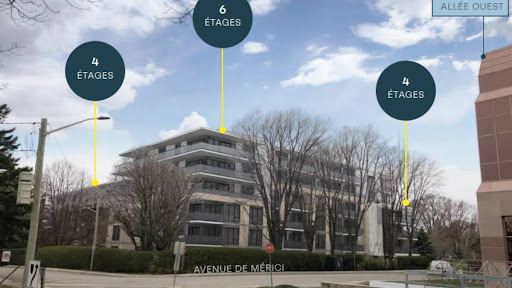
The complex is a project of Groupe Stratera Inc., which calls itself an avant-garde real estate developer. According to concept images, it would have two taller buildings of up to 13 storeys located behind two six-storey buildings fronting the street.

The project is located on a lot that currently has a shopping mall with a pizza restaurant, a pharmacy, a beauty salon, a bakery and a tire store. The city says preparatory construction will begin during the summer, with units available for occupancy in 2026.

The QCT has learned the pizzeria, drugstore and beauty salon will be included in the Laforest project. Valérie Routh, co-owner of Piazzetta Saint-Louis, said because the project will be done in two phases, her restaurant will be able to move out of its current location and into the new building, with street frontage, once it is completed.

She said she and the other tenants are currently negotiating new lease terms with the developer. 

As for the rental units, the mayor acknowledged there are no specific provisions at this point for a dedicated amount of social housing. He said in a Journal de Québec report that the Laforest project will free up more affordable housing when the new occupants move into the building.

That explanation did not satisfy Limoilou Coun. and Transition Québec Leader Jackie Smith. “It is unacceptable that we give a boost to this type of project without requiring the presence of social housing in return. There is money allocated to the Rent Supplement Program which is sitting in the coffers,” she said in a statement. 

A factor contributing to the city’s decision to employ the fast-track law is that “it is a low-carbon residential and commercial project which will be powered by geothermal energy,” the mayor said. It will also feature a public park square and a green roof.

The consultation, at which city officials will explain details of the project, will take place at the Centre de Glaces Intact Assurance on Ave. De Rochebelle at 6:30 p.m. on June 12.

City council needs to approve the fast-track designation of the project by a majority vote at its June 18 meeting. Further information on the Laforest project can be found on the city’s website.

  30 

This image shows the proposed Laforest project at the northwest corner of Rue de la Forest and Chemin Saint-Louis. 

Image from Groupe Stratera 

City fast-tracks huge apartment complex on Chemin Saint-Louis Read More »

Trudel company planning big project for Îlot Dorchester parking lot

Peter Black

June 5, 2024

Local Journalism Initiative reporter

peterblack@qctonline.com

The Trudel Alliance property development company, already busy with huge projects to transform shopping malls in suburban areas, is now targeting a vast parking lot in Saint-Roch for redevelopment.

William Trudel confirmed last week that he and his brother and business partner Jonathan have big plans for what is known as Îlot Dorchester, a 100,000-square-foot lot bordered by Rues Saint-Vallier, Sainte-Hélène, Caron and Dorchester.

A May 31 report in Le Soleil provided details of the project, which would include a 20-storey hotel, hundreds of housing units and new commercial space. William Trudel would not confirm the details reported but did say his company has been consulting privately with concerned parties in the vicinity.

The Trudels bought the property for $6 million in 2022 after having managed the parking lot for another owner for several years previously. Over the years, several development projects have been proposed for the site but none moved beyond the planning stages.

The plan for a 20-storey hotel would require a change to the current zoning regulations, although a building of the same size, the Tour Fresk, was built in 2016 about a block away, on Rue de la Couronne. 

According to information Le Soleil gathered from people consulted about the project, it would include a large major brand grocery store to meet the needs of the Saint-Roch neighbourhood.

Plans for the Îlot Dorchester project would follow the strategy Trudel Alliance is employing in its other major redevelopments, incorporating a mix of housing with commercial space and public areas.

The company’s redevelopment of Place Fleur de Lys in Vanier is well underway, with projects also moving forward at Galeries Charlesbourg and Place Quatre-Bourgeois. 

Trudel spokesperson David Chabot told Le Soleil, “We do not want to comment on the current process out of respect for the citizens who have not yet been met. We are in voluntary consultation to measure the receptivity and interest of partners and citizens in relation to the proposed project.”

The QCT contacted City Hall to confirm the Ilot Dorchester project but did not receive a response by press time. 

                30 

This map shows the large parking lot in Saint-Roch known as Îlot Dorchester, slated to become a hotel, residential and commercial complex. 

Image from Google Maps

Trudel company planning big project for Îlot Dorchester parking lot Read More »

Caisse confirms mid-June release of regional transit report

Peter Black

June 5, 2024

Local Journalism Initiative reporter

peterblack@qctonline.com

Anticipation is building as the days count down to the release of the Caisse de dépôt et placement Infra study of Quebec City’s transit needs. The latest information from the Caisse indicates a mid-June date.

According to the Caisse, the study will first be presented to Quebec and municipal government officials before being unveiled to the public. Reports suggest it will be Caisse officials themselves who will unveil the study’s details.

Caisse spokesperson Michelle Lamarche said in a message to Radio-Canada, “We will submit our report to the Quebec government in June, as planned. In the days that follow, we will present this report and inform the public about all of the work and analysis that led to our recommendations.”

Mayor Bruno Marchand said at a media event last week he appreciates the “transparency” of the Caisse making the announcement without the presence of politicians.

Two weeks ago, Transport Minister Genèvieve Guilbault said the Quebec government would analyze whatever the Caisse recommends and “then we’ll see.”

As promised by the Quebec government, the Caisse report will be delivered within the six-month time frame. The government mandated the Caisse’s infrastructure division to study options for public transit in the Quebec City region following the city’s release in November of an updated cost estimate for a tramway system pegged at $8.4 billion. 

The Caisse was asked to include a “third link” component in the report.

Among those eager to see the results of the Caisse study is Nora Loreto, co-founder of Quebec Désire Son Tramway, a group campaigning for the creation of a tramway system for the city.

On June 1, members of the group walked the full 19.3 kilometres of the proposed tramway route, from near the Ikea in Cap-Rouge to the eastern terminus near Ave. D’Estimauville. The march took six hours; more than 60 people started the route and 15 finished, according to Loreto.

“We’re optimistic that the experts at the Caisse will have the same opinion as the experts who have already studied this. All signals are that the question is not ‘yes or no’ but ‘how’ and what it will look like,” Loreto told the QCT while the trekkers stopped for a break near Ave. Cartier, about midway through the walk. 

She said it will be “up to the CAQ [Coalition Avenir Québec] government if they want to play politics with this issue.”

As the group was marching, the CAQ government released the results of a survey indicating 69 per cent of those polled are in favour of a “structured” public transport network. It also found “a strong majority (82 per cent) perceive that the construction of an additional road transport link between the two shores, including public transport, would be the proposal most likely to have positive repercussions.”

Another group lobbying for the tramway made its concerns known last week. Business leader and philanthropist Yvon Charest, head of the J’ai Ma Passe group, told a media conference the tramway project should not be stymied by questions of “social acceptability” and level of public support.

The mayor responded, saying “social responsibility is not a result; it is a process.”

30 

Trekking for the tram: From left, Nora Loreto, founder of Québec Désire Son Tramway, completed a crosstown trek alongside Aimée Dawson, Tessa Dawson and Della Greener. 

Photo by Peter Black

Caisse confirms mid-June release of regional transit report Read More »

Will Liberals try a bold idea to help save themselves from doom?

Peter Black

June 5, 2024

Local Journalism Initiative reporter

peterblack@qctonline.com

Imagine you’re in charge of a government that’s been in power for a long time and it’s pretty obvious the people are tuning you out. You’ve tried and tried to draw attention to all the great stuff you’ve been doing, but, darn it, you’re still way, way behind in the polls.

What’s a seemingly well-meaning but doomed government to do? 

Well, why not propose something so out-of-the-blue, so moon shot, so controversial, so strangely appealing, it just might change the conversation and breathe a bit of hope into your political prospects?

You probably think we’re talking here about the Liberal government of Justin Trudeau. Actually, we’re referring to a Conservative government, the one that’s ruled the United Kingdom for the past 14 years under five different prime ministers.

The current prime minister, Rishi Sunak, has called a general election for July 4, which was a bit of a surprise; more surprising still, he announced a major plank in the Tories’ platform: a program of compulsory national service for 18-year-old Britons. 

If the Conservatives are elected, all 18-year-olds would be required to do one of two types of national service: 30,000 would spend one year in the armed forces, and the others would be compelled to work one weekend a month for some non-military organization such as the police, fire service or the National Health Service.

The proposal was met with much mockery and howls of derision, but polls show the plan has about 47 per cent support overall, although the 18-plus target group is 65 per cent opposed.

It may take a bit of time to see whether the idea – still short on details – will move the polling needle for Sunak’s Conservatives. A recent survey found them 27 points behind the Labour Party, led by Sir Keir Starmer, a former top prosecutor and human rights lawyer.

As bad as things are for the Trudeau Liberals, it’s hard to imagine them trailing Pierre Poilievre Conservatives by such a grand canyon as the British Tory-Labour split. The gap has been a steady 20 per cent for months, suggesting folks are lapping up Poilievre’s incessant haranguing of all things Trudeau.

But there is the slightest glimmer of hope for the Grits. A recent poll showed the Liberals are actually regaining ground among voters aged 18-29, trailing 28 to 32.

Not for nothing do recent speeches by the prime minister and his entourage contain obligatory references to Millenials and Gen Z, the groups so frustrated in their aspirations to join the Liberals’ much-vaunted middle class nirvana.

What, though, remains in the Liberal bag of tricks, as the months count down to the reckoning at the polls come the fall of 2025, to entice younger voters, or voters of any age for that matter, to return to the fold and grant the Grits a fourth straight mandate? 

Trudeau must be feeling a bit like Seymour in The Little Shop of Horrors, trying to feed the insatiable monster plant. “I’ve given you cheap daycare, I’ve given you dental care, I’ve given you child care cheques, I’ve given you legal weed, I’ve given you gun bans, I’ve given you electric car plants, I’ve given you pandemic grants, I’ve given you a pipeline, I’ve given you carbon tax rebates … and on and on.” 

Crickets, say the pollsters, and (spoiler alert) the monster eats Seymour in the end.

(Of course, he’s also given rampant wokeness, blackface, SNC-Lavalin, immigration woes, massive deficits, international goof-ups and on and on.)

The Liberal-NDP supply and confidence pact expires about a year from now, leaving the governing party little time to come up with some policy ideas, some Hail Mary brainstorm that will change the narrative enough to avoid utter annihilation at the hands of the Conservatives. 

A national service program is not likely on the planning board in the Liberal Party election 2025 war room, but surely the Grits might prefer to go out with some big bang of an idea, rather than a whimper of surrender.

        30 

Will Liberals try a bold idea to help save themselves from doom? Read More »

Le Rivero apartment project converts former CNESST building

Peter Black

May 29, 2024

Local Journalism Initiative reporter 

peterblack@qctonline.com 

A massive former Quebec government building near the St. Charles River had been slated to be demolished. Instead, next year, once extensive renovation work is completed on the abandoned former headquarters of the Commission des normes, de l’équité, de la santé et de la sécurité du travail (CNESST), some 208 apartments will be added to the housing stock of the Vanier district.

The family-owned company Les Immeubles Simard acquired the five-storey structure in 2017, shortly after the CNESST announced plans to move its headquarters to a brand-new building in the D’Estimauville neighbourhood. 

The initial plan had been to demolish the building, opened in 1970, which had become a money pit for renovation work. According to media reports at the time, a $130 million project to upgrade and expand the structure had to be abandoned in 2016 due to cracks in its foundation. Some $20 million had already been spent.

The Simards had to wait five years for the CNESST to move into its new digs in 2022 to be able to start work on their project, which, company executive Jean-Michel Simard told the QCT, was initially imagined as an office building.

The pandemic changed that thinking, and the company, in partnership with construction giant Ogesco, shifted the focus to residential units, which involved transforming an office complex and rehabilitation centre into apartments.

Assured that there were no foundation issues for their project, work to gut the building and bring it up to code began in earnest a year ago, Simard said. Because of the configuration of the building, the units, ranging in size from 3 ½ to 5 ½, will be a different style, capitalizing on the high ceilings, long and narrow width and tall windows.

The marketing material on the website for Le Rivero, the project’s name, reflecting its proximity to the Saint-Charles River, describes the units as New York-style, “characterized by distinctive elements such as exposed concrete and large windows.”

Most of the units will feature what are called loggia, year-round enclosed balconies, heated in the winter and “open to the outside” in the summer. The rent ranges from $1,195 a month for the smaller units to a minimum of $2,295 a month for the larger ones.

The rental office for Le Rivero opened last week and Simard said the response has been very strong. “We’re looking at a market that wants something different,” noting that the apartments on offer have rents competitive with less distinctive units of the same size.  

Apartments completed in the first three phases of the project are slated for June 2025 occupancy, Simard said.

The complex includes amenities such as an indoor and outdoor swimming pool, an interior pickleball court, a landscaped courtyard and a lounge area. 

Simard said that besides the attractive features of the rental units, the big selling point is the building’s location on the St. Charles River and in a section of Vanier undergoing major redevelopment.

Simard said the company has other plans in the works for future phases of the development. 

          30

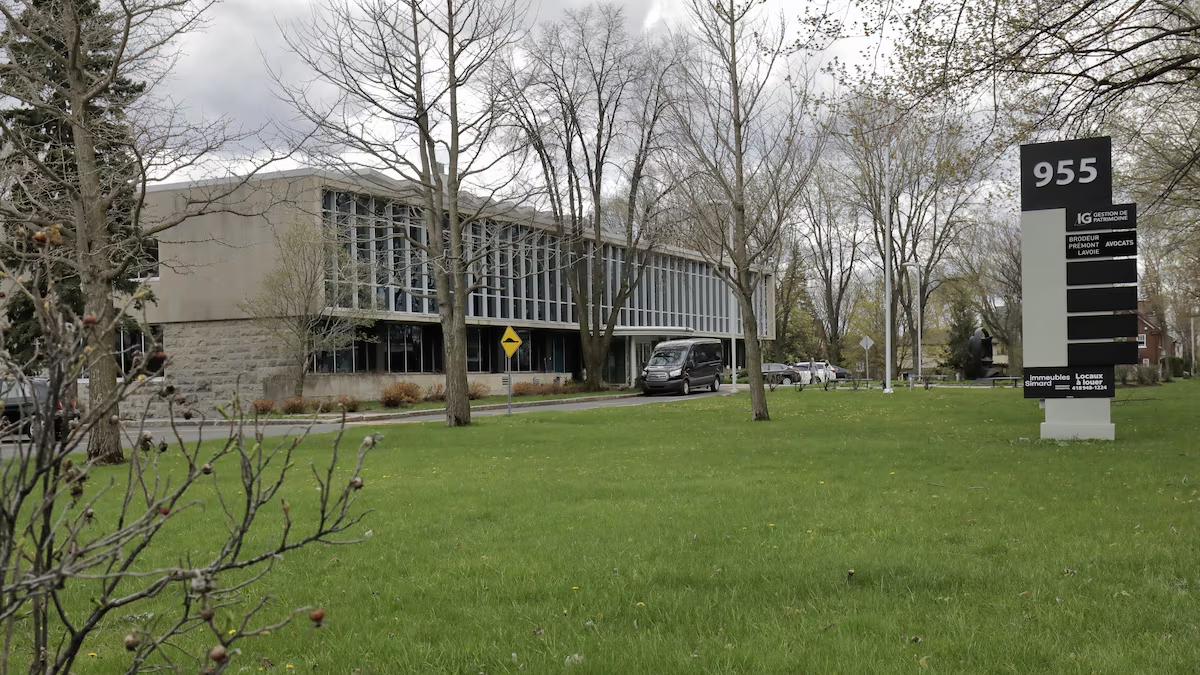
This image shows how the former CNESST headquarters in Vanier will be transformed into 208 rental units.  

Image from Graphsynergie

Large windows allow for the creation of year-round loggia rooms, available in many of the units in Le Rivero. 

Image by Étienne Dumas, 3D artist

Le Rivero apartment project converts former CNESST building Read More »

A brief history of famous (and dubious) anglo separatists

Peter Black]

May 29, 2024

Local Journalism Initiative reporter

peterblack@qctonline.com 

This country has seen some strange and unlikely political conversions over the years. 

For example, there’s raw-boned rancher and Alberta Progressive Conservative MP Jack Horner’s decision to cross the Commons floor in 1977 and join the caucus of Liberal prime minister Pierre Trudeau, who promptly named him industry minister.

Then there’s perhaps the most unlikely political spot-change of all, that of Richard Holden: lawyer, scion of a wealthy Montreal anglo family, one of four Equality Party MNAs elected in the 1989 Quebec election, and … wait for it … a defector to the PQ caucus under then-leader Jacques Parizeau.

The bizarre tale of Richard Holden’s brief pirouette as a PQ MNA inevitably springs to mind when the topic comes up of anglophone converts to Quebec separatism. 

As readers may know, current PQ Leader Paul St-Pierre Plamondon is wooing English speakers with a rather glossy TV ad in la langue de Alice Munro. 

The McGill and Oxford grad’s big pitch is that Quebec gives $82 billion a year to those nasty colonialists in Ottawa and gets nothing in return. Such a claim, objective observers would say, is utterly simplistic hogwash, not to mention reminiscent of the hilarious scene in Monty Python’s Life of Brian, where some Judean rebels ask, “What have the Romans ever done for us?”

PSPP neglects to say specifically how much better off anglos would be in la République du Québec, but no need to get ahead of ourselves more than two years out from the next election.

Back to Richard Holden. His 1992 defection from the anglo-rights Equality Party to the PQ was, in a way, the ultimate mischievous act of a maverick and gadfly. 

Holden joined the ranks of the PQ in reaction to being kicked out of the Equality Party because he refused to kowtow to its young leader, Robert Libman.

Surely such an over-the-top gesture gave Holden as much giddy satisfaction as it did Parizeau to have the MNA for Westmount, of all places, in his secessionist fold.

No one believed for an instant that Holden, a former anglo rights warrior, was a separatist in his heart, although he did run (and lose) for the PQ in the working-class Verdun riding in 1994.

The fact is, there has never been a true-blue anglophone Quebecer elected as a péquiste to the National Assembly, although one technical exception might be Robert Burns, who served in the cabinet of René Lévesque.

Burns was the son of a franco mother and anglo father who died when Burns was two. So, basically, he was raised and schooled in French and identified as a franco.

Then there is David Payne, a Yorkshireman immigrant to Canada, one-time teacher at Vanier College in Montreal and author of Autant de façons d’être Québécois (So many ways to be a Quebecer). 

Payne, a left-wing activist, found himself in PQ circles and in 1981 won the South Shore Vachon riding for the party. 

He lost in the 1985 and 1989 elections which brought in Liberal governments, but made a comeback with the PQ’s return to power in 1994 and 1998. He never made the cabinet of Parizeau or Lucien Bouchard.

This list of notable anglo-Quebec sovereigntists is likely incomplete and does not include other failed PQ candidates.

We cannot not mention another convert to Quebec independence, though with a large asterisk: Reed Scowen, a prominent Townships businessman, longtime Liberal MNA for Montreal’s NDG riding (1978-87) and, dare we say, an eloquent and wise voice for Quebec anglophone rights at a particularly challenging time.

In 1999, exhausted by the numbing discourse over Quebec’s place in Canada, Scowen wrote a book titled Time to Say Goodbye; Building a Better Canada Without Quebec.

As longtime friend and former Westmount mayor Peter Trent commented upon Scowen’s death in 2020, “He was very sad he had to reach the purported conclusion that the only solution was to say goodbye. He was saying a de facto separation had occurred, so let’s make it de jure.”

Scowen evidently felt more positively about Quebec’s future in Canada in the years following his cri de coeur. 

Still, his plea to just stop fighting and have an amicable breakup might be the kind of potion a PSPP would find more useful in seducing anglos than an $82-billion whopper. 

      30 

A brief history of famous (and dubious) anglo separatists Read More »

Brand new city courthouse installed in historic F.X. Drolet building

Peter Black

May 29, 2024

Local Journalism Initiative reporter

peterblack@qctonline.com

Justice may be blind, but that doesn’t mean it can’t look good.

That was the feeling municipal officials expressed at the May 21 official inauguration of Quebec City’s new municipal courthouse in the Saint-Roch district at the intersection of Rue du Pont and Rue du Prince-Edouard.

“Wow” was the word Coun. Marie-Josée Asselin, the city executive committee member responsible for police and fire services, used to describe the new facility installed in a completely gutted historic building.

The structure, which also contains a neighbourhood police station, is the former F.X. Drolet factory, a company that manufactured a wide range of steel products, including many manhole covers and fire hydrants still seen throughout the city.

Asselin lauded not only the design “genius” that went into the ultra-modern conversion, but the fact the building, located near the downtown zone, underlines the city’s commitment to maintaining services in proximity to citizens.

Mayor Bruno Marchand, whose party took over City Hall well after the project was put on the drawing board of the previous administration, said he was pleased with the fact, despite a two-year delay due to pandemic complications and other factors, that the project came within about five per cent of its budget, which ended up at $29 million.

The mayor said he also was gratified that city expertise managed the entire project, as was also the case, he noted, for two other recently completed major city projects – the new police headquarters in Charlesbourg which opened earlier this month and the revamped Gabrielle-Roy Library in Saint-Roch.

When asked by the QCT how these major projects stayed on budget while that of the proposed tramway soared, the mayor said a huge infrastructure project such as a tramway, planned years in advance, is vulnerable to many factors, the pandemic being a major one. 

The new courthouse is spacious, with huge, specially restored windows providing ample sunlight. It has five counters on the main floor as well as one courtroom and two interview rooms. It also has an exhibition space documenting the history of the Drolet company. In what might be a spin on the wheels of justice, the exhibit features a giant steel wheel unearthed during excavation work to decontaminate the industrial site.

On the second floor are three more courtrooms, including one with a more intimate configuration for particularly vulnerable people or sensitive situations. Those appearing in court will enter by a separate secure door leading directly to where the accused are seated. 

The neighbourhood police station is in quarters separated from the courthouse. A squad of officers will provide a rapid response to incidents in the downtown area.

Pierre-Luc Lachance, executive committee member and councillor for Saint-Roch-Saint-Sauveur said, “Since its construction in 1909, the F.-X. Drolet building has been an essential component of the Saint-Roch district, This building is one of the few that still bears witness to the industrial architecture of the early 20th century in Quebec. Today, it begins a new chapter in this history.”

The new facility is scheduled to open for business on June 3; residents will still be able to use the Sainte-Foy service centre on Route de l’Eglise to pay parking tickets and the like. 

30 

An exhibit at the new courthouse documents the history of the F.X. Drolet factory.

Photo by Peter Black

Large, specially restored windows provide ample light in the corridor of the second floor of the courthouse where three courtrooms are located. 

Photo by Peter Black

One of the courthouse’s four hearing rooms has a round table configuration for mediation or other, less formal, proceedings.

Photo by Peter Black

Brand new city courthouse installed in historic F.X. Drolet building Read More »

New police headquarters in Charlesbourg opens under budget

Peter Black

May 22, 2024

Local Journalism Initiative reporter

peterblack@qctonline.com 

Quebec City has a brand new police station, opened several years later and in a different location than originally planned, but delivered under budget and to rave reviews.

City officials gave an inaugural tour of the five-storey structure on May 14. Located in the Charlesbourg district on Boul. Louis XIV near the Autoroute Laurentienne, the new headquarters replaces the antiquated police station near Parc Victoria. That building is to be demolished and the park expanded.

Mayor Bruno Marchand, obviously pleased the project came in $2.3 million under its $112-million projected budget, said, “With this incomparable infrastructure, Quebec City now has one of the best facilities in the province. This is an undeniable advantage for continuing to make Quebec a city where citizens feel safe.”

He said, “Here, we have a concrete example that the city is capable of carrying out major projects that will benefit our community. It was high time to modernize the facilities in order to continue to offer quality services to citizens.”

Police Chief Denis Turcotte said, “The new centre will become the pride of all police and civilian personnel. Having the majority of our teams gathered in the same location will allow for better synergy which will undeniably have an impact on the efficiency of our operations, for the benefit of the population.”

The new police HQ, the area of one and a half football fields, features space for 750 workers, or about 70 per cent of personnel, 52 holding cells, 259 interior parking spaces and 629 exterior spaces. To help cops stay in shape, there is a spacious gym and training facilities. 

Various environmental measures in the building’s construction have created a 30 per cent energy saving.

For citizens, the new building offers, according to background information, “various amenities respecting the principles of universal accessibility. They will benefit from closed premises to ensure confidential complaints and self-service computers to submit an event report or a request for a criminal record check.”

Until the new facility is fully operational in the coming weeks, people will still need to go to the stations in Parc Victoria and on Route de l’Eglise in Ste-Foy to pay tickets or file a complaint.

Several years ago, the city purchased property on Rue des Rocailles, near Boul. Pierre Bertrand, at a cost of $2.6 million, for the new police station, but in 2019 the site was deemed to be too small to accommodate parking.

The new police headquarters in Charlesbourg is located on Boul. Louis XIV near the Autoroute Laurentienne.   

Image from Ville de Québec

The new police station contains an exhibit displaying items from the 181-year history of the force. Stéphanie Filteau is the curator. 

Photo from Ville de Québec

New police headquarters in Charlesbourg opens under budget Read More »

The Zone of Interest’s grim ‘Kanada’ death camp connection

Peter Black

May 22, 2024

Local Journalism Initiative reporter

peterblack@qctonline.com 

The women are in the kitchen having coffee. 

“She asked me where I got one of my jackets from. I said Canada. She asked me, ‘When did I get to Canada?’” The women laugh. One says, “She thought you meant the country.”

“An understandable mistake,” says the lady of the house, the concentration camp commandant’s house.

The scene comes a few minutes into the Oscar-winning movie The Zone of Interest, now available on Prime. If you haven’t seen it, or you did see it and missed the quick reference to “Canada,” there turns out to be a horrific story behind how “Kanada” became associated with one of the grim aspects of the Holocaust.

The “Kanada” to which the women referred was the name for the huge warehouses the Nazis built at the Auschwitz death camp in Poland to store, sort and distribute the possessions confiscated from the more than one million mostly Jewish prisoners who arrived at the camp destined to labour as slaves or to be executed.

It’s unclear how exactly the warehouses – Kanada 1 and Kanada 2 – came to be called Kanada, but according to Holocaust history sources, it was Jewish prisoners themselves who gave the buildings the name, which their Nazi captors adopted. Someone, presumably had the idea in mind that Canada was a place of great abundance. 

(We might interject here that despite the positive thoughts Jewish concentration camp prisoners may have had about Canada, at the time the Nazis were rounding up Jews for extermination, the Canadian government was systematically rejecting Jewish refugees from Europe.)

In the movie, Hedwig Höss, wife of Rudolph Höss, the long-serving commandant at the sprawling Auschwitz-Birkenau extermination centre, receives bundles of clothing delivered in a wheelbarrow by a Jewish prisoner. 

She tries on a fur coat and discovers a tube of lipstick in a pocket. She applies the lipstick, then quickly wipes it from her lips, realizing a Jewish woman was the last person to use it.

The volume of goods taken from new arrivals at the camp was staggering. Jews and other Nazi targets from cities and villages in Poland and elsewhere had no idea where they were headed when ordered to bring up to 100 pounds of possessions and then loaded on trains like animals, often travelling for days without food or water.

Upon arrival at the camp, guards took the prisoners’ goods, from clothing to books, musical instruments and jewelry, and stored them in a “Kanada” while their owners were either stripped and gassed immediately or forced into slave labour.

At their peak, in 1944, up to 2,000 prisoners, called Kanada Kommandos, were working at the Kanada warehousing operation. Most of the goods were shipped to Germany, but some ended up being worn by the commandant’s wife and her friends.

The Zone of Interest is a masterful cinematic expression of the “banality of evil,” political philosopher Hannah Arendt’s description of the methodical way in which the Nazis set about attempting to wipe out the Jews of the world.

The film is based on Martin Amis’ novel of the same name, drawn from the true-life account of the Höss family living an idyllic life in the Polish countryside, with industrial-scale incineration of human beings taking place on the other side of the garden wall.

We never see the grounds of the actual camp – its presence is suggested by the dull rumble of the crematoria and the sound of rifle shots. The only Jews seen are the family servants, including a girl whom Frau Höss admonishes, when she makes a small mistake, that her husband could have her ashes scattered. 

The film’s creator, Jonathan Glazer, opted to include the true story of a young Polish girl who would, secretly in the night, leave apples for the starving labourers at work sites near the camp.

Dare we say The Zone of Interest, winner of the Academy Award for best international feature film, would make an instructive film for screening during the long nights at the campus camp-outs in support of the liberation of Palestinians.

Real liberation of victims of true genocide occurred in January 1945 when a Ukrainian division of Soviet troops opened the gates of Auschwitz and began uncovering the extent of the Nazis’ “final solution.”

The retreating SS camp guards burned the Kanada warehouses to the ground, with whatever remaining goods in them going up in smoke.

            30 

The Zone of Interest’s grim ‘Kanada’ death camp connection Read More »

Replacing rusted steel priority for Quebec Bridge revamp

Peter Black

May 22, 2024

Local Journalism Initiative reporter

peterblack@qctonline.com 

The devil, as they say, is in the details, and it was details that bedevilled the prolonged negotiations between the federal government, CN Rail and the Quebec government that finally resulted in Ottawa retaking possession of the historic structure.

The deal, finally concluded in the last few weeks, centres on the federal government taking over control of the bridge and taking the significant measures required to ensure the historic span’s long-term future.

Two weeks ago, the federally appointed chief negotiator, Yvon Charest, told the QCT that the five major issues in the talks between Ottawa and CN had been resolved, and all that remained were minor issues. He said, “Both parties are motivated” to come to a deal.

Asked why the federal government deemed it so important to take control of the bridge, Prime Minister Justin Trudeau said, “Because it is a perfectly good bridge that has served for many years and can serve for decades more with proper maintenance and upkeep.”

Transport Minister Pablo Rodriquez, who said he often picked up the phone to talk directly to CN management about negotiations, said, “It was the right thing to do” to preserve the bridge for future generations.

Once the federal government takes possession officially in September, work will begin on priorities such as replacing steel components rusted beyond repair – some 2.7 million pounds of metal, according to Rodriguez.

About half of the $1 billion the federal government has committed to the bridge over 25 years will be devoted to repainting the bridge. Work had started a decade ago to repaint the bridge but came to a halt amid a dispute over the escalating cost.

On top of the federal investment in the bridge, CN, whose trains cross the bridge about 12 times a day, is committed to spending $6.1 million a year over 25 years; Rodriguez said that with indexation, the amount could reach $350 million.

Martin Guimont, CN vice-president for eastern Canada, said the company will invest amounts over and above the commitment in the deal and “looks forward to contributing to the economy of Quebec” with the bridge’s rejuvenation.

Under the deal, according to a background document, CN and the Quebec government “will retain responsibility for and ownership of the rail and road decks on the bridge structure, respectively, and will be responsible for all costs associated with these decks, as is currently the case.”

Quebec Infrastructure Minister Jonatan Julien provided no details on Quebec’s plans for the bridge with regards to adapting it to accommodate an expanded public transit component, such as a tramway.

All elected officials at the announcement were cautious about stating any specific impact an upgraded Quebec Bridge – the “first link” – might have on the Quebec government’s desire for a “third link” crossing the St. Lawrence. 

The Caisse de dépôt et placement report on the Quebec City region’s transit needs is expected in June.

Besides freight and passenger train traffic, an average of 33,000 vehicles cross the bridge daily. 

The Progressive Conservative government of Brian Mulroney ceded the Quebec Bridge to CN for $1 in June 1993.

    30 

Replacing rusted steel priority for Quebec Bridge revamp Read More »

Federal government buys Quebec Bridge, invests $1 billion in revamp

Peter Black

May 22, 2024

Local Journalism Initiative reporter

peterblack@qctonline.com 

Calling it a “great day for the Quebec City region,” Prime Minister Justin Trudeau confirmed the federal government will buy the historic Quebec Bridge for a token $1 and pour some $1 billion into its rejuvenation over the next 25 years.

The May 15 announcement took place at the lookout behind the Quebec aquarium, with the 107-year-old, 543-metre-long “Wonder of the World” in the background. 

It was the exact same setting where three years ago federal ministers announced the Trudeau government’s intention to purchase the bridge from Canadian National, and hired retired insurance executive Yvon Charest to spearhead negotiations. 

Trudeau thanked Charest, who was out of the country and unable to attend the announcement, for his efforts. “Without his work, we would not be here today,” Trudeau said.

MP Joël Lightbound, in whose Louis-Hébert riding the bridge is located, introduced the officials at the ceremony, noting he has been “waiting for this day since the first day I was elected” in 2015. 

Trudeau also saluted Jean-Yves Duclos, the MP for the Québec riding and minister of public services and procurement, calling him the “pillar” of the long and complicated negotiations with CN and the Quebec government.

Duclos credited the signing of the deal 31 years after CN took over the bridge to “hope and hard work,” spanning the terms of eight ministers of transport. He said the revamping of the bridge will offer the region “new options” for transit. 

Duclos also saluted former Quebec City mayor Régis Labeaume, who, along with longtime Lévis Mayor Gilles Lehouillier, pushed for the resolution of the impasse that saw the painting of the bridge started more than 10 years ago and then halted. There was even a “Bill, Paint Your Bridge” campaign aimed at Microsoft founder and major CN shareholder Bill Gates.

Duclos also thanked citizen groups who have led campaigns for action to preserve the bridge. He thanked Trudeau “above all” for his commitment to the bridge negotiations and the betterment of the Quebec City region.

Transport Minister Pablo Rodriguez, who also serves as Trudeau’s Quebec lieutenant, lent an extra note of levity to the event by making reference to the iconic Quebec TV series, Les Boys. He said it took “dureté de mental (mental toughness) to get the job done, in particular the perseverance of Duclos, the expertise of Charest and the commitment of the prime minister.

Rodriguez joked it would be Duclos who paid the symbolic dollar for the bridge as minister of procurement.

Jonatan Julien, Quebec infrastructure minister and minister for the Capitale-Nationale Region said the bridge is “a heritage jewel” that is “in the DNA” of people in the region. He praised the persistence of the federal government since taking power in 2015, to see the bridge’s future ensured.

Quebec City Coun. Maude Mercier Larouche, whose district includes the bridge, said people of the area are very proud of the bridge, but it has “lacked a bit of love” and the rejuvenation of the structure will allow future generations to feel the same pride.

Mayor Bruno Marchand said, “There would be nothing happening here today without political will,” calling the announcement “an immense day for the people of Quebec.” 

He thanked the prime minister, whom he called Justin, saying the acquisition of the bridge would not have been possible without his support.

“We are entering a new era for mobility in the region,” Marchand said. 

30 

Jean-Yves Duclos, Quebec MP and minister of public services and procurement stands at the podium with (from left) Louis-Hebert MP Joël Lightbound, Prime Minister Justin Trudeau, Quebec City Mayor Bruno Marchand, Transport Minister Pablo Rodriguez, Quebec City Coun. Maude Mercier Larouche and Quebec Infrastructure Minister Jonatan Julien, with the historic Quebec Bridge in the background. 

Photo by Peter Black

Federal government buys Quebec Bridge, invests $1 billion in revamp Read More »

St. Lawrence faculty union seeks answers after harassment ruling

St. Lawrence union seeks answers after harassment ruling

Ruby Pratka, Local Journalism Initiative reporter

editor@qctonline.com

Members of the faculty union at CEGEP Champlain-St. Lawrence have lost confidence in campus director and director of studies Edward Berryman and called on the school to take stronger measures to prevent psychological harassment in the workplace.

The union’s annual general meeting was held May 28, four weeks after Quebec’s labour arbitration court found that Berryman had played a key role in a long-running psychological harassment campaign against longtime St. Lawrence teacher Lisa Birch. Two confidence votes, regarding Berryman and Line Larivière, the director of human resources of the Champlain Regional College (CRC) network, were held at the meeting. Ninety per cent of members present voted no confidence in Berryman and 100 per cent voted no confidence in Larivière, who is responsible for applying workplace health and safety policy at the CRC campuses in Sainte-Foy, St. Lambert and Lennoxville.

Arbitrator Julie Blouin harshly criticized Berryman in her ruling. Citing the ruling, the motion against Berryman noted that he “spearheaded a psychological harassment inquiry against Ms. Birch judged as serious and vexatious.” The motion against Larivière said she “failed to provide timely support, access to documents and other information, and respond to Ms. Birch’s requests for clarification regarding the proceedings against her.”

A third motion, calling on the college to take immediate action for a healthier work environment, was passed unanimously. The motion requested a response from CRC by June 11.

“A month after the arbitrator’s sentence was made public, CRC has kept us waiting to implement concrete measures to make the work environment safe for its employees. To this day, no representative of the college has tried to contact the victim; this immobility has caused additional psychological distress, not only for the victim but for all of our members,” union president Patrick Savard said in a statement.

Sources indicate that the grievances Birch filed with the arbitration tribunal are likely the first of many, involving several St. Lawrence faculty members.

Savard referred further questions to Yves De Repentigny, vice president responsible for CEGEPs at the Fédération nationale des enseignantes et des enseignants du Québec (FNEEQ-CSN), of which the St. Lawrence faculty union is a member. “It has been nearly a month since the decision, and nothing has happened – the college has not approached the union or Ms. Birch – and it has really made the teachers unhappy,” De Repentigny said on May 31. Although the three motions don’t force the college to take any action, De Repentigny pointed out that “passing a vote of no confidence in two key people sends a strong message.”

The morning after the union meeting where the votes were held, multiple sources told the QCT that Yves Rainville, the interim general director of the CRC network, and human re- sources director Viviana Delgado spoke to members of the faculty union executive at a closed-door meeting and reviewed the motions. Rainville then addressed teachers gathered for a breakfast before a planned professional development day. On both occasions, Rainville reiterated the CRC network’s confidence in Berryman’s leadership. Berryman’s mandate as director of studies and director of the constituent college was renewed earlier this spring.

Rainville told the QCT in a statement that CRC “takes the decision of the arbitration tribunal very seriously and intends to take appropriate measures to ensure a healthy and fulfilling environment for all of its employees.

St. Lawrence faculty union seeks answers after harassment ruling Read More »

ICQ tables new offer as library strike drags on

ICQ tables new offer as library strike drags on 

Ruby Pratka, Local Journalism Initiative reporter

editor@qctonline.com

Three months after employees in the Ville de Québec public library system began an unlimited general strike, the Institut canadien de Québec (ICQ), the city-funded nonprofit which oversees the library system, tabled a new proposed agreement on May 31.

In a statement, ICQ spokes- person Mélisa Imedjouben called the proposal “a final and global offer.”

“We hope the new offer will allow our team to go back to work and give citizens back full access to our libraries,” she said.

However, Roxane Larouche, spokesperson for the United Food and Commercial Work- ers of Canada (UFCW, better known in Quebec by its French acronym TUAC), of which the library union is a member, said “several unanswered questions remained” in the proposed agreement. “We can- not present this offer to our members as long as we don’t have answers and the relevant documentation,” she told the QCT May 31. “We agreed to meet next week in order to have all the answers we need.” If the union executive agrees to put the proposal to a vote and members approve it, it could be several weeks before the strike ends, Larouche said.

Larouche could not share details of the proposal before members had seen it. Strikers’ main demands include more flexible scheduling, higher pay for entry-level staff and pay equivalent to Ville de Québec staff doing similar jobs.

The offer tabled last week is the fourth proposal aimed at ending the strike. In mid- April, the Ville de Québec, which finances the ICQ, rejected one proposal; another was rejected by union members in a narrow (52 per cent to 48 per cent) vote in April. Transition Québec leader Jackie Smith is organizing a citizens’ march in support of the strikers on June 8, starting at 1 p.m. at the Saint- Charles Library in Limoilou and marching to the Gabrielle- Roy Library in Saint-Roch. She said she had received more than 2,000 messages from constituents hoping for a swift end to the strike.

“A lot of people depend on libraries – families, retirees, homeless people, anyone who needs to get out of the house and go somewhere without having to spend money or be- ing rushed along,” said Smith, the mother of two young children. “It’s a place where neighbours can meet, where parents can take their kids for storytime … I’m so tired of reading the same books to my kids over and over again!” She also pointed out that with summer on the horizon, many people rely on libraries for air conditioning and summer reading programs for school- age children. “These kids have experienced the pandemic, the teachers’ strike and now they may lose their summer reading programs,” she said.

She accused the city of pinning the blame for the strike on the ICQ and wear- ing down striking employees with a long dispute. “It’s time for citizens to speak with one voice and say this is unacceptable,” she said. “Our librarians are important – pay them well, end this impasse and reopen the libraries, but not at any price.”

Three public libraries – the Gabrielle-Roy Library, the Monique-Corriveau Library in Sainte-Foy and the Étienne- Parent Library in Beauport – are open with reduced hours during the strike, from 1 p.m. to 6 p.m. on Thursdays and Fridays and 12 to 5 p.m. on Saturdays. The other 23 libraries in the city are closed for the duration of the strike.

ICQ tables new offer as library strike drags on Read More »

MondoKarnaval to skip 2024 edition

MondoKarnaval to skip 2024 edition

Ruby Pratka, Local Journalism Initiative reporter

editor@qctonline.com

MondoKarnaval, the annual summer cel- ebration of cultural diversity in Lower Town, will skip a year this year to plan a bigger and more widespread celebration in 2025, organizers announced last week.

“This year, we are organizing ourselves to diversify and improve our programming, which is already very eclectic. This will allow us to offer you the most intense party in Quebec, next year, in 2025! We firmly believe that this break will strengthen MondoKarnaval … for a memorable and festive experience for all participants,” organizers wrote on social media. “It’s important to keep working together in the same spirit of our first decade. We can already promise marvellous and atypical artists and innovations next year, for the greater pleasure of our faithful spectators.”

In the statement, organizers thanked the federal, provincial and city governments, ExpoCité, the Grand Marché, Desjardins, Decathlon, Trudel Alliance and several local media outlets for their support over the years.

MondoKarnaval traces its roots to Afrique en Fête, a festival which held its first edition in summer 2010 at the Baie de Beauport. The first edition under the MondoKarnaval name was held at the Cartier-Brébeuf National Historic Site in Limoilou in 2014. In 2020, the festival organized a series of online concerts under the name MondoNuméris; a hybrid edition was held at Place Fleur de Lys the following year. In 2022 and 2023, the event was held at Place Jean-Béliveau. The free event usually features concerts by local and international artists, a colourful parade, a soccer tournament and artistic and culinary booths staffed by representatives of various cultural groups and festivals, including groups involved with the English- speaking community.

“It’s never an easy decision [to skip a year]. We’ve had a nice 10 years, and we’re not the first festival saying we’ll take a break to better prepare for next year,” festival founder Doina Balzer told the QCT. “We’re taking a well-deserved rest. I know it can be disappointing for some people who were going to block that weekend off.” Balzer said it was a “constant battle” for the festival’s all-volunteer team to organize the event, secure funding and partnerships and weather the impacts of inflation. “The cultural environment is really difficult – we find that culture is being deprioritized everywhere. Prices went way up last year … everyone is running after the money and the money is not necessarily there.”

Balzer said that although it wasn’t unheard of for festivals to pivot to a once-every-two- years format, she believed the 2024 break would be a one- off and that the event would remain annual in future. “We just want to take the time to give everyone a good show next year,” she said.

MondoKarnaval to skip 2024 edition Read More »

BRIEF: Bagpiper Alan Stairs receives heritage award from MRC de la Jacques-Cartier

Stairs receives heritage award from MRC de la Jacques-Cartier

Longtime 78th Fraser Highlanders pipe major and acclaimed local bagpiper Alan Stairs (left) received the Porteur de tradition (“tradition carrier”) award from the MRC de la Jacques-Cartier (represented by prefect Sébastien Couture) at a ceremony on May 23. Stairs, who lives in Stoneham, was honoured alongside the Société d’histoire de Sainte-Brigitte de Laval, heritage preservation nonprofit Souffler les Braises and the web series VIVANT, in which he was also featured. The awards are given every two years to individuals and groups who have contributed to “initiatives that make living heritage shine in respectful and inventive ways.” (RP-LJI)

BRIEF: Bagpiper Alan Stairs receives heritage award from MRC de la Jacques-Cartier Read More »

Government tables three-year moratorium on most evictions

Government tables three-year moratorium on most evictions 

Ruby Pratka, Local Journalism Initiative reporter

editor@qctonline.com

In a surprise announc ment on May 22, the Coalition Avenir Québec (CAQ) government tabled a bill declaring a three-year moratorium on several common types of evictions and expanding eligibility for protections offered to some older renters.

“The bill we have tabled today places a moratorium on evictions for the enlargement, subdivision or change of vocation of a property,” Housing Minister France-Élaine Duranceau told reporters at the National Assembly. If the bill passes before the end of the current legislative session, the moratorium will be in effect retroactive to May 22. It may be selectively repealed in certain regions if the rental housing vacancy rate rises above 3 per cent.

Property owners will still be able to evict tenants who violate the terms of their lease, or take back a property for their own use or the use of a close family member.

Additionally, measures that ban evictions for low-income seniors 70 and older who have lived in the same unit for at least 10 years will be extended to seniors aged 65 to 69, and the income threshold raised by 25 per cent. Unlike the moratorium, the expanded protections for seniors will be permanent. Renters already have the right to contest what they believe to be an abusive rent hike without breaking a lease, but the new bill would make that option clearer.

“This [moratorium] is a strong measure which is justified by the magnitude of the current housing shortage,” said Duranceau, noting that more than 560,000 new temporary residents have moved to Quebec in the last two years. “Considering the context and the strong demand for housing, some owners may be tempted to evict tenants in order to obtain better profitability. Unfortunately, in the absence of a sufficient supply of housing, the consequences of eviction … can lead to precarious situations for citizens [which] will impact several facets of our society, including the demand for health care, homelessness resources and food banks. We’re proposing a time-out to give the market time to respond to the demand.”

She argued that subdivisions, enlargements and changes of use – the three reasons for eviction targeted in the law – “change the portrait of the rental market without doing anything constructive to expand availability.” Duranceau called the bill “complementary” to Bill 31, the controversial housing reform bill passed earlier this year.

She said the only long-term solution to the housing crisis was to “increase supply, and construction … takes two to three years.”

Duranceau thanked Québec Solidaire (QS) housing critic Andrés Fontecilla, who has called for a similar moratorium since 2019, for his collaboration on the bill. “These aren’t gains for the CAQ or for Québec Solidaire – they are gains for renters,” Fontecilla said at a separate announcement along- side QS seniors’ affairs critic Christine Labrie. Labrie said QS was “pleasantly surprised” by the bill but would have liked to see protections for older renters further expanded.

The Regroupement des Comités logement et Associations de locataires du Québec (RCLALQ), a provincewide federation of renters’ rights groups, called the moratorium a “pleasant surprise.” However, RCLALQ spokesperson Cédric Dussault said it should include guardrails to prevent legal bad-faith evictions. “For example, there’s no control over the repossession process [where a property owner evicts a tenant to house themselves or a close family member.] There should be follow-up to make sure the [family member] is actually living in the unit.”

He also said depending on private developers to increase the housing supply for poorer renters was “magical thinking” and that greater investment in social housing had to be part of any housing plan. “We need to place better [controls] on evictions, rent controls, address the [units] we lose to tourist housing, augment our construction of social housing and support marginalized and older renters – if we don’t address all of that, homelessness will go up,” said Dussault.

Véronique Gagnon of the Front d’action populaire en réaménagement urbain (FRAPRU) noted that the measure came too late for the thousands of renters who received eviction notices late last year or early this year, and are scrambling to move before July 1. “There are a lot of people who are living with roommates, living in places that are too small or have nowhere to go. We’re expecting a tough July 1.”

The Quebec Landlords Corporation, better known by its French acronym CORPIQ, did not immediately respond to a request for comment about the new bill. The landlords’ association “understands the laudable intentions behind this measure, but emphasizes that it will not help resolve the widespread housing shortage which continues to grow,” its president, Éric Sansoucy, said in a statement.

NOTE TO LJI EDITORS: This story originally appeared in the QCT.

Government tables three-year moratorium on most evictions Read More »

St. Lawrence administration harassed longtime teacher, arbitrator rules

St. Lawrence administration harassed longtime teacher, arbitrator rules

Ruby Pratka, Local Journalism Initiative reporter

editor@qctonline.com

CEGEP Champlain-St. Lawrence failed in its duty to provide a psychologically safe work environment to a longtime professor, Quebec’s labour arbitration court has ruled.

Lisa Birch has taught at the CEGEP for more than 30 years. She is a teacher representative on the St. Lawrence governing board, known as the establishment board, and and a former president of the faculty union; she also supported the unsuccessful autonomy movement that sought to split St. Lawrence from the Champlain Regional College (CRC) network.

In a 35-page ruling, arbitrator Julie Blouin laid out the details of the dispute between Birch and the college, dating back to 2021, when the Quebec Ministry of Higher Education and an external labour relations consulting firm were investigating the college’s governance practices and “organizational climate.”

In May 2021, Birch, who met several times with investigators, raised concerns about à conflict of interest between the CRC network governing board and the external auditing firm, which led to the auditing firm being replaced. She also noted inconsistencies in the investigation’s mandate. In January 2022, Birch was told a complaint of psychological harassment had been made against her and was being investigated. In response, supported by the school’s faculty union, Birch filed three grievances alleging psychological harassment and failure to ensure a safe workplace. She alleged that her employer never made it clear what she was accused of, and subjected her to an unnecessarily long investigation, during which she had to respect no-contact protocols with certain colleagues that isolated her and dragged on for months after the initial investigation ended. She was also made to believe multiple people had filed complaints against her when only one person – director of studies Edward Berryman – had. “The investigation should never have happened,” Blouin ruled.

According to the ruling, St. Lawrence acknowledged that the investigation had been long, but that the delays were due in part to Birch’s grievances. It denied harassing Birch and argued she was “paranoid by nature” and “a reasonable person in the same situation would have reacted differently.” Berryman, whose mandate as director of studies was renewed last month, testified that he believed Birch was part of a group working to undermine his leadership and get him fired, and the complaint against Birch was part of an effort to “see who the leaders were and what the influences were.”

Blouin, who found Birch’s testimony clear and consistent, did not buy the arguments put forth by the college or Berryman. She found that Birch was the victim of psychological harassment and that the college “abused its rights in a way that undermined her dignity and psychological state and created a harmful work environment,” as the faculty union argued. She accepted Birch’s three grievances, finding that the school had “launched an unjustified investigation, re- fused to answer [Birch’s] questions during the process, not ensured that the investigation took place within a reasonable time frame [and] restricted [Birch] with unreasonable communications protocols.” She also found that the college failed to back up its allegations against Birch with appropriate documentation, and that Birch’s attempts to raise concerns about governance practices were within her right to free expression. She found no evidence for the college’s claim that Birch was paranoid. A difference of opinion on its own, she ruled, should not give rise to a harassment investigation.

Yves De Repentigny is vice president responsible for CEGEPs at the Fédération nationale des enseignantes et des enseignants du Québec (FNEEQ-CSN), of which the St. Lawrence faculty union is a member. “The way we see it is, Ms. Birch was targeted for her role on the establishment board. She expressed a governance vision that was different from the others and that’s why she was targeted,” he said.

He said the union was afraid for the safety and freedom of expression of St. Lawrence faculty, staff and students. “It’s not normal that you can’t say what you think without it hav- ing an impact on your career.” While he couldn’t directly address ongoing complaints for legal reasons, he and others implied that more such grievances may be forthcoming.

Birch, contacted by the QCT, said she was unable to comment for the time being. “It’s a heavy burden, we’re relieved for her and we salute her courage,” De Repentigny said.

CEGEP Champlain-St. Lawrence referred a request for comment to CRC’s head office in Lennoxville. A CRC spokesperson said the college network acknowledged the decision. “We are currently evaluating our options and will not be commenting further,” they added.

St. Lawrence administration harassed longtime teacher, arbitrator rules Read More »

Générations Actives project gets seniors, teens moving

Générations Actives gets seniors, teens moving

Ruby Pratka, Local Journalism Initiative reporter

editor@qctonline.com

As Pierre Lortie approached the finish line of the 1974 Canadian Ski Marathon after a gruelling 60-kilometre trek through the Outaouais, near Montebello, he saw a cheering crowd, a pack of exhausted fellow skiers and a very old man. Race founder Herman “Jack Rabbit” Johannsen, in his late 90s at the time, stood at the finish line shaking finishers’ hands. He told Lortie, “You must come back every year, young man.” Lortie, a university professor specializing in business management, answered, “Yes, sir.” He kept his word. He knew then that skiing would be a lifelong sport for him – as it was for Johannsen, who started skiing at two, lived to be 111 and skied well into his second century.

Decades later, Lortie, now 83, is helping young people learn to ski through Générations Actives, an intergenerational program where seniors introduce students at Quebec City schools, many of whom are recent immigrants or from less privileged families, to winter sports. “I’m no Alex Harvey, but I’ve been skiing all my life, and I figured I could contribute something healthy for those young people.”

Générations Actives was started in July 2023 by Luc Richer, the founder and long- time executive director of Motivaction Jeunesse, an established local nonprofit which provides outdoor sports opportunities for school groups and less privileged youth. “There are not a whole lot of activities for older people who want to do recreation and sports, and there are not really any inter- generational outdoor sports programs at all,” said Richer. In February, he recruited older adult volunteers, many in their 60s and 70s, to team up with high school students for an out- door winter triathlon; a smaller summer event is planned for later this month and Richer is hoping to organize a bigger event in the fall. “I was a little worried that the sauce wouldn’t take, but the students are open-minded,” Richer said. “They were surprised to see seniors who were active and in good shape and enjoying life.”

Dominique Guimond, a French-as-a-second-language teacher at École secondaire De Rochebelle, one of the city’s largest public high schools, jumped at the chance to have her students discover skiing and skating – and a new language – alongside seniors.

“When kids move to a new country, any sports and recreation are put on pause,” she observed. Many of them have also left their grandparents behind, and come from societies where spending time with elders is seen as a valuable learning opportunity. “Some of the students say, ‘They [the seniors] are in better shape than me!’ It’s also a good opportunity to speak French outside the classroom – the seniors aren’t going to adapt their language to my students!”

Lortie and retired auto mechanic and poet Gilles Duclos, 73, are two of the program’s more active volunteers. “We went skiing with the Rochebelle kids in March and they don’t necessarily speak French, so we had to explain a new sport to them with hand gestures,” Duclos recalled. “In January, we were with a private school in Beauport, and I was grouped with three young men and we talked about poetry and electricity and induction motors; at one point I was drawing in the snow to try to teach them the basics of electricity.” Lortie recalled telling a group of teenagers unused to being physically active, “Wake up! I don’t want to go to your funerals!”

“There’s nothing worse than retiring and saying, ‘That’s it, I’ve done enough, I’ll rest,’” said Duclos, who took a part- time job with the Ville de Québec Cyclistes Avertis bike safety education program and started learning Spanish in “retirement.” “Staying home in your bubble is what accelerates aging.”

Lortie’s parting words of advice for both teens and fellow retirees on a bright spring day can be summed up in three words – “Va jouer dehors – Go play outside.”

Générations Actives is actively seeking both seniors and school groups for upcoming activities. If you are a teacher or an active retiree interested in getting involved with the program, contact Luc Richer directly (luc.richer@generationsactives.ca).

Générations Actives project gets seniors, teens moving Read More »

Vehicle registration transit tax: Mayor deplores deadline; Smith quits RTC

Peter Black

May 8, 2024

Local Journalism Initiative reporter

peterblack@qctonline.com

Quebec City Mayor Bruno Marchand is denouncing the provincial agency for motor vehicles as a “nuthouse” as the deadline fast approaches for his administration to decide whether to raise money for public transit through the Quebec vehicle registration fee.
Last December, the Coalition Avenir Québec (CAQ) government granted all municipalities in the province the power to use car registration fees to raise money for public transit, a tool cities in the Montreal region have had since 2010.
Since 1992, a fee of $30 targeted for public transit has been tacked onto the cost of vehicle registration across the province.
At a May 1 news conference at City Hall, Marchand said he is not happy that the Société d’assurance automobile du Québec (SAAQ) has refused to extend the May 31 deadline for municipalities to inform the agency they want to take advantage of the “registration tax.”
The tax would be imposed on new and renewed vehicle registrations as of 2025. According to media reports, some 30 municipalities in Quebec have informed the SAAQ they plan to take advantage of the revenue-generating opportunity.
The mayor said it is “inconceivable” for the SAAQ to keep insisting on the deadline with the overall city transport situation in limbo, pending the report from the Caisse de dépôt et placement infrastructure division on regional transit needs, expected in June. The CAQ government commissioned the study in reaction to the rising cost of the city’s proposed tramway project. 

Marchand decried the “the administrative formalities” behind the May 31 deadline to submit the tax request. “Does that take nine months to do? There is really someone moving numbers in an abacus and [saying] it will take nine months for us to be able to say what will be the amount that we would charge, if we charge?”
The mayor refused to speculate on what amount the city might wish to impose, saying it first needs to have the overall picture of public transit financing.
Marchand’s comments on the registration tax followed on the heels of Transition Quèbec Leader and Limoilou Coun. Jackie Smith’s decision to resign her seat on the board of the Réseau de Transport de Québec (RTC) to protest the city’s lack of action on the tax.
Smith is proposing $1,167, the value of an annual bus pass, be added to the car registration fee. “The government gave us leverage to increase funding for the RTC and we must use it to double the budget dedicated to public transport in Quebec City,” she said in a statement. “This decision would allow us to make free access universal, erase the deficit and develop our network, rather than increasing prices to barely maintain our services.”
Later, at the news conference, Marchand rejected Smith’s demand, saying it would be too heavy a burden on drivers already having a hard time making ends meet.
Smith said she made the decision to resign from the RTC board to stay true to her principles and her campaign vow to fight for free public transit. She said in a CBC Radio interview, “I have to be coherent. I have to defend the principal reason why I was elected. I felt morally I had the responsibility to resign.”
Marchand answered questions about the registration fee at a news conference convened to announce changes to the Equimobilité program aimed at low-income transit users (see article below). As of July 1, transit users eligible for Équimobilité will pay $50 for a monthly pass and $2 for a single ticket. The regular rate is $94.50 for a pass and $3.40 for a ticket.

    PHOTO BELOW 

Transition Québec Leader and Limoilou Coun. Jackie Smith resigned from the Réseau de Transport de Québec (RTC) governing board to protest the city’s lack of action on the taxation of car registrations.

Photo from Transition Québec

Vehicle registration transit tax: Mayor deplores deadline; Smith quits RTC Read More »

3,300 bikes by 2028: City rolls out huge àVélo program expansion

Peter Black

May 15, 2024

Local Journalism Initiative reporter

peterblack@qctonline.com 

The city administration has laid out a plan to have àVélo electric bicycle rental stations in virtually all neighbourhoods of the city within four years.

Mayor Bruno Marchand and Coun. Maude Mercier Larouche, Réseau de Transport de la Capitale president and member of the executive committee responsible for public transit, integrated mobility and major projects, unveiled the details of the plan at a May 6 news conference at the Station des Cageux on Promenade Samuel-De Champlain.

The site was chosen to highlight the installation of two bike stations on the Promenade, with a total of 52 anchor slots.

By 2028, the city’s àVélo fleet is expected to reach 3,300 bikes parked at 330 stations. As of this summer, there will be 1,300 bikes at 115 stations throughout the city.

The fleet will be expanded by about 500 bikes and 50 stations per year. The àVélo program is operated by the RTC in partnership with the Capitale Mobilté group. The budget for 2024 is $9.5 million, $3.7 million of which comes from the city treasury. By 2028, the cost to the city will be $37 million, the mayor confirmed.

“ÀVélo is experiencing resounding success; this is no longer questionable. … The addition of a mobility option on our territory gives citizens additional opportunities every day to travel as they want, when they want,” the mayor said.

Marchand said the city will ensure safety measures are in place to cope with a major increase in àVélo traffic around the city in the coming years. He said studies show that the more bicycles there are on the streets, the safer it is for pedestrians. 

The city has two pilot projects in the works to expand and diversify the àVélo service. One is the introduction of mechanical (non-electric) bicycles for the winter months, when batteries for electric bikes can’t be charged due to cold weather. The other is the “vélo-cargo” (cargo bike), a bike with a carrying basket to make it easier for cyclists to go shopping. The RTC is looking at two models and will conduct pilot projects to determine which it will introduce.

Both Marchand and Mercier Larouche said they are amazed at the success of the  àVélo program, now in its fourth year of operation. Mercier Larouche said, “When we know that in 2023, 22 per cent of users will choose àVélo rather than use their car, it is simple to affirm that the deployment of this service has a significant impact on the reduction of congestion and greenhouse gasses.”

Marchand said he is himself an avid user of the àVélo bikes, having made some 40 trips last year, with a goal of doubling that this season. He said the service is a “fun and positive” way to fight climate change.

“There’s a narrative that is negative. Here you are doing something positive. You can change your city. It is possible to make changes in your life and it’s easy.

“It’s something that is not mandatory. It is something that you choose to do, and not the mayor and not someone telling you with a big finger you have to change. No, we’re offering you something fun, something cool, something that talks about hope, something that talks about the fact that bringing change to your life might be fun. And I think that’s what we have to deliver as politicians.”

Full details on the àVelo program are available on the RTC website.

  30 

Photo by Peter Black  

Pierre Baillargeon, president of the neighbourhood council bicycle consultation group; Mayor Bruno Marchand and RTC president Maude Mercier Larouche are ready to roll out the àVélo expansion program. 

3,300 bikes by 2028: City rolls out huge àVélo program expansion Read More »

Court rules fugitive French couple owes $465,000 in Provisions deal

Peter Black

May 15, 2025

Local Journalism Initiative reporter

peterblack@qctonline.com

The Drouin cousins, Vincent and Bruno, the former owners of the popular Provisions Inc. grocery store on Ave. Cartier, have won a court battle with the derelict purchasers of the store, but collecting the money owed promises to be another battle.

A recent Superior Court ruling determined French couple Stéphanie Guessas Bouillon and Christophe Bouillon must pay the Drouins some $465,000 still outstanding on the purchase of the grocery dating back to November 2022.

In January, the store was closed on the pretense of repairs to refrigerators, but it never reopened. Meanwhile, according to media reports, the Bouillon family has sold their house and fled to France. 

Vincent Drouin told TVA he was “satisfied” with the April 19 court judgment, but said he has no illusions about seeing the money. “Of course we would like to get that money back. We’ll see what happens eventually.” 

According to the lawyer for the Drouins, Nicolas Gagné, the judgment could be executed in France, in the absence of the French defaulters.

The building, which has two apartments besides the grocery, is now in the hands of the Banque Nationale, with the French couple owing $2.7 million.

There is no update on possible new owners for the grocery, pending the current legal entanglements. 

30 

Provisions Inc. has been shuttered since January when the French owners left town. 
Photo by Peter Black from QCT archives.

Court rules fugitive French couple owes $465,000 in Provisions deal Read More »

Marchand sets $10 ‘provisional’ vehicle registration fee

Peter Black

May 15, 2024

Local Journalism Initiative reporter

peterblack@qctonline.com 

In a surprise turn of events last week, Mayor Bruno Marchand announced the city will take advantage of the Quebec government’s offer for municipalities to raise money for public transit through the vehicle registration fee.

Marchand had initially dismissed the idea, complaining the May 31 deadline to apply for the program, set by the Société d’Assurance Automobile du Québec (SAAQ) for cities across the province, did not take into account the study of regional transit needs from CDPQ-Infra, expected in June.

In a compromise move, the Marchand administration came to an agreement with SAAQ, which administers the registration fee, to meet the deadline while setting a “provisional” fee of $10, with the final figure to be decided before Sept. 15.

Marchand said the arrangement “will allow us to better assess the real needs that will be met by this levy. I thank the minister’s openness for this request which will allow us all to act as rigorous managers and wait to have an overall picture before moving forward. The city will need this tax, but it is our duty to define it better.”

Marchand said he is ready to pay whatever political price that may ensue from adding to the cost of vehicle registration. “It’s definitely risky. There is no positioning without risk,” the mayor said at a May 8 City Hall news conference. 

At the moment, only municipalities in the Montreal region are allowed to add to the registration fee to fund public transit, with the current amount $59. This sum is on top of the $30 dedicated to public transit paid by motorists across the province since 1992.

The tax raised an estimated $125 million for public transit in the metropolitan region of Montreal last year, according to the SAAQ.

  -30- 

Marchand sets $10 ‘provisional’ vehicle registration fee Read More »

Dear Class of 2024: Don’t despair, or maybe just a little bit 

Peter Black

May 15, 2024

Local Journalism Initiative reporter

peterblack@qctonline.com

The graduation season is upon us, as legions of Quebec youth take the next confident step forward on the pathway of life. It is a time of pride and hope for the future leaders of the land.  

It is also a time for many a well-worn cliché about hope, pride and pathways to grace the inspiring addresses of guest speakers at hundreds of graduation ceremonies across the province.

Your scribe was invited on two occasions to be the guest speaker at a high school graduation – same school, about 10 years apart, so either memories faded or the grad committee was desperate. 

In any event, in the interests of trying to avoid some of the above-mentioned clichés, I decided to try to connect with the graduates by way of what I thought were original approaches. 

For the first speech, under the theme of triumphing over adversity, I chose to seek revenge on a teacher who had been my nemesis from primary school to Grade 13 (this was Ontario). 

The climax of the speech was my thrilling description of a showdown in Grade 11, when I defiantly ignored said teacher’s suggestion – in front of the whole class!  – that I ditch the arts stream and switch to shop. Who knows? If I’d taken his advice, maybe now I’d be a rich and retired lathe operator.

For the other speech I opted to use a then-popular song as a metaphor for academic success, the truly inane “Friday” by one-hit wonder Rebecca Black (no relation). 

I interpreted her lyrics – “Lookin’ forward to the weekend” as “looking forward to post-secondary education” and “fun, fun, fun” as “marks, marks, marks.” Turned out to not be the crowd-pleaser I thought. Tough crowd, these future leaders.

I think my best bit was how the group of eager and earnest fresh-faced graduates brought to mind the Quebec NDP caucus. This was June 2011, a month after the election that saw Quebec elect 59 very, very surprised N-Dippers to Parliament. (Three elections later, one NDP MP remains).

So, heaven forbid, were I to be called upon again to address high school graduates, more than a decade after the last go, what could I possibly say? 

The underlying message of the two previous remarks was to embrace and find your place in a rapidly changing world – this was well before smartphones had begun to infest the young brains of the planet, when the Internet was still a marvellous tool for the advancement of humanity. 

How about … “Dear Class of 2024. Don’t despair; the future might not be totally bleak. Some of you might find jobs you like, but most of you won’t. 

Some of you might be able to afford a house if you scrimp and save for 15 years to scrape together a down payment. Most of you will have to wait until your parents leave you the house, unless they sell it to pay exorbitant nursing home fees – pray you don’t get stuck with paying for that.

Some of you will go on to English CEGEPs and universities in Quebec, where you will contribute to the decline of the French language. Some of you will leave Quebec because of the persistent paranoia about the state of the French language and develop and deploy your skills elsewhere.   

Most of the young women graduating today will go on to dominate in professional schools from law to medicine to dentistry to accounting to architecture, with business and engineering the next targets.

As for the young men? S’up, dudes? The number of male high school graduates aspiring to post-secondary education in Quebec is plunging, with mental health issues becoming epidemic. 

This “failure to launch,” this inability to escape from the parental basement and take responsibility for your life, is a crisis the experts say is a recipe for social upheaval.

Enough of the doom and gloom. The fact is, dear graduates, there has never been an easy time to take the next step into the future. Graduating classes from time immemorial know their destiny is in their own hands, no matter what the graduation speaker says. 

But “fun, fun, fun” equals “marks, marks, marks.” That’s inspirational!
    30

Dear Class of 2024: Don’t despair, or maybe just a little bit  Read More »

Quebec City’s ComediHa! to make Montreal laugh this summer

Peter Black

Local Journalism Initiative reporter 

Peterblack@qctonline.com 

Quebec City’s ComediHa! entertainment enterprise is stepping into the void the demise of Montreal’s Just for Laughs festival created, by presenting a new comedy event in the big city in July.

ComediHa! founder and president Sylvain Parent-Bédard made the announcement May 8, saying the sortie into Montreal coincides with the 25th anniversary of his Quebec City-based company, which had been considering an event outside the capital to celebrate the milestone.

Parent-Bédard told the QCT his company was equipped to kickstart another comedy festival once the news broke in March that the long-running Just for Laughs festival had succumbed to financial trouble.

The festival venture took a cue from ComediHa!’s move to take over the Just For Laughs production of the musical Waitress, which would have been cancelled otherwise. The show will now go on in Quebec City in August and Montreal in June. 

Parent-Bédard said the support of sponsors will be needed to shore up the $10-million budget for the 10-day Montreal festival, to be called ComediHa! Salue Montréal. He said he also has unofficial promises of financial support from government sources.

He said there will be some English content in the programming, but the short time span to organize the shows may preclude extensive shows this year.

Parent-Bédard said this inaugural edition of the new festival won’t be on the same scale as the indoor Just for Laughs shows, but the free outdoor events would likely draw the same size crowds.

He said he takes some personal satisfaction in organizing a comedy festival in Montreal because he started his company when Just for Laughs rejected the idea of mounting a festival in the Quebec capital.

The full program for the Montreal festival is to be unveiled in the coming weeks. Shows will take place between July 18 and 28 in Place des Arts, at Espace St-Denis and at the Théâtre du Vieux-Terrebonne.

30 

Sylvain Parent-Bedard, president of ComediHa!, is planning a Montreal festival this summer to fill the void caused by the cancellation of the long-running Just For Laughs comedy extravaganza.

Photo from ComediHa!

Quebec City’s ComediHa! Festival is holding a special edition in Montreal from July 18-28. 

Photo by Cassandra Kerwin from QCT archives

Quebec City’s ComediHa! to make Montreal laugh this summer Read More »

Videotron Centre ‘made for’ Billie Eilish world tour début

Peter Black

May 8, 2024

Local Journalism Initiative reporter

peterblack@qctonline.com 

To borrow from the title of her Oscar-winning song, the Videotron Centre seems to be “made for” the rehearsal and début of superstar pop singer Billie Eilish’s Hit Me Hard and Soft world tour.

Eilish, who won the Academy Award for “What Am I Made For,” from the blockbuster Barbie movie, is expected to arrive with her entourage in Quebec City on Sept. 27 to prepare for the inaugural concert two days later. 

Tickets, priced from $129 to $556, went on sale on May 4. Few seats remained when the QCT checked on the weekend.
Dominique Goulet, programming boss for the Videotron Centre, told the QCT the deal to host Eilish came about through the venue’s relationship with entertainment giant Live Nation, which in the past has arranged similar pre-tour warm-ups for Céline Dion, Paul McCartney, Peter Gabriel, Nickelback, Pearl Jam and Arcade Fire.

Goulet said the fact the Videotron Centre is a state-of-the-art facility with highly experienced technical teams and the fact it would be available for three days straight were some of the selling points.

She said it’s possible Eilish herself had some input into the choice of venue to begin the tour, considering that artists tend to be more “hands on” with tour planning than in past years.

Goulet said the concert set-up for the Eilish show will feature a central stage with a 360-degree view. 

The Quebec stop, Goulet said, would be the 22-year-old Californian’s first gig in Quebec City, and one of only three stops in Canada, besides Toronto and Vancouver. She played Montreal’s Osheaga festival last August, to rave reviews.

Goulet said the city may experience a mini tourism boom during Eilish’s visit, with about 30 per cent of the Videotron Centre’s 17,500 seats expected to be scooped up by out-of-town fans.

The star’s request for special arrangements during her Quebec stay include a vegan menu and a minimal environmental footprint, Goulet said.

Eilish, who writes songs and performs with her older brother Finneas O’Connell, first gained fame in 2015 with her début album Ocean Eyes. The siblings have since won nine Grammys and another Oscar in 2022 for the title song of the James Bond movie No Time to Die.
Eilish’s third studio album, Hit Me Hard and Soft, is slated to be released May 17.

Pop superstar Billie Eilish starts her world tour in Quebec City Sept. 29. 

Photo from Depositphotos

Videotron Centre ‘made for’ Billie Eilish world tour début Read More »

 Revolutionary reflections: Making QS a ‘government’ party

Peter Black\

May 8, 2024

Local Journalism Initiative reporter

Peterblack@qctonline.com

Is it already a dozen years ago since the streets of Quebec’s cities were ringing with the song of angry men (and women), when the beating of their hearts echoed the beating of the drums (or pots and pans, as was the case)?

With apologies to the authors of Les Misérables, we look back at that thrilling revolutionary time in Quebec known as “the Maple Spring” which is a less ironic translation of Printemps d’Érable – riffing off the Printemps Arabe (Arab Spring) movement which tried and famously failed to bring a whiff of democracy to dictatorships in the Arab world,

(Wouldn’t it be nice if all the free-speech-protected anti-Israel campus protests currently happening in the Western world stirred another liberation movement among the folks whose “freedom” they are demanding? We digress.)

The Quebec student uprising was to protest the plan of the Jean Charest government to hike bargain tuition fees $350 over five years to bring them in line with the other provinces.

After some 700 protests on campuses around the province, a few involving ugly clashes with police, the ultimate result was the defeat of the Charest government in September 2012 and repeal of the hike by the incoming Parti Québécois government of Pauline Marois, which slapped a cost-of-living index on the fees instead.

Quebec today still has the lowest average undergraduate tuition fee in Canada at $3,461 –  we don’t get into the recent anti-English out-of-province fee hikes here – but that modest rate is still a far cry from the free tuition the student protesters demanded. 

Oh well, it was the good fight.

We revisit this spell of student revolutionary fervour because perhaps the most prominent student leader at the time, Gabriel Nadeau-Dubois, is facing a similar quandary of idealism versus practicality in his current leadership role.

GND graduated quickly from student politics to the big time, winning a 2017 byelection in a Montreal riding to replace outgoing Québec Solidaire co-leader Françoise David. Shortly afterwards, the socialist student superstar became the male co-spokesperson of the party, sharing leadership duties with veteran activist Manon Massé.
Dare we say there’s always been something a little odd about this notion of male and female co-spokespersons, as if the party was unwilling to accept it actually needs a single identifiable leader.
Last week, faced with the intra-party furore caused by the sudden resignation, four months after she was elected, of his female co-spokesperson, former Rouyn-Noranda–Témiscamingue MNA Émilise Lessard-Therrien, Nadeau-Dubois decided he’s had enough of the socialist family feud.

He announced, after a day off to reflect, the time has come for QS to grow up and act like a party prepared and willing to govern.

There are certainly questions about GND’s leadership style, coming not just in light of Lessard-Therrien’s departure, but also from enigmatic former Quebec City MNA Catherine Dorion, who accused GND, in her recent book about her brief time as a politician, of trying to turn QS into a “traditional party.”

GND, who makes a tidy $177,000 as leader of the third Opposition group, told reporters the party needs to be more pragmatic if it wants to expand its base beyond the leftist core that in the 2022 election gave it 11 seats with 15 per cent of the vote.
Since then, for a number of reasons, the Parti Québécois, with only four MNAs, has siphoned off support from QS and rides high in the polls, while the Solidaires are slumping, with no apparent room for growth.
How exactly GND proposes to drag a notoriously fractious and doctrinaire formation toward the centre is anyone’s guess. He has proposed a series of chantiers for the party to find a way to “modernize” its platform.

Some parties are happy to be eternal fringe, protest or ideological groups – witness the federal Greens or NDP. QS, though, risks being squeezed out of the picture entirely, particularly if the next vote in 2026 turns out to be a “referendum” election with the PQ in contention.

Should Nadeau-Dubois’ QS comrades resist his long march to the middle, one suspects the former student rebel might embrace the path of pragmatism and find himself in a more “traditional” party that has realistic hopes of governing.

30  

 Revolutionary reflections: Making QS a ‘government’ party Read More »

ÉquiMobilité program has “hidden users”, advocates say

ÉquiMobilité program has “hidden users,” advocates say 

Ruby Pratka, Local Journalism Initiative reporter

editor@qctonline.com

Advocates for people living in poverty say the city’s ÉquiMobilité bus pass program may be unintentionally bypassing the people who need it most.

The ÉquiMobilité program currently allows people living under the provincial poverty line to get a 33 per cent discount on Réseau de transport de la Capitale (RTC) bus passes and tickets – the same discount given to seniors and students. On July 1, that discount will rise to nearly 50 per cent; recipients will pay $50 for a monthly bus pass and $2 per individual ticket.

However, potential ÉquiMobilité users have to navigate a multistep eligibility process, printing off an online application form; bringing the form, a proof of income and a photo ID to one of two borough offices; getting proof of eligibility from the borough office; and bringing their proof of eligibility to one of four pharmacies to have their card produced.

Studies suggest as many as one in three Quebecers has serious struggles with reading and writing, and people who struggle with literacy are more likely to be living in poverty than those who don’t; many people who struggle with literacy are also unable to access the internet without help. A long list of steps can also be confusing for people with cognitive disabilities.

Audrey Demers is a literacy educator and co-coordinator of Atout-Lire, an adult literacy nonprofit in Saint-Sauveur. “In the past, we had an agreement [with the RTC] to give all of our learners the student rate – we did all the paperwork and then the learners could go to the pharmacy and get their annual student pass, which was obviously simpler,” she said. “When ÉquiMobilité came in, the city said it would be fairer to have everyone get ÉquiMobilité.”

Demers said many learners needed help accessing the online-only, French-only form, understanding the legalistic language of its terms and conditions, going to the Limoilou borough office and finding a pharmacy which offered the service. “The fact that the form is online and there are two places to go makes it complicated,” she said. It’s also possible to apply by mail, but applicants still need to print and fill out the form.

Demers said she was sure there were “hidden” would- be users of the program, who either had not heard of it, had no way to print out the form or were put off by the application process.

“The form could be a lot more accessible,” said Sophie Tremblay-Bouchard of Collectif TRAAQ, a nonprofit advocacy group for underprivileged transit users which fought for the implementation of ÉquiMobilité in 2022. “We are continuing to discuss the accessibility issue with the [RTC] consultative committee.”

Demers and Tremblay- Bouchard said making the paper form more accessible and increasing the number of service points may make the service accessible to more users.

An RTC spokesperson referred a request for comment to the Ville de Québec, which had not responded at press time.

Are you eligible?

If you think you are eligible for ÉquiMobilité, application forms (in French only) are available on the city website. If you don’t have a printer, you can print your form at a city library. Although your neighbourhood library is most likely closed due to a strike, the Gabrielle-Roy Library in Saint-Roch, the Étienne-Parent Library in Beauport and the Monique-Corriveau Library in Sainte-Foy are open with reduced operating hours. Go to the La Cité-Limoilou or Sillery borough office (bureau d’arrondissement) with your completed form, your most recent notice of assessment from Revenu Québec or Revenue Canada, your Canada Child Benefit slip if you have it, proof of refugee or social assistance status if you have it, and photo ID. If you’re eligible, the borough office will give you a document to take to the Brunet pharmacy (near the Limoilou borough office and the Gabrielle-Roy Library), the RTC information centre (820, Ave. Ernest-Gagnon); the Horizon Santé pharmacy (Les Galeries de la Canardière) or the Brunet pharmacy at 2700, Boul. Laurier. Pharmacy staff will create your card. Both the application and the card are free.

You can also apply by mail and have your card mailed to you. Visit ville.quebec.qc.ca/citoyens/deplacements/programme-equimobilite.aspx (link in French) for details.

ÉquiMobilité program has “hidden users”, advocates say Read More »

Indigenous leaders skeptical of museum project

Indigenous leaders skeptical of museum project

Ruby Pratka, Local Journalism Initiative reporter

editor@qctonline.com

Representatives of Indigenous communities across the province have added their voices to the chorus of skepticism surrounding the proposed Musée national de l’histoire du Québec.

On April 25, Premier François Legault and Culture and Communications Minister Mathieu Lacombe announced that a new museum of Quebec history would open in 2026 in the Camille-Roy Pavilion of the Séminaire du Québec, not far from the Basilica-Cathedral Notre-Dame-de-Québec. At the time, Legault said the museum would trace the story of the Quebec nation “from the First Nations, who were here before us and who helped us” to the present day. However, no Indigenous leaders were present at the announcement, and nearly three weeks later, the Assembly of First Nations Quebec-Labrador (AFNQL) and other prominent Indigenous organizations say they have not been consulted and they have serious concerns about how the museum will incorporate Indigenous perspectives.

“The history of the Quebec nation is inseparable from the history of the Indigenous nations – if the First Nations weren’t there, maybe there wouldn’t be a Quebec nation,” said AFNQL Chief Ghislain Picard. “If we are sticking with the original plan for the museum, we’re on the wrong track.”

Picard said he had the impression First Nations were seen as an “afterthought” in the proposed museum. “We have put a lot of effort into rapprochement and reconciliation over the past few years, and this is not something that inspires trust,” he said.

Denis Gros-Louis, director general of the First Nations Education Council (FNEC), echoed Picard’s sentiments. “One side of the story is not enough,” he said. He pointed out that the museum would be in the same facility where Pope Francis apologized for the Catholic Church’s role in the residential school system during his 2022 visit. “It’s very awkward to say, in that location, that Quebec began in 1608 … the role of the museum is to make sure that people who go there are coming out with a better appreciation of what the society is about.” He said the FNEC was “looking forward” to working with the province to include Indigenous perspectives.

Marjolaine Tshernish is di- rector general of the Institut Tshakapesh, a long-established cultural organization based in Uashat, near Sept-Iles, aimed at promoting the language and culture of North Shore Innu communities. “As Innu people and as a research institution, we have the same concerns [as the AFNQL],” she said.

Despite the greater visibility given to Indigenous stories in the past several years since Truth and Reconciliation Day (Sept. 30) became a holiday, Tshernish said many people still don’t realize there are 11 First Nations in Quebec, know the difference between the Innu (native to the North Shore and parts of Labrador) and the Inuit (native to the Arctic) or understand the impact of residential schools. She said a museum would be a prime opportunity to showcase Indigenous cultural knowledge and the efforts made by First Nations to reclaim their languages and cultures and repatriate artifacts in recent years.

Picard said neither he, nor the APNQL, nor Huron-Wendat Grand Chief Rémy Vincent, “nor any chief as far as we know” has been consulted in connection with the project. Tshernish and Gros-Louis also said their organizations had not been consulted by the scientific committee leading the museum project, but they hoped that would change and were open to dialogue.

At the April 25 announcement, Legault listed a number of historical figures he hoped would be honoured in the museum, none of whom were Indigenous. When asked about Indigenous people who made their mark on Quebec, Picard mentioned the Cree chief and land claims negotiator Billy Diamond, who fought for compensation for Cree and Inuit communities whose land stood to be flooded by the massive James Bay hydroelectric project.

“I would have to consult the communities [before naming names], but there are a lot of Innus who have made their mark on history,” Tshernish added.

Indigenous leaders skeptical of museum project Read More »

ÉquiMobilité transit pass prices to drop July 1

ÉquiMobilité transit pass prices to drop July 1

Ruby Pratka, Local Journalism Initiative reporter

editor@qctonline.com

Getting around the city will get slightly easier on July 1 for people covered by the Ville de Québec ÉquiMobilité program.

The program, a longtime demand of groups advocating for the rights of low-income people in the city, was launched in spring 2023 and offered a 33 per cent discount on bus tickets and monthly passes for people whose income was below a predetermined poverty threshold. Recent changes to the program, in effect July 1, will bump that discount up to nearly 50 per cent.

As of July 1 and for the next two years, ÉquiMobilité participants will pay a fixed rate of $50 for a monthly pass and $2 for a single-ride ticket (com- pared to full prices of $97.50 and $3.50 respectively). The income eligibility threshold will also rise slightly, to $30,526 for a single person (higher for couples and larger families). People with disabilities who are registered for the STAC adapted transit service are automatically enrolled regardless of income.

Mayor Bruno Marchand, for whom the program was a 2021 campaign promise, said he was proud of the program. “An inclusive community is a community that accepts … to create a social safety net with programs where everyone has possibilities to dream and build the city, to build it with us, and not to be stuck at home because the fact they have low income restricts their mobility,” he told reporters at City Hall on May 2.

Coun. Maude Mercier Larouche, member of the executive committee responsible for public transportation, integrated mobility and major projects, said freezing the fee at $50 for a monthly pass made the program “more predictable” for people on tight budgets.

Accès Transports Viables was among the groups that advocated for social pricing for many years. “Mobility is a fundamental right which conditions the exercise of many other rights,” said the organization’s director general, Marie-Soleil Gagné. “It’s simple: if we don’t have transportation options that meet our needs … chances are we won’t be able to go to school, go to work [or] access essential services – we become confined to our own space. Public transportation is the means of transportation for people who don’t own a car – seniors, people in poverty, single mothers, young people, students. In Quebec City, that’s a lot of people.”

Spending less on transit also gives people in precarious financial situations breathing room to afford healthier food, more weather-appropriate clothes, community activities or home care, disability rights advocate Véronique Vézina explained.

According to the Ville de Québec, more than 8,400 people have bought monthly passes through the program since its inception. City officials estimate that several thousand more residents are eligible for the program but not using it.

If you think you are eligible for ÉquiMobilité, application forms (in French only) are available on the city website. Go to the Limoilou or Sillery borough office (bureau d’arrondissement) with your completed form, your most recent notice of assessment from Revenu Québec or Revenue Canada if you have it, proof of refugee or social assistance status if you have it, and a piece of photo ID. If you’re eligible, the borough office will give you a document to take to the Brunet pharmacy near the Limoilou borough office; the RTC information centre at 820, Ave. Ernest-Gagnon; the Horizon Santé pharmacy in Les Galeries de la Canardière or the Brunet pharmacy at 2700, Boul. Laurier. Pharmacy staff will create your card. Both the application and the card are free.

It’s also possible to apply by mail and have your card mailed to you. Visit ville.quebec.qc.ca/citoyens/deplacements/programme-equimobilite.aspx for details.

ÉquiMobilité transit pass prices to drop July 1 Read More »

Geddy Lee and Star Wars: FEQ and Grand Theatre partner for eclectic program

Peter Black

Local Journalism Initiative reporter

peterblack@qctonline.com 

Eclectic might be an understatement to describe the set of six events at the Grand Theatre announced as part of Festival d’Été programming.

On July 13, for example, there’s an afternoon session with Geddy Lee, founder and bassist with the iconic Canadian band Rush, talking about his autobiography, My Effing Life

In the evening, rock talk switches to movie music, with Star Wars: A New Hope in concert, featuring the score of the epic 1977 George Lucas classic performed by Montreal’s FILMharmonique Orchestra. 

Though its repertoire does not include film music as its name suggests, The Cinematic Orchestra, a U.K.-based jazz band, is known for its “impressive and enigmatic live performances,” a FEQ press release stated. The group plays on the evening of July 7.

Also slated for Grand Theatre shows are Cajun favourite Zachary Richard (July 5), French-Swiss jazz trumpeter Éric Truffaz (July 4), and popular Quebec pianist Marianne Trudel opening for American jazz pianist Natalie Tenenbaum (July 12). 

FEQ content director Louis Bellavance said the festival decided to pursue some acts that are not well-suited to an outdoor setting, an idea that’s been brewing with FEQ for several years.

“Instead of letting go of some of these amazing artists we were interested in,” the partnership with the Grand Theatre presented a way to do it, Bellavance said.

“It’s not for everyone to go to an outdoor festival and be standing up on a hill. There’s something very comforting about being part of Festival d’Été, but being inside and buying your seat and knowing where you’re going to be,” he added. 

Bellevance said booking prog-rock legend Geddy Lee took considerable persuasion given he had already wrapped his book tour. He finally agreed, “because he wanted to connect with his Quebec fans.”

Tickets for individual shows are on sale through the FEQ website at prices ranging from $42.50 to $79.

      30

Geddy Lee of prog-rock legends Rush will discuss his autobiography at a FEQ event at the Grand Theatre on July 13.

Photo from FEQ

Geddy Lee and Star Wars: FEQ and Grand Theatre partner for eclectic program Read More »

Government hints Mont Sainte-Anne’s future could be decided soon

Peter Black,

May 1, 2024

Local Journalism Initiative reporter

peterblack@qctonline.com

With another season ended at the Mont Sainte-Anne ski resort, there are signs the Quebec government is preparing to act to find a new operator and upgrade the deteriorating attraction.

Jonatan Julien, the minister of infrastructure and minister responsible for the capital region, said a deal regarding the future of the ski hill, currently in the hands of Alberta-based Resorts of the Canadian Rockies (RCR), “is certainly possible” before the start of the next season.

Julien made the comments at an April 23 parliamentary committee meeting to discuss budget credits for the capital region. Responding to questioning by Liberal interim leader Marc Tanguay, Julien said the file “is progressing very well, quite honestly … We are having very, very important discussions.” He did not specify with whom.

Whatever deal the government may be working on, a tight deadline looms, according to Les Amis de Mont Sainte-Anne, the group that’s been pushing for new ownership to revamp the facility.

Group president Yvon Charest told the QCT, “If you don’t have a new manager for the mountain by July 1, it’s going to be impossible to make the infrastructure improvement in time for the Canada Winter Games that will be happening in February 2027.”

Charest said the Coalition Avenir Québec government needs to change its strategy of trying to negotiate with RCR, which has already rejected private offers to purchase the ski station. He said the government “does not want to play tough with RCR” because it is afraid the owner will walk away and stick Quebec with the ownership and onus to invest millions in new facilities.

Charest said there is an ideal option available with the interest expressed in Mont Sainte-Anne by Christian Mars, founder of the French-Swiss management company e-Liberty, which last year signed a 33-year lease to operate the Mont Grand-Fonds ski hill in the Charlevoix and plans to invest some $45 million to develop the site.

Mars, through his Compagnie des montagnes de ski du Québec, has offered to invest $100 million in Mont Sainte-Anne, topped up by another $20 million from local investors, Charest said.

In a recent interview with the Journal de Québec, Mars deplored the deteriorating condition of Mont Sainte-Anne. “It’s true that in Europe, a station in this state is closed immediately. We don’t let it run. It is not possible. There is a level of security that is not sufficient.”

The safety factor may give the Quebec government an opening to seek expropriation of Mont Sainte-Anne, Charest said, noting ski lifts on the mountain are more than 35 years old and operating well under capacity. Serious accidents on the lifts have occurred in recent years.

The public interest factor also needs to be considered, Charest said, with the upcoming Canada Winter Games in Quebec City in need of a downhill ski event venue up to current standards.

Mars said he met with Industry Minister Pierre Fitzgibbon at Mont Grand-Fonds in March. “He was able to see that we were doing what we are committed to. We are operators and we have shown that what we say, we do.”

Mars said, “The solution lies with the government. Our plan is known to the premier’s office, Mr. Fitzgibbon and Investissement Québec.”

Charest said RCR may have more incentive now to divest itself of Mont Sainte-Anne having recently lost control of the eastern part of the mountain in a court case brought by the Quebec government’s SEPAQ outdoors facilities agency. 

The loss of revenue from that on top of the bleak ski season just finished may add up to retaining the resort not being worth the cost to RCR, he explained. 

Charest said, “The way I see it is that it would be quite wise for the government.to move right now because of public interest, and I’m sure that if the government wants to do so you would have a happy community.”

      30

Le Mont-Sainte-Anne, en avril 2024  Photo from e-Liberty

Prospective Mont Sainte-Anne operator Christian Mars shows off the gondola lift he’d like to see on Quebec slopes. 

Government hints Mont Sainte-Anne’s future could be decided soon Read More »

Quebec getting to know what’s in PSPP’s heart and head

Peter Black

May 1, 2024

Local Journalism Initiative reporter

peterblack@qctonline.com

The Parti Québecois has had six elected leaders since the sovereigntist party was created in October 1968. Its founder, René Lévesque, was never actually elected leader, but as the head of the larger group that merged with another group to form the PQ, he automatically assumed the leadership. 

One leader since then has been acclaimed – Lucien Bouchard, in 1995, after then-premier Jacques Parizeau resigned abruptly in the wake of the failed sovereignty referendum of the same year.

This group of leaders can be broken down generally into two categories: heart or head, emotion or reason. Some fit more neatly into one category or the other.

Take the founder, for example. Lévesque knew instinctively that the path to sovereignty lay with an emotional appeal to Quebecers fed up with a federation that showed little respect towards the francophone majority. Little concerned was he with the nuts and bolts of how sovereignty-association with Canada might work. When he was preparing to bolt the Liberal Party, his then friend and future political foe Robert Bourassa cautioned him, “You don’t seem to realize that political independence goes with monetary independence. Quebec cannot be sovereign and pay the bill with Canadian dollars.”

To which Lévesque replied, “Monetary system, economic system, all this is plumbing. One doesn’t worry about plumbing when one fights for the destiny of a people.” Heart.

By contrast, Jacques Parizeau, though a bit of a lefty radical in his youth, was a technocrat through and through. Prior to joining the PQ in 1969, he had been a senior civil servant instrumental in setting up much of the infrastructure underpinning the Quiet Revolution – the nationalization of Hydro-Québec and creation of the Caisse de depôt et placement being two examples.

His pompous demeanor and trademark three-piece banker suits were not exactly the package to connect with the little people. Still, he had the good timing to take over the PQ as the Meech Lake Accord was unraveling and about to rev up the masses with the potent brew of humiliation and resentment. 

A few thousand votes more on the Yes side in the 1995 referendum and Parizeau could well have been the perfect péquiste premier to negotiate Quebec’s exit from Canada. All head.

Then, amongst the group of five PQ leaders to win an election – Lévesque the only one to win two, 1976 and 1981 – there is Lucien Bouchard, who, history concedes, nearly single-handedly brought the Yes side to the brink of victory.

That Bouchard was all heart, a mesmerizing, emotional speaker who felt first hand the bitter failure and betrayal of Meech. Once winning the 1998 election, however, with the referendum heat cooled, he was the Quebec leader forced to bring in hotly contested austerity measures. 

The only other PQ leader to win an election was Pauline Marois, who cashed in on fatigue with the long reign of Liberal Jean Charest. She won a minority in 2012 but lost two years later to new Liberal leader Philippe Couillard. She wasn’t around long enough to determine how much heart she had – obviously not enough to stay in power, let alone win a referendum.

Other PQ elected leaders – Pierre-Marc Johnson, Bernard Landry, André Boisclair, Pierre Karl Péladeau (!) and Jean-François Lisée – sorry to say, are asterisks in the party’s saga, which, frankly, seemed to be nearing an end with the three seats won in the 2022 general election under new leader Paul St-Pierre Plamondon (PSPP).

So what about PSPP? Heart or head? 

He is so high in the polls he is convinced he sees the promised land. But does that make his heart soar like a hawk? Hardly, based on the 1960s-style bitterness- and resentment-spewing speech he gave to a PQ gathering in Drummondville on April 14.

His Durham Report vision of a Canada deliberately plotting to “weaken and erase” the Quebec people, to “crush those who refuse to assimilate,” had commentators rethinking the glowing praise they have been heaping on the separatist golden boy since the party won a surprise victory in a Quebec City byelection last year..

Then, last week, in a National Assembly exchange with Premier François Legault, PSPP mimed slitting his wrists when the premier asked him if he would join the CAQ if the PQ leader’s proposed third referendum failed.

Heart or head? Hard to tell. But folks are sure getting to know more about the real PSPP.
    30

Quebec getting to know what’s in PSPP’s heart and head Read More »

FEQ fills in blanks with Canadian legends

Peter Black 

April 24, 2024

Local Journalism Initiative reporter

peterblack@qctonline.com 

The Festival d’Été de Québec has completed its lineup, filling in some blanks in the schedule with familiar acts on an all-Canadian night.

Legendary rockers Blue Rodeo are the marquee act on July 13 on the Loto-Québec stage in Parc de la francophonie, with veteran rocker Sass Jordan warming up the crowd.

The same night, across the park on the SiriusXM stage, Canadian country-rock band the Hello Darlins, open for multiple-platinum album pop-rock singer Amanda Marshall, the pride of Toronto. 

FEQ also announced an “Emo Punk” night on July 10 featuring American band All Time Low on the Loto-Quebec stage while Canadian quartet Silverstein perform on the SiriusXM stage. Other acts on the program are Toronto punk-rockers The Anti-Queens and Moneen, and singer-songwriter Cam Kahin.

FEQ opens on July 4 and runs until July 14, featuring hundreds of performers, including such big names as Post Malone, Nickelback, 50 Cent and the Jonas Brothers.

All general admission passes (bracelets) are sold out. The sole remaining passes available are hotel packages.

      30 

PHOTO BELOW 

Quebec rocker Sass Jordan opens for Blue Rodeo on July 13.

Photo from FEQ

FEQ fills in blanks with Canadian legends Read More »

La Maison Smith to conquer Plains of Abraham crowds with café

Peter Black 

April 24, 2024

Local Journalism Initiative reporter

peterblack@qctonline.com 

After an absence of three years, food and drink service is returning to the pavilion on the Plains of Abraham next to the Edwin-Bélanger Bandstand. 

The new operator of the concession will be La Maison Smith, a familiar player in the city’s restaurant community. The Plains location will be the family-run company’s 11th coffee shop in the city.

The cafe is expected to open on June 8, once renovations to the pavilion are completed. La Maison Smith will also provide a food truck and an “espresso bike” to reach less accessible areas.

Mathilde Plante St-Arnaud, one of the three co-owners of La Maison Smith, explained why the company bid for the Plains location: “For 10 years, we have carefully selected the sites where each coffee shop is established. The Plains of Abraham are emblematic and we see the opportunity to promote the city of Quebec by combining our offer with the exceptional site.”

Plante St-Arnaud said the existing pavilion’s interior will be renovated in line with La Maison Smith’s typical decor, but “we always immerse ourselves in the environment where we set up. We have a few weeks to put the interior of the pavilion in our image while respecting the character of the Plains.”

Katherine Laflamme, director of marketing and development for the National Battlefields Commission, said in an April 18 news release the partnership with La Maison Smith “will enhance the experience of visitors to the Plains of Abraham throughout the year. We are excited to provide a wide variety of high-quality food to people visiting the site to discover its history, have fun, play their favourite sport or simply enjoy the park.”

Some four million people visit the Plains park each year.

The Plains cafe will be open year-round, with the daily operating schedule adjusted to events in the park and the demands of the tourism season. There will be interior seating for 55 people and outdoor seating for 50. The cafe will serve alcoholic beverages as well as hot drinks. 

La Maison Smith opened its first coffee shop in Place Royale in 2013, in a building erected in 1653 and occupied for many years by businessman Charles Smith and his family.

Since then, it has added outlets in Old Quebec and around the city. It also recently took over restaurant space in the Centre des congrès de Québec. Its food truck has become a regular sight at major events. 

The company has a coffee roasting facility at its location in Limoilou. It has a workforce of some 270 employees.

Plante St-Arnaud said the company’s rapid success and expansion are due to putting “all our energies in the quality of the product and service. Roasting and training are two key elements. In addition, the choice of each location is decisive.” 

Plante St-Arnaud recently became a co-owner in the company where she has served as executive director since it was founded by Jerome Turgeon and Veronic Pelletier in 2013. 

She said, “It’s sometimes hard to believe for Jérôme and I that we have reached 11 coffee shops and a [food truck] in 10 years. But we keep pace with the demands thanks to an incredible team who support us, who grow with us and who are the foundation of the company.” 

   30 

PHOTOS BELOW 

Mathilde Plante St-Arnaud, co-owner of La Maison Smith; Johanne Laflamme of the National Battlefields Commission, and co-owners Jerome Turgeon and Veronic Pelletier stand before the pavilion near the Edwin-Bélanger Bandstand, the future location of the popular café. 

Photo courtesy of La Maison Smith/Noemie Rochette

A Maison Smith “espresso bike” will be pedaling coffee to visitors to the Plains. 

Photo courtesy of La Maison Smith 

La Maison Smith to conquer Plains of Abraham crowds with café Read More »

CAQ government proposes new $2.8-billion bridge for Île d’Orléans

Peter Black 

April 24, 2024

Local Journalism Initiative reporter

peterblack@qctonline.com 

There will be a new bridge to Île d’Orléans as of 2028 at an estimated cost of $2.79 billion, according to a plan the Coalition Avenir Québec (CAQ) government released last week.

The new bridge would replace the existing one built in 1935 which, while officials assure it is still safe, does not conform to modern standards. The government awarded the contract to a consortium called Groupe Heritage Île d’Orléans, one of two bidders for the project.

Deputy premier and Transport Minister Geneviève Guilbault, in making the April 16 announcement, noted one of the challenges of building the new span: “The new Île d’Orléans bridge is a unique project, in an extremely fragile environment. Every detail of the project is thought out in this sense. This is also why a cable-stayed bridge is built. This is the best solution to respect the environment and cultural heritage.”

The bridge will be just over two kilometres long and have one lane in each direction with wide shoulders, paths for pedestrians and bicycles on both sides, as well as lookouts.  

The new bridge is to be built about 120 metres to the west of the current structure, which will be demolished.

A new bridge for the island had been proposed in 2015 by the previous Liberal government. When the CAQ came to power in 2018, it adopted the notion, initially estimating the cost at about $500 million. 

Guilbault acknowledged the cost was high, due in part to delays in moving forward with the project, but said the government had no choice in the matter.

Jonatan Julien, the minister of infrastructure and minister responsible for the Quebec capital region, said in a press release, “Agricultural and tourist activities on the island will be boosted. They will contribute to the socioeconomic development of the MRC of L’Île-d’Orléans and the Capitale-Nationale.” 

While municipal officials on the island lauded the decision, there was negative reaction from other quarters. 

Lévis Mayor Gilles Lehouillier, a staunch proponent of a third link across the St. Lawrence River, told TVA after the announcement that it is  “unimaginable that we would submit a project like that to the population … without an overall vision” and without waiting for the conclusions of the Caisse de dépôt et placement du Québec (CDPQ) Infra which is studying the transportation needs of the region.”

He said, “The disappointment among the population does not diminish in the face of what is happening: for the tram, the cross-river link and the Île d’Orléans bridge. The disappointment of the population of Quebec City and Chaudière-Appalaches is enormous.”

Quebec City Mayor Bruno Marchand said in a Radio-Canada interview that he was surprised at the price of the bridge, but it’s “a classic case of what happens when you wait too long” to get a project underway. He said he agrees a new bridge to the island is needed, but hopes the money is still there for the city’s tramway project.

Perhaps the harshest criticism came from Quebec Conservative Party Leader Éric Duhaime, who has been advocating a third link to the South Shore passing across Île d’Orléans.

Duhaime said in a release that he thought it “insane” to spend “$2.7 billion for the Île-d’Orleans bridge, which was initially expected to cost around $500 million, in order to serve a population of 7,082 people.”

Duhaime said the CAQ government is “announcing very bad news, poorly planned, without vision, not broad enough, too expensive. Why the rush when the Caisse will submit its report on the third link within two months?”

The CAQ government commissioned the Caisse report in November in reaction to the new $10-billion estimate to build Quebec City’s tramway system. The Caisse was mandated to study the overall transit needs of the city, including a possible new bridge or tunnel between the two sides of the river. 

   30 

IMAGES BELOW 

This cross-section image of the proposed bridge shows two lanes for motorized traffic and paths on both sides for pedestrians and cyclists. 

Image from Quebec government.

The new bridge to Île d’Orléans will be two kilometres long and cost at least $2.8 billion. 

This view is looking towards Beauport and Montmorency Falls. 

Image from Quebec government. 

CAQ government proposes new $2.8-billion bridge for Île d’Orléans Read More »

Dear Bill Maher: Canadian ‘cautionary tale’ is a bit of a joke

Peter Black

April 24, 2024

Local Journalism Initiative reporter

peterblack@qctonline.com 

Dear Bill,

You have no way of knowing this, but my wife and I are big fans of your Friday HBO show, Real Time with Bill Maher. It’s been an essential viewing ritual ever since we subscribed to HBO (yes, kids, we have Game of Thrones!), ever more so with the political rise of Donald Trump. 

Suffice it to say, you had us with that whole business of Trump suing you for suggesting he was sired by an orangutan because the primate’s fur colour is the only one in the natural world comparable to Trump’s trademark mop. It was obviously a joke, but Trump took the bait, and later dropped the suit.

We admired how you fearlessly skewered Republicans and Democrats, hosted panels that combined folks with all points of view, and interviewed a wide range of guests from Elon Musk to William Shatner to David Byrne.

We were thrilled that the show the week before the November 2016 election (that Trump won) featured a panel of three natural-born Canadians: comedian Martin Short, conservative commentator David Frum and former Michigan governor Jennifer Granholm; soon-to-be former president Barack Obama was on the same show.

We noted that current federal Finance Minister Chrystia Freeland has been on the show twice, the first being in November 2013, when she was a new Liberal MP after a high-profile career in business journalism. The second was in November 2015, when she was the newly minted trade minister in the Justin Trudeau government, destined two years later to negotiate a new free trade deal with the Trump administration. 

We remember how on that program you and Freeland sparred over the place of Muslims in North American society, with Freeland defending the principle of diversity. You, meanwhile, called out liberals who defend Islam, despite views that, for example, treat women as second-class citizens.

We think, Bill, that Freeland’s attitude may have stuck in your mind (which, you admit, is frequently “enhanced” by pot) as the kind of approach that would eventually brand the Trudeau government as, dare we say it, a beacon of wokeness. 

Hence, for whatever reason that triggered it, in a recent episode you devoted your usual closing “New Rules” editorial to exposing “zombie lies” about how wonderful Canada is – “Where all the treasured goals of liberalism worked perfectly. It was like NPR [National Public Radio] come to life, but with poutine.”

You went on to list the woes besetting Canada, from an enormous influx of immigrants, to pollution in cities, to the unemployment rate (compared to the States), to the price of housing: “If Barbie moved to Winnipeg, she wouldn’t be able to afford her dream house and Ken would be working at Tim Hortons.” 

You took aim at the “vaunted health care system, which ranks dead last among high-income countries for access to primary health care and ability to see a doctor in a day or two.” Can’t argue with that, although the U.S. ranks 69th in the world in quality of health care, according to another comprehensive survey.

We think you might want to invite your pal Chrystia back to the show to correct your assertion that “Canada has the highest debt to GDP ratio of any G7 nation. I don’t know what that means, but it sounds bad.”

I don’t know what it means either, but the fact is Canada has by far the lowest debt-to-GDP ratio among the G7 – 15 per cent vs 96 per cent in the U.S. Japan is tops with 159 per cent.

The point of your rant is that Canada is a “cautionary tale” for America: “You can move too far left, and when you do, you wind up pushing the people in the middle to the right. At its worst, Canada is what American voters think happens when there’s no one putting a check on extreme wokeness.”

Bill, thanks for thinking about Canada and all that, but, all joking aside, what’s happening in the American election, with Trump still a credible contender for president, would seem to be a more serious “cautionary tale” for the world than Canadian liberalism.

-30-

Dear Bill Maher: Canadian ‘cautionary tale’ is a bit of a joke Read More »

Anglophone communities have uncertain place in proposed history museum

Anglophone communities have uncertain place in proposed history museum

Ruby Pratka, Local Journalism Initiative reporter

editor@qctonline.com

If all goes according to the Coalition Avenir Québec government’s plans, Quebec City will be home to a third major museum as early as 2026.

The Musée National de l’Histoire du Québec is expected to open in spring 2026 at the Camille-Roy Pavilion of the Séminaire du Québec, near the Basilica-Cathedral Notre- Dame-de-Québec in the Old City. Premier François Legault made the announcement on April 25 in Quebec City alongside culture minister Mathieu Lacombe, minister responsible for the Capitale-Nationale region Jonatan Julien, several local MNAs, Quebec City Mayor Bruno Marchand and Musée de la Civilisation CEO Stéphane La Roche.

“I’m very proud to announce the creation of the first museum entirely dedicated to the history of the Quebec nation,” Legault said. “Quebec City is naturally the place for it … be- cause Quebec City is where it all started.” He went on to wax lyrical about the “improbable” survival of the first French settlers and the francophone nation they gave rise to, and the “Indigenous peoples who were here before us and helped us through the years.”

“We had to fight for it,” Legault said, mentioning the Patriote rebellion; the 1838 Durham Report, which recommended the assimilation of francophones into Canada’s English-speaking majority; and the survival of French- speaking Quebec amid “a sea of English” in North America. “The fact we still speak French here is an exploit,” he said. “It’s important to share that with our young people.”

He said the state-of-the-art, interactive, child-friendly museum would trace 400 years of history through “great people and great events,” share the stories of eminent artists, athletes, statespeople and businesspeople and show off the “grandeur of our land” and collective victories such as the creation of Hydro-Québec.

“My objective is that when Quebecers come to see the museum, they’ll say, ‘I’m so proud to be a Quebecer,’” he said. “This museum will show us that we can dream big. I’m proud to be a Quebecer and what I want with this museum is for Quebecers to be even prouder.”

The museum is widely understood to be a scaled-down version of the CAQ’s Espaces Bleus project, which envisioned a museum of Quebec history, culture and identity in each region of the province, and was ultimately shelved due to ballooning cost estimates.

Legault read a long list of Quebec public figures, living and dead, who he expected the museum to honour, including singers Céline Dion, Robert Charlebois, Gilles Vigneault and Jean-Pierre Ferland; authors Michel Tremblay and Dany Laferrière; and sports legends Maurice Richard, Jean Béliveau, Marie-Philip Poulin and Mickaël Kingsbury. Laferrière and sprinter Bruny Surin, both born in Haiti, were the only immigrants mentioned, and no anglophones or Indigenous people mentioned by name. When pressed by CBC reporter Cathy Senay, Legault said, “I could see a place for someone like Leonard Cohen.”

The Ministry of Culture and Communications (MCC) could not provide a full list of organizations that had been consulted for the project by press time, but MCC spokesperson Catherine Vien-Labeaume said a yet-to-be-established “scientific committee” would ensure a diversity of perspectives, including those of First Nations and English speakers. As of this writing, the Quebec Anglophone Heritage Network and the Quebec English-speaking Communities Research Network (Quescren) said they had not been approached. The Huron-Wendat Nation and the Musée Huron-Wendat had not been consulted either, according to Huron-Wendat Nation spokesperson Rose- Marie Ayotte.

“I look forward to seeing how the new museum explores what a Quebecer is, how it explores that idea of nous,” said Quescren research associate and historian Lorraine O’Donnell. “I’d love to see a process where anglophones and other cultural communities are consulted. We’d be very interested to help develop quality content.”

O’Donnell and Guy Rodgers, a filmmaker and advocate for anglophone arts and culture who has consulted for Montreal history museum Pointe-à-Callière, both said they hoped the museum would incorporate anglophone history and avoid perpetuating the stereotype of anglophones as elitist and out of touch with the francophone majority. “Our communities are very diverse in terms of socioeconomic and regional background,” O’Donnell said. “The stereotype that equates anglophones [with] an economic elite in Montreal is part of the story, but it isn’t the whole story. I’d love to see a nuanced picture.”

“The CAQ launched this [Espaces Bleus] idea a few years ago, and it turned out to be a big boondoggle, so they scrapped it. This history muse- um is a way of saving face and centralizing it,” said Rodgers, who explored the rich and varied history of English-speaking communities in Quebec in the documentary What We Choose to Remember. “You do want people to feel proud of their history, but is the vision of history that’s going to be pre- sented positive and inclusive, or will it be resentful? A good history museum would make everyone feel welcome, but anything put together under this government is not likely to do that.”

Anglophone communities have uncertain place in proposed history museum Read More »

Library strike set to continue after staff reject proposal

Library strike set to continue after staff reject proposal 

Ruby Pratka, Local Journalism Initiative reporter

editor@qctonline.com

The strike affecting Quebec City’s public library system is set to enter its ninth week after unionized staff narrowly voted down a proposed collective agreement. Members of the United Food and Commercial Workers Union (UFCWU, more widely known by its French acronym TUAC) local 501, which represents about 200 collections, billing and related staff at the city’s 26 public libraries, rejected the proposal, 52 per cent to 48 per cent. Turnout was estimated at 73 per cent.

Employees have been on strike since March 1. Their main demands include more flexible scheduling, higher pay for entry-level staff and pay equivalent to Ville de Québec staff doing similar jobs.

The agreement that was voted down last week was the third attempt to resolve the dispute. A previous agreement negotiated through a conciliator from the Quebec Ministry of Labour was rejected by the Ville de Québec, which finances the library system through the nonprofit Institut Canadien de Québec (ICQ).

The parties are not allowed to speak publicly about the details of a rejected agree- ment. “The specific reasons people vote yes or no are their business [but] from what we’ve heard, the fact that there was very little movement on pay parity compared to the first proposal and the fact that the first proposal was rejected by the city have led to a lack of trust” between the employees and the ICQ, TUAC spokesperson Roxane Larouche told the QCT. The fact that the ICQ must validate any proposed agreement with the city before approving it also complicates matters. “Ninety-nine per cent of the time, we don’t have to deal with that,” Larouche said.

She said she expected negotiations to resume over the next week. In the meantime, picket lines will return to the steps of city libraries. Larouche said morale has been high on the picket line so far “although such a close vote might make it hard for some people,” and strikers benefit from the union’s nationwide strike fund.

ICQ spokesperson Mélisa Imedjdouben said in a brief statement that the ICQ was “deeply disappointed” at the lack of a resolution to the strike. “The offer presented to unionized staff took into ac- count the concerns expressed in terms of salaries and working conditions, while keeping in mind the need to ensure responsible management of public funds,” she said.

Twenty-three of the city’s 26 libraries will remain closed until further notice. The other three – the Monique-Corriveau Library in Sainte-Foy, the Étienne-Parent Library in Beauport and the Gabrielle- Roy Library in Saint-Roch – are operating on a reduced schedule, open only on Thursdays and Fridays from 1 p.m. to 6 p.m. and Saturdays from noon to 5 p.m.

Library strike set to continue after staff reject proposal Read More »

Gaza war creates divisions in local Jewish community

Gaza war creates divisions in local Jewish community 

Ruby Pratka, Local Journalism Initiative reporter

editor@qctonline.com

For members of Quebec City’s small Jewish community, services at the city’s only synagogue have long provided a “safe space” transcending the barriers of language, politics and ideology. Then came the terrorist attacks of Oct. 7, 2023 in Israel, where over 1,100 people were killed and more than 200 taken hostage, and the subsequent war in Gaza, where an estimated 30,000 Palestinians have been killed and hundreds of thousands injured or displaced.

Now, a Quebec City father says his family has been excluded from two recent events at Congrégation Beth Israel Ohev Sholem (CBIOS) because of his and his partner’s outspoken advocacy in favour of a ceasefire in Gaza.

Université Laval chemistry professor Jesse Greener told the QCT he and his family were told they were not welcome at a children’s event earlier this spring and a Passover celebration this past week. He and his partner, left-wing journalist and author Nora Loreto, have sent a mise en demeure through their lawyer, well- known Montreal-based human rights attorney Julius Grey, asking for a formal apology and a written promise to “cease all forms of discrimination based on political convictions.”

“On April 5, we were told that because of the protest [calling for a ceasefire in Gaza], certain members wouldn’t want to [attend an event] with us. The synagogue has never been a place to discuss politics … even after Oct. 7, we thought there would be people there who would not agree with us, but we weren’t planning to talk about it,” he said. “I guess things have changed, because we’re getting a message that people don’t want to be around us.”

CBIOS vice president Debbie Rootman disputes Greener’s account, saying the family was only asked not to attend one event, a Passover celebration on April 23, and they turned down an invitation to a separate celebration at her home. However, she acknowledged that the Gaza war has created divisions within the synagogue and the wider Jewish community. “This political issue of the Israel and Hamas conflict divided many families and friends,” she said in a brief email exchange with the QCT. “It is very emotional and [there’s] a lot of ignorance and propaganda.” No one from CBIOS was available to com- ment further at press time.

A lost opportunity

Greener said he was disappointed that his two elementary-school-aged children seemed to have lost a chance to connect with their culture. “My family was affected by the Second World War; they were refugees who were resettled in Canada after losing most of their family in the Holocaust. It’s part of my children’s heritage.

“Passover talks about social justice, and we want that for the kids – we want to explain Jewish faith and culture, and talk about slavery, dispossession and war, and break that down with the kids,” he added.

Greener said he believed the ongoing war “was not about Jews vs. Arabs or Jews vs. Palestinians, but about the colonial state of Israel doing colonial things.” He said people within his own family don’t all have the same stance on the war, but are still on speaking terms. “It’s hard, because it is such a tripwire … but it doesn’t have to be a red line. Just because we’re not partisan Israel supporters doesn’t mean we should be divided as a community.”

Gaza war creates divisions in local Jewish community Read More »

Union receives new offer as city library strike drags on

Union receives new offer as library strike drags on

Ruby Pratka, Local Journalism Initiative reporter

editor@qctonline.com

The end may be in sight as the strike by employees in the Quebec City public library system enters its eighth week.

The Institut Canadien de Québec (ICQ), the nonprofit organization which runs the library system, tabled a second proposed agreement on April 19. The first such agreement, put forward by a conciliator from the Quebec labour ministry, was rejected by the Ville de Québec, which funds the library system.

The United Food and Commercial Workers Union (UFCWU, more widely known in Quebec by its French acronym TUAC) local 501 represents about 200 employees of the 26 public libraries in Quebec City, including collections and billing staff. They have been on strike since March 1. Major sticking points, according to the union, include salaries for entry-level staff, indexation to inflation, lower salaries than city employees in similar roles, the ability to take partial vacation days, shift schedules arranged so that breaks are unpaid, and unpredictable schedule changes. “In some areas [managers] would make major schedule changes without checking with employees, but people have family lives and schedule changes can disrupt the whole family,” said union spokesperson Roxane Larouche.

Larouche said members were “very disappointed but not surprised” when the previous agreement was nixed by the city. “The city didn’t approve the previous agreement [for financial reasons], so whatever comes next, workers figure what is coming next will have less on the table,” she added.

“This [second] offer takes into account all the concerns raised by the union, particularly with regard to entry-level salaries, catching up with city employees, salary progressions, work-life balance and elements related to scheduling and bonuses, while keeping in mind the need to ensure responsible management of the public funds entrusted to [the library system],” ICQ spokesperson Mélisa Imedjouben said in a statement. “The Institut Canadien de Québec wishes to reach a settlement as quickly as possible with its unionized staff.”

Larouche, who had not had time to review the offer as of late Friday afternoon, said the union would review the offer, present it to members and schedule a vote in the coming days.

Most of the public libraries in Quebec City have been closed since the strike began. The Monique-Corriveau Library in Sainte-Foy, the Étienne-Parent Library in Beauport and the Gabrielle-Roy Library in Saint-Roch are open with reduced hours. The Morrin Centre Library is managed by a separate nonprofit organization (the Literary and Historical Society of Quebec) and is not affected by the strike.

Union receives new offer as city library strike drags on Read More »

Income tax time in Quebec means double the pleasure or pain 

Peter Black

April 17, 2024

Local Journalism Initiative reporter

peterblack@qctonline.com 

“In this world, nothing is certain except death and taxes.” 

It’s a little-known fact that Benjamin Franklin initially penned the famous quote in French. The American Renaissance man used the phrase in a 1789 letter to a French scientist in reference to Franklin’s uncertainty about the durability of the newly signed United States Constitution.

Whatever language it was written in, the message still holds true, although one suspects that once artificial intelligence makes human death obsolete, taxes will still be imposed on whatever sentient beings evolve in one form or another. 

Yup, it’s tax time, and in Quebec, being a distinct society, the annual rendering unto our contemporary Caesars is double the pleasure or pain for citizens. That is, of course, because Quebec is the only province that collects its own income tax, in addition to the federal government’s exacting of a pound of fiscal flesh. 

This oddity does lead to some understandable confusion for those who have scant interest in or knowledge of the complexities of federal-provincial fiscal arrangements, a group to which your scribe belongs. Most folks, though, do understand that having to file two tax returns does not mean paying double the tax. 

How Quebec came to have its own income tax is as exciting a tale as it sounds, except that the premier who pulled it off, that iron-fisted rascal Maurice Duplessis, rarely did anything boring.

As much as one might like to paint le Chef’s intention to give the Quebec government its own direct taxing powers as an affront to federalism, the fact is Quebec was simply taking back constitutionally-granted powers it and the other provinces had temporarily ceded to the federal government during the Second World War.

Seven of the nine provinces (this was before Newfoundland and Labrador joined the Canadian club) had separate income tax regimes at the time; Nova Scotia and New Brunswick did not, for whatever reason. British Columbia was quick off the hop, bringing in its own income tax in 1876, five years after it joined Confederation.

Quebec didn’t introduce personal income tax until 1939, under Duplessis, but, as circumstances would have it – blame Hitler – the federal government took over the provincial income tax powers with the 1941 Tax Rental Agreement.

After the war, though, only Quebec acted to reclaim its income taxing power, and it took much Duplessis arm-twisting and endless meetings and studies before the deal was finally done in March of 1954. Happy 70th birthday, Quebec income tax! Many happy … returns.

The other provinces were content to allow Ottawa to collect taxes, because it meant the federal government would use the revenue to address serious imbalances in provincial financing.

Thus was born one of the pillars of the Canadian federal system – equalization payments based on a fiscal Three Musketeers code of all for one and one for all. It is so central to the Canadian federation that it was enshrined in the Constitution in 1982.

In 2023-2024, Quebec received some $14 billion in equalization payments, one of six provinces to get the federal payout. The system has come under attack of late from the western provinces, who, because of the current structure of the equalization formula, do not get any payments. 

Of course, the same provinces did not complain about the formula when they were on the receiving end of the equalization subsidies.

As for Quebec’s separate income tax regime, there are periodic calls to have only one tax return, with Quebec collecting for the federal government. Indeed, the Conservative Party supported such a notion in the last federal election. We’re not sure if it is still the official Tory stand.

Prime Minister Justin Trudeau has declared a single income tax system administered by Quebec as a hill too far in the ongoing war with Quebec over jurisdiction. There’s just too much of a whiff of building the infrastructure of a future sovereign Quebec to consider such a move.

As Duplessis put it, “The power to tax is the power to govern.”
    -30-

Income tax time in Quebec means double the pleasure or pain  Read More »

Licence plate-based parking meters coming this month 

Peter Black

April 10, 2024

Local Journalism Initiative reporter

peterblack@qctonline.com

The Ville de Québec is replacing all its current parking meters with new terminals based on licence plate numbers.

The replacement program, announced in an April 4 news release, begins this week with installers working sector by sector to switch 143 old terminals for new ones. The work is expected to be completed by the end of the month, at an estimated cost of $3.4 million.

Coun. Pierre-Luc Lachance, the executive committee member responsible for transport and mobility, said, “The current system has reached a stage of technological obsolescence, and our objective was to proactively respond to the needs of citizens while improving their user experience.”

He said, “by adopting licence plate payment technology, our city is aligning itself with innovative practices observed in other large metropolises around the world.”

With a licence-plate-number-based system, payment is based on the vehicle, not the parking space. Thus, people can move from one parking spot to another without having to pay again as long as the time on the initial meter has not expired.

The new system offers other advantages including “the possibility of stopping the time, the addition of time without overlapping, the registration of several license plates, the sending of alerts when time has expired and easy access to history.

Parking enforcement will be carried out using cars equipped with licence-plate-reading cameras. A parking ticket will still be printed and placed on the windshield of the offending vehicle.

The system will be deployed first on Ave. Maguire and Ave. Myrand in Sillery before being rolled out to (in order) Limoilou, Saint-Roch, Vieux-Port, Vieux-Québec and finally Saint-Jean-Baptiste.

During the transition period, parking in the affected sectors will be free.

Once the payment holiday is lifted, rates will remain at the current $3 for 60 minutes. The city has also standardized the hours when parking is paid on its territory. Unless otherwise noted, on-street parking is chargeable daily from 9 a.m. to 9 p.m. It also eliminated the notion of maximum length of time for parking.

    30 

The Ville de Québec is replacing city parking meters with new ones based on licence plate numbers. 

Photo from Radio-Canada/Louis Gagné

Licence plate-based parking meters coming this month  Read More »

He is risen’: Will Pierre Poilievre be able to separate church and state?  

Peter Black LJI reporter

April 10, 2024

As much as some may loathe Quebec’s legislative approach to secularism,, there is something to be said about the determination it shows to separate the church from the state. 

In a place where evidence of the 400-year-long, all-encompassing grip of the Roman Catholic church still abounds in religious architecture and the like, laity has become as much a Quebec “value” as civil unions, militant unionism and language vigilance.

A recent manifestation of the sacredness of secularism in Quebec was the unholy reaction in the provincial media to Conservative Party Leader Pierre Poilievre’s Easter video message, in French and English.

When your scribe first saw it, he initially thought it was an early April Fool’s joke generated by artificial intelligence. 

If you missed it, here it is:

“He is risen. Today Christians celebrate the resurrection of our Lord and saviour Jesus Christ. Through his sacrifice he paid the ultimate price for our sins and overcame the power of death itself so that we could rejoice in His promise of everlasting life. 

The man who would be prime minister goes on: “The joy of Easter unites all Canadians. It reminds us that although we face hardship we have the promise of a new beginning, of redemption and of the hope of eternal life as families come together to attend church services, paint Easter eggs and enjoy some much needed rest. May you be refreshed and restored in the spirit of Easter season.” 

Poilievre also posted on Facebook a picture of himself with a cross and a murky image of what must be JC in the background, with those words again: “He is risen.”

We get and accept that people believe what they believe as long as they don’t hurt anybody in the process – Hamas and the like being obvious exceptions. 

Religious freedom is a protected right in the Constitution and Charter of Rights and Freedoms and “God” – whose? – is still in the national anthem. 

There have been relatively few religious zealots amongst Canadian political leaders, with the notorious exception of “Bible Bill” Aberhart, the premier of Alberta in the 1930s. (Google him for a jaw-dropping bio).

Prime ministers have conspicuously kept their faith to themselves; indeed Mackenzie King’s borderline insane obsession with mysticism and seances remained a secret until after his death. 

The notion of Canada’s leader during the Second World War seeking advice beyond the grave from his mother and pet dog might not have been comforting to Canadians or other Allied leaders.

Pierre Trudeau, probably the only true intellectual to lead the country and possessed of a profoundly rational mind, was a devout Catholic, a fact he rarely revealed in public. 

A review of Citizen of the World: The Life of Pierre Elliott Trudeau, John English’s biography of Trudeau, observes: “Even when Trudeau was viciously attacking Quebec priests and bishops, as he did often in the heady political debates of 1950s and ’60s Quebec, he was using the same language, thought categories and basic beliefs as his opponents. The church had shaped him far more than we ever knew, even though he was to later reject some of its basic moral teachings on sexuality.”

That last bit refers to Trudeau’s liberalization of laws on the books regarding divorce, abortion and homosexuality. “The state has no place in the bedrooms of the nation,” quoth he, and the corollary of that might be the church has no place in the cabinet rooms of the nation. 

Then there’s Poilievre who is clearly an unabashed disciple of Jesus Christ (“our Lord”) and embraces the Christian orthodoxy surrounding “eternal life.” He also obviously does not care what anyone thinks of his evangelical-style beliefs. We can assume he’s locked up the religious right come election time.

But, as Quebec commentators have wondered with some alarm, how would Poilieve separate his devotion to his “saviour”from his political agenda.

As Journal de Quebec/Montreal columnist Richard Martineau put it: “The word of God is not a buffet where we only choose the passages that suit us …  However, the Bible is clear: God condemns adultery, fornication, homosexuality and considers that the soul is present in every human being from conception.”

He and other observers wonder when and if Poilievre is handed the levers of power of the state, will he serve the people or his Lord?

          30

He is risen’: Will Pierre Poilievre be able to separate church and state?   Read More »

Drainville: ‘It’s a given’ Caisse will recommend third link

Peter Black

April 3, 2024

Local Journalism Initiative report

peterblack@qctonline.com 

With the report on the Quebec City region’s transit needs expected to be delivered in about two months, proponents of the so-called “third link” are speaking out.

In November, the Coalition Avenir Québec (CAQ) government, alarmed at the rising cost of Quebec City’s tramway project, asked the Caisse de dêpot et placement infrastructure division to study the overall transit picture, including a crossing of the St. Lawrence River to supplement the Pierre-Laporte and Quebec bridges. 

Last week, according to media reports, Bernard Drainville, education minister and the MNA for Lévis, gave a speech in which he made it clear the CAQ plans to bring back a third link plan, only a year after abandoning its project to build one of the world’s longest automobile tunnels under the river.

Drainville was openly emotional when reacting to the announcement of the tunnel cancellation at the time.

In a March 25 speech to the Chambre de commerce et d’industrie du Grand Lévis, Drainville said, “We have never abandoned the idea of a new link. Even after the announcement, we continued to work internally to tell our government we can’t just abandon a project we’re committed to.”

Drainville added, “The commitment we have from the Caisse is that they will submit a project for a cross-shore link. That’s a given.”

The minister cautioned that whatever project the Caisse proposed “must respond to needs, and they [the Caisse] must also ensure that the project they are going to submit is technically feasible. That is the big challenge.”

Drainville, a former minister in the Parti Québécois government of Pauline Marois, did not go as far in making a nationalist argument for the third link as Lévis Mayor Gilles Lehouillier, a former Liberal MNA for the South Shore region.

Lehouillier, a longtime proponent of a third link, said in a statement issued March 28, “I am sending a signal to all those who want to build a country. If we want a capital that has an international stature, it will take something other than a single link between the two shores. If we want to adequately accommodate our people, so that they are not too stuck in traffic, that requires public transport.”

He said, “There are people from the CAQ who want a country. There are people from the Parti Québécois who want a country. There are people from Québec Solidaire who want a country. I am speaking to those who want a country: let’s give ourselves a national capital with mobility infrastructures that look good.”

The Lévis mayor’s “signal” reached PQ Leader Paul St-Pierre Plamondon, who admitted to reporters he is “in reflection” regarding his party’s position on a third link. The party opposed the tunnel project as presented by the CAQ.

St-Pierre Plamondon told reporters at the National Assembly, “There is one part where he [Lehouillier] is absolutely right: Quebec [City] deserves a transport infrastructure commensurate with the importance of this city for us in Quebec and the size of its population.”

He added, “Even more so, when we acquire the status of international capital, when we welcome hundreds of embassies arriving overnight and there is an economic boost, we must have the infrastructure to match that status.”

The PQ leader, who polls say would win a majority if an election were held today, said he would wait to see what the Caisse proposes and the CAQ government supports before taking a firm position on a tunnel or bridge.

Meanwhile, the Conservative Party of Quebec has released a poll it commissioned showing strong support for “a third link that includes public transport.”

The Leger poll, issued March 27, found that 70 per cent of respondents “are convinced that a new road link would help improve the flow of traffic between the two shores.”

The poll also found 62 per cent support for the Conservative Party’s proposal to build a bridge that spans Île d’Orléans.

Conservative Leader Éric Duhaime said in a news release, “Our proposal corresponds to what Quebec has always needed and desired. The time is no longer for grand speeches and popular consultations; the time has come for construction of the third link.” 

    30

The CAQ government abandoned the twin tunnel plan last year. 

Image from Quebec government

Drainville: ‘It’s a given’ Caisse will recommend third link Read More »

Popular àVélo e-bike rental station network to expand to suburbs

Peter Black

April 3, 2024

Local Journalism Initiative reporter

peterblack@qctonline.com 

Quebec City’s wildly successful àVélo electric bicycle rental program is rolling into the suburbs.

The Réseau de transport de la capitale (RTC) last week announced a huge expansion of the service, adding 40 new stations, 520 bikes and 900 anchoring slots. 

The new stations are destined for strategic spots in neighbourhoods in Loretteville and Vanier, and in the Saint-Louis, Plateau, Saint-Rodrigue and Vieux-Moulin districts.

The RTC is also responding to complaints about a lack of àVélo stations at the popular new beach on Promenade Champlain. Two stations with a total 52 anchorages will be installed.

The 2024 additions will bring the RTC’s total àVélo network to 115 stations and 1,300 bicycles. The program is in its fourth year, with last season seeing a major surge in usage, particularly during the Festival d’Été. 

At the March 25 announcement of the bike rental expansion in Loretteville, Mayor Bruno Marchand said, “The success of the àVélo service no longer needs to be demonstrated. People across the city want to be able to access this easy, available and efficient service whenever they want it. It’s also about thinking about mobility in a different way. It was essential for our administration to deploy this new network so extensively so that more and more people can travel within our territory.”

Rental fees will rise by five per cent to help pay for the expansion. For example, an annual membership with a base of 30 minutes goes from $114 to $120. A 30-day membership with a 30-minute base rental goes from $31 to $33. There is also a daily rate for out-of-town visitors. Don’t forget to bring your own helmet. 

Executive committee member and RTC president Maude Mercier Larouche said in a news release, “The success of àVélo continues to increase year after year, and the benefits are major. In addition to having a direct impact on [greenhouse gases] and promoting modal transfer, àVélo offers flexibility, contributes to the population’s active lifestyle and reduces road congestion.” 

For details, visit rtcquebec.ca/en/rates-and-purchase/rates-and-passes/fare-schedule.

  30 

Image from RTC

The city is adding 40 more àVélo bike rental stations.

Popular àVélo e-bike rental station network to expand to suburbs Read More »

Eclipse is spectacular, but are we ready for a big solar storm?

Peter Black

April 3, 2024

Local Journalism Initiative reporter

peterblack@qctonline.com

One might hope a little good would come from this total eclipse fever. Like maybe imposing a little cosmic context on humanity to the point of realizing how utterly insignificant Planet Earth is in the grand unknowable scheme of things.

Not to get too dark, but an eclipse is not likely to spark a global epiphany and bring an end to human cruelty, brutality and criminality in the name of race, creed or greed. Nothing seems to humble the arrogant and foolish species befouling this jewel of a rock in space. 

There is, on the other hand, a solar phenomenon that is not an eclipse that has the potential to, if not send humanity back to the Stone Age, cause damage to our precious technology-driven civilization on an apocalyptic scale.

We take you back 35 years, to March 13, 1989, a Monday. At 9:27 p.m., what is called “a coronal mass ejection” –  a bit of solar flatulence, if you will – wafted to the Earth. 

As described in a recent article on solar storm watchers in The New Yorker, “Within 90 seconds, transformers on the Quebec power grid malfunctioned, dozens of safety mechanisms failed, and the entire grid shut down, leaving almost a quarter of the population of Canada in the dark.”

The massive outage lasted nine hours and became known as the Great Quebec Blackout. Surprisingly, it was not the fault of the federal government. Rather, the culprit, according to scientists, was Quebec’s particular geomorphology, notably the hard rock of the Laurentian shield that does not absorb energy very well. When the solar storm hit, the energy was transferred to the Hydro-Québec power grid, which overloaded.

The 1989 solar storm was the least severe of four major events of the like recorded by scientists in recent history. The worst, in September 1859, is known as the Carrington event, in recognition of the British astronomer who happened to be observing the sun at the time and noted the flare.

That solar outburst had rather sci-fi consequences, with telegraph systems sending “fantastical and unreadable messages,” according to one U.S. newspaper report. 

Another storm struck in May 1921. During that event, according to the New Yorker story, “‘electric fluid’ leaping from a telegraph switchboard set on fire a railroad station in Brewster, New York, while stray voltage on railway signals and switching systems halted trains in Manhattan.”

A 2008 report examining the impact of a Carrington-sized storm on today’s modern infrastructure concluded, “Extensive damage to satellites would compromise everything from communications to national security, while extensive damage to the power grid would compromise everything: health care, transportation, agriculture, emergency response, water and sanitation, the financial industry, the continuity of government.”

Do we have your attention now, Earthlings?

Although solar storms are happening all the time with negligible impact, the reason there is suddenly heightened interest in the phenomenon is that 2025 will be the peak of what’s called the solar cycle. 

As a NASA website explains, “Every 11 years or so, the sun’s magnetic field completely flips. This means that the sun’s north and south poles switch places. Giant eruptions on the sun, such as solar flares and coronal mass ejections, also increase during the solar cycle. These eruptions send powerful bursts of energy and material into space.”

So how well are we prepared for a major solar storm, the so-called one-in-a-hundred-year blast?

Hydro-Québec, for its part, says it learned a lot from the massive outage of 1989 and a solar storm has not disrupted the utility’s grid since. It says it has taken various steps to reduce risk to the system, such as reducing the transmission load when solar storms are forecast. Still, what about the Big One?

As we gaze through our protective glasses with awe and wonder at the total eclipse, we might spare a thought for how we’d deal with the nasty side of our marvellous sun.

        30

Eclipse is spectacular, but are we ready for a big solar storm? Read More »

New plan, 150-unit complex slated for old Loto-Québec HQ on Grande Allée 

Peter Black

March 24, 2024

Local Journalism Initiative reporter

peterblack@qctonline.com

Developers of a project on a prime stretch of Grande Allée went back to the drawing board and came up with a redesign they hope wins the approval of residents and city officials.

The large site at 955 Grande Allée Ouest currently hosts a long four-storey office building, erected in 1958 as an insurance company office, which later served for many years as the headquarters for Loto-Québec.

The developers, Les Immeubles Simard, unveiled a new plan for the building at a public information session they convened at Loisirs Montcalm on March 19. The plan includes preserving the existing structure essentially as is, and building two residential structures behind, of four- and six-storey height, fronted on Avenue de Mérici.

The complex would create some 150 housing units of various sizes on what now is a large parking lot. Some 270 parking spaces for residents and office workers would be available in an underground parking garage yet to be built.

The new buildings would cover 25 per cent less surface than the previous plan the company submitted in 2021. The administration of former mayor Régis Labeaume rejected that proposal following negative reaction from the public regarding the impact of the project. 

Les Immeubles Simard, in collaboration with PMA Landscape Architects Limited, has been behind several noteworthy projects in the Montcalm district, including the Le Vitrail complex incorporating two historic villas on Chemin Sainte-Foy, and Les Étoiles on Grande Allée Est, a project on the site of a former monastery.

The Simard company acquired 955 Grande Allée Ouest in 2019.

As the architect in charge of the project, Sandrine Toulouse-Joyal, told the MonMontcalm local news website, “The vertical distribution of the project and the maximization of underground parking spaces would make it possible to preserve as much tree cover as possible and increase the percentage of green areas on the lot.”

The public presentation contained detailed studies on the impact of increased traffic and sunlight for neighbouring residences. Both are negligible, the studies conclude.

Jonathan Tedeschi, the president of the Montcalm neighbourhood council, who attended the meeting, told the QCT, “Several points of view were expressed during this workshop, but there seemed to be a consensus that the new version of the project was more interesting than the old one. Many modifications have been made, which makes the project more attractive.”

Two city councillors attended the session about the project, which straddles the border of the districts they represent: Catherine Vallières-Roland of Montcalm–Saint-Sacrement and Maude Mercier Larouche of Saint-Louis–Sillery.

Mercier Larouche told MonMontcalm, “The [housing] crisis we are currently experiencing is unprecedented. So, when developers do projects, when it happens near us, I can understand the concerns that it generates, but why we do it is really important. It’s an opportunity to respond to the challenges expressed and to achieve the targets we have set.”

The next step for the developers is to submit the new plans to city planning authorities. They have not put a price tag on the project.

30 

IMAGES BELOW 

This image shows the proposed housing complex to be built on Avenue de Mérici. 

Image from Les Immeubles Simard.

The former Loto-Québec headquarters on Grande Allée would largely stay the same in recently announced plans for a housing complex.  

Photo from Les Immeubles Simard 

New plan, 150-unit complex slated for old Loto-Québec HQ on Grande Allée  Read More »

Changes to FEQ pass sales might ruin ‘magic,’ organizers say

Peter Black

March 27, 2024

Local Journalism Initiative reporter

peterblack@qctonline.com

Festival d’Été de Québec (FEQ) organizers have said they did all they could to ensure a fair sale of festival passes in the wake of complaints about a system that left thousands of fans disappointed. 

With only half an hour’s notice, passes went on sale an hour earlier than planned, at 11 a.m. instead of noon, on March 20, the morning the festival announced the line-up of artists at a news conference at the Bell Imperial theatre.

Festival spokesperson Samantha McKinley explained the move was a means to thwart robo-callers and to relieve pressure on the online system given the enormous number of people on the waiting list hoping to get passes.

McKinley told Radio-Canada the festival recognizes the problem and will look at better ways to organize the sale of passes. She mentioned the example of the huge Glastonbury festival in England, where passes are distributed by lottery.

The root problem is the escalating demand for the passes, which, at $150 for the full 11 days, are priced far below other large festivals. Ottawa Bluesfest, for example, charges $150 for a day pass and $450 for the 10-day event.

The festival said about 70 per cent of passes sold went to fans in the Quebec City region.

FEQ programming director Louis Bellavance told the QCT the festival is committed to keeping the festival accessible and affordable. He said the business model, based on selling a large number of tickets at low cost, works because FEQ has the capacity, with a main stage that can accommodate 80,000 fans.

Bellavance said FEQ can sell 125,000 tickets knowing that with the diversity of programming at other sites, not all ticket-holders will want to go to the huge Plains venue for a specific headliner.

The huge crowds FEQ can draw for most acts is a powerful pitch to artists, Bellavance said. “Even if your name is Post Malone, I’m probably the only buyer out there that can look his agent in the eyes and say he is going to play for 80,000 plus.”

Bellavance said raising ticket prices to reduce demand is out of the question. He said the result would be that only people with money would be able to afford passes, and “you’re not gonna get the craziness on the field. It will become the high-end festival for people with money. And you know what happens with people with money…. They don’t cheer. They don’t cry. They don’t dance. So here you go. You, you killed the magic.”

Selling more tickets is not an option either, Bellavance said. “There would be a lot more people upset if they could actually get a ticket and could not get on the field to see Post Malone.”

    30 

Changes to FEQ pass sales might ruin ‘magic,’ organizers say Read More »

‘Big names everywhere’ and a return to Place D’Youville to mark FEQ 2024

Peter Black

March 24, 2024

Local Journalism Initiative reporter

peterblack@qctonline.com

To the delight of fans able to get passes, and the disappointment of those who were not (see article below/on page ?), the 2024 edition of Festival d’été de Québec (FEQ) features a lineup organizers call one of the most impressive ever.

Some of the big prizes headlining the July 4 to 14 event include the immensely popular pop-rapper Post Malone, whose FEQ gig is his only one in Canada this summer; Canadian mega-star rockers Nickelback, making their first FEQ appearance after a 2015 date was cancelled; country stars Zack Brown Band and Latin sensation J Balvin.

Other big names booked for the giant Plains of Abraham stage are punk-pop legends The Offspring, pop favourites The Jonas Brothers, rapper 50 Cent, electro star Alan Walker and “heritage” rockers Mötley Crüe.

FEQ programming director Louis Bellavance told the QCT that in the past the festival relied on two or three huge stars, but this year “all I see are big names, some heavy hitters.” 

The only woman to headline the big stage is Quebec neoclassical star Alexandra Streliski, who will create a carte blanche event with invited guests. Despite that, Bellevance said about half of the acts are women.

Quebec favourites Karkwa will also head up a carte blanche evening, with Les Hay Babies, Fleet Foxes and Tokyo Police Club on the bill.

The twin stages in Parc de la Francophonie are back, featuring some slightly less widely known names, such as Ava Max, Michel Rivard, Martha Wainwright, Les Soeurs Boulay, KITTIE, Kim Mitchell and Kansas.

Bellavance said he is particularly proud of the diversity of this year’s line-up, with something to appeal to most tastes. 

What is also impressive, he said, is that many of the “undercard” performers are headline acts in their own right, giving the example of Killer Mike opening for 50 Cent or Loud Luxury setting up Alan Walker on the electro night.

The festival will be returning to Place D’Youville this summer after a two-year absence. The Place D’Youville stage and the stage in front of the National Assembly will feature emerging artists. Both sites are free to access.

For the first time, FEQ will come to the Grand Théâtre this year. Tickets for Grand Théâtre shows will be sold separately from the regular festival. The lineup is to be announced later.

30 

Canadian rock legends Nickelback will make their FEQ debut this summer. 

Photo courtesy of FEQ

Pop-rap sensation Post Malone makes his only Canadian stop at FEQ this summer. Photo courtesy of FEQ

‘Big names everywhere’ and a return to Place D’Youville to mark FEQ 2024 Read More »

Mexican visa mess shows how Quebec needs immigrant workers 

Peter Black

March 27, 2024

Local Journalism Initiative reporter

peterblack@qctonline.com

Maybe in the age of Donald Trump, saying outrageous things does not necessarily mean the end of a politician’s career. 

Take the example of Jean Boulet, the Coalition Avenir Québec minister of immigration at the time, who proclaimed during a September 2022 election campaign debate: “80 per cent of immigrants go to Montreal, do not work, do not speak French or do not adhere to the values of Quebec society.”

Whether they poison the blood of true Quebecers, Boulet did not speculate.

The statement, of course, sparked the requisite amount of angry reaction, and Boulet offered up an apology of sorts for saying out loud what he was thinking. 

Then-Liberal leader Dominique Anglade, the multilingual, super-high-achieving daughter of immigrants, called for Premier François Legault to fire his seemingly anti-immigrant minister of immigration. 

Boulet was re-elected with an increased majority in his 92 per cent white and francophone Trois-Rivières riding, and Legault promptly named him labour minister in the new cabinet. 

From his new vantage point as minister responsible for the Quebec workforce, Boulet surely would have intimate knowledge – and a different opinion – of the role immigrants play in the job market.  

Though he didn’t have temporary foreign workers in mind when he unleashed his rant, Boulet is surely mindful of the importance they have in the seasonal Quebec economy. 

For example, we are seeing the impact of the CAQ government’s freak-out about unwanted immigrants play out in different ways. Quebec begged Ottawa to reimpose visa requirements on Mexican travellers in the hopes of keeping out undesirable asylum seekers. Ottawa quickly obliged, and now, because of the short notice to process visas, the immigrant worker-dependent Quebec fish processing industry is paralyzed by a lack of workers for plants. 

One operator in Gaspé has 12 workers approved of the 125 he wants to put to work. In Matane, a Danish-owned processing plant has closed completely for want of its Mexican workers, throwing some 50 locals out of a job as a consequence.

The trouble in the fishery business is just the first wave of the impact of the new Mexican visa requirement. With the planting season around the corner – believe it or not, with winter still stubbornly gripping the land – agricultural producers are about to hit the panic button.

About 4,500 Mexican workers have been hired to work in Quebec fields as of April, and less than half have had their applications processed to fly north in time. The Association des producteurs maraîchers du Québec, the Quebec market gardens association, is dreading a disaster where vegetable prices soar and producers face bankruptcy.

Such is the impact of a hasty political decision driven by the desire to prevent asylum seekers from flying to Canada, where many, if not most, once arrived here, promptly attempt to cross by land into the United States illegally.

The Mexican visa mess is a skirmish in the larger war with the federal government over absolute control over immigration into Quebec, a longstanding plank in the CAQ platform. 

There were the requisite howls from the usual quarters when Prime Minister Justin Trudeau officially refused Legault’s request at a recent meeting in Montreal.

Trudeau could hardly surrender to Quebec what the Constitution currently forbids. Immigration is a shared power. Sharing that power is something the federal government has already done, courtesy of a 1991 deal that gives Quebec, alone among the provinces, full control of “economic immigrants,” notably those who bring expertise and investment to the province.

Trudeau, of course, has plenty of wiggle room to grant Quebec more input into the amount and type of non-economic immigrants, including asylum-seekers, students and people entering for the purposes of family reunification, the latter being particularly sensitive.

Still, in Legault’s and Parti Québécois Leader Paul Saint-Pierre Plamondon’s dreams, what would full control of immigration look like? One suspects whatever restrictive, francophone-favouring measures that might ensue would eventually rid Quebec of the problem of too many immigrants wanting to come to this place.

And with immigration being the sole bulwark against a declining and aging Quebec population, who is going to do all the work Boulet says immigrants don’t do?

          30 

Mexican visa mess shows how Quebec needs immigrant workers  Read More »

Scroll to Top