
Author name: The West Quebec Post

Outaouais to benefit from historic $1.2 million boost for caregiver services

Tashi Farmilo
LJI Reporter

In an unprecedented move, L’Appui pour les proches aidants has announced the larges
investment in its history: a $25 million injection into caregiver services across Quebec between
2025 and 2026. The Outaouais region stands to receive $1,233,762 in funding, a significant
recognition of the area’s growing need for caregiver support amid shifting demographics and
mounting health challenges.

Fifteen local organizations in Outaouais will share in the funding, with services ranging from
home respite care and psychosocial support to training and temporary accommodation. These
include the Association pour l’intégration communautaire de l’Outaouais, Centre Action
Générations des Aînés de la Vallée-de-la-Lièvre, Centre de ressources Connexions, Centre
d’entraide aux aînés, Comité Régional Troisième Âge Papineau, Coop des 1001 Corvées,
L’Apogée, L’Arche Outaouais, Parkinson Outaouais, Relais des jeunes Gatinois, Services aux
aînés de Collines, Société Alzheimer Outaouais, Trait d’Union Outaouais Inc., and Voix et
solidarité des aidants naturels de la Vallée de la Gatineau.

These organizations provide a vital support network for caregivers across the region, many of
whom care for loved ones with neurocognitive or intellectual disabilities, chronic illnesses,
autism spectrum disorders, cancer, or mental health conditions.

This region-specific commitment is part of a larger effort by L’Appui to distribute 3 million hours
of service to caregivers throughout the province, of which 1.9 million hours will be devoted to
respite alone. With 75% of the funding earmarked for those caring for individuals aged 65 and
older, Outaouais—like much of Quebec—will see most of its support directed toward families
assisting aging loved ones.

As the population ages, the need for caregiver support in Outaouais is expected to rise.
According to local advocates, the combination of respite hours, personalized assistance, and
structured training will not only provide short-term relief but help prevent the long-term burnout
so common among unpaid caregivers.

“This unprecedented investment significantly strengthens support for caregivers. It will provide
1.9 million hours of respite, expand our collaboration, and provide ever more concrete support.
No caregiver should ever feel alone or at risk of burnout,” said Guillaume Joseph, Executive
Director of L’Appui.

Photo: L’Appui’s record $1.2 million investment in the Outaouais region will bolster vital
caregiver services through 15 local organizations, addressing growing needs in a rapidly aging
population. (TF) Photo: Courtesy of L’Appui pour les proches aidants

Outaouais to benefit from historic $1.2 million boost for caregiver services Read More »
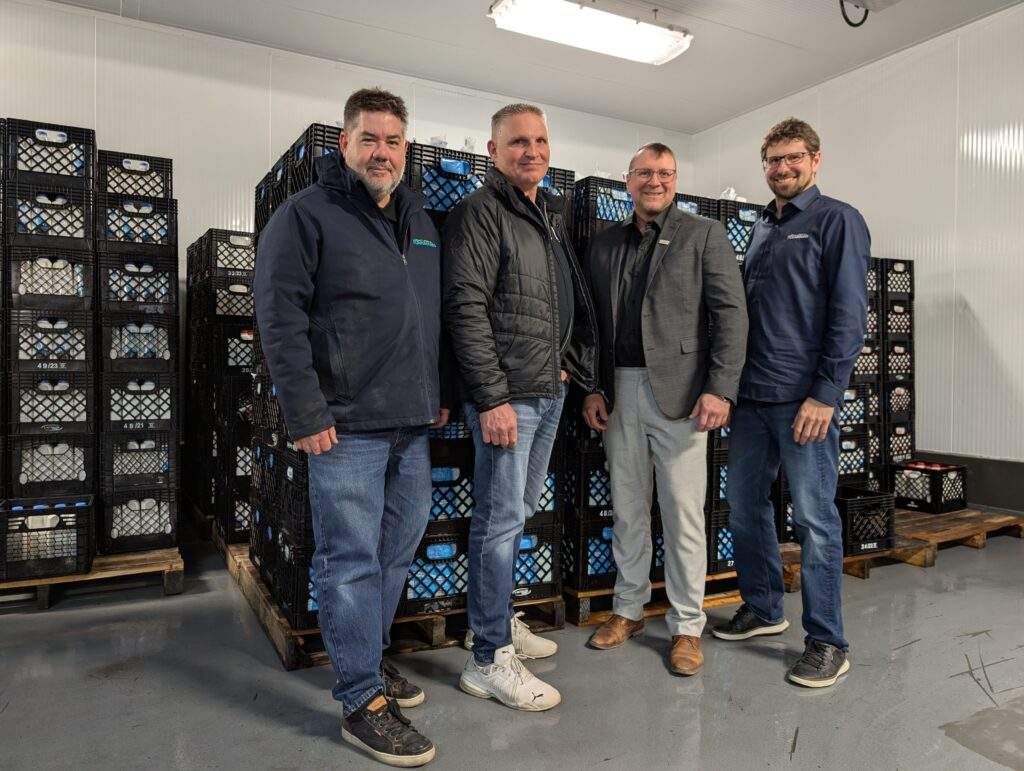
Laiterie de l’Outaouais donates 30,000 liters of milk with local partners

Tashi Farmilo
LJI Reporter

In a concerted effort to address rising food insecurity in the Outaouais region, Laiterie de
l’Outaouais, in collaboration with Moisson Outaouais and Les Producteurs de lait du Québec
(PLQ), has announced a donation of 30,000 liters of milk. The contribution is part of PLQ’s
broader milk donation program aimed at supporting Quebec communities.

This marks the first time that Laiterie de l’Outaouais has taken part in the program, a milestone
that comes amid heightened demand for basic food resources in the region. The donation will
be processed and bottled locally, reinforcing the importance of regional infrastructure in food
distribution efforts.

“We are extremely proud at the Laiterie de l’Outaouais to participate in this milk donation
program by processing and bottling this milk from our region for those in need,” said Yannick
Bouchard, CEO of Laiterie de l’Outaouais. “This program would not be possible without the
essential commitment of our regional dairy producers, and we sincerely thank them for their
participation.”

Photo: From left to right: Stéphane Jobin (Laiterie de l’Outaouais), Steve Leduc (Dairy Farmers
of Outaouais-Laurentides), David Grégoire (Moisson Outaouais), and Yannick Bouchard
(Laiterie de l’Outaouais). (TF) Photo courtesy of Laiterie de l’Outaouais

Laiterie de l’Outaouais donates 30,000 liters of milk with local partners Read More »

Buckingham and Masson-Angers Arenas Need TLC

Mélissa Gélinas LJI Reporter

For several years, the Buckingham and Masson-Angers arenas have needed renovations and new equipment. According to Daniel St-Gelais, president of the Gatineau Lièvre Minor Hockey Association, the city is having a hard time keeping its infrastructure up to date.

“They’re always waiting for something to break before replacing it, but the reality is that our facilities need to be modernized,” explained Daniel. “We don’t have to have futuristic arenas, but we need a bare minimum of renovations to make it a pleasant experience for everyone.”

According to Daniel, the Buckingham arena’s decor has remained unchanged since 1971 and is in dire need of a refresh. The ceiling also needs to be repaired, and equipment such as the scoreboard and safety net need to be replaced. “We inherited the old scoreboard from the old Robert-Guertin arena, and the entire display system is backward, making it extremely difficult for officials to manage everything.”

As for the Masson-Angers arena, it would have issues with the volunteer room, which, according to Daniel, is completely outdated. “We use this room a lot,” he explained. “Last year, the refrigerator pipe broke, and instead of repairing it, it was locked.”

“Furthermore, when visitors come, we often receive comments saying they would have preferred the tournament to be held in facilities like Slush Puppie or Branchaud-Brière.” Daniel estimates that the city will have to spend between $60,000 and $70,000 to get the two arenas operational. “In my opinion, that’s not much for the City of Gatineau, when we’re talking about maintaining their infrastructure, which should have been done a long time ago.”

Daniel said that he hasn’t received an official response from the city. He did, however, manage to meet with Mathieu Lacombe, Member of the National Assembly for Papineau. “I was very well received, and according to him, my requests are very legitimate […],” he emphasized. “I will also be having a meeting with Buckingham City Councillor Edmond Leclerc, as well as a second meeting next week with Masson-Angers City Councillor Mario Aubé.”

Photo: Daniel St-Gelais, president of the Gatineau La Lièvre Minor Hockey Association, during his meeting with Mathieu Lacombe, Member of the National Assembly for Papineau (May 5, 2025) (MG) Photo: Facebook page: Mathieu Lacombe, Member of the National Assembly for Papineau

Buckingham and Masson-Angers Arenas Need TLC Read More »

Carbon Tax: Significant Gasoline Price Differences Between Gatineau and Ottawa

Mélissa Gélinas LJI reporter

Prime Minister Mark Carney abolished the carbon tax in Canada on April 1, 2025, except for Quebec. Having a different pricing system from the rest of Canada (cap-and-trade system for greenhouse gas emissions allowances) since 2013, the Outaouais region, like the rest of Quebec, will have to continue imposing this tax on consumers. As a result, this situation leads to a considerable price gap for gasoline between border regions, as is the case with Gatineau and Ottawa.

“Never in living memory have we seen such significant gaps,” said Carol Montreuil, Vice-President of the Canadian Fuels Association. “These differences can reach up to 30 cents per litre […].”

According to Montreuil, this is an untenable situation for gasoline retailers, who must face this kind of competition in a difficult economic period. “Consumers are right to shop around for better prices,” she said. “This doesn’t mean that people aren’t concerned about the environment, but right now, they have other priorities with the rising cost of living. The government should implement a gas rebate system if it wants to provide some relief and make retailers more competitive.”

Daniel Breton, President and CEO of Electric Mobility Canada stated, “The problem is that people don’t know where the money from this tax is going. People need to be better informed and have better access to information because, right now, there’s a huge lack of transparency.”

The money generated by the carbon tax will first be used to invest in several climate change network projects financially supported by the Quebec government. “Some of these projects are good and some are not so good,” stated Breton. “Among the main projects are the charging infrastructure file and the purchase of electric vehicles. However, by 2027, the rebate offered for the purchase of electric cars will disappear. The owner of this type of car will then have to pay a tax,” he added.

“I believe that, first and foremost, we should invest in efficient, electrified public transportation throughout Quebec,” said Breton. “Currently, public transit is underfunded.”

By 2030, the government’s goal is to reduce its petroleum product consumption by 40% compared to 2013 levels. Daniel Breton pointed out that the measures currently in place are not sufficient to achieve this rate.

However, the transition to electric car purchases appears to be accelerating. This will significantly improve the environment and public health. “According to Health Canada, the cost of road pollution is estimated at more than $10.5 billion for Canada, including $2 billion for Quebec,” Breton stated.

Nevertheless, Quebec Premier François Legault has emphasized that people will have to wait for the election results on April 28 before a decision on suspending the tax is made.

Photo: Daniel Breton, President and CEO of Electric Mobility Canada, in front of the Parliament Buildings in Ottawa (June 12, 2024) (MG) Photo: Electric Mobility Canada Facebook Page

Carbon Tax: Significant Gasoline Price Differences Between Gatineau and Ottawa Read More »

Desjardins family makes landmark $1 Million gift to Centraide Outaouais

Tashi Farmilo
LJI Reporter

In a powerful display of community commitment, Gilles Desjardins and his family have made a
record-breaking $1 million donation to Centraide Outaouais, the largest individual gift in the
organization’s 80-year history. Announced at a press conference in Gatineau, the contribution
arrives at a moment of growing need and stands as a milestone in the region’s philanthropic
tradition.

The Desjardins family—Gilles, along with his sons Jessy and Kevin—serve as co-chairs of this
year’s Centraide campaign, a role they embraced in conjunction with the 40th anniversary of
their family business, Brigil. The convergence of these milestones made the moment both
practical and profoundly personal. “Giving back is part of my story—one I inherited from my
father and now continue with my sons,” said Gilles Desjardins, founder and president of Brigil.
“This is our way, as a family, of saying thank you to a community we love deeply.”

The contribution will establish a trust fund to ensure the long-term sustainability of Centraide’s
work across the Outaouais. The organization supports 88 local agencies that tackle poverty and
social exclusion, offering essential services to vulnerable populations from Hull to the Pontiac.
Centraide’s 2025 campaign aims to raise $4.5 million. The Desjardins donation gives the effort a
major boost, both financially and symbolically, reinforcing the vital role of private residents in
community development. “This unprecedented donation arrives at a turning point,” said Cédric
Tessier, executive director of Centraide Outaouais. “It strengthens our ability to deliver real
support where it’s most needed and demonstrates an extraordinary level of commitment to
social solidarity.”

For the Desjardins sons, the experience of co-leading the campaign has been transformative.
Jessy, Brigil’s vice-president of development and design, emphasized the breadth of Centraide’s
reach: “I’ve been deeply moved by the work happening on the ground. It’s impossible not to be
impressed by how far Centraide extends across the region.” Kevin Desjardins, a community life
designer at the company, described witnessing firsthand the long-term impact of grassroots
organizations, recalling a visit to a local food-sharing initiative where former beneficiaries now
volunteer. “That kind of human return—seeing people come full circle—is incredibly powerful,”
he said.

As community organizations face growing demand and limited resources, the Desjardins
family’s leadership underscores the critical role of philanthropy in maintaining a social safety
net. Centraide Outaouais board chair Sébastien Fugère praised the family’s involvement, calling
it a defining moment for the campaign and a reflection of “a shared vision for a fairer, more
united society.”

For Noëlla Beausoleil, the organization’s director of philanthropic development, the donation
goes beyond numbers. “This campaign has been filled with genuine emotion and moments that ​
will stay with us forever,” she said. “The Desjardins family has set a benchmark in what it means
to give with both heart and purpose.”

“We are not just giving money—we’re investing in the future of our community,” said Gilles
Desjardins. “And there’s no better return on investment than that.”

Photo: Gilles Desjardins and his family have made a historic $1 million donation to Centraide
Outaouais, marking the largest individual gift in the organization’s history and reinforcing a
deep, ongoing commitment to community support in the region. (TF) Photo: courtesy of Brigil

Desjardins family makes landmark $1 Million gift to Centraide Outaouais Read More »

Transistor Festival 2025 set to illuminate with sound, stories, and stars

Tashi Farmilo
LJI Reporter

Transistor Festival returns for its ninth edition from April 24 to 26, offering three days of audio
storytelling, live performances, and cultural discussions. The festival opens with a red-carpet
event at the Salle Odyssée, featuring La disparition de Coyote Comeau , a theatrical audio
production by Julien Morissette and Louis-Philippe Roy. The performance delves into the life of
1950s Quebec wrestler Coyote Comeau, with a cast including Marc Beaupré, Sophie Cadieux,
Émilie Bibeau, and Samian.

“We hope people from Aylmer will see themselves in this year’s programming,” says Marysol
Foucault, Executive Director of Transistor Média. “From funny performances to powerful stories
and community moments that just feel good—whether you’re exploring the mystery of Coyote
Comeau, diving back into early 2000s nostalgia, or laughing out loud with Jo Cormier and Brick
et Brack—we want audiences to leave with images in their minds and voices in their ears. And,
because we believe in cultural accessibility, many events are offered for free.”

On Friday, the festival’s professional programming at the Centre culturel du Vieux-Aylmer
includes panels on topics such as artificial intelligence in podcasting and access to audio
archives. The evening features the launch of L’heure de grande écoute at La Basoche, a project
described as “a collective conversation in sound.” Additionally, Québec Nostalgie , hosted by
Catherine Forget, revisits early 2000s cultural moments.

Saturday’s lineup includes Enfermée , an immersive audio experience exploring the
consciousness of a coma patient; Les enfants nés du viol , a documentary giving voice to
children and mothers affected by sexual violence; Vraiment Litt , a literary podcast recording with
Marie-Christine Chartier and Geneviève Morin; Tout le monde gagne , a comedy hour with Jo
Cormier; and Un pays dans l’oreille , a live podcast by the duo Brick et Brack.
For a complete schedule and ticket information, visit the festival’s official website at
https://transistor.media/festival/programmation/ .

Photo: The ninth edition of Gatineau’s Transistor Festival offers a dynamic three-day lineup of
audio storytelling, live performances, and cultural conversations—celebrating community,
creativity, and accessibility, from April 24 to 26, 2025. (TF) Photo: courtesy of Transistor Festival

Transistor Festival 2025 set to illuminate with sound, stories, and stars Read More »

How Old Chelsea embodies the circular economy

Tashi Farmilo
LJI Reporter

The circular economy is gaining traction not just as a sustainability buzzword, but as a guiding
principle reshaping how communities function. At its core, the circular economy reimagines
production and consumption, moving away from the traditional linear model of “take, make,
dispose” to one that emphasizes reuse, repair, sharing, and regeneration. It’s an idea that
transforms waste into value, and it’s beginning to take root in real, visible ways.

In Old Chelsea, this vision is not a future ideal but a living, breathing practice. The small village,
nestled just outside Gatineau Park, has become an unassuming model of circular innovation.
Local businesses here are deeply interconnected, not just economically but logistically and
philosophically. Shops, restaurants, and accommodations operate with a shared awareness of
their environmental footprint and an active interest in minimizing it.

Take La Petite Grocerie, for example, which doubles as a boutique for regional goods and the
reception area for Les Lofts du Village, a boutique hotel steps away from the trails of the park.
Visitors can check in, buy Quebec-made soaps, wines, and gourmet treats, then settle into their
loft for a weekend of nature and community. The products are local, the suppliers often
neighbours, and the packaging minimal. Even the coffee served at the Lofts comes from Biscotti
& cie, a café and bakery whose pastries are as memorable as its local sourcing.

This kind of overlap isn’t accidental. It reflects a deliberate effort to close loops—sharing
infrastructure, supporting nearby producers, and keeping economic benefits circulating within
the region. The Chelsea Pub, one of the oldest buildings in the area, now serves cocktails
crafted with spirits from the newly established Distillerie du Square. That distillery itself is part
boutique, part educational eco-museum, offering guided tours that explain how ingredients are
sourced and reused in its small-batch operations.

Such integration is central to the circular economy, which thrives on collaboration. The benefits
are as practical as they are ecological: fewer emissions from transport, reduced waste, stronger
local supply chains, and a more resilient community. Even seasonal events like La Terrasse du
Square, a summer-long outdoor food and culture experience, rely on local vendors and shared
spaces, bringing together Korean, Mexican, and Vietnamese fare in a single, festive plaza
without the environmental cost of larger-scale operations.

The Municipality of Chelsea has embraced this direction in policy as well. It was the first in the
Outaouais region to adopt a formal Sustainable Development Action Plan, which supports
initiatives that favour reuse, energy efficiency, and low-impact tourism. These values are visible
in everyday choices: pet-friendly and mobility-accessible lodging, long-term stay packages that
encourage slower, deeper travel, and public markets that highlight artisans using reclaimed
materials.

While the circular economy is often discussed in terms of global supply chains or corporate
sustainability pledges, its most promising developments may be happening on the scale of ​
towns like Old Chelsea. There, it’s not just a theory, it’s breakfast pastries sourced from a
neighbour, a cocktail that supports a friend’s distillery, or a stay that quietly respects the land it
rests on. It’s a quiet but radical shift, where nothing is wasted and everything—goods, spaces,
relationships—is reused and reimagined.

Photo: The Chelsea Pub and its neighbouring businesses in Old Chelsea exemplify the circular
economy in action—working together to reuse resources, support local producers, and create a
sustainable, low-waste community model. (TF) Photo: Tashi Farmilo

How Old Chelsea embodies the circular economy Read More »

Gatineau Council scrambles to fund affordable housing amid surging demand

Tashi Farmilo
LJI Reporter

During a plenary committee meeting on April 8, Gatineau’s municipal leaders confronted
mounting financial gap that is threatening the city’s ability to meet its affordable housing goals
for 2025. With a shortfall nearing $10 million, council members and officials debated urgent
measures to sustain momentum on dozens of housing projects already in the pipeline.

City staff presented a detailed overview of the funding crisis, pointing to rising construction
costs, shifting provincial frameworks such as AccèsLogis and the Programme d’habitation
abordable Québec (PHAQ), and a persistent lack of predictability that complicates financial
planning. Several major projects, including the much-anticipated “Habité chez soi,” now face
unexpected shortfalls after previously anticipated provincial contributions failed to materialize.

Commenting on the situation, Eliane Dubois of the Office d’habitation de l’Outaouais stressed
that the crisis extends beyond funding formulas and bureaucratic delays. “The most critical
issue is the rapid disappearance of deeply affordable housing—the kind someone earning
minimum wage can afford,” she said. “These units can’t be rebuilt, not even with subsidies. They
only exist in the aging housing stock, and once they’re gone, people are left with no viable
alternatives.” She added that the loss of these units often triggers a cascade of instability:
“When someone loses that kind of housing, it’s not just a move—it’s a risk of immediate
homelessness, and the system has very few emergency resources to absorb that.”

Municipal councillor Daniel Champagne of the Versant district, who chairs the Comité-Choc on
housing, emphasized the urgent need for coordinated action and long-term solutions. “We must
continue working with the Comité-Choc, which brings together all the key housing players. This
model has allowed us to move social housing projects forward more rapidly and effectively,” he
said. Champagne noted that while some progress has been made, the market’s deepening
inequality remains stark. “The vacancy rate for units over $1,500 a month is 4.7%. But for
anything below $1,250, it plunges to between 0.1 and 0.3%. That’s where the crisis lives. That’s
who we’re failing if we don’t act.”

To address the shortfall, council approved a plan to redirect funds from the delayed Val-Tétreau
redevelopment project, which is now expected to begin construction no earlier than 2027. While
some officials acknowledged the strain on municipal finances, others described the situation as
a sign of how far the city has come. “This is a good problem to have,” Champagne said. “It
means we’ve done the groundwork, we have serious projects ready to go—we just need to
match that momentum with funding. The response to homelessness is affordable housing. We
have a legislative obligation to deliver, and we must act.”

Photo: Gatineau is facing a severe shortage of affordable homes, with vacancy rates for low-
cost rentals hovering near zero and growing numbers of residents unable to find housing within
their means. (TF) Photo: Tashi Farmilo

Gatineau Council scrambles to fund affordable housing amid surging demand Read More »

Four arrested after armed assault and attempted robbery on Gatineau trail

Tashi Farmilo
LJI Reporter

An attempted armed robbery along a popular urban trail in Gatineau has led to the arrest of four
individuals, highlighting growing concerns about public safety in the area. On the afternoon of
April 6, police responded to reports of an attempted robbery and assault near the Ruisseau-de-
la-Brasserie trail, close to Morin Street in the Hull sector.

According to the Gatineau Police Service, the incident occurred around 4:45 pm when a group
of four individuals approached a pedestrian and attempted to steal their bag. The victim resisted
and sustained a hand injury from a bladed weapon. The suspects fled the scene without
managing to take the bag. Responding officers quickly gathered information from witnesses and
were able to locate and arrest the suspects shortly afterward.

Police later obtained a warrant to search a nearby tent, where they reportedly recovered
evidence linked to the attack. The four suspects — Francis Arbic-Petrin, 30, Audrey Linteau-
Godin, 21, Rosy Lisa Sabourin, 28, and Brandon Vendette-Whissel, 26 — were all charged with
armed robbery, assault with a weapon, and uttering threats. Two of them face additional charges
for failing to comply with court orders.

Since January 2022, the city has recorded over 6,000 cases of assault, more than 3,000 acts of
mischief, 344 incidents of armed robbery, and seized 207 firearms, according to data published
by the City of Gatineau. The Ruisseau-de-la-Brasserie trail, a popular path for cyclists and
pedestrians, has seen occasional episodes of violence in recent years, often prompting calls for
increased surveillance and patrols.

City officials and police have pointed to broader regional dynamics, including spillovers from
gang-related violence in neighbouring Ottawa, as contributing factors in local crime rates. In
2022, the city adopted a five-year staffing plan to add 71 new police and civilian positions. The
Gatineau police also participate in provincial initiatives aimed at preventing gun violence and
improving community relations.

The investigation into the April 6 incident is ongoing, and police are encouraging anyone with
information to come forward and call police at 819-246-0222.

Photo: Four Gatineau residents were arrested following an attempted armed robbery on the
Ruisseau-de-la-Brasserie trail that left one victim injured and led to a swift police response and
court appearances. (TF) Photo: courtesy of the City of Gatineau

Four arrested after armed assault and attempted robbery on Gatineau trail Read More »

Art exhibition Les secrets du vent by Anne Yvonne Jouan opens in Aylmer

Tashi Farmilo
LJI Reporter

Anne-Yvonne Jouan’s newest exhibition, Les secrets du vent , is currently on view at the Espace
Pierre-Debain in Aylmer, offering visitors a contemplative journey through nature’s fleeting
beauty. Presented by the City of Gatineau and running from April 9 – June 1, the show features
the artist’s intricate paper and plant-based sculptures, inspired by the landscapes of Île
d’Orléans.

Jouan, a Franco-Canadian artist with a background in both law and art history, has built a
reputation for her meditative, three-dimensional works crafted from hand-cut paper, dried
vegetation, and delicate metallic pigments.

Her practice begins with the quiet act of collecting—gathering fallen petals, twigs, and leaves
from the landscape around her studio on Île d’Orléans. These fragile remnants are dried, hand-
colored with gold, silver, or subtle pigments, and arranged into luminous compositions that
evoke both the fragility and resilience of the natural world. “It’s about experiencing the world’s
constant renewal through the metamorphosis of matter,” she explains.

The exhibition includes works from her acclaimed series Les Jardins de papier , a set of four
expansive dioramas that trace the shifting light across a single day. From the shimmering whites
of early morning to the shadowy blues of nightfall, each piece captures a moment suspended in
time. More than just visual meditations, the works speak to a reverence for overlooked materials
and the quiet drama of seasonal change. “Using fragile plants and recycled paper, I try to
transport viewers into a space that reconnects them with what is essential,” she said. “A place
that speaks of time, of disappearance, and of rebirth.”

Originally trained as an auctioneer in France, Jouan moved to Canada in 2006 and has since
earned recognition from the Conseil des arts et des lettres du Québec. Her work has been
shown in museums and public galleries across Canada, including the Musée Marius-Barbeau,
the Centre national d’exposition, and the Musée des métiers d’art du Québec. In May, she will
present a large-scale mural piece titled Le Soleil dans l’écume at the Grand Palais in Paris as
part of the Salon Révélations. In September, a new project titled Un chant dans les arbres ,
reflecting on the theme of forest fires, will be unveiled following a residency in Lebel-sur-
Quévillon.

The exhibition is on view at Espace Pierre-Debain, located in the Centre culturel du Vieux-
Aylmer at 120 rue Principale. Admission is free. More information about the artist and her work
can be found at www.ayjouan.com .

“The wind carries with it not only fragments of the seasons, but also the memory of things that
pass and return,” Jouan says. “Through these fragments, I try to show that even what seems to
disappear continues to breathe in another form.”​

Photo: Through delicate, time-intensive compositions, Les secrets du vent invites viewers to
reflect on the quiet beauty of transformation, impermanence, and the cycles of the natural world.
(TF) Photo: courtesy of Anne-Yvonne Jouan

Art exhibition Les secrets du vent by Anne Yvonne Jouan opens in Aylmer Read More »

Quebec’s Family Court reform raises alarm among women’s shelters

Tashi Farmilo
LJI Reporter

As Quebec prepares to adopt Bill 91, which would create a Unified Family Court (Tribunal unifié
de la famille, or TUF), women’s advocacy organizations are warning that the reform may do
more harm than good for survivors of domestic violence.

The Fédération des maisons d’hébergement pour femmes (FMHF), a provincial federation
representing women’s shelters, has voiced serious concerns about the bill’s scope and its
implications for the civil legal protections of women and children facing violence. In a formal
brief submitted to the Commission des institutions, the FMHF warns that the proposed reform
contains significant blind spots and risks making an already complex legal system more
dangerous for those it aims to protect.

One of the key criticisms is the narrow application of the bill. Bill 91 only applies to civil and
parental unions, explicitly excluding married couples and common-law partners with children
born before June 30, 2025. This exclusion, the FMHF argues, leaves out most families in
Quebec and fails to reflect the diversity and complexity of modern family structures.

Particularly contentious is the requirement for mediation in custody and family law matters, even
in cases involving domestic violence. Although the bill allows for exemptions, it requires victims
to submit a sworn statement to qualify—an added burden that, according to the FMHF, may
deter some women from seeking help and could further endanger others by reinforcing the
power dynamics of abuse.

L’Autre Chez-Soi, a longstanding shelter in Aylmer serving women and children affected by
domestic violence, supports the FMHF’s position. The organization emphasized the need for
survivor-centred, trauma-informed approaches. In addition to emergency housing, the shelter
offers 24/7 crisis intervention, one-on-one and group support, child-specific services, legal and
housing accompaniment, and a broad range of educational and outreach programs in local
schools and workplaces.

Staff at L’Autre Chez-Soi referred questions about Bill 91’s impact to the FMHF’s official
submission, noting that the federation’s analysis accurately reflects their concerns. These
include the lack of specialized intake services in the proposed court system, the absence of
mandatory training for judges and mediators, and insufficient investment in legal aid and
personalized support services.

Unlike family court models adopted in other provinces, Quebec’s TUF would fall under the
jurisdiction of the Quebec Court rather than the Superior Court. This distinction has prompted
concerns about whether judges will be adequately equipped to handle complex cases involving
coercive control and chronic abuse without targeted training and institutional support.​

In response, the FMHF has made several recommendations: postponing the law’s
implementation to allow for proper professional training, removing the requirement for sworn
declarations from survivors, formally defining terms like domestic violence and coercive control
in the legislation, and ensuring that specialized support services are built into the court system.

Photo: Quebec’s proposed Unified Family Court reform, Bill 91, is drawing strong criticism from
women’s shelters who warn it could endanger survivors of domestic violence by excluding key
family types, imposing unsafe mediation requirements, and lacking critical support services.
(TF) Photo: courtesy of L’Autre Chez-Soi

Quebec’s Family Court reform raises alarm among women’s shelters Read More »

Autism Awareness Month brings inclusive initiatives, local engagement, communitysupport


Tashi Farmilo
LJI Reporter

April is Autism Awareness Month, and communities across the region are marking the occasion
with events, educational initiatives, and advocacy efforts aimed at promoting inclusion and
understanding of autism.

Local organization Trait d’Union Outaouais (TUOI) is at the heart of these efforts, offering
programs and events that bring together families, educators, and community members. On
Saturday, April 26, TUOI will host the annual Walk for Autism at 2 Millar Street in Gatineau, from
10 – 2 pm. The walk raises funds for TUOI’s summer day camps, which provide structured,
inclusive programming for autistic children and teens. More details are available at
traitdunionoutaouais.com.

Schools across the region also participated in meaningful ways. On April 2, World Autism
Awareness Day, students at Greater Gatineau Elementary School wore red in support of Autism
Acceptance and Appreciation Day. Meanwhile, staff at École Polyvalente de l’Érablière in
Gatineau wore blue to show their solidarity and help raise awareness.

This contrast in colors reflects a broader conversation within autism advocacy. Blue has long
been associated with autism awareness through campaigns like “Light It Up Blue,” led by
international organizations. However, many self-advocates and newer movements now embrace
red or rainbow colors through the #RedInstead campaign, which emphasizes acceptance,
diversity, and neurodiversity-led perspectives. Both gestures reflect a shared commitment to
visibility and support.

The Western Québec School Board has also launched its Autism Month Bingo, an interactive
activity that encourages students to explore autism through daily engagement—reading books
by autistic authors, watching videos on neurodiversity, and using tools created by autistic
individuals. The bingo card is accessible at coeasd.lbpsb.qc.ca/slideshow and is being used in
classrooms throughout the month.

While children and youth are central to many events, TUOI also offers services for autistic
adults, including social skills development, workshops, and employment readiness programs.
These initiatives support long-term inclusion and independence in the community.
TUOI works in partnership with the Fédération québécoise de l’autisme (FQA), which
coordinates province-wide campaigns each April. The FQA’s theme, “Faisons briller l’autisme
dans toute sa diversité,” encourages a move away from one-size-fits-all representations and
instead promotes a celebration of autism in all its forms.

To learn more or to get involved, visit traitdunionoutaouais.com or autisme.qc.ca .​

Photo: As part of Autism Awareness Month, local schools and organizations hosted events to
promote inclusion and understanding, with staff at École Polyvalente de l’Érablière in Gatineau
wearing blue to show their solidarity and help raise awareness. (TF) Photo courtesy of the École
Polyvalente de l’Érablière Facebook page

Autism Awareness Month brings inclusive initiatives, local engagement, communitysupport Read More »

Tree canopy in Gatineau gets $2.7M federal investment to help fight climate change


Tashi Farmilo
LJI Reporter

Gatineau’s effort to grow its urban tree canopy is receiving a significant boost from the federal
government, with $2.7 million in new funding announced under Canada’s 2 Billion Trees
program. The investment will support the planting of 80,000 new trees across all city boroughs
by 2031, helping to cool urban neighbourhoods, capture carbon, and improve the health and
livability of public spaces.

The trees, to be planted in parks, boulevards, and public lands, are expected to increase
Gatineau’s urban forest cover by 30%. Officials say the project is not just about beautification; it
is central to how the city is preparing for the impacts of climate change, from intensifying
heatwaves to declining air quality.

“This is about building a city that’s more resilient, more sustainable, and more pleasant to live
in,” said Gatineau Mayor Maude Marquis-Bissonnette. “With this support, we’re accelerating our
Urban Forestry Plan and turning climate commitments into concrete actions on the ground.”

The Gatineau project is one of four tree-planting initiatives funded across Quebec through this
latest round of federal support. Saint-Jean-sur-Richelieu will receive $2 million to plant 70,000
trees and boost its own urban canopy, while rural initiatives include a large-scale reforestation
project by Les Fermes Harpur in western Quebec and the creation of an Indigenous-run nursery
in Mashteuiatsh, which will eventually produce over 10 million seedlings annually for boreal
reforestation.

For Gatineau, the benefits of the tree-planting initiative are both immediate and long-term. In
addition to mitigating climate impacts and supporting biodiversity, the project will create five new
jobs in the region and lead to long-term maintenance contracts to care for the city’s growing
urban forest.

Federal officials presenting the initiative in Gatineau emphasized its role in a broader national
strategy. “Trees play a vital role in our lives—they clean the air, provide habitat, make cities
more livable, and help us adapt to a changing climate,” said Jonathan Wilkinson, Minister of
Energy and Natural Resources. “This is about planting the right tree in the right place at the right
time—and doing it together with local communities.”

The 2 Billion Trees program, launched in 2021, aims to have two billion trees planted across
Canada by 2031 as part of the country’s nature-based climate solutions. As of late 2024, the
government had secured agreements for the planting of more than 716 million trees.

“Thanks to this federal investment, Gatineau is taking a decisive step toward a greener,
healthier future,” said Marquis-Bissonnette. “Planting 80,000 trees is more than an
environmental gesture; it’s a commitment to our citizens, to their well-being, and to the
generations who will live here after us.”​

Photo: The federal government is investing $2.7 million to help Gatineau plant 80,000 trees by
2031, expanding the city’s urban canopy by 30% and advancing its climate resilience and
sustainability goals. (TF) Photo: Courtesy of the City of Gatineau

Tree canopy in Gatineau gets $2.7M federal investment to help fight climate change Read More »

MRC des Collines charts course toward a sustainable and connected future


Tashi Farmilo
LJI Reporter

In an ambitious move to redefine regional sustainability, the MRC des Collines-de-l’Outaouais
unveiled its 2024 annual report, highlighting efforts in transportation, culture, environmental
stewardship, economic development, and public safety.

Central to the MRC’s vision is the strategic merger of Transcollines, the Régie intermunicipale
de transport des Collines, into its governance structure, setting a new course for sustainable
mobility across the Outaouais. This integration is expected to significantly streamline transit
services, making them more accessible and environmentally friendly.

Meanwhile, the MRC has revitalized its cultural strategy, announcing an expansive new policy in
October 2024 aimed at embedding culture deeply into regional growth. With objectives ranging
from bolstering support for local artists to preserving the region’s vibrant heritage, the plan
positions culture not only as an economic driver, but also as a fundamental pillar of community
identity.

Addressing environmental challenges, the MRC launched the development of its
comprehensive Climate Plan, tackling urgent concerns stemming from climate change.
Concurrently, the adoption of the Plan de gestion des matières résiduelles 2024-2031 marked a
decisive step toward achieving zero waste, featuring innovative initiatives to enhance recycling
efforts and reduce environmental impacts.

Local entrepreneurship received a notable boost through two newly established funding
programs. These initiatives, including the Fonds de subvention aux entreprises and the Fonds
d’experts-conseils, are designed to nurture regional businesses by providing essential financial
assistance and expert guidance, thus reinforcing the area’s economic fabric.

The MRC’s commitment to public safety was also underscored by a reorganization of its Service
de la sécurité publique. This strategic reshuffle aims to optimize resource allocation and foster
greater cooperation among safety personnel, enhancing both administrative effectiveness and
frontline responsiveness.

“The success and progress we achieved this year reflect the extraordinary teamwork and
dedication from across our community,” said Marc Carrière, prefect of the MRC des Collines-de-
l’Outaouais. “Together, we’re not just building a better today but laying the foundation for a
sustainable, thriving future.”

For more information, consult the full report at https://heyzine.com/flip-
book/1d93d4e300.html#page/1

Photo: The MRC des Collines-de-l’Outaouais’ 2024 annual report showcases significant
advancements in sustainable mobility, cultural enrichment, environmental responsibility,

MRC des Collines charts course toward a sustainable and connected future Read More »

Introducing the Argenteuil – La Petite-Nation Candidates for the upcoming federal election

Sophie Demers

LJI Reporter

Canadians across the country will cast their vote in the next federal election on April 28th. The following is an introduction of the candidates from all parties running in the Argenteuil – La Petite-Nation electoral district:

Liberal Party of Canada (LPC): Stéphane Lauzon
• Stéphane Lauzon worked for Canadian International Paper before being certified to teach vocational training. In 2009, he became a Gatineau city councillor and owned and managed a construction company. Lauzon has been the Member of Parliament for Argenteuil – La Petite-Nation since 2015 and has worked as Parliamentary Secretary to the Minister of Citizens’ Services, the Minister of Rural Economic Development, the Minister of Seniors, the Minister of Veterans Affairs and Associate Minister of National Defence. Lauzon has also held the position of Parliamentary Secretary for Sport and Persons with Disabilities.

Conservative Party of Canada (CPC): Martin Charron
• Martin Charron is a former interim mayor and municipal councillor. He states that he has been an entrepreneur for many years and has built and managed businesses. He served as president of the Family Assistance Committee for seven years and helped organize their annual food drive. Charron was also the former treasurer of the Civic Action League and has experience drafting policies for Quebec City.


Bloc Québécois (BQ): Martin Héroux
• Martin Héroux is an actor and comedian who currently lives in Sainte-Anne-des-Lacs, which used to be a part of the Argenteuil – La Petite-Nation electoral district. He has appeared in children’s shows on Radio-Canada and Télé-Québec. Throughout his career, he has worked as an actor, host, stage director, radio station general manager, painter and teacher. He has put his acting career on pause to pursue politics.

New Democratic Party (NDP): Michel Welt
• Michel Welt was born in France and immigrated to Canada when he was 14 and has been raising his children in Argenteuil – La Petite-Nation for 20 years. He is an obstetrician and gynaecologist working in Montreal and Haute-Mauricie. Welt has also worked in Abitibi. He has degrees from the University of Montreal and McGill University. Welt was also the NDP candidate in the previous federal election.

Green Party of Canada (GPC): Bertha Fuchsman-Small
• Bertha Fuchsman-Small is a retired family physician who worked with the James Bay Cree, as well as in Cote-des-neiges and Montreal. She has also worked in the Congo with Médecins sans Frontières. She is a volunteer at Grenville Elementary school and at Arks Harvest in Hawkesbury, a food sharing community organization. Fuchsman-Small is also an active member of Montreal Raging Grannies, a social justice organization.

People’s Party of Canada (PPC): Lindsey Therrien
• Lindsey Therrien is a mother and works in customer service and support. She is a part-time university student studying accounting and finance with the goal of developing her expertise in financial management. Therrien is the mother of four children.

For more information on the upcoming federal election visit the Elections Canada website.

Introducing the Argenteuil – La Petite-Nation Candidates for the upcoming federal election Read More »

Introducing the Pontiac-Kitigan Zibi candidates for the upcoming federal election

Sophie Demers

LJI Reporter

Canadians across the country will cast their vote in the next federal election on April 28th. The following is an introduction of the candidates from all parties running in the Pontiac-Kitigan Zibi electoral district:

Liberal Party of Canada (LPC): Sophie Chatel
• Elected in 2021, Chatel is the incumbent Member of Parliament for the Pontiac-Kitigan Zibi riding. She was previously a public servant and has a law degree as well as a master’s degree in taxation. She is the former head of the Tax Treaty Unit at the Organization for Economic Co-operation and Development (OECD). Chatel has lived in the area since 2002.

Conservative Party of Canada (CPC): Brian Nolan
• Nolan is currently a Senior Program Officer for the Canadian Border Services Agency and has 25 years’ experience in public service work in various government departments. He has a computer programming degree and has been an entrepreneur running an IT consulting company and previously co-owning a food store in Ottawa. The candidate volunteered with Des Collines Minor Hockey, having held the role of President and Vice-President.

Bloc Québécois (BQ): As of publication, the candidate is yet to be announced. Candidates have until April 7 to announce their candidacy.

New Democratic Party (NDP): Gilbert Whiteduck
• Whiteduck was born and raised in Pontiac Kitigan-Zibi. He has served on the band council for Kitigan Zibi Anishinabeg for 20 years, including seven years as Chief. The candidate has worked for over 30 years in education. Whiteduck has four university degrees. He is known as a strong advocate for his community. He also served as Senior Education Advisor with the First Nations Education Council for two years.

Green Party of Canada (GPC): As of publication, the candidate is yet to be announced. Candidates have until April 7 to announce their candidacy.

People’s Party of Canada (PPC): Todd Hoffman
• Hoffman is a former member of the Canadian Armed Forces. Later, he became an entrepreneur, running a construction company and a microbrewery before taking his current position as a high school teacher. Hoffman was involved with the Pontiac Chamber of Commerce for many years. He has served as president and is currently vice-president of the organization.

For more information on electoral districts and how to vote, visit the Elections Canada website.

Introducing the Pontiac-Kitigan Zibi candidates for the upcoming federal election Read More »

Riot and Security Issues at Hull Prison

Mélissa Gélinas LJI Reporter

During lunch break on March 20, more than a dozen prisoners at the Hull detention centre decided to demonstrate their delinquency by throwing and destroying objects in the lunch area.

An emergency team intervened to restore discipline and order. “There were no injuries, thanks to the officers’ rapid response,” said Mathieu Lavoie, president of the Quebec Union of Peace Officers in Correctional Services. “This was an area where behavior had been problematic for several days.”

The increasing rate of violence in prisons is a reality that is becoming increasingly problematic and, unfortunately, few resources are available to alleviate the situation. “The Superior Court has taken away a lot of power from correctional officers,” said Lavoie. “This prevents us from managing a very violent prison population.”

Furthermore, security on the premises is also suboptimal. Several drones transport weapons, drugs, and cell phones to inmates. “This is the reality in prisons today,” Lavoie explained. “We’re calling for intervention tools and taking no action has the effect of encouraging and increasing the trafficking of illegal items and drugs. Although officers are responsible for screening prisoners using X-ray machines, drone activity has increased significantly in recent years.

Given the facility’s dilapidated condition, inmates regularly manage to break their cell windows to retrieve their packages. “We’ve resorted to appealing to the Commission des normes, de l’équité, de la santé et de la sécurité au travail (CNESST) and the courts to secure the windows, since the government isn’t taking action.” According to Lavoie, this problem isn’t just affecting Gatineau, but all detention facilities across Quebec.

In addition to this issue, the Hull prison is an outdated facility that needs major investment, particularly in the old section. “There are still barred doors that are no longer compliant,” explained Mathieu. “Construction of these stopped over 40 years ago.” Solid (closed) doors need to be installed. This prevents objects from being thrown and/or the lock from being tampered with.

On the other hand, according to information gathered from the Quebec Treasury Board Secretariat, the infrastructure will need to be redeveloped and expanded to meet the requirements and the current lack of prison capacity.

Photo: Quebec Correctional Services Badge (December 12, 2024) (MG) Photo: Correctionnellement Facebook Page

Riot and Security Issues at Hull Prison Read More »

Gatineau to fund 24 community gardens this summer


Tashi Farmilo
LJI Reporter

The City of Gatineau will provide $79,200 in funding this summer to support 24 community and
collective gardens across its territory, continuing a municipal commitment that spans five
decades. The initiative supports local food production, promotes sustainability, and strengthens
community ties through accessible urban agriculture.

In Aylmer, several well-established gardens are poised to benefit, including Jardin collectif
North, Jardin communautaire Deschênes, and Jardin aux saveurs du monde. Each is
coordinated by a local non-profit, such as Enviro Éduc-Action, Groupe communautaire
Deschênes, and the Regroupement des cuisines collectives de Gatineau.

Jardin collectif North stands out as the city’s only fully collective garden, operating without
individual plots. Instead, members share the responsibilities of planting, maintaining, and
harvesting as a community. The garden is working to raise awareness of its model among
residents of Aylmer, particularly targeting populations that may not have easy access to
gardening space.

Over the past two years, the garden has partnered with the CISSS de l’Outaouais to make the
space more accessible to seniors living at the nearby CHSLD d’Aylmer. A gate was installed last
summer to connect the two sites, and with this year’s funding, plans are to construct a paved
gazebo to better accommodate residents with reduced mobility during the 2025 growing season.

In addition to expanding accessibility, the garden is also focused on increasing membership
among low-income households and newly arrived immigrants. The aim is to foster a space
where diverse agricultural knowledge can be shared and where food-growing skills contribute to
both individual well-being and collective resilience.

Municipal funding also supports a range of operational needs at Jardin collectif North, from
purchasing organic seedlings and offering workshops, to maintaining critical infrastructure like
greenhouses, sheds, and irrigation systems. The garden’s sustainability efforts include a pedal-
powered compost initiative, Pédale au Compost, which collects food waste from local
businesses to produce compost for use on-site.

Elsewhere in Aylmer, Jardin à l’assiette—a project run by the Regroupement des cuisines
collectives de Gatineau—has already been approved for an additional $15,000 in support. The
funds will go toward constructing raised garden beds aimed at improving access to fresh
produce and offering hands-on food education.

Beyond Aylmer, the city has announced the creation of two new gardens in Hull: Jardin collectif
du Shamal and Jardin communautaire Laurent-Groulx. These additions will bring the total
number of supported gardens this season to 24 and will be reflected in an updated municipal ​
map of community and collective gardens later this year.

Gatineau’s Community and Collective Garden Support Framework offers annual assistance for
operational costs, infrastructure renewal, and program development. While demand for garden
plots continues to grow—especially in urban sectors like Aylmer—these green spaces
increasingly serve not just as sites of food production but also as places for education,
connection, and community-building.

Photo: Gatineau is investing over $79,000 to support 24 community gardens this summer, with a
strong focus on accessibility, inclusion, and food sustainability in the Aylmer sector. (TF) Photo:
courtesy of Jardin collectif North

Gatineau to fund 24 community gardens this summer Read More »

A strategic partnership to propel manufacturing innovation in Gatineau


Tashi Farmilo
LJI Reporter

A newly announced partnership between Investissement et Développement Gatineau (ID
Gatineau) and the Association for the Development of Research and Innovation of Quebec
(ADRIQ) is set to accelerate innovation within the region’s manufacturing sector. The initiative
will provide 10 selected companies with specialized support from ADRIQ’s accredited
consultants, aiming to enhance their technological transformation and competitiveness.

Under this agreement, each company will receive 30 hours of strategic consulting tailored to its
growth and innovation needs. With ID Gatineau covering 75% of the cost, businesses will only
be required to pay a fraction of the total investment. This financial backing underscores the city’s
commitment to fostering a dynamic and innovative business environment.

For ADRIQ, this collaboration aligns seamlessly with its core mission. “This agreement fully
supports ADRIQ’s mission to guide Quebec companies along their innovation journey,” said
Marilyn Rémillard, Director of Communications and Events at ADRIQ. “By joining forces with ID
Gatineau, we want to offer Outaouais manufacturing businesses privileged access to experts,
tools, and strategic resources to accelerate their technological transformation and
competitiveness.”

Yet, the road to innovation is not without its challenges. Many small and medium-sized
enterprises (SMEs) struggle with the adoption of new technologies, access to financing, and
internal change management. “One of the major challenges we anticipate for selected
companies is the effective adoption of new technologies and the integration of innovation into
their business processes,” Rémillard added. “Often, SMEs face obstacles such as limited
internal resources, difficulty securing funding, or resistance to change within their teams.

ADRIQ’s expert consultants will provide personalized diagnostics and recommendations
tailored to their realities. Our approach is pragmatic: we want each company to quickly
implement concrete solutions and achieve measurable returns on investment.”
The selected companies must meet ID Gatineau’s eligibility criteria, including being located
within the Gatineau region and demonstrating the potential to benefit from this high-level
support.

“This agreement represents a unique opportunity for Gatineau manufacturing companies to
access strategic resources and high-caliber support,” said Sylvie Charrette, General Manager of
ID Gatineau. “Together with ADRIQ, we aim to create an environment conducive to innovation,
allowing our companies to prosper and stand out in competitive markets.”

With Quebec’s business landscape becoming increasingly competitive, public-private
collaborations like this one may prove essential to ensuring that local manufacturers not only
survive but thrive in an evolving global economy.​

Photo: This new partnership between ID Gatineau and ADRIQ, led by Sylvie Charrette, General
Manager of ID Gatineau, and Frédéric Alberro, CEO of ADRIQ, aims to accelerate
manufacturing innovation in Gatineau by providing strategic resources and expert support to
selected companies. (TF) Photo: Courtesy of ID Gatineau and ADRIQ

A strategic partnership to propel manufacturing innovation in Gatineau Read More »

10th edition of the Prix de la Relève Agricole


Tashi Farmilo
LJI Reporter

Quebec’s Ministry of Agriculture, Fisheries and Food has launched the 10th edition of the Prix
de la relève agricole, an annual award recognizing outstanding young agricultural
entrepreneurs. The initiative aims to highlight innovation, sustainability, and leadership among
the province’s next generation of farmers, offering financial support to the winners.

The competition is open to agricultural entrepreneurs under the age of 40 who own a majority
stake – at least 51 per cent – in a registered farming business that has been operational for
three to ten years. Eligible applicants must have generated at least $50,000 in gross revenue in
the previous year. The award is available to entrepreneurs from all regions of Quebec.

Winners will receive a $7,500 grant, while finalists will be awarded $3,500. The selection
process is overseen by a jury of experts from the Ministry of Agriculture, business
representatives, and industry associations, evaluating applicants based on their business vision,
financial performance, community involvement, and sustainability efforts.

Applications must be submitted by May 20, including a completed nomination form, a letter of
recommendation from a regional agricultural advisor, and full financial statements for the past
two years. Candidates are required to work with their regional agricultural succession and
establishment advisor, who will assist in verifying eligibility and providing support throughout the
application process.

Last year’s winners, Maude Péloquin, Renaud Péloquin, and Michaël Lecours, owners of Ferme
de Ste-Victoire Inc. in Montérégie, were recognized for their commitment to sustainable farming
and their efforts to promote innovative agricultural practices within the industry. The finalists,
Emmanuelle Vincent and Simon Laflamme, who operate a dairy farm in Chaudière-Appalaches,
were commended for their successful farm transfer model, which serves as an example for
young farmers seeking to enter the industry.

The Prix de la relève agricole will be awarded during the official ceremony of the Ordre national
du mérite agricole in the fall of 2025. More information, including application details and
eligibility criteria, can be found on the official Quebec government website:
https://www.quebec.ca/gouvernement/reconnaissance-prix/agriculture/prix-releve-agricole. For
inquiries, applicants can contact the Ministry of Agriculture at Prix.Releve@mapaq.gouv.qc.ca.

Photo: Quebec’s 10th edition of the Prix de la relève agricole is now open for applications,
offering financial recognition to young agricultural entrepreneurs across the province, including
Outaouais, with a $7,500 grant for the winner and $3,500 for the finalist. Among last year’s
honourees were winners Renaud Péloquin, Maude Péloquin, and Michaël Lecours, owners of
Ferme de Ste-Victoire Inc. in Montérégie. (TF) Photo: Éric Labonté, MAPAQ

10th edition of the Prix de la Relève Agricole Read More »

Quebec emergency rooms facing high occupancy rates amid winter surge


Tashi Farmilo
LJI Reporter

Santé Québec held a virtual press conference on February 21 to provide an update on the state
of emergency rooms across the province. Robin-Marie Coleman, Associate Vice-President for
Access Coordination and Care Pathways at Santé Québec, and Dr. Mélanie Labrosse, Pediatric
Emergency Physician at CHU Sainte-Justine, addressed key concerns regarding hospital
overcrowding and provided guidance on managing non-urgent medical cases.

Coleman reported that Quebec’s emergency rooms continue to experience high occupancy
rates, with an average ER bed occupancy of 123% across the province. This figure rises
significantly in the Montreal area, where rates have climbed from 122% to 144% between
February 4 and February 17. The increasing number of patients, coupled with the impact of
seasonal illnesses and two recent winter storms, has placed additional pressure on healthcare
facilities.

The average length of stay in emergency departments has worsened by approximately 96
minutes compared to last year. This trend is attributed to multiple factors, including an aging
population, an overall increase in ER visits, and the resulting strain on inpatient hospital units.
Dr. Labrosse highlighted a notable rise in pediatric emergency visits, which have reached 487
visits per day—100 more than the same period last year. Most of these cases are related to
respiratory infections and gastroenteritis, conditions that typically do not require emergency
care. However, she noted a positive development: a decline in newborn hospitalizations due to
respiratory syncytial virus (RSV), likely due to the implementation of new vaccination programs.

To help reduce unnecessary ER visits, Dr. Labrosse advised parents to consult alternative
healthcare options such as family doctors, pharmacists, and the provincial health hotline (811).
She also emphasized key strategies for at-home care, including proper fever management with
alternating doses of Tylenol and Advil, and hydration techniques for children experiencing
vomiting.

As spring break approaches, Santé Québec is urging the public to exercise caution during
winter activities. According to Dr. Labrosse, emergency rooms typically see an increase in
injuries related to skiing, snowboarding, sledding, and other outdoor sports during this period.
She particularly warned against the dangers of children digging snow tunnels, citing a recent
tragic incident in which a teenager lost their life due to asphyxiation after a snow collapse.
To minimize the risk of injuries, parents are advised to ensure children wear appropriate
protective gear, including helmets for winter sports. Families traveling during the break should
consult travel clinics for necessary vaccinations and preventative health measures, particularly
for destinations with risks such as malaria.​

Despite current pressures, Coleman indicated that emergency room activity is expected to
plateau rather than escalate further. Public awareness and responsible healthcare-seeking
behaviours remain crucial to ensuring efficient emergency services for those in urgent need.
Santé Québec expressed gratitude to healthcare workers for their dedication during this
challenging period and reaffirmed their commitment to improving access to care across the
province.

Photo: Quebec’s emergency rooms are experiencing high occupancy rates, with some reaching
up to 144%, driven by seasonal illnesses, winter storms, and increased patient visits. (TF) Photo
courtesy of CISSS

Quebec emergency rooms facing high occupancy rates amid winter surge Read More »

Public consultation on Outaouais forest management plans


Tashi Farmilo
LJI Reporter

The Ministère des Ressources naturelles et des Forêts (MRNF) is inviting residents of the
Outaouais to participate in a public consultation regarding special management plans aimed at
recovering forests affected by the spruce budworm. The consultation, running from now until
March 17, also includes proposed modifications to an existing integrated operational forest
management plan (PAFIO) that governs activity on public lands.

The plans under review outline potential intervention zones where tree harvesting operations
are scheduled to mitigate the effects of the spruce budworm outbreak. Additionally, they detail
proposed construction and improvements to roads and other forestry infrastructure across
several development units: 071-51, 071-52, 073-51, 073-52, and 074-51. The PAFIO plan under
discussion further specifies areas where harvesting and roadwork, including construction and
maintenance of multi-use roads, are expected to occur in unit 071-52.

The public is encouraged to review these plans and submit feedback through the province’s
consultation website, Québec.ca/consultations-foret-outaouais, before the March 17 deadline at
11:59 pm. The process is intended to gather public input, though it does not extend to re-
evaluating land allocations or altering previously granted rights on public land.

To facilitate participation, the MRNF will hold a virtual information session in collaboration with
the Pontiac Regional County Municipality (MRC). Scheduled for February 27, 2025, from 12:30 –
1:30 pm, the session will provide an overview of the intervention plans and outline how
residents can submit comments. A question-and-answer period will conclude the event.
Interested participants must register by noon on February 26 at www.trgirto.ca/en/. Registered
attendees will receive instructions and an access link via email.

For additional information or to schedule an appointment, members of the public can contact the
Outaouais Forest Management Directorate during business hours, Monday to Friday from 8:30
am to noon and from 1 – 4:30 pm, by calling 819-246-4827, extension 701449, or by emailing
consultationpafi-outaouais@mrnf.gouv.qc.ca.

The consultation period provides an opportunity for the community to weigh in on forestry
management strategies in the region, as authorities work to mitigate the impact of the spruce
budworm while maintaining sustainable use of public forest resources.

Photo: Spruce budworm recovery efforts drive public consultation on forest management plans
in Outaouais, inviting community input on tree harvesting and infrastructure improvements. (TF)
Photo courtesy of Natural Resources Canada

Public consultation on Outaouais forest management plans Read More »

Forging the future federal investment sparks growth in Outaouais


Tashi Farmilo
LJI Reporter

The Gatineau Chamber of Commerce and Soudure Marc Marine are set to benefit from a major
federal investment aimed at strengthening the Outaouais economy. The two organizations will
receive a combined $2.32 million from Canada Economic Development for Quebec Regions
(DEC), a move designed to promote business growth, innovation, and market diversification.

At a press conference on February 17, attended by government officials and business leaders,
Minister of Employment and Workforce Development Steven MacKinnon, announced the
funding as part of a broader effort to support regional economic development. Soudure Marc
Marine, a company specializing in metal structures and marine repairs, will receive $1.75 million
to expand its facilities and invest in state-of-the-art equipment. The Gatineau Chamber of
Commerce will receive $570,000 to support Export Outaouais, an initiative that helps
businesses explore new export markets.

“Supporting the growth and innovation of our local businesses is essential to ensuring the
economic prosperity of the Outaouais,” MacKinnon said. “With these investments, we are
enabling Soudure Marc Marine to modernize its facilities and the Gatineau Chamber of
Commerce to continue supporting businesses in new markets. This support will not only
strengthen the competitiveness of the Outaouais but also create quality jobs and boost our local
economy.”

The announcement follows an additional $1.08 million investment in Export Outaouais, provided
jointly by DEC and the Quebec Ministry of Economy, Innovation, and Energy (MEIE). Of that
amount, $570,000 comes from DEC to continue supporting regional businesses in diversifying
their export markets, while $510,000 from MEIE will be used to promote international business
development and provide companies with export-oriented tools and guidance.

For Soudure Marc Marine, the funding will help drive a significant expansion project. The
company has been in continuous growth for 37 years and is now investing in a new building and
automation technology, bringing the total cost of the project to $10 million. “We are a company
in constant expansion,” said Marc Lauzon of Soudure Marc Marine. “To better meet the needs of
our vast clientele in the Capitale-Nationale region, we have chosen to invest in a new building
and the automation of our operations with cutting-edge technology. Thanks to financial support
from various levels of government, as well as the backing of ID Gatineau and Desjardins, this
project will become a reality. We sincerely thank them for their support.”

The company’s commitment to modernization aligns with the government’s goal of ensuring that
Quebec businesses remain competitive in the evolving industrial landscape. Officials
emphasized that investments like this not only create jobs but also help local businesses
strengthen their position in national and international markets. The Gatineau Chamber of
Commerce, through its Export Outaouais program, will use its share of the funding to assist ​
businesses looking to expand beyond Quebec. The organization provides guidance,
mentorship, and resources to help companies develop their export strategies.

“This support is a game-changer for businesses looking to grow beyond provincial borders,”
said Étienne Fredette, director general of the Gatineau Chamber of Commerce. “Exporting is a
key driver of economic success, and these funds will ensure that Outaouais businesses have
the tools and resources they need to seize new opportunities.”

Photo: Minister of Employment and Workforce Development Steven MacKinnon announced a
$2.32 million federal investment to support the expansion of Soudure Marc Marine and the
Gatineau Chamber of Commerce’s Export Outaouais initiative, aiming to drive economic growth
and market diversification in the Outaouais region. (TF) Photo: Élisabeth Caron​

Forging the future federal investment sparks growth in Outaouais Read More »

Cultural funding strengthens 29 arts and heritage projects in 2025


Tashi Farmilo
LJI Reporter

The MRC des Collines-de-l’Outaouais is investing over $224,000 in cultural projects across the
region in 2025. As part of the Entente de développement culturel with the Government of
Québec, a total of $224,501 has been awarded to 22 cultural organizations and municipalities to
support artistic and heritage initiatives. This funding ensures that local culture continues to grow
and enrich communities.

Cultural initiatives are thriving, with 29 projects receiving support this year—more than double
the number funded in 2024. Among them are Une balade littéraire en or, a literary event for
seniors by the Salon du livre de l’Outaouais, Hantée, a storytelling project by Transistor Média,
Archéo Pontiac, an archaeology-focused initiative by Les Amis du Sault-des-chats, Découverte
Opéra, an introduction to opera for children at CPE le Lièvre et la Tortue, and a new mural at the
Espace culturel de Cantley. These projects highlight the diversity and creativity that define the
region’s artistic landscape.

“The Fonds de développement culturel allow us to support an increasing number of cultural
projects, demonstrating the strength and commitment of our local arts scene,” said Marc
Carrière, Prefect of the MRC des Collines-de-l’Outaouais. “This investment reflects our belief
that culture is a key driver of transformation, social cohesion, and sustainable development.”
The MRC is now calling for submissions for the 2025 edition of the Fonds de développement
culturel, inviting nonprofit organizations and municipalities to apply for funding to support cultural
and heritage-focused projects. Eligible proposals can range from public art installations and
performances to exhibitions, literary initiatives, and heritage preservation efforts.

Two deadlines have been set for applications: March 30 and August 3, 2025. “We encourage all
cultural organizations and municipalities to take advantage of this opportunity to bring new
projects to life,” said Mélanie Bureau, Coordinator of Strategic Communications and Public
Relations at the MRC des Collines-de-l’Outaouais. “By investing in local culture, we ensure that
our communities remain vibrant, creative, and connected.”

Applications must be submitted in French, and interested organizations are encouraged to
consult the Guide du promoteur 2025 and complete the official application form available on the
MRC’s website. Given the high demand for funding, proposals will be evaluated based on their
artistic quality, community impact, and alignment with the MRC’s cultural strategy. Organizations
looking for guidance on the application process or eligibility requirements can reach out to the
MRC’s cultural development team at culture@mrcdescollines.com .

Beyond funding, the MRC des Collines provides ongoing support to cultural organizations
through strategic planning assistance, networking opportunities, and advice on securing
additional funding. The region also participates in the Programme de partenariat territorial de ​
l’Outaouais in collaboration with the Conseil des arts et des lettres du Québec (CALQ), which
provides additional grants for artistic creation and community-based cultural projects.

Photo: Les Amis du Sault-des-chats and Découverte Opéra, an introduction to opera for children
at CPE le Lièvre et la Tortue, are among the 29 cultural arts projects receiving funding in 2025
through the MRC des Collines-de-l’Outaouais’ $224,501 investment in regional artistic and
heritage initiatives. (TF) Photo: courtesy of Les Amis du Sault-des-chats

Cultural funding strengthens 29 arts and heritage projects in 2025 Read More »

Federal support boosts Wildwood Nature Escape and Chutes Coulonge Expansion


Tashi Farmilo
LJI Reporter

Wildwood Nature Escape Inc. and Chutes Coulonge, two key tourism organizations in the
Pontiac Regional County Municipality (MRC), are set to expand their offerings thanks to a
significant investment from the Government of Canada. The two organizations will receive
nearly $300,000 in non-repayable contributions from Canada Economic Development for
Quebec Regions (DEC), an initiative aimed at fostering economic growth and diversification in
the province.

Wildwood Nature Escape Inc. will receive $99,998 to develop a new type of tourist
accommodation in the region. The funding will support the purchase and development of land,
acquisition of domes, tents, cabins, and a sauna, as well as necessary equipment and
furnishings. Additionally, the project includes the construction of a welcome centre equipped
with sanitation facilities and solar panels, enhancing the sustainability and comfort of the site.
“We are thrilled to have the collaboration of all levels of government in addition to the support of
local organizations. The investments will allow us to improve our available facilities and make
Wildwood an attractive outdoor destination for those exploring the region,” said Joel Levy, Co-
Owner of Wildwood Nature Escape.

Chutes Coulonge, a renowned outdoor adventure site featuring waterfalls and tree-top activities,
will benefit from a $200,000 investment. This funding will contribute to infrastructure
improvements, the acquisition of new equipment for the aerial park, and the launch of a new
website with an integrated reservation system. The grant will also facilitate the enhancement of
the visitor centre, including the addition of a retail shop, construction of a new restroom facility,
and the creation of a dedicated camping and van parking area. Additionally, a new ice-related
activity will be introduced to diversify the park’s year-round offerings.

Sophie Chatel, Member of Parliament for Pontiac, made the announcement on behalf of
Pascale St-Onge, Minister of Tourism and Minister responsible for DEC. She emphasized the
role of small and medium-sized enterprises (SMEs) and non-profits in driving economic growth
and strengthening communities. “Our government is proud to support Wildwood Nature Escape
Inc. and Chutes Coulonge, two organizations that are expanding and diversifying our region’s
tourism sector. The economic benefits of these projects will undoubtedly contribute to the vitality
of Pontiac and the broader Outaouais region,” she stated.

Minister St-Onge echoed this sentiment, underscoring the government’s commitment to regional
tourism development, particularly in economically vulnerable areas of Quebec. “These financial
contributions from DEC will not only stimulate the local economy and create jobs but also
enhance the appeal of Outaouais as a tourism destination for visitors from Quebec and
beyond,” she said.​

Photo: One of two Pontiac tourism sites receiving federal investment, Wildwood Nature Escape
is enhancing its facilities, including unique outdoor accommodations, to attract more visitors to
the region. (TF) Photo: Joel Levy

Federal support boosts Wildwood Nature Escape and Chutes Coulonge Expansion Read More »

Réconfort en Sac: A warm solution to food insecurity


Tashi Farmilo
LJI Reporter

Moisson Outaouais has launched a new initiative, “Réconfort en sac,” (Comfort bag) aimed at
addressing food insecurity in the region by distributing 15,000 dehydrated soup meals to
vulnerable individuals, with a particular focus on seniors. Ready to use with just the addition of
water, these soups provide a warm and comforting meal for those in need. The project was
made possible through a $30,000 donation from Club Piscine Gatineau, which has been a
longstanding partner of Moisson Outaouais for over a decade. Employees from Club Piscine
actively participated in assembling the first batches of soups, marking the official launch of the
initiative.

Marie-Pier Chaput, Director of Communications at Moisson Outaouais, explained the dual
objectives of the project. “The first goal is to address food insecurity by providing a nutritious
and complete meal to those who lack access to essential groceries. The second is to support
our 50 partner organizations in the region that have been expressing a growing need for food
products that require neither refrigeration nor extensive preparation.”

While the soup meals will be available to all individuals accessing Moisson Outaouais’ affiliated
organizations, special attention was given to the needs of seniors when developing the initiative.
“Seniors often face mobility challenges, especially in winter. Having a long-lasting, easy-to-
prepare meal at home can be invaluable,” said Chaput. She also highlighted that seniors
represent 20 per cent of those requesting food assistance in the region, a figure that continues
to rise. The organization developed four soup varieties—L’Épicurienne, La Jardinière, La
Rustique, and La Campagnarde (The Epicurean, The Gardener, The Rustic, and The Country
Girl)—each offering a distinct flavour profile. La Campagnarde, for instance, features a
comforting chicken broth base.

Moisson Outaouais, the largest regional food bank in the area, serves as a hub for food
collection, storage, and redistribution to its network of community organizations. These partner
groups include food banks, soup kitchens, shelters, and community organizations, such as
youth centres and meal programs. “We don’t distribute food directly to individuals, but rather to
our affiliated organizations, who then serve those in need,” Chaput explained.

The organization operates with minimal government funding, with only 15 per cent of its
revenues coming from public subsidies. “The majority of our funding comes from community
donations and corporate sponsorships, like this one from Club Piscine Gatineau,” said Chaput.
To sustain its operations, Moisson Outaouais relies on fundraising campaigns, including its well-
known Loto-Moisson, where supporters can purchase tickets to win prizes while contributing to
food security in the region.

Beyond “Réconfort en sac,” Moisson Outaouais has other initiatives aimed at addressing food
insecurity. The organization runs a school meal program in partnership with La Cantine pour
tous, providing hot meals to elementary school students. During the 2023-2024 school year, the ​
initiative served 14,290 meals to 1,250 students across four schools. “Being a school meal
provider is a challenge, but thanks to La Cantine pour tous, we receive crucial support, such as
feedback from parents and logistical assistance, allowing us to focus on preparing nutritious
meals,” said David Grégoire, Director of Operations and Special Projects at Moisson Outaouais.
The program operates on a sliding scale, with parents paying between one and six dollars per
meal, depending on their financial situation, ensuring that children have access to healthy food
regardless of their household income.

Another major initiative is the Supermarket Recovery Program, which combats food waste while
providing nutritious food to those in need. By recovering unsold but still consumable perishable
goods from 28 grocery stores in the region, the program redistributes over 36,000 kilograms of
food every month. “Meat, in particular, is a precious commodity for food assistance programs
because it is expensive and highly nutritious,” Chaput noted. Since launching the program,
Moisson Outaouais has helped partner organizations reduce their food budgets, allowing them
to allocate resources to long-term food security initiatives.

The need for food assistance in Outaouais has increased dramatically in recent years. In March
2024 alone, Moisson Outaouais responded to 91,042 food assistance requests—an increase of
nearly 30,000 compared to 2021. Over 4,300 households received food hampers, marking a
37.7 per cent increase from 2022. Children make up 35 per cent of those requiring food
assistance, and 42 per cent of beneficiaries are families with children, including single-parent
and two-parent households.

With food insecurity rising, initiatives like “Réconfort en sac” are crucial in providing immediate
relief while highlighting the broader challenges faced by vulnerable populations in Outaouais. As
Chaput emphasized, “Every meal we distribute is not just food, it’s a gesture of solidarity and
support for those who need it most.”

Photo: Moisson Outaouais’ “Réconfort en sac” initiative aims to distribute 15,000 dehydrated
soup meals to vulnerable individuals, particularly seniors, providing an easy-to-prepare,
nutritious, and comforting food option with support from Club Piscine Gatineau. (TF) Photo:
courtesy of Moisson Outaouais

Réconfort en Sac: A warm solution to food insecurity Read More »

Quebec moves to declare hockey its national sport


Tashi Farmilo
LJI Reporter

Minister of Culture and Communications, Minister Responsible for Youth, and Minister
Responsible for the Outaouais Region, Mathieu Lacombe, presented Bill 90 to the National
Assembly on February 6th, aiming to officially recognize ice hockey as Quebec’s national sport
and establish National Ice Hockey Day, to be celebrated on the first Saturday of February each
year.

Hockey has been central to Quebec’s culture and history for over 150 years. While it is widely
considered the province’s national sport, it has never received official government recognition.
With this initiative, Minister Lacombe proposes to formalize the historical and cultural
significance of hockey within Quebec’s identity.

The bill also introduces amendments to the Cultural Heritage Act. Notably, it includes the
concept of a “national cultural reference,” denoting an element deeply rooted in tradition and
reflecting a distinctive aspect of Quebec’s identity. This provision will allow the government to
increase efforts to promote and highlight cultural symbols unique to Quebec, such as hockey.

Mathieu Lacombe emphasized that “hockey has been a cultural and identity symbol in Quebec
for over 150 years. More than just a sport, it has become, over the years, a reflection of the
influences, struggles, and aspirations of Quebec society. Officially recognizing hockey as
Quebec’s national sport would foster a sense of belonging and pride among Quebecers
regarding their history and traditions, while also highlighting Quebec’s contribution to the history
of world sports.”

Isabelle Charest, Minister Responsible for Sports, Recreation, and the Outdoors, welcomed the
introduction of the bill, stating, “We all have a memory tied to hockey, whether on a
neighborhood rink, in minor hockey, professional leagues, or Olympic clashes. I am very
pleased with the introduction of this bill, which will officially grant hockey the status of Quebec’s
national sport. It is a discipline that excites the people of Quebec, and I am delighted that our
government is committed to acknowledging it.”

This bill responds to a recommendation made by the Quebec Committee on Hockey
Development and is part of a series of initiatives aimed at encouraging hockey practice and
growth in Quebec. It also seeks to strengthen accessibility, safety, and the sport’s expansion
among younger generations, further solidifying its role as a unifying element of Quebec society.

Photo: Hockey, a deeply rooted part of Quebec’s culture for over 150 years, is set to be officially
recognized as the province’s national sport with the introduction of Bill 90, which also
establishes National Ice Hockey Day. (TF) Photo: courtesy of Minister Mathieu Lacombe’s
Facebook page

Quebec moves to declare hockey its national sport Read More »

The Witness Blanket honouring residential school survivors


Tashi Farmilo
LJI Reporter

The Witness Blanket, a powerful travelling exhibition, threads together the voices, memories,
and histories of survivors of the residential school system. Now open at the Canadian Museum
of History, the installation serves as a poignant testament to resilience, reconciliation, and
remembrance.

The exhibition features a life-size photographic replica of Indigenous artist Carey Newman’s
original work, a striking mosaic of hundreds of objects gathered from residential schools,
churches, and communities across Canada. It mirrors the structure of a woven blanket, a
symbol of warmth and protection, yet its pieces carry the cold weight of loss, resilience, and
intergenerational trauma.

“The Witness Blanket is a powerful call to action,” said Caroline Dromaguet, President and CEO
of the Canadian Museum of History. “This exhibition exemplifies our commitment to amplifying
Indigenous voices and fostering a better understanding of the impacts of the residential school
system.”

This commitment is reflected not only in the installation itself but in the interactive elements that
surround it. Visitors can listen to survivor testimonies through touchscreen kiosks, explore
interpretive panels, and engage in a response activity. A quiet space invites reflection, offering
an augmented reality artwork that deepens the immersive experience. The museum will also
screen the documentary “Picking Up the Pieces: The Making of the Witness Blanket” at CINÉ+,
offering an intimate look at the creation of this work and the stories that shape it.

For educators, the museum has developed “Listening to Truths: Survivor Testimonies, Art and
Reconciliation,” a half-day program that integrates the exhibition with hands-on activities and a
documentary screening. Running now till May 1, it invites students to engage deeply with these
histories, encouraging dialogue and understanding among younger generations.

The Witness Blanket exhibition will remain at the Canadian Museum of History until May 5.
Photo: The Witness Blanket, a powerful travelling exhibition at the Canadian Museum of History,
weaves together survivor stories and artifacts to honour resilience, foster reconciliation, and
educate visitors on the lasting impacts of the residential school system. (TF) Photo: Aaron
Cohen, CMHR

The Witness Blanket honouring residential school survivors Read More »

New forestry investment reaches Pontiac


Tashi Farmilo
LJI Reporter

The federal government is investing over $250,000 in five forestry-related projects across
western Quebec, including initiatives in the Outaouais region, as part of a larger $13.3 million
funding package aimed at strengthening the competitiveness and sustainability of Quebec’s
forest sector.

Announced on March 20 by Minister of Natural Resources Jonathan Wilkinson, the funding
includes support from the Indigenous Forestry Initiative, which focuses on fostering Indigenous
leadership in forest management and encouraging economic opportunities rooted in
environmental stewardship.

In the Outaouais, the Kitigan Zibi Anishinabeg community in Maniwaki will receive $50,000 to
enhance its ability to participate in forestry consultations. The project aims to equip the
community with the tools and expertise needed to conduct in-depth analyses of proposed forest
plans, ensuring that responses reflect community values and long-term impacts.

Further north in Kebaowek, two projects are receiving federal support. One, funded at $50,000,
will enable the creation of enhanced territorial maps that integrate historical, cultural, and
ecological data. This resource will support more meaningful collaboration with governments and
industry during planning processes. The second, with $57,700 in funding, will allow the
community to operate its sugar bush for the first full season as an environmentally conscious,
forest-based enterprise.

Additional funded projects include $50,000 for the Timiskaming First Nation in Notre-Dame-du-
Nord to develop consultation tools for forest planning, and $50,000 for the Abitibiwinni First
Nation in Pikogan to create a geomatics decision-making platform, helping the community
engage more proactively in government and industry consultations.

Together, these projects are expected to strengthen Indigenous governance in forestry, support
local employment, and contribute to sustainable land management in western Quebec.
“These strategic investments will not only empower our Indigenous partners, but they also pave
the way for more inclusive, resilient, and sustainable forest practices across our region,” said
Pontiac MP Sophie Chatel. “It’s about creating shared prosperity, grounded in respect for the
land and for the people who care for it.”

Photo: The federal government is investing over $250,000 in five forestry projects across
western Quebec, including in the Outaouais and Pontiac, to strengthen Indigenous leadership,
promote sustainable land use, and support local economic development. (TF) Photo: Melissa
Gelinas

New forestry investment reaches Pontiac Read More »

Gatineau monitors rising river levels as spring melt begins


Tashi Farmilo
LJI Reporter

Although no major flooding is currently forecast in Gatineau, officials are urging residents in
flood-prone areas to prepare as water levels along the Ottawa River continue to rise with the
onset of the spring freshet. Mild temperatures and mid-March rainfall have triggered early
snowmelt and increased runoff, prompting regular monitoring by municipal and provincial
authorities.

While no flood warnings are in effect for the Quebec side of the river, the Ottawa River
Regulation Planning Board has reported gradual water level increases between Pembroke and
Montreal, including the Gatineau region. Snowpack remains close to seasonal norms, but with
more rain and warm weather expected, conditions could shift rapidly.

“It is too early to forecast,” said Isabelle Maltais, Director of Watershed Science and Engineering
at the Rideau Valley Conservation Authority. “There are no significant flooding concerns at this
time, but water levels and flows are expected to increase.” She added that snowmelt earlier in
March and near-average snow cover suggest a typical freshet, though ice jams or heavy
precipitation could change that. “Continuous monitoring is essential.”

Residents are encouraged to inspect sump pumps, test backup generators, and ensure
downspouts divert water away from their homes. Valuables should be moved to higher floors,
and basement drains, toilets, and sinks should be sealed. The city also advises boarding up
basement windows and doors, disconnecting eavestroughs from drains, and storing hazardous
materials in elevated areas. Gas-powered equipment should be used with caution, and carbon
monoxide detectors are recommended.

In an emergency, residents using natural gas should contact Gazifère at 819-771-8321. For
power-related concerns, Hydro-Québec can be reached at 1-800-790-2424. To report flooding
or register as a flood victim, residents can call the City of Gatineau at 311. Additional
preparedness information is available at gatineau.ca/flood, with regional river updates at
ottawariver.ca .

On March 25, Gatineau announced the creation of the ADAP-Inundations Committee, a new
working group supported by the Quebec government to develop a long-term adaptation plan for
flood-vulnerable areas. The initiative will involve public consultation, expert input, and potential
new staffing to lead the effort.

“Go through the steps ahead of time,” Maltais said, “so you’re not reacting during a possible
flooding event.”

Photo: No flooding is currently forecast in Gatineau, but authorities advise residents to stay alert
and be prepared as Ottawa River levels rise with ongoing snowmelt and rain. (TF) Photo: Tashi
Farmilo

Gatineau monitors rising river levels as spring melt begins Read More »

Quebec launches Regional Action Plan to revitalize the Outaouais


Tashi Farmilo
LJI Reporter

The Quebec government has unveiled a comprehensive action plan to support the long-term
development of the Outaouais region. The Plan d’action régional 2025–2029, presented on
March 24 by Minister of Culture and Communications Mathieu Lacombe, is part of the
province’s broader strategy to ensure territorial vitality and directly addresses priorities identified
by municipal leaders.

“The territory has its own specificities, its own colours and riches,” said Lacombe. “It is therefore
essential to showcase them and ensure that they have positive impacts for the entire
population.”

At the heart of the plan are seven regional priorities, including affordable housing, cultural
development, improved access to education, sustainable local services, food security, economic
diversification, and climate adaptation. Each is supported by measurable goals and concrete
government commitments.

Housing remains one of the most pressing issues. Rising costs and low vacancy rates have
made it increasingly difficult for residents to find affordable options. The plan calls for building
new units, diversifying rental offerings, and exploring public land transfers to support social
housing.

On the cultural front, the government will increase support for arts and heritage initiatives to
offset the region’s proximity to Ottawa and Montreal, which often draw away talent and
resources. New funding and promotional efforts will target underserved areas outside Gatineau.
Educational inequality is also a key concern. While urban centres enjoy higher rates of post-
secondary education, rural municipalities face elevated dropout rates. The plan aims to expand
local training options, especially in sectors facing labour shortages.

Environmental and climate resilience are central to the strategy. Measures include reducing
emissions through transit electrification, supporting biodiversity, and protecting natural areas. In
tandem, the plan promotes food security through local farming initiatives and support for agro-
environmental practices.

The rollout will be led by the Conférence administrative régionale de l’Outaouais (CAR), a first
for the region. This interministerial body will coordinate efforts across sectors and ensure
regional voices shape implementation.

Andrée Laforest, Minister of Municipal Affairs, called the plan “a real lever” for regional vitality.
“The commitment and mobilization of all partners are essential,” she said. “Promising projects
will emerge in the coming years and will have positive impacts for all local communities.”​
Lacombe echoed that momentum: “Thanks to this action plan, we can continue to act concretely
for today’s and tomorrow’s generations.”

Photo: Andrée Laforest, Minister of Municipal Affairs, described the newly unveiled 2025–2029
Outaouais Action Plan as a coordinated government strategy to address regional priorities such
as housing, education, economic diversification, and climate resilience, with the goal of
strengthening the vitality and sustainability of the territory. (TF) Photo: Tashi Farmilo

Quebec launches Regional Action Plan to revitalize the Outaouais Read More »

Gatineau tightens sprinkler restrictions to conserve water


Tashi Farmilo
LJI Reporter

Gatineau has introduced new watering restrictions to help reduce potable water consumption by
20%, part of a provincewide initiative.

Residents may now use sprinklers only two days a week from 8 to 10 pm. Even-numbered
addresses can water on Tuesdays and Fridays, while odd-numbered ones are allowed on
Wednesdays and Sundays. Previously, watering was permitted three times a week.

Automatic timers are generally banned. However, they are still allowed with in-ground irrigation
systems, which may operate once a week between 3 and 5 am on Tuesdays for even-numbered
addresses and Wednesdays for odd-numbered ones. This provides an option for night-shift
workers who can’t water manually in the evenings.

Manual watering of lawns, gardens, trees, shrubs, and vehicles is allowed every day between 8
and 10 pm, except Mondays. Special permits are available for newly planted lawns or gardens.
A $200 fine applies for non-compliance. A courtesy notice will be given for first-time violations
but repeat offences can lead to fines. Year-round rules also prohibit watering driveways and
sidewalks, using hoses without automatic shut-off systems, and operating more than one hose
at a time (except when filling pools).

Not all councillors backed the new rules. At the March 18 caucus preparatory council meeting,
Mario Aubé voted against the bylaw. “We should have reduced watering days gradually,” he
said, arguing for a transition from three to two days a week before imposing further restrictions.
Aubé also criticized the general ban on timers, noting that most residents rely on above-ground
hoses equipped with simple timer attachments rather than costly in-ground systems. “Without
timers, people who work evening shifts won’t be able to water,” he said. Instead of an outright
ban, Aubé proposed enhanced enforcement for misuse, particularly when residents water during
rain.

“People are proud of their lawns and gardens,” he added. “They’ve spent a lot of money, and
now they might not even be able to water them properly.”

Photo: The City of Gatineau has introduced strict new watering rules to curb water consumption,
though Councillor Mario Aubé opposed the bylaw, citing concerns for evening-shift workers and
the impact on residents who have invested in their landscaping. (TF) Photo: screenshot of the
March 18 caucus preparatory council meeting

Gatineau tightens sprinkler restrictions to conserve water Read More »

Adele Conn among recipients honoured with King’s medal


Tashi Farmilo
LJI Reporter

A distinguished group of Canadians gathered at Rivermead Golf Club in Aylmer on March 19, as
the National Association of Career Colleges (NACC) presented them with the King Charles III
Coronation Medal, an honour recognizing significant contributions to education and community
service. Among those recognized was Adele Conn, who learned of her award in a rather
unexpected way: on vacation in Punta Cana.

“I thought that once I retired, awards like these would stop,” Conn remarked, her surprise
evident. “But apparently, they don’t.”

Michael Sangster, CEO of NACC, spoke highly of the honourees, highlighting their efforts in
strengthening Canada’s workforce. “Their tireless dedication equips learners with the tools
necessary for successful careers,” Sangster said. “These contributions are vital in critical
sectors like healthcare and skilled trades.”

Conn, an experienced educator who previously taught administrative procedures at Algonquin
College, was recognized for her extensive work with NACC, particularly her role in refining the
examination processes for personal support worker programs. Her meticulous attention to detail
significantly improved the integrity of assessments critical to the profession.

“I’ve watched many, many exams,” Conn said, recalling her extensive efforts. “I even wrote a
training manual to ensure these exams remained fair and effective. Being a senior myself, I now
appreciate more than ever the critical role personal support workers play in our society.”
The evening also celebrated other notable community and education leaders, including Cheryl
Russell-Julien, Dan Delaney, Ann Knowlton, Hugo Delisle, Martin Morissette, Martin Houde,
David Leonard, Larissa Bezo, Ramona Buda, and Gary Mofford.

Reflecting on her recognition, Conn described the award as deeply meaningful and entirely
unexpected. “You do the work because you love it,” she explained. “To be acknowledged in this
way, without anticipating it, feels truly special.”

She proudly described the medal’s intricate design, noting it would soon join other cherished
awards in her living room. But for Conn, the significance of the award goes beyond personal
pride.

“Knowing something is wonderful,” she concluded. “But passing knowledge on—ensuring others
understand it too—that’s even better. You’re more valuable when you share your knowledge
rather than keeping it all to yourself.”

Photo: Adele Conn was among the distinguished Canadians honoured with the King Charles III
Coronation Medal by the National Association of Career Colleges for significant contributions to
education and community service. (TF) Photo: Tashi Farmilo

Adele Conn among recipients honoured with King’s medal Read More »

Charles Milliard on leadership, economy, and the fight against misinformation


Tashi Farmilo
LJI Reporter

Charles Milliard, a pharmacist and former President of the Fédération des chambres de
commerce du Québec (FCCQ), has built his public life around a simple principle: leadership
begins with listening.

Drawing on years of experience in healthcare, business, and community service, Milliard
believes strongly in economic renewal through targeted support for small and medium-sized
enterprises (SMEs). He advocates reducing the SME tax rate from 11.5% to 10%, introducing
tax incentives for smooth business succession, and exempting employer contributions to the
Health Services Fund for five years—measures aimed squarely at stimulating local growth. “Our
SMEs are the backbone of our prosperity,” Milliard said, emphasizing the need to dismantle
interprovincial and international trade barriers so Quebec businesses can thrive in new markets.

On healthcare, Milliard proposes concrete solutions to address chronic underfunding, especially
in underserved areas such as the Outaouais. He suggests legislation guaranteeing salary parity
for health-care workers with their Ontario counterparts, along with a $200 million investment in
regional health-care infrastructure and workforce retention. “Quebecers work hard, pay high
taxes, and deserve accessible, quality healthcare,” he insisted, emphasizing prevention,
innovation, and efficiency rather than harmful cuts.

Milliard’s education platform calls for significant reform, advocating the creation of a professional
order for teachers to elevate the profession, standardize training, and ensure accountability. He
believes modernizing the curriculum is essential to reducing dropout rates, particularly among
young boys. “We must build a system that gives every child, in every region, an equal
opportunity to succeed,” he stated.

Youth engagement is also central to Milliard’s vision. Inspired by younger members of his
community, he supports mandatory paid internships to help students manage the rising cost of
living. He argues that young people deserve a meaningful seat at the political table, as their
voices are critical for Quebec’s future.

On the sensitive issue of language, Milliard maintains a balanced approach. He is committed to
strengthening French through enhanced francization programs while respecting minority
communities. He emphasizes dialogue and unity over division, believing that linguistic diversity,
approached respectfully, strengthens Quebec.

With growing concerns about misinformation and AI-generated deepfakes, Milliard underscores
the importance of safeguarding Quebec’s media. “Quebecers deserve objective, reliable
information, and safeguarding the integrity of our news media is vital to our democracy,” he said.
Reflecting broadly on his public service, Milliard distilled his vision into a straightforward
principle: “Political engagement should inspire pride rather than hostility.”​

Photo: Charles Milliard, a pharmacist and former business leader, emphasizes listening,
economic growth through targeted SME support, and reforming healthcare and education. He
advocates engaging Quebec’s youth through paid internships, promoting linguistic harmony, and
safeguarding journalism by clearly labeling AI-generated content. Ultimately, Milliard argues
political engagement should inspire pride, not hostility. (TF) Photo courtesy of Charles Milliard

Charles Milliard on leadership, economy, and the fight against misinformation Read More »

Histoires en chemin brings immigrant stories to Outaouais


Tashi Farmilo
LJI Reporter

A deeply moving theatrical production, Histoires en chemin, explores the journeys of four
immigrant women as they navigate exile, integration, and the search for belonging in Quebec.
On April 25, AGIR Outaouais, in collaboration with Théâtre Parminou, will present the play at the
Cégep de l’Outaouais (Campus Gabrielle-Roy), offering audiences a rare and poignant glimpse
into the realities of immigration.

Written by Emmanuelle Jimenez, the play is based on firsthand accounts from 60 immigrant
women interviewed across 17 regions of Quebec in 2023. These testimonies, recorded and
transcribed, shape the voices of the four characters—originating from Burkina Faso, Colombia,
Algeria, and Haiti—who bring their lived experiences to the stage. Histoires en chemin aims to
humanize immigration, moving beyond statistics to forge connections between immigrant and
non-immigrant communities.

“This play aims to create a meaningful encounter with audiences, allowing immigrants to see
their experiences reflected on stage while helping others understand the challenges of the
immigration process,” said Ariane Coddens-Bergeron, Campaigns and Communications
Manager at Théâtre Parminou. “It carries a message of tolerance and hope.”

Part of a province-wide tour from November 2024 to November 2025, the production features
over 50 free performances funded by the Ministère de l’Immigration, de la Francisation et de
l’Intégration (MIFI). AGIR Outaouais is handling event promotion and coordination for the
upcoming performance.

“Theatre is a deeply human experience and a powerful medium for social change,” Coddens-
Bergeron emphasized. “Because it engages emotions and personal connections, it can shift
perspectives and foster lasting awareness.”

The play is accessible to all audiences. Though not specifically designed for children, it contains
no disturbing content, making it suitable for all ages. A discussion session will follow the
performance, providing an opportunity for attendees to reflect on the themes explored.
Admission is free, but reservations are required. Those interested in attending can register at
https://forms.gle/FnVV2Q5icXFSrboK9 .

“As we continue to tell these powerful stories, we hope the audience leaves with a greater
understanding and empathy for the immigrant experience,” said Coddens-Bergeron.

Photo: AGIR Outaouais and Théâtre Parminou present Histoires en chemin on April 25, a
powerful theatrical production based on real immigrant experiences, fostering understanding
and connection through storytelling. (TF) Photo: Courtesy of Théâtre Parminou

Histoires en chemin brings immigrant stories to Outaouais Read More »

CISSS de l’Outaouais eliminates 102 jobs amid budget crisis


Tashi Farmilo
LJI Reporter

The Outaouais health-care system is bracing for another wave of cutbacks as the Centre intégré
de santé et des services sociaux (CISSS) de l’Outaouais moves forward with eliminating 102
positions, including 25 managerial roles. The decision, described by officials as a necessary
response to budgetary pressures, has ignited a debate over the region’s long-standing health-
care funding challenges.

Dr. Marc Bilodeau, Director General of CISSS de l’Outaouais, defended the move as an
unfortunate but essential step to maintain financial stability while protecting core medical
services. He stressed that the cuts would not affect frontline health-care workers and that
employees facing job loss would receive assistance, including career counseling, retraining
programs, and opportunities for reassignment. “These are tough choices, but they are
necessary to ensure the long-term sustainability of our health-care services,” Bilodeau said. He
acknowledged the strain such measures would place on affected employees but maintained that
they were unavoidable given the financial realities.

The announcement, however, has been met with fierce opposition from health-care advocates
who argue that the cuts are not simply a cost-saving measure but a symptom of deeper,
systemic neglect. SOS Outaouais, a regional advocacy group, has criticized the government for
what it sees as a pattern of underfunding that has left hospitals overwhelmed and patients
waiting for care. “This is not about financial management; it’s about a government failing its
responsibility,” said Jean Pigeon, spokesperson for SOS Outaouais. “The Outaouais is
underfunded by $200 million annually and, instead of fixing this injustice, the government is
imposing an additional $90 million in cuts. Patients are paying the price.”

Concerns over the impact of these reductions extend beyond advocacy groups. André Fortin,
MNA for Pontiac and the Official Opposition Health Critic, has warned that the cuts will further
strain a system already operating beyond its limits. Emergency rooms in the region are among
the most overcrowded in the province, and surgical wait times continue to stretch well beyond
medically recommended delays. “The government is taking resources away from a region that is
already at a breaking point,” Fortin said. “No matter what assurances they give, these cuts will
hurt services, and patients will feel the consequences.”

CISSS de l’Outaouais insists that the adjustments have been carefully planned to minimize
disruption to health-care services, but many remain unconvinced. Critics argue that while
balancing the budget is important, it should not come at the expense of patient care. As the
region’s hospitals continue to face mounting pressure, calls for reinvestment in the health-care
system are only growing louder.

“The government’s excuses are over,” Pigeon said. “We will not stand by while our health-care
system collapses.”​

Photo: Dr. Marc Bilodeau, Director General of CISSS de l’Outaouais, defended the decision to
cut 102 positions as a necessary financial measure, but critics argue the move exacerbates
chronic underfunding and threatens health-care access in the region. (TF) Photo: Tashi Farmilo

CISSS de l’Outaouais eliminates 102 jobs amid budget crisis Read More »

Aylmer police station construction underway


Tashi Farmilo
LJI Reporter

Blasting work near the Aylmer police station on Aylmer Road is part of a developer’s project to
extend municipal services. While these activities are ongoing, they are not expected to disrupt
the daily operations at the station. Essential functions there continue to be carried out.
Soon, however, the Gatineau Police Service plans to construct a new building to house the
Aylmer police station. Construction is scheduled to begin in the spring. The purpose is to
enhance local police infrastructure to better serve the growing needs of the community. This
project is part of the Plan d’infrastructures policières centralisées , which seeks to improve public
safety services in the city.

The new building will be constructed next to the current police station. During the construction
period, the existing service point will remain operational. Once the new facility is completed, the
old building will be demolished.

“The Aylmer police station plays a key role in maintaining peace, public safety, and law
enforcement while respecting residents’ fundamental rights,” said Maude Laverdière, a
communications officer for the Gatineau Police Service. “As a central element of local security,
the station works to prevent crime, improve the quality of life for residents, and ensure a safe
environment, particularly in terms of road safety. It serves a similar role to the headquarters and
other service points of the Gatineau Police Service, such as those in Hull and Buckingham.”

For more information about the plans for the Aylmer police station, residents are encouraged to
visit the official website of the City of Gatineau: https://www.gatineau.ca/portail/default.aspx?
p=police/a_propos_spvg/plan_infrastructures_policieres_centralisees&ref=sous-navigation

Photo: The Aylmer police station will remain operational while a new facility is constructed next
to it, with completion planned as part of a broader effort to enhance police infrastructure and
public safety. (TF) Photo: Tashi Farmilo|

Aylmer police station construction underway Read More »

DuoEmploi connecting people with disabilities with employers


Tashi Farmilo
LJI Reporter

DuoEmploi, a Quebec government initiative that pairs people with disabilities with employers for
a one-day exploratory internship, has opened registration for its 2025 edition. Running during
the Semaine québécoise des personnes handicapées from June 1 to 7, the program provides
participants with firsthand workplace experience while encouraging businesses to embrace a
more inclusive workforce.

“DuoEmploi is an opportunity for both individuals and businesses to discover new possibilities,”
said Hull MNA Suzanne Tremblay on her social media account. “I encourage companies and
people with disabilities to take part in this valuable experience.”

The initiative, which has been operating since at least 2020, has seen participation from
employers in industries such as arts, retail, construction, tourism, IT, finance, and healthcare. It
offers individuals a chance to explore career paths and helps businesses recognize the benefits
of hiring people with disabilities.

Employers and participants must register by May 3, 2025. The program is supported by the
Regroupement des organismes spécialisés pour l’emploi des personnes handicapées
(ROSEPH) and the Conseil du patronat du Québec (CPQ). More details and registration
information are available online: https://www.quebec.ca/en/businesses-and-self-employed-
workers/managing-running/hiring-managing-staff/duoemploi

Photo: DuoEmploi, a Quebec government program connecting people with disabilities to
employers through one-day exploratory internships, has opened registration for its 2025 edition,
with participants and businesses able to sign up until May 3. (TF) Photo: courtesy of the Quebec
Government

DuoEmploi connecting people with disabilities with employers Read More »

Rural public recreation development initiative


Tashi Farmilo
LJI Reporter

In an innovative collaboration, Loisir Sport Outaouais and the Direction de la santé publique en
Outaouais have launched a unique initiative designed to address the challenges faced by rural
municipalities in providing public recreational services. The project involves eight municipalities,
selected for their potential to create sustainable solutions while addressing the specific needs of
communities grappling with poverty and remoteness.

Municipalities such as Pontiac, Low and La Pêche (Lac-des-Loups sector) are participating in
the pilot phase of the program, which aims to explore ways to improve and enhance local
recreational services. The process begins with an introductory meeting to allow local leaders to
understand the project’s goals and its potential benefits. The next step involves filling out a
detailed questionnaire, which will help identify the municipality’s challenges regarding public
recreation. The questionnaire must be completed by a team consisting of a leisure department
representative, the general management, and the municipal official responsible for recreation.

Normand Veillette, a key development agent for the initiative, explains that the goal is not just to
identify problems, but to actively tackle them through structured planning. “The goal is to create
a clear path forward for municipalities, focusing on long-term solutions,” he said. “Once the
questionnaire is complete, we’ll prioritize two or three key issues that will be addressed through
a customized service offer and action plan.” Veillette emphasized that Loisir Sport Outaouais
and the health department will provide continuous support to ensure the municipalities’
successful implementation of these plans.

The initiative is designed to have long-lasting impacts, not only for the municipalities directly
involved but also for the future of rural community development in the region. “We’re not just
looking at solving immediate problems but building a foundation that can support municipalities
in the future,” Veillette noted. “The feedback we get from residents and local organizations will
be critical in shaping these solutions.”

The project also aims to measure success through a variety of indicators, including the number
of residents who benefit from the improved recreational services. The involvement of the
community is paramount, with residents expected to engage through surveys, focus groups, and
discussions about their needs and satisfaction with local recreational services.

One challenge faced by many rural municipalities is the limited financial resources available to
address these issues. Veillette acknowledged that finding the necessary funding to implement
long-term changes could be difficult. “While we provide guidance and support, the municipalities
will need to secure funding for the solutions we develop together,” he said.

Despite these obstacles, the project offers hope for rural municipalities to build sustainable
recreational infrastructures. As Veillette concludes, “Our goal is to ensure that, in the future, ​
municipalities will have concrete plans in place for public recreation that will continue to benefit
residents for years to come.”

For more information about the initiative consult their website: https://www.urlso.qc.ca/une-
demarche-innovante-pour-les-municipalites-rurales-en-outaouais/

Photo: Normand Veillette, a key development agent for the Démarche de développement des
loisirs publics en milieu rural initiative, highlighted that the project is designed to create
sustainable, long-term solutions for rural municipalities by providing tailored support and
fostering community involvement in improving public recreation services. (TF) Photo: Courtesy
of Loisir Sport Outaouais

Rural public recreation development initiative Read More »

La Trappe à Fromage secures $3.68M for growth and innovation

Tashi Farmilo
LJI Reporter

La Trappe à Fromage, a family-owned dairy company based in Gatineau, has received a $3.68
million investment from the Quebec government and Investissement Québec to support a major
expansion of its operations. The funding will be used to increase automation at its factory and
expand its production capacity. The total cost of the project, which is expected to significantly
boost productivity, is valued at over $10 million.

Founded in 1995, La Trappe à Fromage has grown from a modest 1,800 square-foot facility to a
sprawling 71,000 square-foot complex. The company, which processes 16,000 liters of milk
daily to create a range of cheeses, has invested more than $26 million in the Outaouais region
over the years. “La Trappe à Fromage de l’Outaouais is proud to contribute to the economic
development of the Outaouais,” said Gilles Joanisse, the company’s president. “For over 30
years, we have been transforming Quebec milk into cheese in various forms. Our growth,
expansion, and automation have been made possible thanks to a close partnership with the
provincial government.”

Christopher Skeete, Minister Delegate for the Economy and Minister responsible for Laval,
underscored the importance of technological innovation in growing businesses. “Integrating
technological innovation into businesses is essential for boosting productivity. With this
investment, La Trappe à Fromage will be even more efficient in producing and distributing its
products across the beautiful Outaouais region and all of Quebec, much to the joy of consumers
who want to support local products,” Skeete explained.

Robert Bussière, the Member of Parliament for Gatineau, also expressed his pride in the
company’s growth, noting the lasting impact of the expansion on the region. “By supporting La
Trappe à Fromage, we are reinforcing our commitment to generating sustainable economic
benefits for the Outaouais region. I am proud to see this family business, which celebrates its
30 th anniversary this year, evolve in this way in Gatineau!”

The project will allow the company to increase production and enhance its competitive edge,
meeting the growing demand for high-quality, locally produced cheese. Joanisse also looked to
the future, adding, “This new chapter for our company reflects our commitment to innovation
and growth, and we are excited to continue expanding our reach both within Quebec and
beyond.”

Photo: Minister Christopher Skeete emphasized that integrating technological innovation is
crucial for boosting productivity, making La Trappe à Fromage more efficient in delivering its
products across Quebec. (TF) Photo: Tashi Farmilo

La Trappe à Fromage secures $3.68M for growth and innovation Read More »

Culture Outaouais unites artists in solidarity amid funding crisis


Tashi Farmilo
LJI Reporter

Artists and cultural workers in the Outaouais region, grappling with growing financial pressures,
came together on February 27 at Le Minotaure for an evening of solidarity and mobilization.
Organized by Culture Outaouais, the event united nearly 50 participants to confront the
escalating funding crisis threatening Quebec’s cultural sector.

Under the theme, Solidarité culturelle – Ensemble face à la crise , the evening provided a
platform for open discussion, where attendees voiced concerns over budget cuts, institutional
closures, and broader instability in the arts sector. Representatives from Culture Outaouais
outlined the current nationwide demands for increased cultural funding and positioned the
Outaouais region within this broader movement.

“This event was meant as a space for connection and solidarity,” said Clara Lagacé, co-
president of Culture Outaouais. “We hope it marks the beginning of a collective mobilization in
Outaouais.”

The gathering echoed the recent advocacy efforts of the Front commun pour les arts, which is
calling for a $200 million increase in funding for the Conseil des arts et des lettres du Québec
(CALQ) in the next fiscal year. Many attendees expressed concerns that without urgent
intervention, underfunding could jeopardize artistic practice in both the short and long term.

Photo: Outaouais’ artistic community is rallying together in the face of adversity, uniting in a
collective effort to address the financial challenges threatening the region’s cultural sector. (TF)
Photo: courtesy of Culture Outaouais

Culture Outaouais unites artists in solidarity amid funding crisis Read More »

Questions on mining rights as Showcase Minerals moves forward in Pontiac


Tashi Farmilo
LJI Reporter

Showcase Minerals Inc. is advancing its Pontiac Project, a 3,461-hectare uranium and rare
earth exploration site near Fort Coulonge, but questions remain on whether the company has
the legal standing to proceed. While Showcase Minerals has promoted the project as a potential
source of critical minerals for clean energy and technology, neither local officials nor the Quebec
government have received formal communication from the company regarding its plans.

The Pontiac Project is in a region where mining activity is under growing scrutiny. While some
parts of Pontiac are designated as territories incompatible with mining activities (TIAMs),
restricting development, these protections do not cover the entire area. “The TIAMs that are
currently temporary do not apply to the entire MRC Pontiac,” said Jason Durand, Director of
Land Use Planning and Environment for the MRC Pontiac. He added that the Ministère des
Ressources naturelles et des Forêts (MRNF), secteur Mines, is still able to grant mining claims
in areas outside these restricted zones.

The MRNF informed the Pontiac Journal that the company does not have official exploration
permits in the province’s Registre des droits miniers, réels et immobiliers du Québec. Instead,
the company has an option agreement to acquire 100% ownership of the project from Afzaal
Pirzada of Geomap Exploration Inc. Quebec law requires mining companies to obtain
government authorization before conducting exploration activities that could impact the
environment, and the MRNF confirmed that Showcase Minerals has not submitted a request for
such authorization.

Recent legislative changes have also added complexity. Bill 36, which took effect in November
2024, prohibits mining on private lands, though claims active or requested before May 28, 2024,
remain valid. Additionally, starting in May 2025, companies with exploration rights must notify
local municipalities and Indigenous communities at least 30 days before beginning any work.
Uranium exploration is subject to even stricter oversight. Mining companies must report any
uranium discovery exceeding 0.1% concentration and undergo a Bureau d’audiences publiques
sur l’environnement (BAPE) review before receiving approval for extraction.

MRC officials say they have not been contacted by Showcase Minerals regarding its operations,
despite the company’s ongoing exploration efforts. “We have had no communication with them
about their claims,” said Jason Durand, Director of Land Use Planning and Environment, adding
that with numerous government-issued claims under different names, “it is nearly impossible for
the MRC to monitor all prospecting activities.” While Quebec law does not require mining
companies to inform municipalities about exploration on Crown land, the MRC Pontiac has
previously passed a resolution requesting voluntary disclosure. “If they’re on Crown land, they
don’t have to tell anyone,” Durand explained. “Some have [informed us], and some haven’t. It’s
a bit disappointing.”​

This lack of communication is even more significant given that the MRC Pontiac formally
requested in June 2023 to be consulted before any mining exploration or development within its
territory. The resolution, adopted unanimously by the MRC’s Regional Council of Mayors,
emphasized that while mining claims exist across the region, the local government expects to
be informed as part of legal consultation procedures.

Despite the uncertainty, MRC Pontiac Warden Jane Toller does not believe there is cause for
alarm. “Right now, I would say there’s no cause for any kind of concern,” she stated. She noted
that while mining companies frequently make announcements about projects, many struggle to
secure the necessary investment to proceed beyond early-stage exploration.

However, she also pointed out the potential economic benefits of mining if a project were to
move forward under the right conditions. “Currently, we have a number of people who are
trained as miners, and they are established and raising their families here, but they have to
travel to jobs outside the region,” Toller said. “Someday, if we did have a project in an area that
was not protected, it could mean economic development for Pontiac, and it could mean these
miners could work closer to home.”

Showcase Minerals has publicly stated that it is preparing for a second phase of exploration,
including further sampling and trenching. However, the company has not responded to multiple
requests for comment regarding its legal standing, compliance with Quebec’s mining
regulations, or plans to engage local authorities.

Questions on mining rights as Showcase Minerals moves forward in Pontiac Read More »

Local organization proposes the protection of 2,431 km2 in the Outaouais to meet COP15 commitment

Sophie Demers

LJI Reporter

A call for projects was announced in early June by the Environment Ministry (MELCCFP) for conservation projects for public forests and waterways.

The Outaouais chapter of the Canadian Parks and Wilderness Society (CPAWS) coordinated the submission of the projects for the Outaouais, proposing a total of 2,431 square kilometers of protected area. Of these areas, 2,111 km2 are in the MRC Pontiac, 317 km2 are in MRC de la Vallée-de-la-Gatineau, 3 km2 in MRC des Collines-de-l’Outaouais and 92 in the MRC Papineau.

These projects would bring the protected natural areas in Outaouais from 10.02% and 17.15%.

The initiative was in line with Quebec’s commitments at the 15th Conference of the Parties to the United Nations Convention on Biological Diversity (COP15) to protect 30% of land and waterways by 2030. As of March, almost 17% of Quebec’s territory was protected. The government will need to double the size of the current protected areas to meet its target.

•   Noire and Coulonge Rivers corridor: This 403 km2 area is home to Bryson Lake Lodge and the Forant Lake Outfitter. Lodge owners Laurel and Denis LeBrun said they support the proposal. The proposed 403 km2 will expand the 852 km2 already designated as a conservation area last year. 
•   Lac-Brûlé: This area covers 837 km2, the majority of which is in the MRC Pontiac. A small portion, 48 km2, is in MRC Vallée-de-l'Or and 205 km2 are in MRC Vallée-de-la-Gatineau. A 2020 field study by biologists identified 55 area species that are considered at risk. 
•   Lac-Dumont-Ellen-Murray: This 172 km2 area is home to a forest that is 80 years old, while other parts are over 100 years old.  
•   Lac-Saint-Patrice and Poussière River: This 490 km2 area contains parts of two controlled harvesting zones: ZEC Saint-Patrice and ZEC Rapides-des-Joachims.   
•   Coulonge-River-East: CPAWS proposed this 510 km2 area for conservation due to the presence of animal and plant species of interest, important ecosystems, and aquatic environments. 
•   Presqu’île du Lac à l’Indienne: This 823 km2 area was proposed due to the presence of important ecosystems, environments of interest and its significance for outdoor activities. 
•   Alvars and riverbanks of Bristol and Clarendon: CPAWS proposed this 16 km2 area because of the presence of important ecosystems, environments of interest, and its popularity for outdoor activities.   
•   Basses collines du lac au Brochet: This 49 km2 area is located 48 km northwest of Buckingham. It encompasses Lac du Brochet, Lac Sam, and Lac à la Truite, as well as other small lakes.   

The proposals will be analyzed by MELCCFP. In the next year, a list of retained areas will be announced. The change to conservation status should be finalized for the selected areas in two years.

Local organization proposes the protection of 2,431 km2 in the Outaouais to meet COP15 commitment Read More »

Outaouais MRCs work together to create territorial climate plan

Sophie Demers

LJI Reporter

Propelled by the Conférence des préfets de l’Outaouais which gathered all the prefets from the region as well as the mayor of Gatineau, three MRCS have come together to address climate change on their territory. The MRCs of Collines-de-l’Outaouais, Papineau, and Pontiac created a working group to collaborate in the development of their respective climate plans. The efforts have been coordinated by the MRC des Collines-de-l’Outaouais.

The goal of the collaboration is to create a common basis for action and a larger scope for action by joining forces to fight climate change.

The process is well underway, according to Marc Carrière, MRC des Collines-de-l’Outaouais préfet. An analysis of the current risks and environmental vulnerabilities and a study of greenhouse gas (GHG) emissions in the area is underway. This information will guide the creation of a climate plan. In early December, a public webinar was held introducing key partners and the preliminary results of the studies.

“We’ve seen the effects of climate change in the region over the years with the flooding, and the storms. We have a responsibility to act for the future generation,” said Carrière.

In 2022, the main emitter of greenhouse gases in MRC des Collines-de-l’Outaouais was road transportation which made up 62% of emissions. The next largest emitter was off-road transportation, making up 24%. In 2022, the emissions totaled 318,095 Metric tons of carbon dioxide equivalent.

The final climate plan is scheduled to be presented this fall. The creation of the climate plan is financially supported by the Fonds région et ruralité of the Ministère des Affaires municipales et de l’Habitation (MAMH), as well as the financial assistance program “Accelerating Local Climate Transition” (ATCL), launched in March 2024 by the Ministère de l’Environnement, de la Lutte aux changements climatiques, de la Faune et des Parcs (MELCCFP).

“We received 1.1 million per MRC from the Quebec government to finance our climate plan. And after that, if there is any money left, we will be able to use it for concrete actions against climate change. There are also more opportunities for funding these actions once the climate plan is complete. The first step is the climate plan, the next step is reducing our emissions,” said Carrière.

Residents are able to provide their feedback for the climate change plan by filling out the public survey available on the MRC des Collines-de-l’Outaouais website.

Outaouais MRCs work together to create territorial climate plan Read More »

Chelsea residents can take advantage of the municipality’s free trees initiative

Sophie Demers

LJI Reporter

Chelsea reminds residents that this season is a great time to plant trees, especially with their tree planting initiative. The municipality’s greening initiative provides financial support for purchasing and planting native trees on private property.

The native tree planting initiative refunds the costs (up to $200) of planting native trees on a Chelsea property. Eligible expenses include the purchase of trees, material costs such as soil, compost, stakes and mulch, and planting costs, if applicable.

The initiative is in line with the municipality’s Strategic Plan 2040: Nature and Environment, Climate Change Adaptation Plan, and Tree Policy. Chelsea states that planting trees helps reduce heat islands, helps control water runoff, and benefits shorelines as well as improving the mental health of residents.

Permitted trees include white birch, white spruce, yellow birch, black spruce, bur oak, white pine, white oak, red pine, red oak, jack pine, red maple, hemlock, sugar maple, balsam fir, American beech, Tamarack, and American hophornbeam.

Residents are encouraged to read the eligibility requirements before making any purchases. More details can be found on the Chelsea website: https://www.chelsea.ca

Chelsea residents can take advantage of the municipality’s free trees initiative Read More »

Catering company raises funds to upgrade the Chelsea sugar shack and vineyard

Sophie Demers

LJI Reporter

In December of last year, My Catering Group purchased the Chelsea vineyard and sugar shack, Le Vignoble de Chelsea. Le Vignoble de Chelsea will be the closest vineyard to the nation’s capital and will be used for farm-to-table catered events.

Owner and founder of My Catering Group, Derick Cotnam, wants to make the location an agri-tourism destination. In order to do this, the sugar shack will need some upgrades. Using a Quebec crowdfunding website, La Ruche, and selling tickets to a fundraising soirée, the new owners of the site were able to surpass their $20,000 fundraising goal. The “party with a purpose” event took place on September 29, the event consisted of food, music and drinks that were enjoyed by all. The funds raised totaled $21,945.

The new owners are working closely with the MRC des Collines-de-l’Outaouais, Tourisme Outaouais and Juniper Farms to get to know the community and prioritize sustainability. The upgrades will mostly be updating equipment throughout the rest of the year just in time for next year’s sugar shack season. Equipment upgrades will include an oil-fired evaporator, tubing, pumps, and syrup containers, tanks, and pans.

Le Vignoble de Chelsea is located at 1582 Route 105 in Old Chelsea.

Photo: Le Vignoble de Chelsea

Photo credit: courtesy

Catering company raises funds to upgrade the Chelsea sugar shack and vineyard Read More »

Grandparent fraud scams are on the rise once again in Gatineau

Sophie Demers

LJI Reporter

Gatineau Police are warning residents once again about a local fraud scheme. On September 25 alone authorities received several complaints concerning the grandparent scheme. Many cases reported losing thousands of dollars ranging from $4,000 to $10,000.

As the name indicates, the grandparent’s fraud targets anyone old enough to have grandchildren, usually individuals over the age of 45. Authorities remind individuals that no one is immune to fraud, anyone can be targeted, and strategies evolve and change to target more people.

The cases all follow the same formula. First, the fraudster calls the victim pretending to be their grandchild, or their child’s or grandchild’s spouse and states they need help. Usually, the suspect says they were involved in a car accident and have hit someone. Many times, they state they’ve hit a pregnant woman and have been arrested. To make the situation more dramatic, they say they were using their cell phone while driving when the accident happened.

Next the caller will add urgency by stating that this is their only phone call, and they need the victim to bail them out of jail. The scammer will tell the victim not to tell anyone about the situation. Before hanging up, the suspect tells the victim to await a call from their lawyer.

A second scammer will then call pretending to be a lawyer and ask the victim to withdraw a specific amount of money and to not tell the bank what the money is for to avoid paperwork. The fraudster will then say that a bailiff, police officer or courthouse employee will go to the victim’s house to retrieve the funds. The suspect will then go to the individual’s house to collect the money that is left out for them. Sometimes the individuals will meet in a public place to exchange the cash.

Gatineau police remind residents that to pay bail, one must go to a police station, the Hull jail, or the Court Registry. Once there, they will be provided with an official receipt. There is never a situation where bail would be picked up in cash at a resident’s home or in a public area. Bails set by a Gatineau police officer cannot exceed $500. Only justices of the peace can impose a higher bail amount.

Gatineau Police Fraud Prevention Tips

It is important that people not trust the number on the display screen of their phone. Even if it’s a number they recognize, it could be used by a scammer. It is important to ask questions that only the relative could answer correctly to validate their identity. If suspicious, individuals should hang up and call the person that is being imitated at the usual number. Lastly, never provide personal or banking information over the phone.

Grandparent fraud scams are on the rise once again in Gatineau Read More »

New biocarbon project to take over the Thurso pulp mill after 5-year closure

Sophie Demers

LJI Reporter

The former pulp mill in Thurso was lively on September 9 for the official launch of Évolys, the company that will be taking over the industrial site. Évolys was created by Canadian mining giant Rio Tinto and American company Aymium, with the goal of accelerating decarbonization in the metal industry. Specifically, on reducing greenhouse gas emissions created by Rio Tinto Iron and Titanium facilities. The existing Fortress pulp mill buildings will be redeveloped to build a new renewable metallurgical biocarbon plant using forest residues.

Évolys aims to be operational in 2025. It will create over 30 permanent jobs, and an additional 50 jobs for construction. This is welcome news for Thurso, which took major losses when the Fortress pulp mill closed five years ago.

“These last five years have not been easy for the community. It has not been easy for families,” said Thurso Mayor Benoit Lauzon, “families who have been forced to move to continue working. We hope to see them come back home in the next few years, to come and work on this new site here with the Évolys company.”

The first phase of the operations consists of a $50 million investment. The initial capacity will be 50,000 tonnes of biocarbon annually. In terms of reducing greenhouse gas emissions, this represents taking 30,000 cars off the road.

“In collaboration with Évolys Québec, our government is breathing new life into these facilities [that are] of great importance to Thurso and the surrounding area. The project will create jobs for the people of Papineau and stimulate our local economy. I’m very proud of the work accomplished over the past few years to revive this industrial site, to the benefit of the entire Outaouais region.” said Mathieu Lacombe, MNA for Papineau, Minister of Culture and Communications, Minister responsible for Youth and Minister responsible for the Outaouais region.

The Évolys project helps Rio Tinto’s goal of being at net zero carbon emission by 2050. This reflects the Quebec government’s commitment to be carbon neutral by 2050 as well.

Biocarbon is created using biomass, Évolys plans to partner with the local forestry industry for their biomass supply, which will consist of pulp quality round wood, forest residues, and sawmill residues. This will support the existing industries in the region.

“This project is much more than an industrial revival. It symbolizes our ability to evolve toward a more sustainable future and to preserve quality jobs. The forestry industry is thus coming back to life. This is therefore good news for Thurso and for the entire ecosystem, because jobs will be secured in our city and everywhere in Outaouais,” said Lauzon. “The creation of Évolys is perfectly in line with the vision we have of our territory.”

Rio Tinto is a mining giant in Canada; they produce aluminum, titanium dioxide, iron ore, diamonds, and scandium, and they operate eight hydroelectric power plants, and two research centres.

Aymium produces biocarbon that can be used to replace fossil fuels, specifically in the production of metals, energy, for agriculture, and air and water purification. The company is based in the United States.


Photo: From left to right, Sophie Bergeron, Executive Director of Rio Tinto Iron & Titanium and Diamonds; Benoit Lauzon, Mayor of Thurso and Warden of the Papineau MRC; Mathieu Lacombe, Minister of Culture and Communications, Minister responsible for Youth, Minister responsible for the Outaouais region and Member of the National Assembly for Papineau; Pierre Renaud, Mayor of the Canton of Lochaber-Partie-Ouest; and, James Mennel, Chief Executive Officer of Aymium. Provincial and municipal government representatives, along with executives from Rio Tinto and Aymium at the September 9 official launch of Évolys in Thurso.

Photo: Sophie Demers

New biocarbon project to take over the Thurso pulp mill after 5-year closure Read More »

Local health coalition consults public about encounters with healthcare system

Regional health coalition SOS Outaouais is gathering data from residents’ first-hand experiences and their opinions on the region’s health-care system, which has been a concern for some time.

Coordinated by the Gatineau Health Foundation, the regional health coalition brings together organizations and citizens across Outaouais in a collective voice to call on the National Assembly of Québec to remedy the region’s crumbling health-care network.

To better paint the reality of residents in Outaouais, the coalition launched a bilingual online consultation platform in late July. Consisting of two sections, the consultation process will allow SOS Outaouais to get a pulse check and to provide solutions to the challenges facing the health-care sector.

“It’s a pretty neat tool that we’ve been able to put forward and keep that momentum going during the summer,” said Jean Pigeon, Gatineau Health Foundation executive director and coalition spokesperson.

The first section allows users to share their opinions on the government’s efforts, funding allocated to the region, levels of concern, and the possible repercussions of what has been described as decades of neglect and underfunding.

The second portion asks residents to share their experiences with the region’s health-care system. “What we’ve been experiencing so far is a lot of people have some pretty horrible stories about how they’re being affected … because of what we’re dealing with in this region,” said Pigeon.

To help put faces to the numbers, the coalition plans to work with individuals who are willing to come forward and share these experiences with the public.

“What I’m seeing from the platform is a basic reflection of what we thought it was going to be. There’s a lot of people who are worried for themselves, for their families, for their friends.”

As of early August, over 160 individuals have participated in the consultation process. Many condemned the province for the lack of consideration for those in Outaouais, one even stating they were saving money to move across the bridge “to protect (their) future.”

Along with the online platform, the coalition has also been distributing free lawn signs to amplify the movement throughout the region. “I know there’s been a lot of those signs that went out and I’ve actually seen some in my neighbourhood,” stated Pigeon.

Only spanning a few questions, the consultation process takes minutes to complete depending on the amount written. As the situation continues to unfold in the region’s health-care network, the coalition plans to continue utilizing the platform to gauge residents’ opinions.

To lend your voice and participate in the consultation, visit sos-outaouais.v3.cocoriko.org/. For more information on the coalition and to acquire a lawn sign, check out the SOS Outaouais website at sosoutaouais.ca.

Photo caption: To keep the momentum going around the demands to correct the Outaouais health-care network, SOS Outaouais has launched various initiatives to encourage residents to lend their voice to the movement.

Photo credit: SOS Outaouais Facebook Page

Local health coalition consults public about encounters with healthcare system Read More »

Fighting child hunger: Fondation Faim d’Aider and local restaurant Alpina unite

Tashi Farmilo
LJI Reporter

The Fondation Faim d’Aider, dedicated to addressing food insecurity among children, ha
partnered with Restaurant Alpina for a summer-long fundraising campaign that promises to
make a tangible difference in the lives of vulnerable youth. From July 1 to September 2, patrons
of Restaurant Alpina can order a special dish called the “Béné Faim d’Aider,” with $5 from each
purchase directly supporting the foundation’s mission.

Founded in 2003 by Elena and Victor Mazzola, the Fondation Faim d’Aider was inspired by a
powerful observation: children perform better in school when they are not hungry. The
Mazzolas, who also run a catering business serving local primary schools, noticed that a
particular teacher was paying out of pocket to ensure students had meals. This teacher
observed significant improvements in behaviour and concentration among students who
received food. This revelation spurred the Mazzolas to establish the foundation, which has since
provided over 23,000 healthy meals to 562 children across more than 50 schools in the region.

At the heart of the foundation’s work is the belief that no child should have to struggle to learn
on an empty stomach. By providing nutritious meals, the foundation aims to not only alleviate
immediate hunger but also support long-term academic and personal success. The partnership
with Restaurant Alpina exemplifies this commitment. Each order of the “Béné Faim d’Aider”
represents a direct contribution to feeding a child in need, turning a meal out into a meaningful
act of kindness.

The impact of the Fondation Faim d’Aider extends beyond numbers and statistics. While the
foundation maintains the anonymity of its beneficiaries, the stories of transformation and hope
are evident in the improved performance and well-being of the children they serve. Each meal
provided is a step toward leveling the playing field for children who might otherwise be left
behind. The foundation discreetly works with schools to identify children in need, ensuring they
receive the same nutritious meals as their peers without stigma or embarrassment.

As the summer unfolds, the collaboration between Restaurant Alpina and the Fondation Faim
d’Aider serves as a reminder of what can be achieved when a community comes together with a
shared purpose. The campaign invites everyone to partake in this effort, transforming ordinary
acts of dining into extraordinary acts of giving. By the end of the summer, the hope is that
hundreds more children will have benefited from this initiative, their lives a little brighter and their
futures a little more secure.

The Fondation Faim d’Aider is always in need of donations and volunteers to sustain and
expand their efforts. Community members can contribute financially through the foundation’s
website at faimdaider.ca or offer their time and skills to support various initiatives.

Photo: The Fondation Faim d’Aider has partnered with Restaurant Alpina for a summer
fundraising campaign, where $5 from each special dish ordered will support providing nutritious ​
meals to food-insecure children, aiming to enhance their academic and personal success. (TF)
Photo: Tashi Farmilo

Fighting child hunger: Fondation Faim d’Aider and local restaurant Alpina unite Read More »

Scroll to Top