Author name: The Record

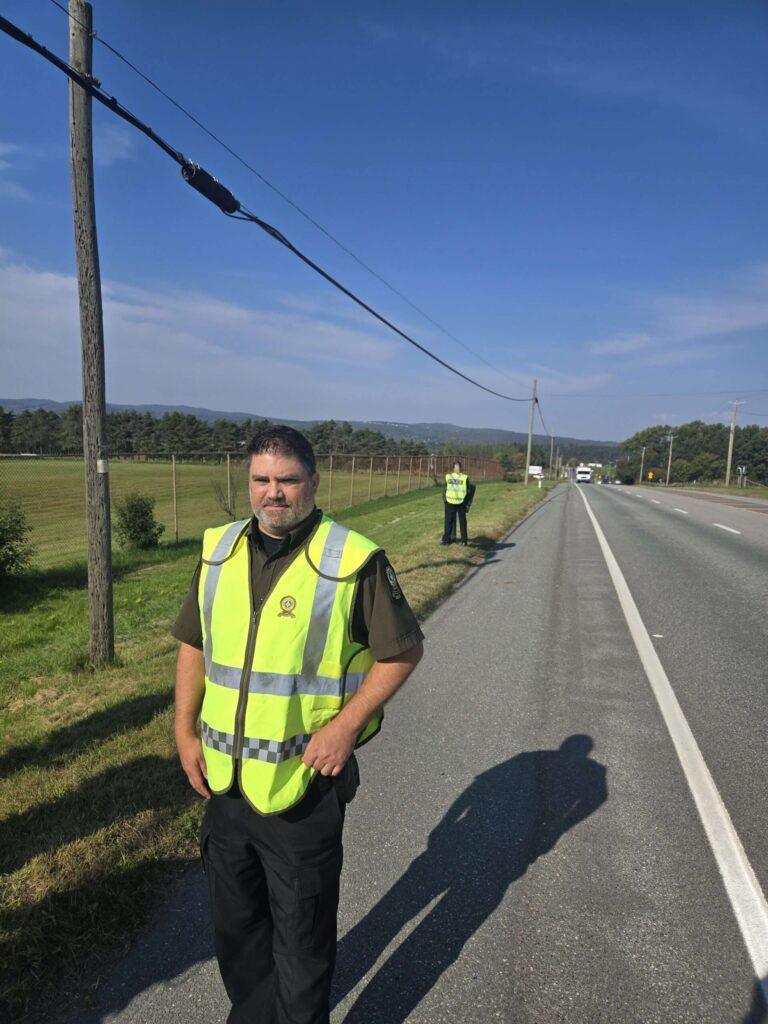
North Hatley councillor Andrew Pelletier

Photo courtesy

Tête-à-têtes with your local elected officials

By William Crooks

Local Journalism Initiative

Andrew Pelletier, a well-established councillor in North Hatley, shared his views on the future of the small Eastern Townships municipality in a recent interview. With a rich career background spanning geography, environmental sciences, and the oil industry, Pelletier has brought a wealth of experience to his role on the council.

“I was in the oil industry for 37 years, working with companies like Gulf Canada and Petro Canada,” he shared. After retiring from the petroleum industry, Pelletier sought a quieter life and found North Hatley to be the ideal place. “We came to North Hatley right at the onset of COVID in 2020. My wife and I found a nice home here, and we’ve been very happy with our decision.”

Pelletier’s transition from the corporate world to public service has been seamless. “I was on a council before, in Candiac, between 1993 and 2005, so this isn’t new for me,” Pelletier explained. When the 2021 elections came around, he was acclaimed to the council. “It’s been a good situation, and I think we’ve accomplished a lot.”

Challenges facing North Hatley

When asked about the challenges facing the municipality, Pelletier was quick to emphasize the growing complexity of running even a small town. “Whether it’s a small municipality or a big one, the requirements of the provincial government are still the same. We need to be very cautious with how we spend the town’s money,” he noted.

One of the town’s biggest current projects is the Pleasant View development. Pelletier praised the administrative staff for their diligent work in securing funding for this project, which promises to significantly impact the town. “I think our admin has done an exceptional job going to get funding for Pleasant View. That’s a very big project, and it’s right to see that go forward.”

Other challenges on the horizon include the town’s marina and future development projects. “Any developers who might have projects for our municipality, we have to ensure they’re well managed—and they will be,” he emphasized.

Addressing public and council relations

One topic Pelletier was keen to discuss was the relationship between council members and the public, particularly in light of recent legislation aimed at curbing harassment of municipal employees. When asked for his perspective on this issue, he acknowledged its importance but highlighted that North Hatley has been fortunate in avoiding these challenges.

“Harassment has no place in the workplace. None of us want that,” he said firmly. “In North Hatley, I have to tell you, I’ve not had a problem. I’ve seen problems elsewhere, but I think when somebody isn’t acting correctly, you just have to be honest and address it directly. That’s the way I’ve always handled it.”

Pelletier, with his decades of experience in communications, believes in open dialogue to resolve issues. “I’ve had a 40-year career in the petroleum business, and I’ve never had a problem I couldn’t solve. You just have to be better than that and go forward.”

As for the new legislation, Pelletier expressed his support for applying it when needed but reiterated that in his town, there’s been little cause for concern. “If it’s needed, we should apply it, but here, it hasn’t been much of an issue.”

Community projects and daycare success

The town of North Hatley has seen several community-focused projects take shape recently, one of which is the new daycare located in the town hall. “I think we’re all pleased with the daycare,” Pelletier remarked, crediting the administration for their hard work in securing the arrangement with the provincial government.

The facility has received praise from the community, and Meals on Wheels has also benefitted from the shared space. “Meals on Wheels is working as we said it would. They’re using that section as well, and there aren’t any problems that I’m aware of.”

The strengths of North Hatley

Despite the challenges facing the town, Pelletier remains optimistic about North Hatley’s future. “This continues to be a great place to visit,” he said. The councillor spoke fondly of the town’s essential services and local businesses, which he believes are integral to its charm and economy.

“I frequently go to the local grocery store, LeBaron’s, and La Chocolatiere. We’re fortunate to have these merchants and services in our community,” he said. Pelletier encourages both locals and visitors to support these businesses, emphasizing the importance of keeping the town’s economy vibrant.

Homelessness and housing issues

Homelessness has been a growing concern in nearby municipalities and regions like Lennoxville and Brome-Missisquoi. However, Pelletier clarified that the issue has not manifested in North Hatley to the same extent. “I know we have an abandoned building in town that’s owned by a developer, and there’s a demolition permit to remove it,” he mentioned. However, he has not seen any squatting or homelessness issues in the area.

Still, Pelletier remains mindful of the housing challenges that may arise, particularly as North Hatley attracts a broader range of residents. “We have a cross-section of people in this town, and some are less fortunate than others,” he acknowledged. “But, for now, homelessness hasn’t been a pressing issue here.”

A dedicated council Pelletier concluded the interview by expressing his gratitude to his colleagues and emphasizing the council’s dedication to working for the town. “This council and this administration are working hard for the people of North Hatley,” he said. “We’re putting forward projects that are smart and meet the needs of the municipality, and we’ll continue to work hard.”

North Hatley councillor Andrew Pelletier Read More »

National Day for the Elderly – Local perspectives and beyond

By William Crooks

Local Journalism Initiative

This year’s National Day for the Elderly, observed on Oct. 1, coincided with the United Nations’ International Day of Older Persons. It is a day to raise awareness about the contributions of the elderly to society and the challenges they face. Provincially, organizations such as Intergénérations Québec and the Association québécoise de défense des droits des personnes retraitées et préretraitées (AQDR) used the day to call for action and policy changes. Locally, Lennoxville and District Community Aid (LDCA) plays a pivotal role in supporting seniors, offering a range of services aimed at enhancing the quality of life for elderly residents.

A snapshot of local elderly needs

Leigh Hortop, a representative from LDCA, spoke candidly about the many challenges and opportunities that seniors in the region face. “It’s a very big topic,” she said when asked about the well-being of seniors in Lennoxville. “You could think about the physical, social, emotional, and intellectual needs.” Hortop’s insights into these categories reflect the comprehensive approach taken by LDCA in addressing the well-being of seniors in the community.

One of the most pressing issues for elderly residents, according to Hortop, is the need to meet basic physical needs, such as food security. Many seniors in the area struggle with mobility and a loss of autonomy, making it difficult to manage daily tasks like grocery shopping or attending medical appointments. “Access to food is a big one,” Hortop noted, explaining that LDCA offers services like Meals on Wheels and rides to the grocery store to ensure that seniors are able to access essential items.

Medical needs also present a significant challenge for seniors. As individuals age, they often encounter more frequent and complex health issues. LDCA offers transport services to medical appointments and even provides volunteers to accompany seniors, helping them navigate hospital environments. “We accompany them, wait with them, and help navigate the hospital,” Hortop explained, emphasizing the importance of ensuring medical needs are addressed.

Social isolation and cognitive health

Beyond physical needs, social isolation remains a major concern. Many seniors face loneliness, which can lead to a faster decline in health, including conditions like dementia. Hortop pointed to the importance of social interaction and cognitive stimulation in maintaining mental well-being. “There’s a need for emotional stimulation,” she said. LDCA organizes activities like card games and memory exercises, which help keep seniors’ minds engaged and active.

Hortop highlighted the importance of balance exercises, such as those offered by LDCA and other organizations, which can help prevent falls that can lead to a loss of independence. “Maintaining balance is key to keeping seniors’ autonomy as long as possible,” she said.

A broader provincial context

On a broader scale, organizations across Quebec used National Day for the Elderly to advocate for changes in policies affecting seniors. Intergénérations Québec emphasized the importance of intergenerational relationships as a way to combat isolation and ageism. In a recent statement, they noted that fostering interactions between different generations can help break down stereotypes, promote inclusion, and create meaningful social experiences. “Intergenerational approaches are a powerful social lever,” said the organization, adding that these interactions provide tangible benefits such as improved mental health, social inclusion, and even physical well-being.

In addition, the AQDR held a press conference on Oct. 1, calling for the creation of a Ministry for Seniors. The AQDR’s president, Pierre Lynch, highlighted in a release the need for new approaches to senior care, particularly in areas like affordable housing and access to healthcare. “It is time to change our methods and think differently,” Lynch said, calling for a more coordinated approach to improving the quality of life for the elderly.

Aging positively: A shift in perception

While many challenges remain, Hortop and her colleagues at LDCA are keen to emphasize the positive aspects of aging. “Our society tends to focus on loss of autonomy and medical issues,” she acknowledged. However, she added that many seniors in Lennoxville view aging with optimism. “They see age as just a number,” she said, explaining that her clients talk about the importance of staying active, learning new things, and remaining socially connected. “There’s a lot to look forward to and a lot to be thankful for,” Hortop added, reflecting the positive mindset of many local seniors.

LDCA plays a crucial role in helping seniors maintain their independence and continue living at home for as long as possible. With support from local CLSCs and various senior organizations across the Eastern Townships, many seniors can remain in their homes with dignity and autonomy. This echoes the broader push from national organizations like AQDR, which advocate for more support systems that allow seniors to age in place.

Looking forward

As the senior population continues to grow, the challenges highlighted by both Hortop and larger organizations like AQDR and Intergénérations Québec will only become more pressing. By 2030, seniors will make up 25 per cent of Quebec’s population. This demographic shift makes it crucial for local communities like Lennoxville to continue supporting their elderly residents with a comprehensive range of services.

National Day for the Elderly serves as a reminder of the value that seniors bring to our communities and the ongoing efforts needed to support them. With organizations like Lennoxville & District Community Aid at the forefront, the local community is making strides in ensuring that seniors can live fulfilling, independent lives.

National Day for the Elderly – Local perspectives and beyond Read More »

“Every Child Matters” march leads Truth and Reconciliation events in Sherbrooke

Photo by William Crooks
Participants in orange shirts march in Sherbrooke on Sept. 30, honouring residential school victims and survivors as part of Truth and Reconciliation Week.

By William Crooks

Local Journalism Initiative

On Monday, Sept. 30, the community gathered for the “Every Child Matters” march, part of Truth and Reconciliation Week, to honour the children who never returned home from residential schools and to support survivors. This followed a regional worship service on Sunday at Lennoxville United Church (LUC), where local United Church congregations came together to celebrate Truth and Reconciliation Sunday.

Marching for truth and reconciliation

The “Every Child Matters” march, organized by Bishop’s University’s Indigenous Student Support Centre, served as a public tribute to the lost children and survivors of the residential school system. Held on Orange Shirt Day, the march drew participants from across the region, dressed in orange as a symbol of remembrance and solidarity.

The event began at 12:30 p.m. at Parc Jacques-Cartier in Sherbrooke with ceremonial songs and speeches. By 2 p.m., marchers were moving through the streets, heading toward Marché de la Gare. Many carried signs and banners bearing messages of hope and reconciliation, as they paid tribute to those impacted by the residential school system.

Phyllis Webstad’s story of having her new orange shirt taken away on her first day at a residential school continues to resonate with communities across Canada, symbolizing the profound loss Indigenous children experienced. The march is part of a broader effort to ensure the history of residential schools is remembered and that reconciliation remains a priority.

Photo by Linda Hoy
The congregation at Lennoxville United Church gathers for a regional Truth and Reconciliation Sunday service on Sept. 29, bringing together United Church communities from across the region.

A regional worship service of unity

The day before the march, the Lennoxville United Church hosted a significant regional worship service, uniting several United Church congregations from the St. Francis Cluster. Churches from Lennoxville, Waterville, Sherbrooke, Richmond, and other areas gathered for this special service, which focused on reconciliation and collaboration.

Shanna Bernier, a representative of the St. Francis Cluster, described in a recent interview the event’s significance, noting, “This was the first time since 2019 that all the churches in our region came together for a joint service of this magnitude. It was important to us not only to share resources but also to take this opportunity to celebrate Truth and Reconciliation Sunday collectively.”

The service included the dedication of the Mohawk Bible and the Abenaki Gospel of Mark, texts that hold deep cultural and spiritual significance for Indigenous communities. Though the invited Mohawk and Abenaki guests could not attend, the congregation honoured the contributions of Harvey Satewak Gabriel, whose decades-long work in translating the Bible into Mohawk was celebrated through a video presentation. This dedication marked an important step in the church’s ongoing efforts toward reconciliation with Indigenous peoples.

Musical contributions from an expanded choir, led by Maryse Simard, and a children’s story session Bernier added to the day’s significance. The worship concluded with a community lunch, prepared by Unit 6 of the United Church Women, as attendees reflected on the themes of unity and healing.

Truth and Reconciliation Week in Sherbrooke

In addition to the march and the worship service, several other events are being hosted during Truth and Reconciliation Week. The University of Sherbrooke (UdeS) and Bishop’s University have organized a series of activities focused on Indigenous healing and empowerment. These events, running from Sept. 30 to Oct. 4, aim to raise awareness of the lasting impact of residential schools and celebrate Indigenous knowledge and culture, according to a recent release.

Highlights of the week include cultural workshops, healing ceremonies, and guest lectures from Indigenous leaders. One particularly anticipated event is the screening of “Soleils Atikamekw”, followed by a discussion on Indigenous traditions and healing practices. These events are part of an ongoing effort to foster dialogue on reconciliation and offer participants a deeper understanding of the realities facing Indigenous communities today.

For more information, consult the UdeS and Bishop’s website.

“Every Child Matters” march leads Truth and Reconciliation events in Sherbrooke Read More »

New 5.3-kilometre trail extends Massawippi conservation network

Photo courtesy Massawippi Foundation
The team behind the recent 5.3-kilometre trail extension at the Massawippi Conservation Trust, celebrating their hard work and dedication to expanding the local hiking network.

By William Crooks

Local Journalism Initiative

The Massawippi Conservation Trust has recently expanded its already extensive trail system by adding 5.3 kilometres of new paths to its Massawippi trail in Ste. Catherine de Hatley. Mahicans Diamond, a trail maker with the Massawippi Foundation, shared insights into the trail’s construction and features during a recent interview, emphasizing the challenging terrain and unique layout of the new section. This addition brings the total length of the trail network to over 13 kilometres, offering hikers the chance to explore a diverse landscape ranging from mature forests to wetlands.

“This project is an extension of our existing trail system, which already had close to nine kilometres of trails,” said Diamond, adding that the new paths aren’t for the faint-hearted. “It’s difficult access, which means it’s really at the end of our existing network.”

An inverted hiking experience

Unlike traditional hiking trails that lead to a summit, the Massawippi trail begins at the top. Diamond described the unusual approach as an “upside-down concept,” with hikers parking at the top of the mountain and descending towards the main destination—a beach and viewpoint known for its relaxing atmosphere and swimming spots.

“Usually, you park at the bottom of the mountain, you climb up to the top of the mountain for the view and climb back down to the parking lot,” explained Diamond. “But we park at the top of the mountain, walk down through our main destination… and then you have to hike back, unfortunately.”

The hike to the beach and back forms part of a seven-kilometre round trip, but the new section of the trail adds even more variety. Depending on the loop chosen, visitors can expect up to 13 kilometres of trail, turning a leisurely hike into a half-day adventure. Diamond emphasized the need for preparation, stating, “You have to give yourself a good half day, bring some food and some water… it takes a fair amount of physical conditioning, too.”

Norman’s Marsh and Turtle Rock

Among the highlights of the new section is a wetland area named Norman’s Marsh. The area is dedicated to the memory of Norman Webster, a former trustee of the Massawippi Conservation Trust, and his wife, Pat, who was instrumental in pioneering the trail system. The marsh serves as a serene destination, offering visitors a quiet place to pause and reflect on the natural beauty around them.

Another intriguing feature of the trail is Turtle Rock, a large boulder that, according to Diamond, bears a striking resemblance to a Ridley green sea turtle. “It’s quite detailed,” he said. “It’s pretty obvious that it looks like a green turtle… which doesn’t exist around here.” The resemblance is so uncanny that even topographic maps of the area show the outline of a turtle, complete with a head, legs, and shell.

Although Turtle Rock offers a semi-view of the lake, Diamond noted that the trail is not known for its sweeping vistas. “It’s just a peek here and there,” he said, adding that despite years of searching, there is no full natural lookout point along the trail.

Burroughs Falls and Quebec Lodge

Diamond also provided updates on two other significant projects, Burroughs Falls and Quebec Lodge, which are set to further enhance the region’s outdoor recreation offerings.

Regarding Quebec Lodge, Diamond confirmed that work on the trail network is still in the early planning stages. “We have some permits to do some work,” he said. “But for the main part of the trail that will be accessible to the public… that’s not happening until 2026.” The trail system, which will cover either 30 or 60 acres depending on final plans, is expected to include around two kilometres of trails by the time it opens in 2027 or 2028.

Burroughs Falls, meanwhile, is progressing at a faster pace. The park is a popular spot for its iconic waterfalls, and Diamond explained that the team is working in phases to develop the area. He added that they hope to complete two kilometres of trail and open the park to the public in time for the fall colours. However, he was careful not to make any promises, citing potential delays due to permits and weather conditions. If all goes according to plan, the park will be open by 2026 at the latest.

A promising future for the region’s trails

As work on these trails and parks continues, the region is set to become an even more attractive destination for nature lovers and hikers. The Massawippi Conservation Trust’s ongoing efforts to expand and maintain the trails underscore their commitment to preserving the area’s natural beauty while providing accessible outdoor recreation opportunities for all skill levels.

Diamond expressed optimism about the future, saying, “After finishing up the new sector at the Massawippi Conservation Trust, we went straight to Burroughs Falls.” If the Burroughs Falls project wraps up on schedule, the local community will soon have another stunning location to explore and enjoy.

For now, hikers can enjoy the newly completed trails and experience the diverse landscapes of the Massawippi area, from wetlands to forests, and perhaps even spot the mysterious Turtle Rock along the way.

New 5.3-kilometre trail extends Massawippi conservation network Read More »

Eastern Townships School Board faces funding cuts to francization programs

By William Crooks

Local Journalism Initiative

The Eastern Townships School Board (ETSB) is grappling with significant cuts to funding for its francization programs, a development that threatens the program’s future and impacts both staff and students. In a Sept. 30 interview, ETSB Chair Michael Murray outlined the extent of the cuts, the impact on the board’s operations, and the uncertain path forward.

The school board’s francization efforts have expanded significantly in recent years, growing from a modest base to accommodate between 400 and 500 full-time equivalent students. This growth aligned with the Quebec government’s push to improve French language skills among immigrants, refugees, and new arrivals, helping them integrate into Quebec society and find employment.

However, despite this progress, the board’s recent budget allocation, which arrived in July—two months late—was unexpectedly cut back to 2021 funding levels. “We’ve ramped up the program over the last three or four years, thinking it was in line with the government’s objectives,” Murray explained. “And then, suddenly, in the budget we received, funding was cut back to the 2021 levels.”

Murray expressed frustration and confusion over the cuts. Initially, the board hoped it was a mistake, but they later confirmed that the reduction was intentional. The delay and the cuts left the board with little time to react, and so far, no clear solutions have emerged. “There was a certain amount of disbelief and incomprehension to get answers from the authorities,” he said. “We found out it was not an accident or oversight but an intentional decision.”

Adding to the challenge is the complexity of the adult education funding structure. Francization programs are funded on a historic activity basis, meaning the board’s recent expansion efforts haven’t yet been reflected in the budget. “The budget this year is based on activity from years earlier,” Murray noted. “We’ve been ramping up, understanding that eventually there would be compensation, but we’re not there yet.”

In response to the cuts, the board began informing staff and students that the current level of courses may not be sustainable. “There’s a limit to how long we can continue to offer this level of courses,” Murray said. The program, which employs 28 individuals, including teachers and support staff, is facing a difficult future. Currently, the board is funding the program out of other parts of its budget, but this approach is not sustainable long-term. “We’re doing it now, but we can’t afford to keep doing that indefinitely,” he explained.

Murray highlighted that the demand for francization courses remains high, with long waiting lists underscoring the need for the program. “There are long waiting lists, which seems to indicate that this is something both needed and appreciated,” he added. The program serves an important role in helping new arrivals in the Eastern Townships acquire the language skills necessary to integrate into society and find jobs. “We’ve accepted immigrants and refugees into Quebec, and we’re now telling them that, sorry, we can’t afford to teach you French,” Murray remarked.

While the board is still searching for solutions, Murray was candid about the situation: “The simplest way to say it is, give us more money,” he admitted. “But, of course, it’s never that simple.”

One of the challenges the board faces is determining exactly where the cuts originated. Murray speculated that funding for francization likely comes from several ministries, making it difficult to track down who is responsible for the reduction. “It’s channeled to school boards through the Ministry of Education, but we suspect it might come from other ministries, which adds a layer of complexity in resolving this,” he said.

Despite repeated attempts to engage with the provincial government, Murray said the board has yet to receive a clear answer on why the cuts were made or how they might be reversed. “I can’t see why at the first moment we drew attention to this dilemma there wasn’t a stronger reaction to reassure us that a solution would be found,” he shared.

The uncertainty has placed additional stress on staff, many of whom are now unsure of their future. “Our staff is already under enough stress, and now they have this added uncertainty,” Murray explained. “It’s tough on them, and it’s tough on the students.”

When asked about the board’s next steps, Murray said they are still actively looking for solutions. “We’re continuing to advocate with the Ministry of Education and elsewhere, but so far, we don’t have any clear answers,” he said.

Eastern Townships School Board faces funding cuts to francization programs Read More »

Lennoxville faces growth and gaps, census says

Community urges action on housing, income disparities

By William Crooks

Local Journalism Initiative

A Sept. 24 presentation in Lennoxville’s community hall by Karine Picard, a research agent at the Observatoire Estrien en Développement des Communautés (OEDC), provided Lennoxville’s community with a revealing look into the borough’s socio-economic conditions. The data, drawn from the most recent census, highlighted positive trends such as population growth and educational achievements but also underscored significant challenges like housing affordability and an aging population. Community organization leaders, present at the event, engaged in an in-depth discussion about the data and raised concerns over vulnerable populations, housing issues, and the need for future development to retain younger families. Data on language use and bilingualism were also discussed.

Population and education: strengths and concerns

One of the most notable highlights of Picard’s presentation was Lennoxville’s population growth, which rose by 10 per cent between 2016 and 2021. The population increased from 5,280 to 5,825, a higher growth rate than both Sherbrooke and the wider Estrie region​. This rise was partly attributed to Lennoxville’s role as an educational hub, home to institutions like Bishop’s University and Champlain College. These institutions attract a young, educated population, which has contributed to Lennoxville’s status as one of the most educated communities in the region. Picard noted, “44 per cent of the population aged 25 to 64 in Lennoxville have a university degree, compared to 35 per cent in Sherbrooke and 26 per cent in the Estrie region.”​

However, this strength also presents a challenge. Many young people leave Lennoxville after completing their education, leading to concerns about the long-term retention of educated youth. Community leaders emphasized the need to create more opportunities for young families to settle in the area, particularly by improving housing options and public services​.

Employment and income: Growth tempered by disparities

Another positive trend highlighted in the presentation was the increase in employment. The proportion of people aged 25 to 64 who were not employed decreased by 4 per cent between 2016 and 2021, with Lennoxville seeing a greater reduction in unemployment compared to Sherbrooke and the Estrie region​. However, there remains a significant gender disparity in employment, with 25 per cent of women in Lennoxville unemployed compared to only 17 per cent of men​.

Income levels in Lennoxville also showed a mix of improvement and stagnation. The total median after-tax household income rose to $53,200 in 2021, which is similar to Sherbrooke but still lower than the regional median of $58,000​. The gender disparity was also reflected in income levels, with men earning a median of $34,800, while women earned $29,800​.

These income figures are heavily influenced by the pandemic, with government benefits temporarily boosting household earnings in 2020. Picard emphasized that these figures should be interpreted cautiously, stating, “The 2021 census used data from 2020, a year when many households were receiving COVID-related government support, which skewed the income figures upwards.”

Housing and vulnerability: Pressing concerns for the community

Housing affordability emerged as a key issue during the presentation. Lennoxville’s housing market has seen significant shifts, with average rent prices for tenants decreasing to $708 in 2021. However, this figure was met with skepticism from the audience, with many noting that the current rental market is much more expensive than what the data suggests. Community leaders suggested that the lower average rent prices might reflect long-term tenants who have not seen substantial increases in their rent, rather than the reality for new renters​.

Further exacerbating the issue is the increasing burden of housing costs on both homeowners and renters. In 2021, 30 per cent of Lennoxville’s renters were spending more than 30 per cent of their income on housing​. This is consistent with the trend across Sherbrooke and the Estrie region. Community organizations raised concerns about housing affordability, particularly for young families and low-income residents, calling for urgent action to address the growing crisis.

Low-income residents in Lennoxville are also facing vulnerability, with 19 per cent of individuals aged 15 to 64 living in private households falling below the low-income threshold​. This figure represents a slight decrease from 2016 but still highlights the ongoing economic struggles faced by a significant portion of the community. Of particular concern was the rise in low-income households among residents aged 65 and older, increasing from 14 per cent in 2016 to 19 per cent in 2021​. This aging demographic, coupled with their vulnerability, prompted calls for better support systems for seniors, especially in terms of housing and healthcare.

Community responses and future directions

Following Picard’s presentation, local organizations and community members participated in a discussion that focused on how to address the borough’s most pressing issues. One of the central concerns was the need to retain young families and attract new residents. Participants emphasized that Lennoxville’s strength as an educational hub must be leveraged to create long-term growth, particularly by ensuring affordable housing and reliable public services.

Picard acknowledged these concerns and urged the community to work together to tackle these challenges. “The data shows that Lennoxville is a strong, vibrant community, but there are clear areas where improvement is needed,” she said. “It’s important to use this information to inform our policies and future actions, particularly in addressing housing and supporting vulnerable populations.”

The organizations present echoed these sentiments, pointing to the need for enhanced communication about available services, especially for those in vulnerable situations. One common concern was the lack of resources to inform residents, particularly seniors and low-income individuals, about the services available to them. “There’s a real gap in how we’re reaching people in need,” said one community leader, stressing the importance of grassroots efforts to bridge this gap.

The discussion also touched on the broader economic issues affecting the region, particularly the need to foster local businesses and create more employment opportunities. Many participants expressed a desire for more community-driven initiatives, such as local co-working spaces or entrepreneurship programs aimed at supporting young professionals and new families.

Language diversity: linguistic trends in Lennoxville

Another important area of particular note in Picard’s presentation was the linguistic makeup of Lennoxville. As a bilingual community, Lennoxville has long prided itself on its ability to bridge linguistic divides between English and French speakers. The 2021 data reflects this, showing that Lennoxville’s anglophone population remains substantial, even as the broader region of Sherbrooke and the Estrie leans more heavily towards French.

According to the 2021 census data, 46 per cent of Lennoxville residents primarily speak English at home, a much higher proportion than in Sherbrooke (4.1 per cent) and the wider Estrie region (7 per cent). “This significant anglophone presence distinguishes Lennoxville within the broader region, and it remains a cultural and social asset for the community,” Picard explained.

However, there has been a slight decrease in the proportion of English speakers since 2016, when 50 per cent of Lennoxville residents reported English as their primary language. This decline has raised concerns about the future of the community’s bilingual identity. Local organizations voiced apprehensions during the discussion following Picard’s presentation, noting that the preservation of the community’s bilingual character is crucial to maintaining Lennoxville’s unique appeal. One community member stated, “Our bilingualism is a big part of what makes Lennoxville special, and we need to ensure that we continue fostering both English and French in our schools, services, and everyday life.”

The allophone population, those who speak a language other than English or French at home, also saw a slight increase. In 2021, 3.9 per cent of Lennoxville residents were allophones, compared to 2.8 per cent in 2016. While still a small minority, this increase reflects the gradual diversification of the community, mirroring broader immigration trends seen across Quebec.

Challenges for language services

Despite the strong English-speaking presence, accessing bilingual services outside of Lennoxville remains a challenge for many residents. During the community discussion, participants raised concerns about the availability of services in English, particularly in healthcare and other essential services. “There’s a real barrier for our English-speaking residents when it comes to accessing services in Sherbrooke or beyond,” said one local leader. “This is something we need to address as we look at the future of our community.”

Picard acknowledged these concerns, noting that while Lennoxville maintains a strong bilingual culture, there is a risk that it could erode over time if not actively supported. “The data shows a slight decline in the number of English speakers, and this could become more pronounced if younger generations don’t feel that they can thrive in a bilingual environment,” she explained.

In response to these challenges, community organizations called for more efforts to promote bilingualism in schools and public services. They also emphasized the importance of ensuring that newcomers, including immigrants who speak neither English nor French, are integrated into the community in a way that supports both languages.


Key takeaways

The detailed data presented by Karine Picard offered a snapshot of Lennoxville’s socio-economic situation as of 2021. Key takeaways included:

– Population Growth: Lennoxville’s population grew by 10 per cent between 2016 and 2021, outpacing both Sherbrooke and the wider Estrie region.

– Education: Lennoxville is one of the most educated communities in the region, with 44 per cent of residents aged 25 to 64 holding a university degree.

– Employment: The unemployment rate among 25 to 64-year-olds decreased significantly, with Lennoxville experiencing a 4 per cent drop, a greater improvement than in Sherbrooke or Estrie.

– Income: The median household income after tax in Lennoxville rose to $53,200 in 2021, but income disparities between men and women persist.

– Housing: 30 per cent of Lennoxville renters spend more than 30 per cent of their income on housing, underscoring a growing affordability issue.

– Vulnerable Populations: 19 per cent of residents aged 15 to 64 and 19 per cent of those aged 65 and older are living in low-income households.

– Language: 46 per cent of Lennoxville residents primarily speak English at home, compared to 4.1 per cent in Sherbrooke and 7 per cent in the Estrie region. However, there has been a slight decrease in the English-speaking population since 2016, and concerns about maintaining the community’s bilingual identity were raised.

In summary, Lennoxville is a growing and educated community with clear strengths, but it faces challenges that require attention. Housing affordability, income disparity, and support for vulnerable populations remain critical issues that must be addressed as the community looks toward future development. Moreover, maintaining Lennoxville’s bilingual character and ensuring access to services in both English and French are essential to preserving the community’s identity.

Lennoxville faces growth and gaps, census says Read More »

Lennoxville Council debates speed limit change, prepares for community events

Photo by William Crooks
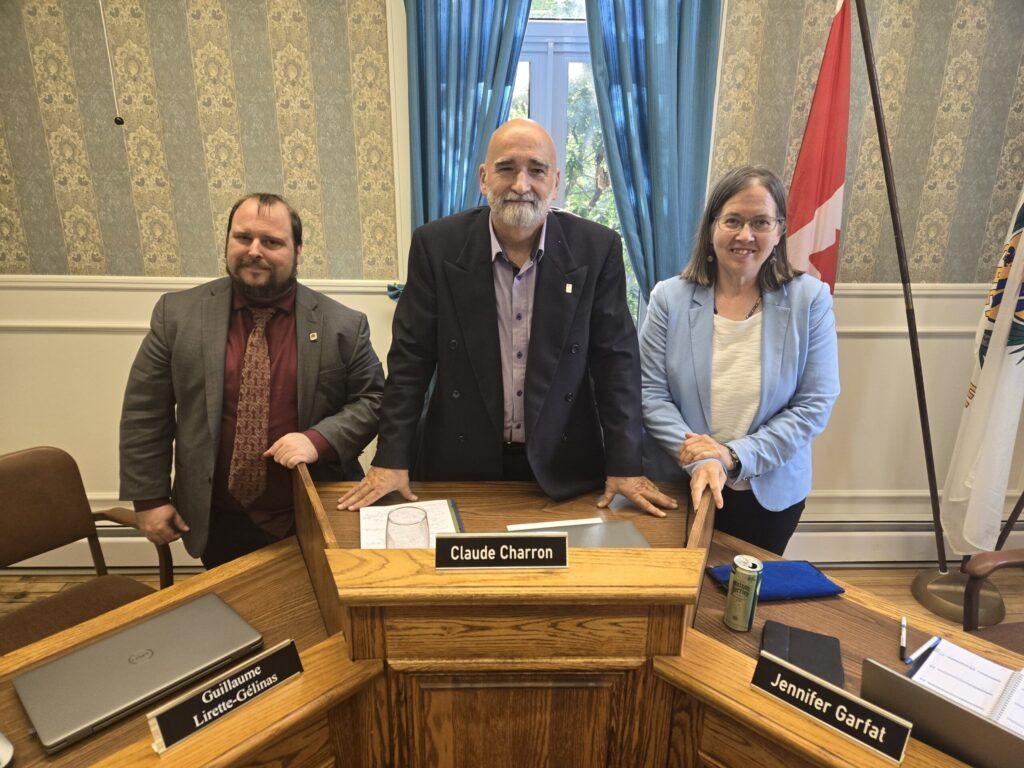
Lennoxville Councillors Guillaume Lirette-Gélinas, Claude Charron, and Jennifer Garfat

By William Crooks

Local Journalism Initiative

At Lennoxville’s monthly public borough council meeting on Sept. 24, presided over by Borough President Claude Charron, the primary focus was on a potential change to the speed limit on Thomas-Woodward Road. This issue, raised by residents concerned about road safety, sparked considerable discussion among council members, who debated the borough’s ability to address the matter within existing provincial regulations.

A speed study conducted on Aug. 8 revealed that the average speed of vehicles on Thomas-Woodward Road was 47 km/h, with 85 per cent of drivers staying under 55 km/h. However, the posted speed limit remained at 60 km/h, a limit that has been in place for over 15 years. The winding nature of the road and the higher density of residences between Bowen and des Rigoles Streets have caused some residents to request that the speed limit be reduced to 40 km/h.

Council members discussed the challenges of responding to this request. One member highlighted the significant risks associated with higher speeds, especially for pedestrians. “Every kilometre per hour past 30 km/h increases the risk of serious damage in the event of a collision,” he stated. He went on to explain that the closer a vehicle gets to 50 km/h, the higher the likelihood of fatal consequences in pedestrian accidents. Despite these concerns, the borough’s hands are tied when it comes to lowering speed limits without provincial approval. “The city of Sherbrooke cannot make a change to 40 km/h without permission from Quebec,” one council member explained. The borough has already made a formal request to the provincial government, asking for permission to lower the speed limit. However, as it stands, a response from Quebec could take some time.

In the meantime, the borough plans to implement safety measures that it hopes will mitigate the risk. These include placing signs at the intersection of Thomas-Woodward and des Rigoles to make the junction more visible to drivers. There will also be a review of the placement of the current 60 km/h signs to ensure they are appropriately located. As part of a public safety awareness campaign, the borough office will distribute signs encouraging drivers to reduce their speed to 40 km/h voluntarily.

One council member voiced their frustration with the limitations placed on the borough. “I would have liked to propose widening the shoulders of the road so pedestrians feel safer,” they said, emphasizing the importance of providing more space for foot traffic in this area, which sees a considerable number of walkers. Although the suggestion was not formally adopted, it highlighted the council’s recognition of the road’s challenges.

In addition to the speed limit discussion, the council also addressed several other items on the agenda, including financial assistance for the Uplands Cultural and Heritage Centre. The borough has committed to providing $10,000 towards a $20,000 study to evaluate whether historical objects currently housed in Uplands’ main building can be stored in a climate-controlled space in its red barn.

As the meeting drew to a close, council members took the opportunity to highlight upcoming community events. Among these is the Giant Pumpkin Festival, set to take place on Sunday from 11 a.m. to 4 p.m. The annual event has grown steadily in popularity, drawing in families and residents from all over the borough. “It’s a wonderful family event, and if you’ve never seen the giant pumpkins, it’s worth coming just for that,” one council member remarked.

The councillors also acknowledged the retirement of Paul Chapdelaine, the borough’s longtime coordinator, who has served Lennoxville for nearly 20 years. “Paul has been an invaluable resource for our team,” a councillor said. “His knowledge and dedication to the borough will be missed.” Chapdelaine, who started as an inspector and later became the coordinator, received praise for his professionalism and his commitment to the community.

Before adjourning, council members reminded residents about Sherbrooke’s upcoming urban planning consultation on Oct. 23. The borough encouraged community participation in the event, which will allow citizens to provide input on the future development of the city.

Lennoxville Council debates speed limit change, prepares for community events Read More »

Local veteran honoured with Quilt of Valour for service in Persian Gulf

Courtesy
Alan Marsh, wrapped in his Quilt of Valour, stands with representatives from St. Hubert and Terrebonne at a small ceremony in his Bolton Centre home, honouring his military service during the Persian Gulf War

By William Crooks

Local Journalism Initiative

Alan Marsh, a military veteran from Bolton Centre, recently received a Quilt of Valour from the Rouge Valley Quilters Guild, a tribute that recognizes his dedicated service in the Canadian Armed Forces. The quilt, hand-quilted by Laurie Mitchell, was presented in a small ceremony at Marsh’s home, with representatives from St. Hubert and Terrebonne delivering the honour.

“I was really touched,” Marsh said during a recent interview. “It’s a special thing for anyone who served in the military, especially those who were on the front lines.”

Marsh enlisted in the military on Jan. 26, 1978, with the Royal Canadian Horse Artillery (R.C.H.A.) out of Sherbrooke, Quebec. After completing basic training in Cornwallis, Nova Scotia, and being posted to Shilo, Manitoba, he began a career in artillery, which would take him across Canada and the world. One of his earliest assignments involved setting up survival cairns in Fort Good Hope, Northwest Territories, the oldest Indigenous reservation in Canada.

In 1990, Marsh was deployed to the Persian Gulf aboard the H.M.C.S. Protector during Operation Friction, Canada’s involvement in the Gulf War. “My job was to provide low-level air defence,” Marsh explained. He was tasked with defending against potential missile attacks. “When Saddam [Hussein] was firing the Exocet missile, I was to shoot them down with a Javelin missile system,” he recalled. This experience, he noted, was unlike any other. “It was different. I never set sail before, and I’ll never sail again,” Marsh said with a chuckle.

Marsh’s career spanned over 17 years, during which he received numerous accolades, including the Cyprus Medal for peacekeeping, a NATO Medal for service in Germany, and a Persian Gulf Medal. After retiring from active duty in 1993 with the rank of Sergeant, he transitioned to civilian life, purchasing a semi-trailer and working as a truck driver across North America.

The presentation of the Quilt of Valour was particularly meaningful to Marsh. “It’s not just for peacekeeping,” he said, emphasizing that the honour represents all of his military contributions. He views it as a heartfelt gesture acknowledging his service.

Marsh currently resides in Bolton Centre with his wife Denise. Though his time in the military is behind him, the memories of his service, particularly in the Gulf, remain vivid. “We were on the verge of war there for sure,” he reflected. The Quilt of Valour now serves as a reminder of those days, and of the appreciation extended to him for his years of dedication to the Canadian Forces.

Local veteran honoured with Quilt of Valour for service in Persian Gulf Read More »

Heron the side of caution?

Photo by William Crooks
A crowd of nearly 100 Ayer’s Cliff residents gathered in the basement of Saint-Barthélemy Church to discuss the proposed bylaw aimed at protecting local heron habitats. 

Ayer’s Cliff debates new protection bylaw

By William Crooks

Local Journalism Initiative

Ayer’s Cliff citizens gathered on Sept. 23 for a public consultation to discuss proposed amendments to the Urbanism Bylaw No. 2009-03. This meeting, held in the basement of Saint-Barthélemy Church, was convened following a municipal council session on Sept. 3, where a draft bylaw was introduced to address environmental concerns about potential heron nesting sites in the area. Led by Mayor Simon Roy, the consultation drew nearly 100 residents, who voiced a mix of support, concerns, and questions.

The purpose of the meeting was to allow citizens to express their views on the draft bylaw, which aims to incorporate new protections for areas identified as potential heronries. These sites are viewed as ecologically sensitive and valuable for conservation. The meeting was structured in three parts: a presentation by municipal staff, followed by a question period, and then a comment period, which allowed residents to share their opinions.

Initial presentation

Élaine Leblanc, a municipal employee responsible for environmental dossiers, opened the meeting with a 15-minute presentation explaining the context of the draft bylaw. She noted that since 2023, the municipality had been aware of the presence of herons in the area and had erected signs to protect the natural environment. The herons are highly sensitive to disturbances, and their nesting sites are protected under provincial and federal law, including the Migratory Birds Act.

Leblanc revealed that a recent inspection identified 17 nests, with 7 to 8 active adult herons near the Ripplecove Hotel. The municipality’s goal is to establish a 200-meter buffer zone around these nests to safeguard the birds’ habitat. “This 200-meter radius is recommended by the Ministry as a precautionary measure,” she stated. This radius would prevent construction and certain activities in the designated area. The draft bylaw also proposes restrictions on tree cutting within this zone unless the trees pose a direct danger to people or property.

Leblanc clarified that if a property were within the 200-meter zone, development restrictions would apply only to areas that remain in their natural state, such as wooded parts of the land. If a property were already developed, including lawn or garden areas, owners would still have the freedom to maintain and expand within existing limits.

Question period

During the question period, several residents expressed confusion and sought clarification on how the bylaw would impact their properties. One resident asked whether the 200-meter radius could be reduced. An official responded that the 200-meter buffer is based on scientific recommendations but acknowledged that the literature primarily focuses on rural environments, where such distances are more feasible. In more urbanized areas like Ayer’s Cliff, flexibility could be considered, but the Ministry’s recommendation remains the standard.

A key question raised by another resident was about the procedure for adopting the bylaw and the timeline. Mayor Roy explained that after the consultation, the council would reconvene to decide whether to proceed with the draft as is, make amendments, or abandon the project altogether. The council has 60 days to act on the draft, during which there would be a freeze on development applications that fall within the proposed restricted zones.

Other questions touched on the long-term value of properties within the affected zone. One resident voiced concerns that the new bylaw would lower property values, especially for those planning to develop or sell their land in the future. An official responded that while some restrictions would apply, the municipality was open to discussing compensation or mitigation measures for heavily impacted property owners. Mayor Roy added that the municipal budget, however, does not currently allow for large compensation payouts.

A particularly engaged participant, Vincent Létourneau, an ornithologist based in Orford, proposed a third option that would balance the needs of the herons with property owners’ rights. He suggested working on a compromise that might allow certain types of low-impact development while still protecting the heron habitat. The mayor welcomed this idea, emphasizing that the meeting’s purpose was to gather input and explore all viable options.

Comment period

The comment period revealed a clear divide among residents. Some expressed support for the bylaw, stating that preserving wildlife and biodiversity was important for the community’s long-term environmental health. “I think no one here is against protecting the herons. We all benefit from having a healthy ecosystem,” one meeting attendee commented.

Others, however, were less convinced. One resident pointed out that heron populations in the area had increased despite previous development projects, questioning whether the new regulations were necessary. “We’ve been building here for years, and the herons haven’t gone anywhere,” he said, sparking murmurs of agreement from some attendees.

Another recurring theme in the comments was the potential impact on future development in Ayer’s Cliff. Some residents feared that the bylaw would freeze growth in key areas, particularly as the town continues to expand. “What happens when herons decide to nest in another part of town? Are we going to keep adding new restrictions?” one resident asked, voicing concerns about the long-term effects of the regulation.

Several speakers raised the issue of fairness, questioning whether the burden of protecting the herons should fall entirely on a small group of landowners. “The benefits of biodiversity are collective, but the costs are being localized,” one speaker argued. This sentiment was echoed by others who felt that the bylaw disproportionately affected property owners with large wooded lots.

Outcome and consensus

At the end of the meeting, it was clear that while many residents valued the herons and the natural environment, there was no clear consensus on the best way forward. Mayor Roy assured attendees that their feedback would be taken into account during the council’s deliberations. He reiterated that the council had no vested interest in pushing the bylaw through if the majority of residents were opposed.

However, Roy also warned that waiting for the Memphrémagog MRC (Regional County Municipality) to update its land-use plan could delay necessary protections. “If we wait too long, we might lose the herons, and we’ll be left explaining why nothing was done,” he said.

The consultation ended with a commitment from the council to further investigate potential modifications to the bylaw, including the possibility of reducing the buffer zone in urbanized areas and exploring compensation options for affected landowners. Mayor Roy thanked residents for their participation, emphasizing the importance of community input in shaping local policy.

Heron the side of caution? Read More »

Cleveland has concerns

Photo by Nick Fonda
Louis Robert, Herman Herbers, Martin Lessard, and Pascal Goux spoke at a press conference in Cleveland Monday morning on a government proposal to regulate the use of sludge on agricultural land.

By Nick Fonda

Local Journalism Initiative

Waste—human waste—is a problem. 

The problem was addressed at a Monday morning press conference at the Municipality of Cleveland Town Hall when the director general, Martin Lessard, made public the municipality’s recommendations to the provincial government which is preparing legislation to regulate the storing and spreading of sewage sludge, also referred to as biosolids and as fertilizing residual material (FRM).

In addition to Martin Lessard, three other people spoke:  Herman Herbers, mayor of Cleveland, Pascal Goux, a retired engineer and Cleveland resident, and Louis Robert, a retired agronomist and author of Pour le bien de la terre, a book that outlines the harm being done to agricultural land by the overuse of fertilizers and pesticides.

All towns and cities on the St. Francis River now have water filtration plants.  Municipal waste water from the town’s sewer system flows to the filtration plant.  There the water is aerated in ponds where the solids sink to the bottom and the water—now clean—is pumped back into the river.

Over time, the sediment in the settling ponds accumulates.  Periodically, the pond is drained and the sediment dries into sludge which is transported to farms where it is spread over the fields like fertilizer.

Human waste is not very different to the waste produced by livestock, and it has been used the same way since the advent of agriculture.

More recently, that simple, natural cycle has become more complicated.  As well as waste from residential neighbourhoods, filtration plants also have waste from commercial and industrial concerns.  Inevitably, the process of fabricating household or other goods creates waste.  Often, to varying degrees, the waste is toxic.

On a number of occasions, including in Cleveland in 2020, the dumping of toxic waste on agricultural land has resulted in people being poisoned, livestock stricken, and wells contaminated. 

So far, the Quebec government has had guidelines to try to control where municipal and industrial sludge is spread.  To prepare laws, rather than just guidelines, to regulate the sludge market, the government released a management code for fertilizing residual matter and gave interested parties a relatively small window of time to offer feedback and input into the drafting of the legislation.

Martin Lessard headed a group that prepared a detailed commentary focussed on the environmental impact of the management code, a text that is 91 pages long and was published in the Gazette Officielle du Québec on July 24, 2024.

High on the list of concerns were the timing and time-line set out by the government’s consultation process.  Those wishing to suggest changes had 45 days to make their proposals.  Worse, the government issued their request at a time when many are on vacation, and likely to miss the government’s announcement.

The proposed changes presented by Cleveland ran to 14 legal-sized pages.  What follows are selected highlights.

There is already considerable literature from the United States on the link between public health and the indiscriminate spreading of sludge.  Cleveland proposes a moratorium on the use of sludge on agricultural land until there are more conclusive studies available and until public hearings by the Bureau d’audiences publiques sur l’environment (BAPE) or similar public hearings can be held.

The government management code effectively allows sludge merchants to ship or store their product without prior permission.  Cleveland’s proposal—if a moratorium is not imposed—is to adopt strict controls and to ensure that if there are problems that there be rapid follow-up.

Chemical analysis of the sludge at the point of source should be recorded by the municipality or industry producing it, however Cleveland would like those records to be publicly available to ensure full transparency.

Depending on its source, sludge contains a range of concentrations of pathogens—bacteria, viruses, moulds, and parasites.  These concentrations should be minimal in the case of the sludge spread on fields.  There should be no mixtures of biosolids to create misleading average readings.

The government paper is unclear as to certain roles.  Cleveland feels that the sludge merchant should not be the one to carry out the chemical analysis of the sludge.

While owners of woodlots have to authorize the spreading of sludge on their land, this is not the case for owners of agricultural land.  Cleveland would like to see a system whereby landowners have to give their approval to the spreading of sludge, even if they themselves are not the ones exploiting the land in question.

Not only humans, but livestock as well should be protected from the odours of stockpiled sludge.  There should be a minimum of 165 meters between a pile of sludge and any buildings, a distance recommended in 2016 by Quebec Public Health.  In addition to being unpleasant, odours also indicate that bioaerosol dispersal is occurring:  potentially noxious agents are being spread through the air.

The management code would permit sludge to be dumped 60 meters away from any waterway or 100 meters from a well.  Cleveland’s bylaws already stipulate these distances as 150 meters.  Furthermore, the municipality’s bylaws state that, in the case of a slope of more than 3 per cent, sludge should be piled more than 200 meters from the well or waterway.

Agronomists should be bound by their code of ethics and not be put into positions where they face a conflict of interest.  An agronomist being paid by a promoter selling sludge should not simultaneously be advising farmers on the use of FRMs.  Agronomists should similarly not be acting contrary to the public good.

Cleveland suggests that when sludge is to be delivered to a rural property, neighbouring residents should be informed 10 days prior, not seven days as proposed by the code.  This allows property owners time to test their water before the sludge is delivered.  If water tested after a delivery of sludge proves to be contaminated, the source of contamination won’t be in dispute.

The new code wants to give municipalities two days notice of sludge deliveries.  Cleveland feels that the notice given should be 30 days to allow the municipality to properly manage its territory.

The government proposes that sludge merchants be allowed to deliver a quantity of less than 2,000 metric tons of certain classes of biosolids without notifying the municipality beforehand.   Cleveland feels that municipalities should always be informed about sludge being delivered to their territory, regardless how small the quantity is or its category.  Transparency is essential to the proper functioning of the municipality.

The management code would change the categories of FRMs that have to be accompanied by a small sign indicating what kind of sludge has been dumped on an agricultural field.  Cleveland would want to maintain the practice of installing a sign with relevant information.  The cost of this is minimal and it provides transparency.

This summary is superficial at best.  Sludge is as complicated as it is malodourous.  For one thing, it is not uniform but, depending on where it comes from, will have a chemical composition that places it in one of dozens of different categories—C2, P1, O3, E2, I1 etc.—which defy simple explanations.  As our technologies grow more sophisticated, the number of potential new contaminants also grows.  The newest sludge category (listed under “I”) includes what are called forever chemicals that take a very long time to break down.  While there are dozens, if not hundreds, of chemicals in this category, the government is only asking that testing be carried out for a few of them.

Sadly, what does seem apparent is that the government management code is industry-friendly.  It gives sludge merchants loopholes that facilitate the disposal of biosolids and that leaves municipalities and rural property owners ill-informed and vulnerable to toxic poisons that should be incinerated at high temperature rather than spread on green pastures.

Waste—human and industrial—is a problem most of us would just as soon leave unmentioned.  Yet, the longer it goes ignored, the more serious the consequences we face.

As Martin Lessard pointed out, we don’t want to wake up in 20 years time and realize that this is the moment when we should have acted to protect our environment, and that includes our agricultural lands.

Cleveland has concerns Read More »

Federal school meal program faces jurisdictional challenges in Quebec

By Ruby Pratka

Local Journalism Initiative

Amid calls from nonprofit organizations to give students in elementary and secondary schools more regular access to healthy food, the federal Liberal government has announced plans to implement a national school lunch program. “With an investment of $1 billion over five years, the Program, included in Budget 2024, will launch with a target of providing meals to 400,000 more kids every year, beyond those served by existing school food programs. For moms and dads, it will mean the peace of mind that your kids are taken care of and do not go hungry. For kids, it will mean healthy meals – helping them learn, grow, and reach their full potential,” Prime Minister Justin Trudeau’s office said in a statement, after the rollout of the program was announced in April. Québec Solidaire (QS) has also made implementing a school lunch program one of its stated policy priorities for the fall term.

Currently, students in Quebec’s public schools get breakfast and lunch through a patchwork of programs, which vary from region to region and even within school boards. “There’s not a single morning meal served in a school in the province that is funded by the government,” said Claudine Dessureault, principal purchasing and inventory advisor at the Breakfast Club of Canada, which provides free breakfast to students at about 500 schools in Quebec that have been designated as underprivileged by the provincial government.

Dessureault said she wanted to “bring the necessary attention” to the proposed federal school meal program, as organizations like hers struggle to provide meals to ever-growing numbers of students. “Since the pandemic, with inflation…the cost of food and transport has gone up. We have to feed more kids and the food costs more.” She said the Breakfast Club has about 100 Quebec schools on its waiting list, and principals of schools that already partner with the Breakfast Club are “calling and asking if we can feed another class.” 

Interim ETSB communications advisor Geneviève Ouellette provided the BCN with a written overview of existing school breakfast and lunch programs at the ETSB. “Most schools have a breakfast program with the support of different partnerships. If they do not have a breakfast program, the schools have healthy snacks in their fridges at no cost to students,” the overview said. “Each school provides for their local needs. Some breakfasts are run by volunteers and donations are made to the school.” Several schools also partner with the Breakfast Club, the Fondation Christian Vachon, Cantine pour tous, the Tillotson Fund or local church groups to provide a light, balanced breakfast.

“Hot lunch is generally served in most of the schools either through the school itself or an external caterer. The number of days of operation varies where parents can sign up for the month or pick their days. The cost varies between schools and is paid for by the parents. Students can also bring their own lunch if they wish. Finally, there are free lunches that are available if a student forgets his lunch and there are different lunch programs available for students whose family has financial difficulties,” the document explains. “Students can bring their own lunch [or pay for it]. If the student forgets their lunch, the school will provide one for them free of charge. Free meals are sometimes made available through different programs. If a student does bring their own lunch, but is still hungry due to insufficient food, the schools provide soup and snacks.” The ETSB did not comment on the necessity or feasibility of an eventual national school lunch program.

Any uniform school meal program would be under the purview of the Ministry of Education. Ministry spokesperson Bryan St-Louis said Quebec’s participation in the federal program would require “an agreement [that] must be fully respectful of Quebec’s jurisdiction.”

“In order to ensure the deployment of school food programs in full coherence with existing initiatives and thus avoid unnecessary and costly duplication and overlap, Quebec expects to receive its fair share of any federal funding for this purpose,” St-Louis said.

QS co-leader Gabriel Nadeau-Dubois said at a press conference that his party intends to table a motion to demand that the Legault government reaches an agreement with its federal counterpart sooner rather than later. “With federal election rumours gathering pace, we need to reach an agreement as soon as possible. We need this money to quickly improve school food programs in Quebec,” Nadeau-Dubois said.

Federal school meal program faces jurisdictional challenges in Quebec Read More »

Cases of homelessness in Lennoxville spark concern and calls for action

By William Crooks

Local Journalism Initiative

A homeless person was recently removed from in front of the former Sebby’s restaurant on Queen Street in Lennoxville, raising concerns among locals. Additionally, reports have surfaced of a homeless couple living nearby, further highlighting the growing issue of homelessness in the area. This situation reflects a larger trend observed throughout Lennoxville and Sherbrooke, particularly in the aftermath of the COVID-19 pandemic.

Claude Charron, Borough President of Lennoxville, noted in a Sept. 23 interview that homelessness in the area has become more visible in recent years, with calls from concerned citizens becoming more frequent. “We get about four or five calls a year about people on their grounds,” Charron said. “COVID really created the situation, with everything closing, people started to move around, and it spread out until we started seeing them in Lennoxville.” He mentioned that while the pandemic was a turning point, homelessness is not a new issue.

Despite the visibility of the problem, solutions remain elusive. Charron explained that the borough relies heavily on the police for handling such situations. “The police will move them, but what really happens is they just move elsewhere,” he said. “It’s a no-end situation.” He provided specific examples, such as homeless individuals being moved from areas like between the buildings near the former Sebby’s restaurant and along the Samuel-Gratham bike trail behind Motel La Marquise. Police often only respond when complaints are filed by concerned residents. “If the police don’t get complaints, they don’t do anything about it because there’s no solution to this,” Charron explained.

He emphasized that homelessness is not just a local issue but a national problem. As a board member of the Federation of Canadian Municipalities, he is aware of similar challenges across the country. “We’re discussing different things to do between municipalities. I know they just built a new building in Val d’Or, but they couldn’t open it because they couldn’t get insurance. The intention is good, but the bureaucracy is so heavy,” he said.

Tahnie Parent, a social intervener for La Chaudronnée de l’Estrie, shed light on the struggles faced by homeless individuals in the region in a same day conversation. “The lack of affordable housing is a huge issue,” Parent said. She highlighted that while there are resources available, accessing them can be challenging for many. “It’s very hard to get out of this situation because it takes so much management, and I’m not sure people have the capacity to navigate that,” Parent explained.

Services such as access to food and hygiene are also limited. “There’s a laundry service and showers, but we don’t judge anyone. Everyone is welcome here,” Parent said, talking about her own organization. She also explained that La Chaudronnée de l’Estrie provides additional support by allowing people to use their address to receive mail, ensuring they can access social assistance and other vital services. “We try to link them with other organizations that can help,” she said. “But it’s minimal.”

Parent noted that community policing efforts have increased in response to homelessness. Officers regularly visit encampments to check on people and make sure they are prepared for the coming winter, often guiding them toward the limited available resources. However, despite these efforts, there is no dedicated shelter in Lennoxville. “There’s no shelter, no real place for them to stay,” Parent insisted.

Both Charron and Parent expressed concern about the broader implications of homelessness on public safety and the community’s perception. Charron shared that some residents feel insecure due to the presence of homeless individuals. “Technically, the citizens are insecure because they think they’re dangerous,” he said, although he was quick to clarify that most homeless individuals pose no threat. “You can’t generalize. It just takes one person to ruin the perception.”

Charron cited a case where individuals were camping near the Massawippi River, and police only moved them when the landowners expressed fear. “The police will move them if you tell them that you’re scared,” he admitted. He encouraged residents to report such concerns, while emphasizing the importance of balancing security with empathy. “It just makes me think of the guys on Aberdeen Street with their cups, walking into traffic. It’s totally dangerous, but people give [and it keeps them coming] right back.”

The situation becomes more complicated with mental health issues playing a significant role in homelessness. “It’s mental health most of the time,” Charron acknowledged. Parent echoed this sentiment, pointing out that many individuals experiencing homelessness do not want to use the services available. “They don’t want to live in a house. They want to be free,” Charron said, adding that it’s important for the public to understand the complexities of mental health when considering homelessness.

Both Charron and Parent agree that more needs to be done at the provincial and federal levels to address the issue. Charron mentioned that while the police and social services collaborate to some extent, the issue requires a more coordinated and compassionate approach. “It’s not our jurisdiction,” he said, explaining the limitations of municipal government in tackling such a pervasive problem. “But it’s a national issue. We need a more comprehensive strategy.”

Parent pointed out that while there are initiatives to address homelessness, they often fall short due to a lack of long-term support. “We do what we can, but it’s not enough,” she said. Her hope is that increased awareness will lead to better resources and a more sustainable approach to helping those in need.

As Lennoxville continues to grapple with the challenges of homelessness, both officials and social workers like Charron and Parent remain committed to finding solutions, but they acknowledge the difficulties. “It’s not an easy task,” Charron concluded. “But we’re working on it, and we hope that the community continues to support efforts to provide aid and find long-term solutions for these individuals.”

In the meantime, Lennoxville residents are encouraged to remain compassionate and to reach out to local authorities if they encounter individuals in distress. While the problem may not have an immediate solution, raising awareness and providing support are steps in the right direction.

Cases of homelessness in Lennoxville spark concern and calls for action Read More »

Pam Eby’s legacy – A life of music, art, and education

Photo by William Crooks
Pam Eby sitting at the organ at St. Mark’s Chapel in December 2023, where she continued to share her love of music with the community until her final months.

By William Crooks

Local Journalism Initiative

Pamela Gill Eby, a celebrated organist, music educator, and artist, will be remembered for her lifelong passion for music, particularly in the realms of church and choral music. A memorial service honouring her legacy is scheduled for Sat., Oct. 5, at 2 p.m. at St. Mark’s Chapel on the Bishop’s University campus. While the service will bring together friends, family, and former students, the highlight will be Pam’s own recorded organ pieces, lovingly referred to as “Virtual Pam,” which will provide a special accompaniment during the service.

Pam’s remarkable journey with music began at a young age in her hometown of London, Ontario. Though her family was not particularly musical, as her husband, retired Bishop’s University music professor Jack Eby, recounted in a recent interview, “There was a piano in the house, which was the norm in the 1950s.” This simple start led to organ lessons in her teenage years, a turning point that would shape her entire life. Jack noted that “something clicked” when Pam started learning the organ, and her dedication to the instrument grew quickly.

Pam earned her Bachelor of Music in Organ Performance and Theory from the University of Western Ontario in 1974. Her talent was immediately recognized when she won a national organ competition in 1973, leading to a performance on CBC’s “Organists in Recital.” Despite her nervousness before recitals, Pam’s skill was undeniable, though she eventually found her true calling not in solo performances, but in liturgical and choral music, a realm she deeply cherished.

Her career took her across various churches in Ontario, including St. Michael and All Angels Anglican Church and the Roman Catholic Basilica of St. Peter’s in London. After marrying Jack Eby in 1981, the couple spent a year in Paris, where Pam furthered her organ studies at the Conservatoire Nationale de Rueil-Malmaison. The couple then moved to the Eastern Townships in 1984 when Jack was hired at Bishop’s University, a move that Pam embraced fully.

Pam’s contributions to the musical life of Sherbrooke and Bishop’s University were vast and lasting. She served as the organist and choir director at Plymouth-Trinity United Church in Sherbrooke from 1984 to 2004, where she oversaw the rebuilding of the church’s organ for its 150th anniversary. She also played an instrumental role in selecting and managing the renowned Karl Wilhelm organ at St. Mark’s Chapel at Bishop’s, often regarded as one of the finest organs in the Eastern Townships.

Her students at Bishop’s, where she tutored organ for many years, often spoke of Pam’s meticulous attention to detail in hymn playing, a skill she honed under her first organ teacher at London’s Anglican Cathedral. “Her teacher impressed upon her the importance of good hymn playing,” Jack shared. Pam rehearsed each verse of a hymn separately, ensuring that the phrasing aligned with the text. “A good hymn player will understand the text and make sure all the nuances are there,” Jack explained, noting that Pam was one of the best in this art.

Photo by Marjorie Retzleff
Pam and Jack Eby in conversation with Prince Philip, Duke of Edinburgh, during his visit to Bishop’s University, where Pam played for the royal service.

One of the most memorable moments of Pam’s career came when she had the honour of selecting and playing the music for a service attended by Prince Philip, Duke of Edinburgh, during his visit to Bishop’s University. Jack fondly recalled how, during the visit, Prince Philip unexpectedly walked over to meet them. “We were watching from a distance, and then all of a sudden, here he is walking right up to us,” Jack recounted, laughing. “Pam introduced herself as the organist, and Prince Philip asked, ‘So you get to choose all the music?’ to which she responded with her typical humility.”

Pam’s deep connection to music extended far beyond performance. She taught music in local schools, including Lennoxville Elementary, and even developed a course at Bishop’s University on integrating the arts into classroom teaching. Her love for education was clear, and in 2003, she was awarded a Certificate for Teaching Excellence from the SRC.

The visual arts also played an important role in Pam’s life. She took several Fine Arts courses at Bishop’s and participated in vernissages at Uplands Museum in Lennoxville. Though music was her primary passion, her artistic talent was evident in her sketches and paintings. Jack recalled how Pam and her friend, the renowned artist Kay Kinsman, would often go out sketching together, capturing local scenes with their pencils and brushes.

In recent years, Pam’s health challenges slowed her down, but they didn’t stop her from continuing her musical contributions. When COVID-19 hit and in-person services were suspended, Pam began recording hymns and organ solos from home, which were then broadcast into St. Mark’s Chapel. Jack shared, “She called herself ‘Virtual Pam.’ Even when she couldn’t physically be there, her music filled the chapel, and many didn’t even realize she wasn’t present.”

Pam’s last recording, fittingly, was “Amazing Grace,” made just a few months before she passed. This piece, along with several others, will be featured at her memorial service. The service will also include live performances by local organists, reflecting Pam’s deep involvement in the creation of the St. Mark’s organ and her passion for church music.

Her legacy will undoubtedly live on in the hundreds of students she taught and the countless lives she touched through her music and her unwavering commitment to the arts. “She had an incredible ability to bring out the beauty in hymns,” Jack said. “She was the best hymn player I’ve ever known.”

Pam Eby’s life, rich in music, education, and art, was a testament to the power of dedication and passion. As her recorded music plays once more at St. Mark’s Chapel, her presence will be felt not just through the notes but in the hearts of those who knew and loved her.

Pam Eby’s legacy – A life of music, art, and education Read More »

Bringing Lennoxville’s intangible heritage to life at Uplands event 

By William Crooks 

Local Journalism Initiative

The Uplands Cultural and Heritage Centre is set to present a series of events during “Les journées de la culture” to highlight Sherbrooke’s intangible heritage, particularly focusing on traditions in Lennoxville. Scheduled for Sept. 27–28, the events will showcase various elements of living heritage that reflect the community’s cultural fabric.

According to Laurie Hamel, the coordinator at Uplands, intangible heritage refers to traditions and skills passed down through generations. “It’s intangible because it’s knowledge, it’s skills, it’s traditions,” she explained in a recent interview. “It’s passed from one generation to another, but they are not physical things.”

The centre, which is known for preserving the tradition of afternoon tea, decided to expand its focus this year. “We always do things around tea… so we said, this time… let’s try something a bit different,” Hamel said, explaining the initiative to involve other groups. “We contacted the Quilters’ Guild, and we ended up collaborating with Bishop’s University Indigenous students.”

On Friday, Sept. 27, students from Lennoxville Elementary School (L.E.S.) and Saint-Antoine will interact with Uplands tea mentors, Quilters’ Guild members, and Indigenous students from Bishop’s University. This interaction will give students a chance to engage with the knowledge bearers of these traditions. The event is part of the broader “Heritage and Community” programming at Uplands. Hamel expressed her excitement about the school event, stating, “We’re really happy to go meet the students.”

On Saturday, Sept. 28, from 10 a.m. to 1 p.m., booths will be set up at the Lennoxville Farmers’ Market in Square Queen. Each tradition bearer will host a booth, offering the public an opportunity to (re)discover Lennoxville’s intangible heritage.

These booths will feature activities such as Uplands tea demonstrations, quilting exhibits, and storytelling by Indigenous students from Bishop’s University. Additionally, The Record will present Friendship Day as part of the festivities. “We joined the farmer’s market because we hope to get that crowd as they pass through,” Hamel added.

These events are made possible thanks to financial support from the City of Sherbrooke, and this year marks the first time Uplands has organized an event of this nature. Hamel hinted at potential future events but noted, “We really focused on Lennoxville because that’s where we are.”

Bringing Lennoxville’s intangible heritage to life at Uplands event  Read More »

Bishop’s Gaiters men’s basketball team inducted into Sherbrooke’s Sports Hall of Fame

Photo courtesy
Coach Eddie Pomykala, alongside Bishop’s University staff and several members of the 1997-1998 championship team, proudly accepts the team’s induction into the Sherbrooke Sports Hall of Fame on Sept. 11. The ceremony celebrated their historic national title win, a first for Bishop’s men’s basketball, and the impact it had on the Eastern Townships community.

By William Crooks

Local Journalism Initiative

On Sept. 11, Coach Eddie Pomykala and his legendary 1997-1998 Bishop’s Gaiters men’s basketball team were inducted into the Sherbrooke Sports Hall of Fame. The ceremony, held at the Granada Theatre in Sherbrooke, was a poignant reminder of the historic achievement they accomplished over two decades ago. The induction celebrated their victory at the 1998 CIAU (now U Sports) National Championship, Bishop’s University’s first and only men’s basketball title.

In a recent interview, just days after the induction, Pomykala reflected on the ceremony and what it meant to him and the team. “It was very well done, very professional. And it was a real honour to be part of it,” Pomykala said. Several members of the team, including co-captain and national tournament MVP Stewart Clark, travelled from afar to attend. Clark came with his two young sons from Kingston, Ontario, while other players like Ryan Thorne, Patrice Lemieux, and Jamie Woods made the trip from the Montreal area.

The team’s incredible journey to their national title in March 1998, starting from a difficult defeat the previous year, was a testament to perseverance and teamwork. “The year before, we lost by six points to McMaster in the first round of the national championship,” Pomykala recalled. That loss was transformative for the team, as it became the catalyst for their determination to come back stronger. “We sat there and we said we’re coming back here next year, and this time we’re coming back to win it,” he explained.

That grit and determination carried them through the 1997-1998 season. The Gaiters were known for their unselfish team play on offense and the best defense in the country, statistically. Despite lacking any first or second team All-Canadian players, they were a dominant force. “It was teamwork personified,” Pomykala said. “We never knew who was going to be the leading scorer in each game.” It wasn’t just luck or recruitment but a shared commitment to work together that powered them to victory.

Bishop’s secured their national title with victories over powerhouse teams, defeating the University of Alberta Golden Bears, the University of Victoria Vikes, and finally, the McMaster University Marauders. Their 74-71 victory in the final was a culmination of hard work, preparation, and a little bit of magic.

Reflecting on their success, Pomykala highlighted the trust that developed among his players as a crucial factor in their championship run. “Trust is the most important word in team sports,” he said, attributing their high shooting percentages and ability to make great shots to that trust. The team shot an impressive 60 per cent from the floor during the national tournament.

The 1998 win wasn’t just a victory for the Gaiters but for the entire Bishop’s community. The team was supported by a massive contingent of fans who made the long journey to Halifax to cheer them on. “We had the most incredible fans,” Pomykala remembered, noting how 700 fans travelled to Halifax. The Gaiters also maintained an unbeaten home streak for two-and-a-half years, another testament to the energy their fans brought to every game.

At the time, the win had a profound impact on the school and its students. Back in 1998, Bishop’s fans flooded the streets of Halifax after the final game. The Bishop’s faithful had travelled through a snowstorm from Lennoxville, and the team’s dramatic semifinal victory over the University of Victoria only fueled the celebration. As one fan remarked at the time, “It’s all about the Gaiters.”

The final against McMaster was a tense affair, with the Gaiters relying on crucial plays from players like Stewart Clark, whose defensive tenacity and calm under pressure secured their victory. In the final seconds of the game, Clark made a decisive free throw to put Bishop’s ahead by three, ensuring McMaster would need a desperate last-second shot to tie the game. When that shot missed, the Gaiters became national champions.

Looking back, the legacy of the 1998 team goes beyond the championship banner that hangs in the Bishop’s sports complex. “We didn’t think of ourselves as special,” Pomykala said. “But when I look back at it now, I think for Bishop’s University and for our athletic department, we were special.” Their induction into the Hall of Fame 26 years later was a testament to how much their achievement meant, not just to the university but to the Eastern Townships and Quebec university basketball as a whole.

Coach Pomykala was quick to credit the broader community for their role in the team’s success. “For the Eastern Townships community and for the city of Sherbrooke to recognize us, I think that also takes it to another level,” he said. “We went outside of our own community to have that kind of recognition. It was special.”

Pomykala reiterated just how much the team’s accomplishment still resonates today. “Twenty-six years later, you go, wow, this is really something, and we really did something special.” Their place in the Sherbrooke Sports Hall of Fame ensures that the memory of their historic championship will live on for future generations of Bishop’s students and basketball fans alike.

Bishop’s Gaiters men’s basketball team inducted into Sherbrooke’s Sports Hall of Fame Read More »

Eight-year-old calls 911 to rescue dad

Photo by William Crooks
A few days after saving his father’s life, eight-year-old William Tinker poses proudly at home. William quickly called 911 when his father, Stephen Tinker, fell unconscious, and Sherbrooke Police officers kept him company by playing hockey until family arrived.

By William Crooks

Local Journalism Initiative

In a remarkable show of courage and quick thinking, eight-year-old William Tinker from Sherbrooke is being hailed as a local hero after his timely actions helped save his father’s life. On Monday evening, William’s father, Stephen Tinker, fell unconscious due to a medical condition that he hadn’t experienced in nearly a decade.

Stephen shared the details during a Wednesday interview: “It’s something that happened to me nine years ago when I’m too stressed,” he explained. This sudden episode left him incapacitated, but young William didn’t panic. With impressive composure for his age, William immediately dialed 911, a skill his father credits to a lesson practiced in school. “He knows his address because he worked on that in school,” Stephen proudly stated.

William gave clear instructions to the emergency services, allowing first responders to arrive quickly. “The police came over, and then the ambulance came over,” Stephen recounted. Stephen Tinker regained consciousness in the ambulance and was transported to hospital for further treatment.

But William’s ordeal didn’t end there. Left alone at home, the eight-year-old remained calm as Sherbrooke Police officers stayed by his side. “The police stayed and they played hockey downstairs with William until my father came to pick him up,” Stephen said. The officers even donned William’s Sherbrooke Phoenix hockey jerseys, bringing comfort and familiarity to the young boy during a difficult time.

Though the medical emergency was a frightening experience, Stephen Tinker and his family are grateful for the support of the Sherbrooke Police officers and, above all, for William’s heroic response in a moment of crisis.

Eight-year-old calls 911 to rescue dad Read More »

Users’ Committee beefs up advocacy efforts for seniors

Photo by William Crooks
Comité des usagers des CLSC et CHSLD de Sherbrooke et de l’IUGS members – Front: Marcel Bolduc, Claire Mercier, Nicole Chiasson – Back: Caorline van Rossum, Aurélie Marcil, Ginette Desmarais, Charlene Raby

By William Crooks

Local Journalism Initiative

At the Annual General Meeting (AGM) held on Sept. 17, at the CHSLD St-Joseph Auditorium, Nicole Chiasson presided over the meeting as she has for nearly a decade. Her leadership as president of the Comité des usagers des CLSC et CHSLD de Sherbrooke et de l’IUGS was a central theme of the gathering, as attendees reflected on the year’s achievements and the challenges that lay ahead. This meeting, much like previous ones, emphasized the committee’s ongoing commitment to the elderly, particularly those in the Sherbrooke area receiving health and social services.

Chiasson opened the meeting by addressing the recurring issue of low attendance. “Year after year, we don’t have many users attending our AGMs,” she remarked, echoing a sentiment from previous meetings. Despite widespread efforts to announce the AGM in various outlets, including flyers and the EstriePlus web journal, participation has remained minimal. This issue reflects a larger challenge facing organizations like the Users’ Committee: how to engage a population that often feels disconnected from decision-making processes or overwhelmed by their daily health concerns.

A year in review: Key accomplishments

Over the past year, the committee has been actively involved in promoting the rights and well-being of residents in the region’s long-term care homes (CHSLDs) and health service centres (CLSCs). The report for 2023-2024 highlighted several notable initiatives. Perhaps most impressive was the distribution of 200 calendars containing vital information on users’ rights and resources available to them. These calendars were particularly aimed at residents of mental health support facilities, a vulnerable population often in need of clear, accessible information.

The committeec also took part in various community outreach efforts. “We had a presence at the FADOQ Salon,” Chiasson noted, referring to the event held in October 2023. The event allowed the committee to engage with over 400 people, distributing promotional materials and educating the public on their rights as users of health and social services. This hands-on approach continues to be one of the committee’s core strategies in ensuring that elderly users and their caregivers understand their entitlements under the Quebec health system.

Additionally, the committee worked to improve conditions in long-term care facilities. Chiasson noted significant progress in negotiations with Vidéotron to enhance cable services in CHSLDs. This issue, seemingly minor, has a real impact on residents’ quality of life. “For many, watching TV is one of the few entertainments they have left,” Chiasson explained, stressing the importance of even small comforts.

Another notable achievement was the committee’s intervention to reintroduce recreational activities for users of the CHSLD Argyll’s short-term geriatric unit. “After one of the caregivers raised concerns, we made sure that these users were once again invited to participate in group activities,” said Chiasson. This move was particularly important, as many residents had seen these activities discontinued during the pandemic.

Promoting user rights and advocacy

The committee’s mandate also involves defending the rights and interests of users, both individually and collectively. Over the past year, this included participation in surveys assessing the quality of care in CHSLDs. Such evaluations are essential for identifying areas where care can be improved, particularly for an elderly population that may struggle to advocate for themselves.

One recurring issue that the committee addressed was the use of polyester gowns in CHSLDs, which some residents found uncomfortable. After raising the issue with the appropriate authorities, the committee was able to offer residents the option of wearing cotton gowns instead, marking a small but meaningful victory for patient comfort.

The committee also collaborated closely with infection prevention and control services to ensure that residents and their families were adequately informed about outbreaks in care facilities. Given the impact of COVID-19 on long-term care homes, this effort was crucial in maintaining transparency and ensuring that preventive measures were communicated effectively.

Financial overview and challenges

Chiasson presented a thorough financial report for the year, noting that the committee ended the fiscal year with a surplus of over $95,000. Much of this budget was allocated to promotional materials, such as calendars and information pamphlets, which are essential for raising awareness about users’ rights. The committee’s other expenses included travel costs for members to attend meetings and community events, as well as administrative costs associated with running the organization.

Despite the healthy financial situation, Chiasson acknowledged that managing the committee’s resources has been a complex task. “I’m relieved that all our accounts have been closed and that the financial side is now being managed by the CIUSSS de l’Estrie-CHUS,” she said, expressing her appreciation for the centralized support.

Looking ahead: 2024-2025 perspectives

As the AGM drew to a close, Chiasson outlined the committee’s plans for the coming year. The focus will remain on distributing the 2025 calendars and ensuring that promotional materials continue to be available in CLSCs and CHSLDs. Additionally, the committee will continue to participate in various working groups within the health network, providing input on policies that affect users, particularly the elderly.

One of the key areas of focus for 2024-2025 will be the creation of a new residents’ committee for the Maison des aînés et alternative de Sherbrooke. The establishment of this committee will ensure that the voices of residents in this facility are heard and that their rights are protected. “We’ll be working closely with the management at the Maison des aînés to support the creation of this new committee,” Chiasson said.

However, the committee faces a significant challenge in recruiting new members. Chiasson stressed the importance of finding fresh volunteers to take on leadership roles, particularly as she will be stepping down after nearly ten years at the helm. “We’re not overloading the committee with too many activities next year because we need to find new people to take over,” she explained. The committee has hired a consulting firm to assist in recruitment efforts.

Chiasson’s legacy

As Chiasson prepares to step down from her role, her nearly decade-long tenure stands as a testament to her commitment to the elderly and vulnerable populations in Sherbrooke. Under her leadership, the committee has grown into a strong advocate for users’ rights, ensuring that residents of long-term care facilities are treated with dignity and respect. Chiasson said she looks forward to seeing new faces bring fresh energy to the committee.

As the AGM concluded, attendees were invited to enjoy a light snack, a small but welcome tradition that fosters a sense of community among the committee members and supporters. Though the future brings challenges, the Comité des usagers des CLSC et CHSLD de Sherbrooke et de l’IUGS remains committed to its mission of defending the rights of users and improving their quality of life.

Users’ Committee beefs up advocacy efforts for seniors Read More »

Gary Bowers honoured for decades of service to the dairy industry

Photo courtesy
Gary Bowers, longtime Eastern Townships dairy farmer and recent recipient of the 2024 Dairy Cattle Improvement Industry Distinction Award, stands with one of his prized Jersey cows. Known for his leadership in advancing dairy genetics and his nearly 40 years of service to the industry, Bowers remains active on his family farm in Compton, where he continues to promote innovation and efficiency.

Bowers joins elite group of crème de la crème of dairy farming

By William Crooks

Local Journalism Initiative

Gary Bowers, a long-time resident of the Eastern Townships, has been awarded the prestigious Dairy Cattle Improvement Industry Distinction Award by Lactanet Canada. This recognition highlights his nearly 40 years of dedication to advancing the dairy industry, particularly in the field of genetics, where his contributions have left an indelible mark.

Bowers, who grew up on Bowers Road near the Milby Golf Course, has been involved in dairy farming his entire life. “That was my grandfather’s farm,” he noted in a recent interview. Though the family sold the farm when he was only five years old, Bowers’ early exposure to dairy life left a lasting impression. He worked on various farms across Ontario before settling back into the Eastern Townships, where he has since become a well-known figure in the Canadian dairy scene.

A lifetime of leadership

Over the course of his career, Bowers has taken on numerous leadership roles, beginning locally but eventually extending to national and international platforms. His leadership roles began with Jersey Québec, where he served as president, and expanded to include Jersey Canada, the Canadian Dairy Network (CDN), Ciaq, and Semex Alliance. He also held a significant role with Dairy Farmers of Canada (DFC), contributing to multiple projects aimed at improving dairy farming across the country.

According to a recent release provided by Bowers, his work with Semex, in particular, brought about significant changes in the industry. Under his leadership, bull housing, semen production, and distribution systems were streamlined, resulting in increased efficiency and reduced costs for dairy producers. These efforts were not only appreciated in Canada but also internationally, as Bowers became known for his innovative approach to dairy cattle genetics.

As president of Jersey Canada, Bowers played a key role in the establishment of the Multi-Breed Classification Program in 2005. This program remains one of the most important tools for dairy farmers in evaluating cattle quality and is offered as a service by Holstein Canada. It allows for a more accurate assessment of dairy cattle across various breeds, helping farmers make more informed decisions about breeding and herd management.

In addition to his administrative roles, Bowers was heavily involved in improving the genetic makeup of dairy cattle. His work on the CDN board was instrumental in the introduction of genomic evaluations in 2009. Genomics allows for the use of DNA to predict a cow’s future traits, such as milk production, health, and reproductive efficiency. Bowers’ leadership in this area helped bring this cutting-edge technology into the mainstream, revolutionizing the way dairy farmers select animals for breeding. He also contributed to the creation of Pro$ in 2015, a profit-based economic index that helps farmers maximize the profitability of their herds.

One of Bowers’ final contributions before stepping down from board work in 2020 was his involvement in the creation of DairyTrace, Canada’s national dairy cattle traceability program. This program helps track the movement of dairy cattle across the country, improving food safety and disease control.

A global ambassador for Canadian dairy

While Bowers made significant contributions on a national level, his influence extended far beyond Canada. As a well-respected judge, he was invited to judge dairy cattle shows in countries around the world, including Argentina, Brazil, Colombia, Mexico, Australia, Japan, and South Africa. His expertise in evaluating cattle earned him invitations to the biggest shows, such as the Royal Winter Fair in Toronto, where he judged twice.

“Judging cattle is an honour and a responsibility,” Bowers explained. “It’s about recognizing the best animals that will drive the future of dairy farming. I’ve been lucky to do it in so many countries.”

Bowers noted that being a judge isn’t something you can be trained for; it comes from years of experience and a keen eye for detail. “People get to know your name, and you get asked to judge. It’s not something you apply for; it’s something you grow into after years of being involved.”

His role as a judge not only helped showcase Canadian dairy genetics on the international stage but also solidified his status as an ambassador for Canadian agriculture. Wherever he went, he promoted the strength of Canadian dairy cattle, helping build the country’s reputation as a leader in the global dairy industry.

Challenges in the dairy industry

Though Bowers has achieved much success, he acknowledges that the dairy industry faces significant challenges today. “The rising cost of inputs—feed, fuel, labour—are making it harder and harder for producers to turn a profit,” he said. “With interest rates on the rise, it’s tough to make ends meet.”

Mechanization and technology, however, offer hope. On his own farm, located in the Compton area, Bowers and his family have implemented robotic milking systems. “The ones that are going to survive in the future are going to have to use all the technology they can to lower their costs,” he emphasized. “Robots have made a huge difference for us, cutting labour costs and freeing up time.”

Bowers sees technology as not just a means to survive but as a way to enhance the quality of life for farmers. “For so long, dairy farmers have been tied to a rigid schedule. Robots give us flexibility. Now, we can enjoy things like having supper with friends, something that used to be a rare luxury.”

A humble recognition

Despite his many accomplishments, Bowers remains humble about receiving the Dairy Cattle Improvement Industry Distinction Award. “I was never expecting anything like that,” he admitted. “It’s kind of a lifetime achievement for me, but I didn’t really set out for it. I just kept going from one board to the next, always trying to do what was best for the industry.”

Reflecting on his nearly 40 years of service, Bowers expressed gratitude for the opportunities he has had to make a difference. “I’ve been passionate about dairy farming my whole life, and I’m proud of what we’ve accomplished. This award is a nice recognition of that.”

Bowers will officially receive the award at the 2024 Dairy Cattle Industry Forum in Toronto on Sept. 17-18. As he continues to farm with his family, his contributions to the industry will undoubtedly be felt for years to come, both in the Eastern Townships and across Canada.

With this award, Gary Bowers joins an elite group of only 15 individuals who have been recognized for their exceptional contributions to the Canadian dairy cattle improvement industry. His story is one of passion, innovation, and a lifelong commitment to advancing the dairy sector.

Gary Bowers honoured for decades of service to the dairy industry Read More »

David Price honoured for decades of public service

Photo by Gaston Stratford
Former Lennoxville mayor, Compton-Stead Member of Parliament and longtime community leader David Price receives the Médaille de la Députée from Geneviève Hébert, recognizing his decades of public service and contributions to the Lennoxville community.

By William Crooks

Local Journalism Initiative

In recognition of his long-standing contributions to the Lennoxville community, David Price, former mayor and prominent political figure, was awarded the prestigious Médaille de la Députée by the MNA for Saint-François, Geneviève Hébert, on Sept. 13. Price’s decades of public service, at local and federal levels, as well as his deep involvement in various community organizations, were celebrated in a ceremony at the Old Lennoxville Golf Course that brought together local leaders and residents alike.

Price, who has been a fixture in the Lennoxville community for more than 50 years, described the moment as “different” for him, reflecting on how unusual it felt to be on the receiving end of an award. “I’m used to being the one handing out awards,” Price said in an interview shortly after the event. “It was a bit strange, but of course, it’s an honour. It’s always nice to be recognized for your work.”

Price’s career in public service began in 1989, when he was first elected as a councillor for Lennoxville. Four years later, he was elected mayor, serving from 1993 to 1997. His leadership was marked by his hands-on approach and dedication to the local community. “We didn’t even have a decent fire station back then,” Price recalled. “We got that built. And there was no community centre at the time either. We had to make do with schools and churches. We needed proper infrastructure, so we worked on that.”

Photo by Gaston Stratford
Brompton’s Sandra Côté is awarded the Médaille de la Députée by Geneviève Hébert for her work in preserving local history, founding “Ici Brompton”, and transforming the Sainte-Praxède church into a community space.

Beyond his local work, Price also left his mark on federal politics. In 1997, he was elected as the MP for Compton-Stanstead and served until 2004. During his time in Ottawa, he acted as the parliamentary secretary to the Minister of National Defence and held roles as a spokesperson for both National Defence and Citizenship and Immigration. Despite his work at the national level, Price always maintained a deep connection to Lennoxville, a community he calls home. “Lennoxville has always been my base,” he said. “Even when I was in Ottawa, I kept my roots here. It’s a special place.”

His time in Lennoxville wasn’t solely focused on politics. Price was also heavily involved in numerous community organizations, including health-related foundations. He served as vice-chair of the Bishop’s University Corporation from 2004 to 2008 and, since 2018, has been the president of the Grace Village Care Foundation, which supports residents who cannot afford care at the facility. “Grace Village has been a big part of my life these last few years,” Price shared. “It’s a challenging job, but it’s rewarding. The work we do there matters to the residents and their families.”

Reflecting on his extensive volunteer work, Price noted that his community spirit was something he inherited from his parents. “My mom and dad were both big-time volunteers,” he said. “They were always organizing things and helping out. I guess it just rubbed off on me.”

Photo by Gaston Stratford
Fleurimont’s Marco Leclerc, long-time organizer of the Festival des Traditions du Monde and leader in local sports, receives the Médaille de la Députée from Geneviève Hébert, celebrating his decades of volunteerism.

Over the years, Price has played a key role in the development of Lennoxville, from working on infrastructure improvements to fostering the town’s close relationship with neighbouring Sherbrooke. “One of the things I’m most proud of is the work we did with Sherbrooke,” he said. “Instead of just being a user and paying rent, Lennoxville became part owners of key facilities, like the sewage treatment plant and the public transit system. We had a say in how things were run, and that was important to us.”

However, Price’s relationship with Sherbrooke wasn’t always smooth. The amalgamation of Lennoxville with Sherbrooke in 2002 is something he still regrets. “That wasn’t my favourite chapter,” he admitted. “We fought to keep our independence, but in the end, it didn’t go our way.” Despite this, Price’s dedication to Lennoxville has never wavered. Even after the merger, he continued to advocate for the community’s interests, serving as the borough president of Lennoxville from 2009 to 2017.

The recent award from Hébert is just the latest in a long line of recognitions for Price’s service. “It’s nice to be acknowledged,” he said. “But at the end of the day, it’s about the work. Lennoxville is home, and I’ll always do whatever I can to help.”

Photo by Gaston Stratford
Diane Goyette, co-founder of Verger Le Gros Pierre and a driving force behind the Comptonales and Virée gourmande, is recognized by Geneviève Hébert for her leadership in agrotourism and community development.

Three other individuals were honoured with the Médaille de la Députée. for their contributions to the broader Saint-François region. Sandra Côté, Diane Goyette, and Marco Leclerc were recognized alongside Price for their exemplary service in their respective communities.

Côté, known for her work in Brompton, was praised for her efforts to preserve local history and foster community engagement through projects like the journal “Ici Brompton” and the transformation of the Sainte-Praxède church into a multifunctional community space. Goyette, co-founder of the renowned Verger Le Gros Pierre in Compton, has made significant contributions to agrotourism in the region, while Leclerc has been a key figure in sports and cultural events in Fleurimont, including his leadership role in the Festival des Traditions du Monde.

In presenting the awards, Hébert emphasized the importance of community leaders like Price, Côté, Goyette, and Leclerc. “These are people who have dedicated their lives to making their communities better,” Hébert said in a recent release. “They are role models for the next generation.”

As for Price, while the accolades are appreciated, his focus remains on the future. “There’s still a lot of work to do,” he said. “Lennoxville will always be a part of me, and I’ll keep working for this community as long as I can.”

David Price honoured for decades of public service Read More »

Give me a quest!

Photo courtesy
Patrick Lafortune, longtime Dungeon Master at the Lennoxville Library, leads a group of eager young adventurers through a Dungeons & Dragons session, fostering creativity and teamwork among local children.

Lennoxville Library invites kids to explore Dungeons & Dragons challenges

By William Crooks

Local Journalism Initiative

The Lennoxville Library is set to host an exciting event aimed at introducing local children to the world of tabletop role-playing games. On Wednesday, Sept. 18, from 4:30 p.m. to 6:30 p.m., children aged 8 to 12 will have the opportunity to participate in an Introduction to Dungeons & Dragons (D&D) session at the library. The session, organized by the library, promises to be a fun and educational experience that promotes creativity and teamwork among young participants.

Tailored for young players

The event is part of a larger initiative that has been running at the library for several years. Christian Collins, the Lennoxville Library coordinator, emphasized in a recent interview the importance of such activities in sparking creativity and building community among the youth. “D&D is a whole other kind of amazing terrain for the imagination, especially for kids. It allows them to engage in world-building and come together in ways that spark their creativity,” said Collins.

The upcoming events will be led by two dedicated Dungeon Masters (DMs): Patrick Lafortune, a seasoned D&D player with over 30 years of experience, and Fabrice Juhasz, a student in the education program at Bishop’s University. Juhasz will focus on short introductory games for younger children, while Patrick will run more sustained campaigns for older participants. The duo aims to provide an engaging and structured experience that caters to both beginners and those who want to delve deeper into the world of Dungeons & Dragons.

A deep dive into D&D

Lafortune has been a long-time DM at the library, running initiation groups for local children for the last few years. Reflecting on his role in an interview, he shared his passion for the game and its lasting appeal: “I’ve been playing since the second edition of D&D, and for me, that era was the golden age of creativity. There were so many books, so many adventures, and the possibilities were endless,” said Lafortune.

Lafortune’s sessions typically revolve around both pre-made adventures and his own creations. He uses a mix of official content from the game’s earlier editions and his own innovative scenarios. His ability to balance both structured and imaginative play is a key element of what makes his sessions unique. “It’s always a 50-50 for me,” he explained. “I use official adventures, but I also bring in my own creations, which allows for a richer and more dynamic experience for the players.”

As an example of potential gameplay, Lafortune has guided children through a scenario where they must protect a fort from an impending attack. The adventure will introduce players to the game’s basic mechanics, such as rolling dice, taking damage, and healing. “I build foam-core dioramas to help kids visualize the setting. In one session, they had to defend a fort against a small dragon, orcs, and ogres. Through this, they get to know the mechanics of the game, such as initiative and team collaboration,” he explained.

Photos Courtesy
Detailed dioramas created by Patrick Lafortune, used in his Dungeons & Dragons campaigns, help young players immerse themselves in the fantasy world as they tackle quests.

Creativity and collaboration

One of the unique aspects of Dungeons & Dragons is its ability to foster both creative expression and social skills. Lafortune and Collins both pointed to the game’s benefits in promoting communication, teamwork, and problem-solving among young players. “When kids sit around the table, even the shyest ones are given a chance to express themselves,” said Lafortune. “Everyone shines at some point, whether through their combat skills or their clever solutions to puzzles. It’s a beautiful game for bringing people out of their shells.”

Collins echoed this sentiment, noting that D&D offers a rich environment for children to build on their creativity. “It’s not just about rolling dice or fighting monsters. D&D teaches kids to think critically and work together to overcome challenges,” he said. Additionally, Collins highlighted the game’s community-building aspect, particularly in a bilingual region like Lennoxville. “It’s wonderful to see both Anglophone and Francophone kids coming together, often forgetting they’re learning a second language because they’re so absorbed in the game.”

The evolution of D&D at Lennoxville Library

The Dungeons & Dragons program at the library began in 2020 when Lafortune approached Collins with the idea of holding game sessions for the community. Since then, it has steadily grown, with more and more children signing up each year. The demand has been so high that the library recently expanded the program to offer more frequent sessions.

“We were originally doing it just once a month, but it became clear that we needed to offer more,” said Collins. “With Fabrice now involved, we’re able to provide twice-monthly sessions for younger children, while Patrick continues to lead the more advanced campaigns for older kids.”

Looking ahead

For those interested in the program, Collins emphasizes that advance sign-up is required to ensure a spot in the sessions. Parents can register their children through the library’s online platform, and they are encouraged to sign up early, as spaces tend to fill quickly.

As the Lennoxville Library continues to offer more diverse programming, Collins is optimistic about the future. “Whether it’s through reading or games like D&D, our goal is to offer young people a space where their imaginations can run wild,” he said.

Give me a quest! Read More »

Police crack down on speeders near Alexander Galt

Photo by William Crooks
Louis-Philippe Ruel, SQ Information Agent, stands by Route 108 near Alexander Galt High School, emphasizing the importance of speed limits in school zones during a joint traffic safety operation on Sept. 17.

By William Crooks

Local Journalism Initiative

A joint traffic safety operation led by the Sûreté du Québec (SQ), Sherbrooke Police Service (SPS), and Contrôle routier Québec (CRQ) took place on Tuesday, Sept. 17, focusing on the Alexander Galt High School area along Route 108. The operation, which ran from 8:30 a.m. to 11 a.m., aimed to tackle speeding and other road safety infractions in the school zone. This initiative is part of the 2021-2026 Road Network Safety Strategy, designed to reduce fatal and serious injury collisions across Quebec’s roads, trails, and waterways.

The operation was strategically conducted as the school year had recently begun, and traffic near Alexander Galt High School had noticeably increased. With school zones being particularly vulnerable, officers set up several checkpoints along Route 108, including the 50 km/h school zone and near the end of Autoroute 410, which includes a roundabout leading to Bishop’s University.

“We’re targeting a school zone, with the speed limit set at 50 km/h here near Alexander Galt. It’s critical to remind people that school zones are in effect, and drivers need to adjust their speed accordingly,” said Louis-Philippe Ruel, an SQ Information Agent, on the scene. He emphasized the importance of having a visible police presence in school zones to reinforce the message to drivers to slow down.

Photo by William Crooks
Two police officers on motorbikes monitor traffic along Route 108 as part of a joint operation focused on speeding and road safety infractions near Alexander Galt High School.

The operation involved not just speeding violations but also other dangerous behaviours behind the wheel. “Police will be observing several types of behaviour—whether it’s speeding, ignoring stop signs, crossing double lines, or distracted driving,” Ruel explained. He noted that distractions, like using cell phones or other in-car activities such as makeup application, are common violations observed in these operations. “We want people to be aware of their environment—look out for speed signs, especially in school zones where the speed limits often change during the school year. It’s important for drivers to know when they’re in a 50 km/h zone versus a 30 km/h zone,” Ruel continued.

The operation also focused on the intersections and roundabouts that are key areas of concern, particularly near the busy Route 108 corridor. “There are several locations where police and road inspectors are stationed today, including the end of Autoroute 410 and the roundabout near Bishop’s University. We want to make sure drivers in these high-traffic areas understand that we’re monitoring their driving habits closely,” Ruel said.

The joint operation is part of an ongoing effort by law enforcement agencies across Quebec to ensure road safety, especially in areas with vulnerable populations, such as school zones. The presence of multiple police forces underscored the serious commitment to reducing accidents. “We want to remind people that speeding is one of the main causes of fatal and serious injury collisions in Quebec,” Ruel added, stressing that continued vigilance is needed to bring down these numbers.

The 2021-2026 Road Network Safety Strategy, called “La vie humaine, au cœur de nos actions” (Human life at the heart of our actions), emphasizes a collaborative approach through partnerships, interventions, public awareness, and the application of new technology. “Through these collaborative efforts, we’re striving toward a common goal—making our roads, trails, and waterways safer,” Ruel said.

Police crack down on speeders near Alexander Galt Read More »

Local auctioneer Stephen Barrie says what’s hot and what’s not in antiquing

Courtesy
Stephen Barrie

‘People don’t have room anymore for large dining sets or bedroom suites’

By William Crooks

Local Journalism Initiative

In the heart of Richmond, Stephen Barrie continues a family legacy of auctioneering and antiquing that spans more than four decades. With roots in the Eastern Townships, Barrie and his family have built a thriving business in the unique and evolving world of antiques. In a recent interview, Barrie provided an insightful look at the challenges and joys of running an antique auction business, reflecting on the state of the market, local trends, and what it means to keep history alive through treasured pieces.

When Barrie speaks about antiques, it’s with a sense of both nostalgia and expertise. Having spent over 35 years in the antiquing and auctioneering business, Barrie is well-versed in the trade’s nuances. He officially took over his family’s auction business a decade ago, but his involvement started long before that, tagging along to auctions since he was a boy. His parents, Brian and Heather Barrie, began their foray into auctioneering and antiques in the early 1980s, operating primarily out of Richmond and the surrounding Eastern Townships.

“We’ve been in operation since the early ’80s, and my wife and I took over the business from my parents about 10 years ago,” Barrie said, referencing his family’s long history with the trade. “My parents were always passionate about collecting, and it was something they passed down to me.”

The business, now officially under Barrie’s leadership, continues to thrive, even as it adapts to the evolving market. Over the years, it has grown to become an integral part of the local community, offering a window into the past for collectors, history enthusiasts, and those simply in search of unique home décor.

Courtesy
A Stanstead Grocery sign, a cherished piece of local history, exemplifies the advertising memorabilia that continues to draw high interest at Barrie’s auctions

A family tradition with deep roots

Barrie’s parents recently retired from their active role in the business, marking the occasion with a massive auction event held at the end of August. The sale liquidated over 50 years’ worth of antiques and collectibles his parents had amassed, housed primarily in a large three-story barn on their property, which had once belonged to Barrie’s grandparents.

“Over the years, that barn filled up with all kinds of unique pieces, especially advertising signage, tins, and general store merchandise,” Barrie shared. “My dad was really into advertising, so a lot of the collection focused on that.”

The collection, sold off in a two-day auction event, was a mix of rare finds and cherished pieces, marking the end of an era for the senior Barries. However, Stephen and his wife remain committed to keeping the family business alive, regularly holding auctions in the region.

“We advertise in The Sherbrooke Record regularly and still host both live and online auctions,” Barrie said. “We focus mainly on Canadiana and Quebecois antiques, which are always in demand.”

The legacy of the Barrie family’s auction house is deeply intertwined with the local culture of the Eastern Townships, known for its rich history and heritage. As Barrie continues to operate the business, he recognizes that their role in preserving this history goes beyond merely selling items—it’s about storytelling. Each item has its own history, and through the auctioning process, those stories get passed on to new owners who appreciate their cultural and historical significance.

Navigating a changing market

The world of antiques isn’t what it used to be. With the rise of platforms like Facebook Marketplace, eBay, and other online selling venues, pricing antiques has become a complex task. For experienced auctioneers like Barrie, determining the value of an item involves more than just knowing its age or origin. In today’s market, there’s a balancing act between the seller’s expectations and the buyers’ willingness to pay.

“It’s much harder to price items in 2024,” Barrie explained. “Everyone has a different idea of what their things are worth. One person might want $1,000 for a chest of drawers, while another would take $200. It can be really inconsistent.”

The influx of online sellers has democratized the market in some ways, giving individuals more control over the sales process. However, this has also introduced challenges. Barrie notes that many people come to his auctions with preconceived ideas about their items’ value, often inflated by the prices they see online.

“What we like about auctions is that you get a true sense of what people are willing to pay,” Barrie said. “Sometimes the auction price surprises everyone—an item could bring in much more than expected, or it could fall short of the seller’s hopes. Either way, it’s the fairest method for both parties.”

Despite the convenience and reach of online auctions, Barrie remains a steadfast advocate for live auctions, which he believes offer a unique excitement and community atmosphere that’s difficult to replicate virtually. This method not only preserves the traditions of auctioneering but also fosters a sense of connection among participants.

“During COVID, we had no choice but to switch to online auctions, and while they worked, I much prefer live auctions,” he admitted. “There’s something about gathering people in a room and feeling that energy.”

Courtesy
This miniature salesman’s sample sleigh from the early 1900s, auctioned for $1,100, offers a glimpse into the craftsmanship and history preserved through Barrie’s auction house

Local focus with a global reach

Although Barrie sources many items from the Eastern Townships, the reach of his business extends beyond local borders. Over the years, he’s traveled to Ottawa and other regions to bring unique pieces to his customers. However, the heart of his collection comes from the older homes and estates in the Townships, a region that boasts some of the oldest properties in Quebec.

“We’re fortunate that there are still a lot of bigger, older homes in the Townships,” he said. “These homes often contain amazing furniture and antiques from over a century ago.”

Barrie specializes in Quebec-made furniture from the 1800s, a highly sought-after category. “If you can find furniture from the 1830s to 1850s, especially Quebec-made, you’ve got something special,” he noted. “That kind of craftsmanship is rare, and those pieces are typically in private collections or museums.”

Unfortunately, not all vintage furniture holds its value. Items from the 1930s and 1940s, which are much more common, are often difficult to sell in today’s market. Barrie attributes this to changing tastes and the smaller size of modern homes. “People just don’t have room for large dining sets or bedroom suites,” he explained. “It’s a different world now.”

Another significant shift Barrie has observed is the changing preferences of younger buyers. “Younger generations are more minimalist and tend to prefer modern styles,” he noted. “They’re less likely to invest in large, ornate pieces of furniture, and that’s contributed to the downturn in the furniture market.”

The hot items in today’s antique market

While the market for furniture may be struggling, certain categories of antiques remain in high demand. Advertising memorabilia, especially from the early to mid-20th century, is incredibly popular. Collectors are willing to pay top dollar for signs, packaging, and promotional items that evoke the aesthetics and nostalgia of bygone eras.

“Anything related to advertising, especially Coca-Cola signs, oil cans, and petroliana, is hot right now,” Barrie said. “If you have a Coca-Cola cooler in good condition, it could be worth several thousand dollars.”

Oil and gas-related items (petroliana), such as signage and memorabilia from brands like Mobil and Esso, are fetching high prices, driven largely by nostalgia. “Baby boomers who grew up seeing these brands now have the disposable income to buy them,” Barrie explained. “It’s a big part of the market.”

Nostalgia plays a significant role in determining what’s valuable in the antique world. “A lot of what’s driving the market is people buying things that remind them of their youth,” he said. “That’s why things like muscle cars and service station signs are so popular.”

Courtesy
Vintage Coca-Cola signs, like this one auctioned by Stephen Barrie, remain highly sought-after collectibles, with prices driven by nostalgia and rarity

Unique finds and local treasures

One of the more unique items Barrie sold recently was a miniature horse, part of an estate sale for a local man who decided to downsize. “It was an emotional sale for him,” Barrie recalled. “These horses were like pets to him.”

On the antique side, Barrie recently auctioned off a rare salesman’s sample sleigh, a miniature replica used in the early 1900s to showcase what a full-sized sleigh would look like. “That was a really neat item,” he said. “It sold for $1,100 to a collector in Sherbrooke.”

Another memorable sale involved a sign from the 1930s advertising the Cookshire Fair. The piece, rich in local history, was purchased by local Joel Barter, administrator of the popular Eastern Townships Roots Facebook page. “It’s a piece of local history, and I’m glad it’s staying in the region,” Barrie said.

Beyond antiques, Barrie has also sold items that speak to other facets of rural life in Quebec, such as farm equipment and livestock. At a recent auction, he sold a sheep for $9,500, reflecting the demand for quality livestock in the local agricultural community.

The future of auctioneering

As the auction world continues to evolve, Barrie remains optimistic about the future of his business. While the younger generation may not have the same interest in live auctions, he believes there will be a place for them in the near future.

“For the next 20 years, I think I’ll be okay,” he said with a laugh. “But who knows after that? The younger generation is so used to technology, they may prefer online formats.”

For now, Barrie continues to embrace the thrill of the hunt, enjoying the process of uncovering hidden gems and helping people find value in the items they cherish.

“I love the idea that something we sell today could still be around, still being used, in another hundred years,” he said. “That’s the magic of antiques.”

Local auctioneer Stephen Barrie says what’s hot and what’s not in antiquing Read More »

Mathematics and democracy

By Nick Fonda

Local Journalism Initiative

The title would have caught my attention any time, all the more so in election season.  To the south of us, the Excited States have been in election frenzy since the Republican candidate announced he was running almost two years ago.  (The early announcement has been successful in stalling and deferring almost all of the legal cases facing the former president.)  Here in Canada, we might find ourselves in election season at any moment between now and October 2025.  Our election season is thankfully much shorter, mandated by law to be from 36 to 50 days.

The intriguing title of the video was Why Democracy is Mathematically Impossible

The opening line of the video softens the title somewhat by rephrasing it as, “Democracy might be mathematically impossible.”  If democracy might be impossible, surely that leaves some room to hope that democracy might also be possible.

Certainly, democracy as its practiced in Canada and in the country next door is in grave need of reform.  In both countries, political power irregularly but inevitably swings between only two parties.  Both countries use the first-past-the-post (FPP) system and in both countries the party garnering the greatest number of votes is by no means assured of winning the election.  Both countries have experienced requests (so far unheeded) on the part of some of the populace for electoral reform. 

In 2015, Justin Trudeau was well aware that many of his fellow Canadians would welcome electoral reform.  After all, for both the NDP and the Green Party, a change to proportional representation was a key plank to their electoral platforms.  Trudeau borrowed the plank and promised that the 2015 election would be the last one contested under FPP.  Like many democracies around the world, he said, Canada would adopt some form of proportional representation.

For many—but not all—Canadians, the idea of having our representatives in Parliament correspond proportionally to the popular vote is appealing.  It reflects an innate desire for fairness.  If Party X gets 40% of the Vote and Party Y gets 20%, then Party X should have 40% of the seats in Parliament and Party Y should have 20%.

Might that be mathematically possible?

The video begins by stating that the methods we use to elect our leaders is irrational, before delving into the history of democracy and the math involved in democratic elections.

The simplest form of a democratic election is to list the names of all the candidates on a ballot and ask the voter to indicate their preferred candidate.  This electoral system dates back to antiquity.  It has been used to elect members to Parliament in England since the 14th century.  There are 44 countries around the world—including 30 former British colonies—that use some form of this system.  It came to be known as FPP probably because of the horseracing metaphor often used to describe elections.

Even though it is still used by almost one quarter of the countries in the world, it is a flawed system on a couple of levels.  Because we have political parties, and because of disparities in the size of federal ridings (from about 25 000 voters to 120 000 voters), a majority of votes won’t guarantee electoral victory.  In the last century, England has had 21 majority governments, but only twice did those majority governments garner a majority of the votes. 

Another problem with FPP is the spoiler effect.  Parties with similar platforms split the vote, and a less popular party ends up winning.  In 2000, Ralph Nadar was a third-party candidate in a race that was only ever between Bush and Gore.  In the key state of Florida, Nadar took some 100 000 votes.  If about 600 of those votes had gone to Gore, George W. Bush would never have become president.

There are alternatives to FPP. 

In 1784, Jean Charles de Bordas of the French Royal Society of Science proposed an electoral system that ranked candidates.  The following year, a fellow-nobleman and fellow member of the Society, the Marquis de Condorcet dismissed Bordas’ idea and proposed a somewhat different ranked-ballot system by which voters rank the candidates in their order of preference.  Condorcet came to be known as the grandfather of a branch of mathematics called Social Choice Theory.  He also gave his name to the Condorcet Paradox.  While his ranked-ballot system could work quite well, it could also result in a Mexican standoff in which no clear winner could be determined.

Curiously, Condorcet’s system had been proposed almost five centuries earlier by Ramon Llull, a philosopher, theologian, poet, and prolific writer.  For over three centuries, the Catholic Church elected its pope using Llull’s ranked-ballot system.  Condorcet was unaware of Llull’s electoral ideas because his Ars Eleccionis (The Art of Elections) went lost and wasn’t discovered until 2001.  A philosopher and social economist who was a proponent of education and women’s rights, Condorcet also drafted a constitution for the newly-born French Republic.  Sadly, this effort landed him in jail where he died at the age of 50.

When voters rank the candidates, they essentially have a second chance to express their wishes.  If a voter’s candidate is eliminated (by placing last), the voter’s second choice is given his vote.  A candidate who places second on multiple ballots can see himself emerge as the winner by virtue of picking up the votes of eliminated candidates.

This voting system was used in a municipal election in Minneapolis and resulted in an unexpected side-effect.  In 2013, after having been in office by acclamation for several terms, the mayor of Minneapolis announced his retirement.  In all, 35 people from the city of 425 000 stepped forward to fill his shoes.  With that many candidates, it was reasonable to assume that at least one (if not many more) might be aggressive, combative, and generally unpleasant.  Instead, aware that placing second on the ballot might be even better than placing first, the candidates were unfailingly polite, courteous, and friendly.  (A voter’s first choice is likely based on policy, but a second choice could well be based on personality.)  The mayoral debate ended with the 35 candidates, linked arm in arm on the stage, singing Kumbaya.

Following Condorcet, dozens of mathematicians turned their attention to his paradox and finding a mathematically satisfactory system of electing a democratic government.  Among them was Charles Dodgson, little known for teaching Math at Oxford but well known as Lewis Carroll, author of Alice in Wonderland.

While all of the systems proposed were better than FPP, all of them had particular flaws or weaknesses that, under certain conditions, could be problematic.

Then, in 1951, an American mathematician, Kenneth Arrow, published Arrow’s Impossibility Theorem.  In it he outlines five conditions necessary for a reasonable and logical voting system.  He then proved mathematically that, in an election with three or more candidates, it is impossible to satisfy all five criteria.  In part for his theorem, he was co-winner of the Nobel Prize in Economics in 1972.   

More recently, and on a more encouraging note, a Scottish economist, Duncan Black, published a paper entitled On the Rationale of Decision Making.  Black’s voting system is based on the work of both de Bordas and Condorcet.  He places voters and candidates on a line between two opposites:  left and right, pro and anti.  Black showed that the preference of the median voter reflects the majority decision.  In Black’s system, the voter indicates the candidate he approves of, or disapproves of and to what extent.  In places where Black’s system has been tried the side effects were all positive:  increased voter turnout, minimal negative campaigning, and the elimination of the spoiler effect.  Approval rating is used to elect the Secretary General of the United Nations.  Kenneth Arrow came to accept the viability of Black’s electoral system.

It there is hope that democracy is mathematically possible, perhaps there is hope that Justin Trudeau will remember his promise of 2015 and introduce electoral reform.

Swinging back and forth between the same two parties is of interest to big-money donors but to no-one else.  While Canada is not yet officially in election season, like autumn, it’s in the air.  We’re at a curious moment in Canada, with a great many citizens dissatisfied with the current Prime Minister, and almost as many already dissatisfied with the Prime Minister in-waiting.  Proportional representation, in any form at all, would be a welcome change from FPP, a form of democracy as flawed as it is antiquated.

For more information, go to: 

Mathematics and democracy Read More »

Fabric of peace – Sherbrooke women’s group to lead Parliament Hill demonstration

Courtesy

By William Crooks

Local Journalism Initiative

The Canadian Federation of University Women (CFUW) Sherbrooke & District is leading a unique and peaceful demonstration on Parliament Hill on Sept. 21, in honour of the International Day of Peace. The event, named “Pieces for Peace,” invites women from across the country to display handmade fabric panels with messages and symbols of peace, aiming to shift conversations away from war and politics. Former CFUW Sherbrooke & District President Deborah Dimitruk explained the motivation behind it in a recent interview: “A lot of us, everyone I talk to, just feels a lot of anxiety and sorrow about what’s going on in the world.”

The inspiration for the event came from the ongoing global conflicts, particularly in Ukraine and Gaza. “What can I do as an individual?” Dimitruk reflected. “I can talk to people and I can gather people. And then when we’re a little bit of a larger group… we start to be able to talk to more people.” This ripple effect, she hopes, will foster deeper conversations around peace, especially as the demonstration takes place in front of the Peace Tower.

The visual centrepiece of the demonstration will be nearly 1,000 fabric panels—each about 18 inches square—created by women from across Canada. These panels feature peace messages, hearts, doves, and even tributes to John Lennon. “We stay away from any of the conflicts and wars that are going on in the world,” Dimitruk noted, stressing that the event is solely about promoting peace without engaging in contentious debates. “We just want to talk about peace,” she insisted.

The CFUW Sherbrooke & District club has been instrumental in organizing this event, collaborating with CFUW clubs in Ottawa, Nepean, and beyond. Dimitruk credits the club’s support and dedication: “It’s a dynamic group of women who really try to do community work.”

While the turnout is uncertain, Dimitruk remains hopeful that participants from Montreal, Sherbrooke, Ontario, and other nearby regions will attend. “Regardless of whether we have 200 bodies or 50 bodies, the panels speak for the issue,” she said.

Fabric of peace – Sherbrooke women’s group to lead Parliament Hill demonstration Read More »

Neil Tillotson’s lasting legacy

Courtesy
Rendering of the Mount Hereford Tower, designed to restore 360-degree views from the summit. The five-level tower, inspired by Neil Tillotson’s nitrile glove invention, will provide a unique visual and architectural experience for visitors.

Tower and trail projects to revive Mount Hereford’s scenic views

By William Crooks

Local Journalism Initiative

The legacy of Neil Tillotson, a prominent figure in the “North Country” and beyond, continues to inspire new developments in the Eastern Townships, thanks to two major projects led by the Hereford Community Forest. François Bouchy-Picon, the Chair of the Board of Directors for the forest, discussed these initiatives during an interview on Sept. 12, focusing on the creation of a monumental tower atop Mount Hereford and the revival of the historic Owen Road. These projects not only honour Tillotson’s deep connection to the land but also serve to preserve his vision for the region’s future.

Mount Hereford Tower: A modern tribute to a natural wonder

The Mount Hereford Tower is an ambitious undertaking aimed at restoring the scenic 360-degree views that were once visible from the summit of Mount Hereford, a key feature of the region’s natural landscape. In the early 2000s, when Neil Tillotson still owned the forest, the mountaintop was cleared to allow visitors to enjoy an unobstructed panoramic view. Visitors could once see across the forest canopy and beyond, including views of New Hampshire’s White Mountains and Mount Washington.

However, following Tillotson’s passing and the eventual transfer of the land to the Hereford Community Forest, strict conservation rules were implemented. These rules prohibit tree cutting, even at the summit, causing the once stunning views to be obscured as the trees gradually grew back. “Twenty-four years later, visitors using Centennial Drive, which leads up the mountain, can no longer see what they are supposed to see,” explained Bouchy-Picon.

In response to growing visitor demand, the idea of constructing a tower emerged. “We’re building a tower to meet the demands of visitors who miss those incredible views,” Bouchy-Picon said. The project officially began in the summer of 2022, after several rounds of consultations with stakeholders including the Hereford Community Forest’s Board of Directors.

The tower, which will stand 46 feet tall, is being constructed from Corten steel, the same material used for the iconic Pioneer Trail characters found throughout the region. The structure is designed to blend seamlessly with the natural environment, while also offering an unforgettable experience for visitors. “The tower will be made out of Corten steel, a reddish metal that blends in with the landscape and is durable enough to withstand the elements,” Bouchy-Picon explained.

More than just a viewing platform, the tower will offer a unique architectural experience. Its five levels, stacked vertically, are inspired by the nitrile glove—a fitting tribute to Tillotson, who invented the glove that has become ubiquitous worldwide. “From above, the tower will resemble a glove, which is not only symbolic but functional, providing a layered experience as visitors ascend,” Bouchy-Picon added. Each level will offer a distinct perspective, with visitors able to pause at different heights to take in the landscape from new angles.

The tower’s top level, which may include a glass floor, will provide an uninterrupted 360-degree view over the forest canopy, restoring the view that once made Mount Hereford a popular destination for tourists. “Not only will the view be restored, but the tower itself will be an experience for visitors, with each level providing something new,” said Bouchy-Picon. The tower will be free to access, offering a no-fee attraction for hikers, bikers, and tourists visiting the summit by foot or by car.

While the tower is expected to be completed by May 2025, depending on weather conditions, much of the groundwork has already been completed, with the base of the tower in place. The structure is set to become a major draw for tourists and locals alike, enhancing the area’s trail offerings and supporting regional tourism.

Funding and support for the tower project

Funding for the Mount Hereford Tower has come from a variety of sources. The Neil and Louise Tillotson Fund, part of the New Hampshire Charitable Foundation, as well as the Tillotson North Country Foundation, have both made significant contributions to the project. However, the total cost of the tower is far greater than the contributions from these funds alone. “The Tillotson North Country Foundation gave us a substantial amount, but the project costs far more than that,” Bouchy-Picon explained.

In addition to the financial support from the Tillotson-related organizations, the Hereford Community Forest itself has contributed funds, as have local benefactors and regional partners. To engage the community further, a unique fundraising initiative was launched, allowing individuals to sponsor one of the tower’s 80 steps or five terraces. Each donor will have their name engraved on a plaque affixed to the step or terrace they sponsor. This initiative has already generated considerable interest, with many steps already claimed by donors looking to leave their mark on this significant local landmark.

Owen Road: Reviving a historic route

The second major project currently underway is the Owen Road Project, which seeks to revive an important piece of local history. Owen Road once connected Hereford and East Hereford, providing a vital route for early settlers in the region. The road was also used for smuggling during the Prohibition era, when alcohol could be illegally transported across the Canada-U.S. border via this remote stretch of land. Today, if residents want to travel between the two towns, they must either go through Vermont or take a longer, indirect route.

“We’re bringing the history of the old Owen Road to life by installing interpretive panels along key points on the road,” Bouchy-Picon explained. The project, which has been in the works for several years, will feature panels at various historical sites along the route, each one telling the story of the region’s past. “The panels will cover everything from the first settlers and the early farms to the smuggling routes and the line houses that straddled the border,” he said.

These line houses, which were built directly on the Canada-U.S. border, played a key role in smuggling during Prohibition. The houses were designed so that one half was in Canada and the other half in the U.S. This unique arrangement allowed residents to move goods, including alcohol, across the border simply by walking from one room to the next. The interpretive panels will also highlight the role these houses played in the local economy, as they often served as general stores or taverns in addition to their more illicit functions.

The Owen Road Project will also explore the life and legacy of Neil Tillotson, who was born near the end of Owen Road. “There will be panels talking about Tillotson’s life, his family’s history in the area, and his contributions to the community,” said Bouchy-Picon. Other panels will discuss the region’s agricultural and forestry heritage, providing visitors with a comprehensive overview of the area’s historical and economic significance.

Delays and setbacks

Although much of the research, translation, and design work for the Owen Road Project has been completed, recent weather events have delayed the installation of the panels. Heavy rains and flooding in July caused significant damage to Owen Road, forcing the temporary closure of the route. “The floods delayed the project, but we’re determined to move forward as soon as possible,” Bouchy-Picon noted. Despite the setback, the project is expected to be completed within the next year, once repairs to the road are finished.

A lasting legacy

Both the Mount Hereford Tower and Owen Road projects reflect Neil Tillotson’s enduring legacy in the region. Born in Dixville Notch, New Hampshire, Tillotson had deep roots in the North Country and the Eastern Townships. Throughout his life, he remained committed to supporting the communities where he grew up, eventually purchasing and protecting over 5,400 hectares of land, including Mount Hereford. His vision of conservation, community engagement, and sustainable tourism continues to guide the work of the Hereford Community Forest.

“These projects will not only honour Neil Tillotson’s legacy but will also serve to strengthen the ties between local communities and the natural environment,” Bouchy-Picon remarked. The Mount Hereford Tower and Owen Road Project will enrich the region’s cultural and environmental landscape, offering both residents and visitors unique opportunities to experience the history and beauty of the Eastern Townships.

Both projects are on track for completion in the near future, with the tower’s grand opening anticipated in May and the Owen Road panels expected to be installed once flood repairs are completed. “These projects will ensure that Neil Tillotson’s vision for this land continues to inspire future generations,” Bouchy-Picon said.

Neil Tillotson’s lasting legacy Read More »

Sunnyseed sprouts again, harvests success

Photo by William Crooks
A young Sunnyside student proudly serves bruschetta made from vegetables grown in the Sunnyseed Garden during the school’s celebration event.

Sunnyseed Garden expansion celebrated at Sunnyside Elementary

By William Crooks

Local Journalism Initiative

Sunnyside Elementary School hosted a lively event on Sept. 12 to celebrate the expansion of its community garden, the Sunnyseed Garden. The project, which has been growing steadily since 2021, has become a symbol of community collaboration, sustainability, and education for the students and the larger Stanstead area. With the new additions of a passive solar dome greenhouse and an outdoor classroom-kitchen, the garden now plays a significant role in both the curriculum and the local food security efforts.

Marie-Andrée Lafrance, Community Learning Centre Coordinator, one of the event’s speakers, opened with a welcoming address, stating, “We thank you for joining us as we roll out the red carpet for our partners and to celebrate the expansion of our garden.” She highlighted the bilingual nature of the school, with presentations throughout the day given in both English and French.

From seed to success

The Sunnyseed Garden began as a small project in 2021, spearheaded by Sunnyside’s staff and students. Over time, it has grown into a community-supported initiative with far-reaching benefits. During the event, one speaker provided context, saying, “It started, as all things in a garden do, as a seed. An idea from [someone]… but like any good seed, it needed room, and eventually, it outgrew its pot.” The garden’s expansion was made possible by several partnerships and financial contributions, which have allowed it to thrive.

Principal Amy Gallant, who played a central role during the event, explained the broader educational mission of the garden: “The purpose of this was to create a space for learning in and among nature and to create greater opportunities for sustainable, healthy eating habits for our students.” The newly installed greenhouse has allowed the growing season to extend, enabling nearly 500 pounds of vegetables to be harvested already this year.

Educational and community impact

The Sunnyseed Garden is not just about growing vegetables—it’s about growing minds. The garden has become an integral part of the school’s curriculum, providing hands-on learning opportunities for students. “This will be our first opportunity of the school year to gather as a whole school,” Gallant noted.

The involvement of the students was evident during the event as they served food made from the vegetables they had grown in the garden. “The kids plant the seeds, they harvest the seeds, and then they make something with it the following year,” said Gallant. Students served bruschetta, made from garden-grown ingredients, to the attendees, demonstrating the full cycle of food production and consumption that they had learned.

One of the most touching moments of the event came when Michael Murray, Chair of the Council of Commissioners of the Eastern Townships School Board, spoke about the values instilled in students through their work in the garden. “A garden will teach you the kinds of skills that we need for our children to grow up with—things like collaboration, like communication, like patience,” said Murray. Reflecting on an earlier visit, he added, “I was here a little over a year ago, when the geodesic dome greenhouse was only an idea. What a fantastic asset for any school.”

Photo by William Crooks
Guylaine Lampron, Coordinator of the Estrie Committee for Healthy Living, Émilie Rousseau and Sara Salina, Representatives from the Agri-Spirit Fund of Farm Credit Canada, Steven Harvey, Municipal Councillor representing the town of Stanstead, Michael Murray, Chair of the Council of Commissioners of the Eastern Townships School Board, and Amy Gallant, Principal of Sunnyside Elementary, pull carrots and potatoes to inaugurate the expansion of Sunnyseed Garden

A collaborative effort

The event underscored the significant collaboration involved in the garden’s success. Numerous community partners have contributed to its development, and this support was acknowledged throughout the day. One speaker emphasized the importance of partnerships, stating, “Without these partners, we wouldn’t be standing here today celebrating this achievement.”

A message from the Honourable Lawrence MacAulay, Minister of Agriculture and Agri-Food, was read aloud, recognizing the garden as an exemplary project. “This is truly an inspiring project, and you have shown tremendous vision and dedication to get it up and running,” MacAulay said in his message, which applauded the garden’s role in supporting food security in the community.

The project has also received strong support from Farm Credit Canada and Agriculture and Agri-Food Canada’s Local Food Infrastructure Fund. This financial backing, combined with local fundraising efforts, has allowed the garden to continue to expand and serve not only the school but also the wider Stanstead community. The surplus vegetables grown in the garden are distributed through the Community Fridge, a local initiative that provides fresh produce to individuals in need during the summer months when school is not in session.

A community celebration

The event concluded with a tour of the expanded garden and its new features. Attendees were invited to explore the greenhouse and outdoor classroom-kitchen, which will continue to be used for educational workshops and community gatherings. Students and community members alike took pride in what they had accomplished together.

Principal Gallant, in her closing remarks, encapsulated the spirit of the day, stating, “Today we are here, among the literal fruits of our labour, to celebrate this seed turned into what you now see before you, our abundant, flourishing Sunnyseed Garden.”

As Sunnyside Elementary and the community look ahead, the future of the garden appears bright. With continued support from partners and the involvement of students and volunteers, the Sunnyseed Garden is set to remain a vital part of both education and food security efforts in Stanstead.

“We are so proud of what we’ve accomplished together,” said Gallant. “At Sunnyside, we believe in nourishing, educating, and mobilizing—and this garden embodies all of those values.”

With its roots firmly planted in the soil and the hearts of the community, the Sunnyseed Garden will continue to grow and flourish for years to come.

Sunnyseed sprouts again, harvests success Read More »

North Hatley town council meeting highlights

Photo by William Crooks
Attendees of the North Hatley Town Council’s public meeting on Sept. 9 listened as local residents raised concerns about the new invasive species bylaw and ongoing zoning issues in the village center

Invasive species, zoning changes, Beach House resolutions, and reported squatters

By William Crooks

Local Journalism Initiative

The North Hatley Town Council’s monthly public meeting on Sept. 9, presided over by Mayor Marcella Davis-Gerrish, focused on a variety of important local issues. These included a new invasive species bylaw, a zoning change for the Interfaith Centre, resolutions on the new Pleasant View Beach House, and concerns over squatters near a local dental clinic. These topics sparked lively discussion in the small hall adjoining Sainte-Élisabeth Church, highlighting the Council’s ongoing efforts to address environmental protection, community safety, and infrastructure development.

New invasive species bylaw

The Council passed a bylaw targeting invasive and exotic species in the municipality, aiming to protect both public and private properties from species that could damage the local ecosystem. This legislation stems from regional MRC guidelines and is part of a broader environmental strategy. Under the new bylaw, property owners are responsible for removing invasive species from their land at their own expense, while the town will offer guidance and resources to assist with identification and management.

A few residents raised concerns about the costs associated with compliance, particularly for larger properties. One resident questioned the effectiveness of enforcement, citing past difficulties the town has had in implementing similar regulations. A member of the Council acknowledged these concerns but stressed that the town is committed to better enforcement this time around. Education campaigns are planned to help residents understand their responsibilities under the bylaw and how they can contribute to the overall health of the local environment.

The Council emphasized that the bylaw is a proactive measure, designed to prevent the kinds of environmental damage seen in other regions where invasive species were allowed to spread unchecked. Specific species covered by the bylaw will be identified in a list provided by the MRC, and property owners will be informed about best practices for removal. The Council assured residents that enforcement will be accompanied by town-led initiatives to address invasive species on public lands, setting an example for private landowners.

Interfaith Centre zoning change

The potential rezoning of the Interfaith Centre at 124 Church was another key topic of discussion. The current owner said he has been seeking a zoning change for over 14 years, hoping to convert the building from its current designation as a place of worship to a commercial property. The owner explained that dwindling congregation numbers and rising maintenance costs have made it impossible to continue using the building for its original purpose.

Several residents voiced concerns about rezoning the property before the town completes its master plan for the village center. One resident, who has been involved in local planning efforts, urged the Council to delay the decision, arguing that the rezoning should be considered as part of a broader strategy for the area’s development. The resident pointed out that hasty zoning changes could lead to disjointed growth and that the Interfaith Centre’s historical significance should be factored into any future plans.

In response, the Council acknowledged the importance of the master plan and agreed that it would be premature to approve the zoning change before its completion. They indicated that the master plan, which is expected to be finalized in the coming months, will provide a clearer framework for decisions about zoning and development in the village center. However, the Council also recognized the financial pressures faced by the building’s owner and assured them that the issue would be revisited as soon as the master plan is complete.

Despite the assurances, the owner expressed frustration, noting the years of delays and the cost of maintaining the building in the meantime. The Council reiterated that their goal is to balance the needs of property owners with the long-term vision for the community, and that the master plan will provide a comprehensive approach to zoning decisions moving forward.

Pleasant View Beach House resolutions

Resolutions regarding the Pleasant View Beach House project were another major focus of the meeting. This long-standing community fixture, originally intended for summer use, has been deemed beyond repair due to structural issues and its location in a flood zone. What began as a renovation plan has evolved into a complete rebuild, and the Council is working to secure provincial funding to cover the costs.

The meeting saw the passage of resolutions authorizing the town to move forward with architectural, civil, mechanical, and structural engineering plans for the new building. These plans are necessary to meet government funding requirements. The Council made it clear that without provincial support, the town would not be able to afford the estimated $2 million plus required for the project.

During the meeting, a resident raised concerns about the design of the new building, particularly the decision to replicate the original structure, which was intended for seasonal use. The resident suggested that a more modern design, better suited for year-round use, would be more cost-effective and energy-efficient, especially given the high heating costs associated with the original design.

The Council acknowledged these concerns and explained that while the current plans reflect the original structure, adjustments could be made once the costs are fully evaluated. They emphasized the importance of securing the funding first, before making any major changes to the design. The Council also indicated that energy efficiency will be a priority, with options for modern heating and insulation systems under consideration. The new building is expected to serve as a multi-purpose space for the community, with the potential to host events year-round, rather than being limited to summer activities

Community input will continue to be an important part of the process, and the Council assured residents that there will be opportunities to provide feedback on the design and function of the new building as the project moves forward.

Concerns from local dentist regarding squatters

A local dentist raised serious concerns about squatters occupying an abandoned building near her clinic on Church Street. She explained that the building, which has been vacant for several years, has become a safety hazard for both her business and nearby residents. The dentist, who operates a clinic and commercial building serving 30 to 50 people daily, described how the presence of squatters could lead to a fire, putting her patients and staff at risk.

She reported that the building’s windows had been broken and that people had been seen entering the property despite the town’s attempts to secure it. She emphasized that the derelict building, which is slated for demolition, had been in this state for far too long, and that immediate action was needed to prevent a potential disaster. She noted that she had been raising these concerns for five years, but little progress had been made.

The Council responded by acknowledging the delay and the safety risks posed by the building. They indicated that legal and logistical challenges had slowed the demolition process but assured her that the building’s removal was a priority. In the meantime, the Council will work with local authorities to increase security around the site and ensure that the property remains as safe as possible until demolition can be completed.

The discussion highlighted the broader issue of abandoned buildings in North Hatley, with other residents expressing concerns about the safety and appearance of such properties. The Council agreed that more needs to be done to address these issues and confirmed that they are exploring options to expedite the demolition of hazardous structures throughout the village.

The meeting lasted over an hour and a half and was adjourned around 8:40 p.m.

North Hatley town council meeting highlights Read More »

Just plane fun

Photo courtesy George Weller
Elmer Andrews – Grasshopper 009

Local George Weller’s Annual Fly-In to take off for the 14th time

By William Crooks

Local Journalism Initiative

George Weller, a well-known figure in Stanstead’s aviation and farming communities, is preparing for his 14th Annual Fly-In, which will take place on Sept. 14. This event, which has grown in popularity over the years, brings together aviation enthusiasts, pilots, and members of the local community for a day of flying, food, and conversation at Weller’s private airfield. What started as a small gathering has expanded significantly, now attracting pilots from across Quebec, Ontario, and even further afield.

In a Sept. 9 interview, Weller shared how his love for flying started in the 1960s while he was working at a paper mill in Wisconsin. “I started flying when I was in Wisconsin at a paper mill, working for a big company,” Weller recalled. After moving to Stanstead in 1970, he became more serious about aviation. His journey took a significant turn in 1980. “I found a wrecked airplane at Newport Airport and bought it. My wife and I, along with my oldest son, fixed it up.”

That airplane, a 1946 Aeronca Champ, became a symbol of Weller’s passion for aviation. The process of rebuilding it not only rekindled his love for flying but also inspired his son. “He went on [to become] an aeronautical engineer,” Weller said proudly.

Weller’s airfield, located at his farm near Stanstead, has grown over the years, largely due to his own hard work and resourcefulness. “I brought the plane back to my field because I didn’t want to pay rent at the airport in Newport. Over time, it took me 10 years to build [my] airport,” he said. Since then, Weller has extended his runway and transformed the airfield into a hub for local aviation activities.

In an email sent ahead of the event, Weller shared more details about the Fly-In, which has become a highlight of the year for many local and visiting pilots. “In the past, there were about 20 or 30 planes that would fly in. Recently, there’s been around 60 planes,” Weller noted. Visitors can expect a wide variety of aircraft, including certified planes, home-built airplanes, and even gyrocopters. “We’ve had all sorts of planes here—everything from single-engine planes to experimental aircraft,” Weller shared. He recalled one of the more unique visitors to the airfield: a Russian Antonov with a 1,200-horsepower radial engine. “That plane could carry a ton or more,” Weller noted.

Despite its status as a private airfield, Weller welcomes pilots to land at his farm, although they must agree to take personal responsibility for their safety. “People are welcome to come, ” Weller explained, “They have to agree that they’re responsible for anything that happens.” For those who appreciate Weller’s hospitality, a donation mailbox is located on the hangar door.

Photo courtesy George Weller
Sept. 12, 2020 – Fly-in during Covid 19

This year, Weller is expanding the Fly-In to include more community involvement. In an email, he stated, “In the past, I’ve only invited aviation-interested people and pilots, but this year I’m opening it up to the community.” Families are invited to come and enjoy the planes, as well as a lunch that includes sweet corn, Beefalo burgers, and fresh vegetables from Weller’s U-Pic garden. “There’s no charge to attend, but by choosing to attend, people must also choose to be personally responsible for themselves, their actions, and their children,” Weller emphasized. Lunch is available for $25 per person, and children can have fun playing on hay bales while the planes come and go.

Weller’s airfield, which has hosted pilots from as far as Ontario and the United States, is listed on Google Maps under both Weller Farm and Stanstead/Weller Airport. “There are all kinds of planes that come from different places in Canada,” Weller said. However, cross-border aviation participation remains a challenge due to customs regulations. In another email, Weller explained his ongoing efforts to secure Canadian Border Services Agency customs clearance for U.S. pilots flying in from Vermont and other nearby states. “I’ve repeatedly tried to get one or two hours of customs so that little planes from Vermont could attend, but I keep getting refused,” he wrote.

The lack of customs services has been a point of frustration for Weller. During the interview, he recalled how easy it was to fly across the U.S.-Canada border before the heightened security measures introduced after 9/11. “Before 9/11, I could fly [my] Bluebird across the border to Newport, Vermont, and go to EAA (Experimental Aircraft Association) meetings in New England,” he said. Weller fondly remembered flying NORDO (without radio communication), relying solely on his map and compass to navigate long distances, including trips to Florida and Oshkosh, Wisconsin. Oshkosh is known for hosting the world’s largest fly-in, drawing thousands of planes and nearly a million attendees each year. “It’s where Burt Rutan introduced his revolutionary aircraft, and I even saw the Concorde there when it was still flying,” Weller recounted.

Weller’s passion for innovation extends beyond flying. As an inventor and tinkerer, he enjoys experimenting with new ideas and technologies. “I’d like to encourage anybody in the aeronautical field to bring their innovations here,” he said. One of Weller’s current projects is a combination drone-airplane, which he has been developing on his farm. “It’s a little ways along, but it could be quite interesting,” he hinted.

While Weller is optimistic about the future of aviation at his airfield, he continues to advocate for a more seamless cross-border flying experience. Drawing comparisons to Europe’s Schengen Zone, Weller believes Canada and the U.S. could benefit from a similar arrangement. “Why can’t Canada and the U.S. eventually establish something like that? Look at the businesses on both sides of the border that are suffering because people just don’t go,” Weller said.

Weller’s Fly-In isn’t just about planes—it’s about community, innovation, and fostering a shared love for aviation. The event, set to take place at 4945 Stage Road in Stanstead, is open to all who are curious about aviation or just want to enjoy a unique day out. For those who wish to get involved, Weller is still seeking volunteers to help with parking, lunch service, and other event logistics. “Volunteers are asked to arrive at 8 a.m. and will receive a free meal for their efforts,” Weller shared in an email. “Planes can start arriving as early as 9 a.m., so we could use some extra hands,” he added.

Anyone interested in attending or volunteering can reach Weller by email at: gweller@ctq2.org or by phone at 819-876-2528. As Weller prepares for yet another successful Fly-In, his dedication to aviation and community continues to leave a lasting impression on the Eastern Townships.

Just plane fun Read More »

At ease!

Members enjoy active relaxation during ANAVETS Convention in Lennoxville

By William Crooks

Local Journalism Initiative

At Lennoxville’s ANAVETS Unit 318, the annual tradition of camaraderie and competition continued on Sept. 10 as part of the 56th biennial convention. Brady Smith, the president of Unit 318, welcomed members from across Canada for a time of well-earned relaxation after several days of heavy meetings.

“They always do a sports afternoon,” said Smith in an interview on the scene. “They play cribbage, pool, darts, shuffleboard, and even horseshoes outside if needed. It’s a camaraderie thing—you get to meet new people from different provinces and play the sport. It’s a lot of fun in the afternoon, especially after all the meetings that can get pretty heavy.”

The convention, which hosted more than 170 attendees, included speeches from Veterans Affairs Canada, the American Legion, and the Atlas Institute, which provides care for veterans. Though much of the convention involved resolutions and discussions, Smith highlighted the importance of advocating for veterans. “We’re a veterans support organization, 100 per cent,” Smith emphasized, noting that although many resolutions were discussed, the focus remains on supporting veterans across Canada.

Don Fisher and Don Hinse, members of the Sidney, B.C., Unit 302, were among the attendees enjoying the event at “The Hut,” the nickname for the Lennoxville ANAVETS building. Fisher, reflecting on the convention, noted, “All business, you know… but it’s nice to step into the light and come here afterwards. We really enjoy it so far.”

For Hinse, it was his fourth convention in the last 20 years, and he marveled at the Lennoxville unit’s offerings. “I love this unit. They’ve got a beautiful museum,” he remarked, adding that his unit in Sidney also boasts a museum, but it’s not quite as large. Despite the years of attending conventions across Canada, both Fisher and Hinse found Sherbrooke’s gathering measured up well.

With awards and elections scheduled for the following day, the members took advantage of the time to relax and reconnect before concluding their time at the convention.

Amidst the discussions and resolutions, the convention in Lennoxville offered attendees a chance to decompress and reconnect—a vital component of their service to each other and their country. “After all the meetings, it’s a nice release for everybody, and it’s all about camaraderie,” Smith reiterated, emphasizing the importance of the gathering in fostering strong bonds among veterans across the country.

Photos by William Crooks

At ease! Read More »

“It affects all of us”

Photo by Géraldine Lemonde
Bishop’s College School’s Alistair S., Form VII student, Julie Massé, Athletic Coordinator, Jeff Bray, Director of Athletics and Victoria H., Form VII student

Lennoxville Terry Fox Run to raise funds and awareness for cancer research this weekend

By William Crooks

Local Journalism Initiative

The annual Lennoxville Terry Fox Run, hosted by Bishop’s College School (BCS), will take place on Sunday, Sept. 15, continuing its long-standing tradition of supporting cancer research. The event will be held at 80 chemin Moulton Hill, with registration starting from 9:15 a.m. to 9:45 a.m. in the BCS gymnasium. Participants can choose between a 1.5 km family and youth run beginning at 10 a.m. or 4 km and 8 km courses starting at 10:10 a.m. The event is free, but donations are encouraged, and the school aims to raise approximately $5,000 through online and in-person contributions.

The event, which has become a community staple, is expected to attract runners of all ages. Snacks and water will be provided for participants, and commemorative t-shirts and stickers will be available for sale. BCS has been hosting the Terry Fox Run for over 20 years, contributing to the global initiative started by Terry Fox himself in 1980.

Jeff Bray, BCS Athletics Director, emphasized in a recent interview the importance of keeping this event as a community run rather than transitioning to a school-only event. “Even if we only get a hundred people from our community, that’s still a goal of ours—to try and keep it a community run,” Bray stated. Safety remains a top priority, with the 1.5 km family course being held entirely on campus to avoid crossing roads.

Bray also touched on the school’s internal efforts to educate students about Terry Fox’s mission. BCS prefects, the school’s student leaders, will deliver a presentation about Fox during an assembly before the run. “They put a personal touch to it,” Bray said. “Everybody’s story is different. They’ll give a bit of background on what Terry Fox did, but students will throw in something personal.”

This year, the school hopes for good weather and a strong turnout. Reflecting on his personal connection to the cause, Bray explained that the run hits close to home. “It affects all of us. There’s hardly a family out there who hasn’t been touched by cancer,” he said. Bray mentioned friends and colleagues currently battling the disease, underscoring how cancer research continues to make strides toward improving outcomes.

Bray also reflected on the awe-inspiring legacy of Terry Fox and the sheer determination it took to run a marathon every day despite using a prosthetic leg. “I see how my wife trains for half-marathons and marathons, and I think about how [Terry] got up every day to try and do one,” Bray said. “With no breaks—it’s incredible.”

The event symbolizes more than just raising funds for cancer research; it honours Terry Fox’s legacy and his dream to find a cure. The Lennoxville community’s participation is part of a worldwide effort to continue Fox’s mission. “Little Lennoxville tries to chip in and add to the big total,” Bray said with a smile.

For more information, visit: terryfox.org

“It affects all of us” Read More »

Local gun safety course available in English

By William Crooks

Local Journalism Initiative

For English-speaking residents in the Eastern Townships seeking firearm safety certification, an upcoming October session of the popular English-language gun safety course is now fully booked. But Brian Wharry, Fire Battalion Chief and Director of Quebec Lodge, who leads the courses, confirmed that high demand continues, and a new session may be offered in the spring. The program has become an essential resource for locals since it was introduced, Wharry said

“The October course filled up quickly, which is great to see,” Wharry noted in a recent interview. “There’s clearly a need for English-language gun safety courses in this area, and it’s important we make these resources available.” With hunting and recreational shooting so prominent in the region, Wharry said there was an increasing demand for firearm safety certification that English-speaking residents could access locally.

Since launching these courses, Wharry has consistently received positive feedback. “A lot of people had been travelling outside the region to get their certification in English. Our goal was to bring that option closer to home,” he explained.

These courses, certified by the Fédération Québécoise des Chasseurs et Pêcheurs, offer thorough instruction on handling both non-restricted and restricted firearms. Wharry stressed that safety is the top priority. “It’s critical that anyone handling firearms understands how to do so safely and responsibly, whether it’s for hunting, sport shooting, or any other purpose.”

The courses include both a written and practical exam, required for those looking to obtain a firearm license in Quebec. “We teach people not just how to handle firearms, but how to store them properly, transport them legally, and comply with all provincial and federal regulations,” said Wharry. The training is comprehensive and designed for individuals of all experience levels. “We’ve had everyone from complete beginners to seasoned hunters in these courses, and they all come away with something new.”

In addition to practical skills, participants are taught about their legal responsibilities as firearm owners. “It’s not just about shooting or hunting. There’s a strong focus on understanding the law—knowing what you’re allowed to do and what you’re not,” Wharry pointed out. “The legal side of things is often where people get tripped up, so we make sure to cover that in detail.”

Wharry also highlighted the hands-on component of the courses, which gives participants the opportunity to physically handle and practice with firearms in a controlled environment. “It’s one thing to learn the theory, but it’s another to actually get a feel for how to properly use and care for a firearm. That’s a key part of our program.”

Since the October session is now fully booked, Wharry encourages those interested in future courses to stay informed. “We’re looking at potentially offering another session in the spring, depending on how much interest we see,” he said. “I try to keep everyone updated through my Facebook page, so people should follow me there if they’re looking for the latest news.”

He added that the courses have filled up quickly in the past, and he advises those interested to register as soon as dates are announced. “It’s always a good idea to sign up early. These courses are popular, and spaces don’t last long.”

Wharry also expressed his appreciation for the community’s response to the initiative. “It’s been great to see so many people taking safety seriously. We want to make sure that anyone who handles a firearm has the proper training and knowledge.”

For more information on the English-language gun safety courses, including updates on future sessions, residents are encouraged to visit: www.fedecp.com or follow Brian Wharry on Facebook, where he regularly posts updates about the program and upcoming courses.

Local gun safety course available in English Read More »

Sherbrooke University launches groundbreaking Net Zero Research Chair

Photo courtesy Sherbrooke University
Sherbrooke University Net Zero Co-Chairs Ben Amor and Marie-Luc Arpin

Tackling climate change beyond carbon neutrality

By William Crooks

Local Journalism Initiative

The Université de Sherbrooke (UdeS) has launched a groundbreaking research initiative that aims to redefine strategies for achieving net zero carbon emissions. Co-chaired by Professor Marie-Luc Arpin of the Department of Management and Human Resources, and Professor Ben Amor from the Department of Civil and Building Engineering, the chair is tasked with developing innovative life cycle analysis (LCA) approaches to ensure that carbon neutrality goals are met while also addressing broader environmental impacts. Their work represents a bold step toward the aim of creating a sustainable future through interdisciplinary research that combines natural sciences, engineering, and social sciences.

A bold and expansive goal

Arpin explained in a Sept. 5 interview that the objective of the initiative is to go beyond the more familiar concept of carbon neutrality. “The project is ambitious because it addresses not only carbon emissions but also the full spectrum of environmental impacts, such as biodiversity loss, resource depletion, and human health,” she said. Unlike traditional carbon-neutral strategies, which focus solely on reducing greenhouse gas emissions, this research aims to account for all environmental consequences through life cycle assessments.

Arpin emphasized that this broadened scope is crucial because a net zero strategy should not be limited to carbon emissions alone. “We call it net zero on the full spectrum of environmental impacts,” she said. This broader approach allows the research team to anticipate and address counterproductive dynamics, such as rebound effects—situations where efforts to reduce environmental impact can inadvertently lead to increased consumption elsewhere. “For example, if a company becomes more energy efficient but then scales up its operations, the net benefit could be offset by this expansion,” Arpin explained.

Modelling beyond traditional boundaries

The research chair’s work challenges conventional LCA methods by integrating social science perspectives, as Arpin explained. “Traditional life cycle assessments have huge potential but face limitations when applied to complex decisions that involve trade-offs between different environmental and social impacts,” she said. The goal of the chair is to develop new modeling approaches that not only measure environmental impacts more accurately but also help decision-makers navigate the trade-offs inherent in any strategy aimed at reducing emissions.

Professor Ben Amor, who specializes in sustainable engineering and life cycle analysis, has been instrumental in advancing LCA methodologies. His work, which is heavily data-driven, focuses on developing models that help organizations make more sustainable choices. “Ben’s research develops methodologies for environmental modeling, which are primarily software-based and require a lot of data,” said Arpin. Their collaboration allows them to explore new ways of using LCA results in decision-making processes, particularly by factoring in paradoxes and counterintuitive outcomes.

As Arpin pointed out, their research aims to push the boundaries of traditional environmental modeling by integrating insights from both social sciences and engineering. “Our work generates new approaches for both teaching and assisting decision-makers,” she said, highlighting the interdisciplinary nature of the project.

Industry collaboration and real-world applications

The chair is not just an academic exercise; it benefits from strong industry collaboration and financial backing from key industry players like Hatch, EXP, Groupe Canam, and Pomerleau. These organizations have contributed to the research initiative through UdeS’ major fundraising campaign, “Choisir de changer l’avenir”. Their support underscores the practical implications of the research, as they hope to see the findings contribute to real-world solutions for tackling climate change. This was confirmed in a press release from the university, which emphasized that the creation of the chair would not have been possible without these donors, who believe in the impact of academic research on society.

The research chair aims to create strategies that help organizations stabilize and reduce greenhouse gas emissions while avoiding unintended environmental and social consequences. One of the primary focuses is on developing robust compensation methods for emissions that are difficult to eliminate. However, the team is mindful of the potential negative side effects of these strategies, such as making certain communities more vulnerable to climate change.

Anticipating and mitigating these negative impacts is a key aspect of the chair’s work. Arpin reiterated that the rebound effect—the phenomenon where improvements in efficiency lead to increased consumption—is a significant focus of their research. “The idea is not to criticize these policies but to implement them with agility and awareness of potential downsides,” she said.

The role of digital transformation

A particularly exciting area of research for the chair is the intersection of digital transformation and environmental sustainability. One of the chair’s upcoming PhD projects will focus on how digital technologies, such as artificial intelligence (AI), can both aid and complicate the transition to a more sustainable economy. “Digital transformation is often viewed as a key enabler of the ecological transition, but we must also consider its environmental footprint,” said Arpin.

AI, for example, is increasingly used to optimize operations and reduce resource consumption. However, some forms of AI, particularly deep learning, consume vast amounts of energy. Arpin pointed out that while not all AI applications are energy-intensive, those that are should be deployed carefully to ensure they do not counteract the environmental benefits they are intended to generate. “It’s a question of whether the sophistication of the AI being used is really necessary for the task at hand,” she said.

Building a framework for the future

As the research chair begins its work, Arpin and Amor are looking ahead to future projects. One area of focus is the role of digital technologies in helping organizations transition to a circular economy—an economic model that minimizes waste and makes the most of resources. “Digital technologies, such as real-time data analysis and AI, can play a significant role in the circular economy by helping us monitor and optimize resource use,” said Arpin.

The chair will also contribute to the education of future leaders in management and engineering by incorporating its findings into the curriculum at UdeS. “Our work is closely linked to the real-world challenges faced by organizations, and we hope that our interdisciplinary approach will inspire practical innovations in both life cycle analysis and management,” said Arpin. According to the press release, the research chair aims to develop, test, and implement the concept of a “Net Zero strategy.” This strategy not focuses on achieving carbon neutrality by 2050.

A broader vision

With a focus on creating responsible, sustainable strategies that take into account the complexities of real-world applications, the research chair at UdeS believes it is poised to make a significant impact. “This is a super ambitious research project,” said Arpin. “It sets the horizon very far, but that’s what makes it exciting.” The goal of developing net zero strategies that are robust, adaptable, and socially inclusive is a tall order, but it is one that Arpin, Amor, and their team are determined to tackle head-on.

Sherbrooke University launches groundbreaking Net Zero Research Chair Read More »

Meet the candidates in Richmond’s District 5

Photo courtesy

By Nick Fonda

Local Journalism Initiative

The headline in last Tuesday’s (Sept. 3) paper was at least a little startling:  six candidates had stepped forward to contest the September 29 byelection in Richmond’s District 5.

Of itself, six candidates vying for one post is not particularly remarkable. 

(In a recent federal byelection in Toronto’s St. Paul riding, 84 names were on the ballot.  The great majority of those candidates were trying to send a message to Justin Trudeau, that he should keep his 2015 promise to reform our first-past-the-post electoral system and replace it with some form of proportional representation.  Despite being a long-standing Liberal stronghold, Justin Trudeau’s candidate lost the byelection.  Trudeau did not get the message to keep his promise, or if he did, he opted to ignore it.)

What makes the number of candidates unusual is that Richmond’s municipal elections rarely prompt so many potential politicians to step forward.  The late Marc-André Martel served as Richmond’s mayor for 31 years and only ever contested one election, his first.  His multiple subsequent mandates all came by acclamation.  Similarly, town councillors only rarely find themselves having to campaign for votes.  The folks in District 5, for example, have given their seat by acclamation the last four elections.

Not so this time.  Six people, all men, thought that this byelection was a good time to get involved in municipal politics.  Sitting on town council requires commitment.  A short mandate of just barely over a year is an ideal testing period.  It’s long enough to see if there’s enough time and energy to make good on the commitment.  It’s also long enough also to realize that the chemistry or group dynamic just isn’t there.

On Sunday, Sept. 29, or Sunday, Sept. 22 for those who want to cast their ballot early, the more than 450 eligible voters in Richmond’s District 5 will elect their new councillor.  He will be one of the following:  Pierre Bédard, Raymond De Martin, Nicolas Isabelle, Yves Lupien, Benoit Saint-Pierre, or Kevin Stoddard.

The Record reached out to all six to ask why they’re running for office and what they hope a seat on town council will permit them to do. 

Pierre Bédard

Pierre Bédard is 69 years old and has lived in Richmond for the last four years.  After studying Computer Science and Economics, he obtained an MBA from the Université de Montréal’s Hautes Études Commerciales.  His varied and extensive work experience began with a paper route when he was still a young boy.  He spent 25 years working with different oil companies in, among other things, distribution and sales.  For a time, he owned a small company that operated vending machines and doubled its profits in four years.  He also worked as a consultant to small and medium businesses.

He has always done volunteer work, something he describes as a family trait and traces back to his grandparents’ involvement in scouting.  Since moving to Richmond, he has become a volunteer at the Centre d’Art de Richmond as well as continuing his involvement with other volunteer organizations in Sherbrooke.

“Part of the reason I’m running for office,” Pierre Bédard says, “is to meet more of my neighbours and learn their concerns.  Richmond’s demographic is changing.  There are many people here whose roots go back several generations, but there are also new arrivals from all corners of the world.”

“I’d like to work towards making Main Street a little more attractive,” he says.  “Richmond already attracts visitors with events like the St. Pat’s Parade and the Antique Car Show, but I wonder if we can’t do a little more?”

“I find that, in general, people tend to be a little shy,” he continues.  “I wonder if holding neighbourhood street parties wouldn’t be a good way to get people to mingle a little more.  It’s a common phenomenon in Europe.  Recently, the Mahubay Fest on Richmond’s Main Street brought out a lot of people and suggests to me that there’s an appetite for that kind of get-together.”

“I’m also conscious of the need for affordable housing,” he adds.  “Could the Town help in some way, either by investing in buildings itself or by encouraging developers to integrate more affordable units into their new construction projects?”

“As well,” he says, “we could look at other income streams for the Town.  We should also consider balancing what the Town contributes to organizations outside of the municipality and to those within the municipality.”

Raymond De Martin

Raymond De Martin is 63 years old and has lived in Richmond for the last six years.   He studied Law at the Université de Montréal and later Administration at the Université de Québec.  Despite his academic background, he never took his bar exam and never practiced law.

Raymond’s work experience is quite varied.  For several years he worked as an administrator, overseeing programs that supported community groups as well as individuals and families facing difficulties.  For a period of time, he owned and operated a travel agency.  He was also an independent trucker for close to two decades.  He has travelled widely, both in Europe and Africa.

“A friend, who currently sits on Richmond’s Town Council, told me about this byelection,” he says.  “At the time, no candidates had stepped forward to contest the seat and I was interested, both in terms of personal experience and making a contribution to the town.”

“I think I could help in a few ways,” he continues.  “One of my preoccupations is with waste.  There are several small steps that could be taken to reduce waste, and taken together would reduce the drain on the Town’s coffers.”

“To go a step further,” he adds, “it might be worthwhile to consider an amalgamation of Richmond and the surrounding municipalities.  Do Cleveland, Melbourne, and Richmond each need their own administrative structures?  Wouldn’t a single administration save considerable sums of money?”

 “As a young retiree,” he says, “I could focus all my time and energy on serving as a councillor.  I believe it’s essential to listen to citizens and then work together to find solutions to the problems that Richmond’s taxpayers face.”

Yves Lupien

Yves Lupien is 64 years old.  He was born in Melbourne and, except for three years spent in Montreal, has lived in Richmond his entire life.  He studied Marketing at the Cégep de Sherbrooke.  He worked for a few years as a number cruncher for the toy company, Hasbro, before becoming an operator at the Domtar mill in Windsor.  His volunteer work in the area includes driving and delivering for Meals on Wheels as well as clearing brush off the trails at the Melbourne Cross-Country Ski Club.  He also helped out regularly at church suppers.

“I decided to run for town council shortly after doing a TV interview with CBC News,” Yves Lupien says.  “From mid-May till the end of July the water coming out of taps at home was brown.  I found it hard to accept the mayor telling me that brown water was good to drink.  A third of the town was affected and yet we were told nothing.  The Town has to be more transparent with its citizens.”

“I’m also bothered by the debts that the Town has incurred,” he continues.  “On my municipal tax bill, 20 per cent is allotted to covering costs related to decontaminating soil on the site of the new apartment buildings on Adam St. and water infrastructure.  At least some of those costs should not have been borne by the Town.”

“I’m running for councillor because I want to be involved, I want to improve things,” he says.  “For example, Dufferin Street has only one functioning street light.  That’s not acceptable.  Similarly, we need lighting at the intersection of Laurier Street and Highway 143.  As well, because my wife and I walk a lot, I notice that the upkeep and maintenance of streets and parks leaves a lot to be desired.  Our municipal workers should take more pride in their work.”

Benoit Saint-Pierre

Benoit Saint-Pierre is 71 years old and has been a property owner in Richmond for the last 15 years.  After retiring 12 years ago his weekend getaway became his permanent home.   Benoit holds a B.Sc. in chemical engineering from the Université de Sherbrooke.  He spent his career in the aluminum industry where he rose to a senior management position, a role that saw him oversee projects as far afield as Australia.

In 2015, Benoit became the founding president of the non-profit, Couvent Mont St-Patrice, where he succeeded in refurbishing the old convent and finding tenants to rent almost 100 per cent of its useable space.  For the last four years he has sat on the Comité Consultatif d’Urbanisme.  He is also a volunteer at the Daniel Menard Library and for Meals on Wheels.

“I’m running for office because I wonder if I can help in some way,” Benoit Saint-Pierre says.  “Sitting on the town council will be a learning experience, a chance to see how things work and also to find out the limitations within which the Town has to operate.  All my life, I’ve worked to improve on ideas and initiatives that were already established.  I see myself as someone who can bring people together.  I believe that it’s important that the Town and its citizens have a shared vision of the future.  There are always immediate problems that have to be addressed but long-term planning is essential.  We saw this here recently when the pump at the water filtration plant broke down.  Water security should definitely be one of the Town’s objectives.”

Kevin Stoddard

Kevin Stoddard is 32 years old.  Except for a year and a half that he spent in Sherbrooke, he has been a Richmond resident all his life.  He studied Criminology at Champlain College before opting to join the Sherbrooke Fusiliers.  After three years with the army, he decided to join his father and brother in the family business, Centre Mécanique RS, in Richmond.  For the last decade he has been a volunteer firefighter, participating actively in the extra tasks that the fire department undertakes:  collection of hazardous waste, family day, and Hallowe’en security.

“I’ve always had an interest in municipal politics,” Kevin Stoddard says.  “I was contemplating running in the next general municipal election in 2025.  It was a friend on town council who told me there was going to be a byelection and suggested I consider running.”

“There are a lot of good things about Richmond,” he continues.  “It’s a friendly place and you can feel safe here.  Still, one source of dissatisfaction for me is the lack of activities for youth.  For example, we have a skate park but it’s largely abandoned.  Another example is our Main Street which has far too many closed storefronts.  We should be working to bring in new businesses, perhaps through grants or subsidies for new start-ups.”

“I am concerned about taxes,” he says.  “Homeowners are paying rates comparable to Sherbrooke’s without the same level of amenities.  I want to listen to people’s concerns and then find ways to address them.”

At press time, Nicolas Isabelle had not yet replied to requests for an interview.

The byelection in District 5 was called following the death of André Brussière, who was in his first term as councillor.  If a council seat becomes vacant more than 12 months before the next general election, the municipality is legally bound to hold a byelection.  A town official estimated that the cost of holding the Sept. 30 byelection will amount to $7,000 or $8,000, an unexpected expenditure in this year’s budget.  The next general election, on Oct. 5, 2025, will likely cost about three times as much and will be budgeted ahead of time.  Most electoral costs go to training and salaries for election officials.

Meet the candidates in Richmond’s District 5 Read More »

Military veterans commemorate sacrifice and service at 56th Biennial Ceremony in Sherbrooke

Photo by William Crooks
Brady Smith, President of Lennoxville’s Army, Navy & Air Force Veterans in Canada (ANAVETS) Unit #318, lays a wreath of remembrance Sept. 8

By William Crooks

Local Journalism Initiative

On Sept. 8, the Army, Navy, and Air Force Veterans Association of Canada (ANAVETS) hosted a ceremonial parade and wreath-laying event as part of its 56th biennial Dominion Convention. The event took place at Parc des Vétérans in Lennoxville and drew over 200 attendees from across the country, along with several international guests, to honour the sacrifices and service of Canada’s military personnel.

This was the first time in over 50 years that the convention was held in Quebec, marking a significant moment for veterans and their families in the province. The wreath-laying event commenced with a solemn prayer by local Reverend Mead Baldwin, who reminded attendees of the ongoing struggles faced by those who have served. He honoured the memory of fallen soldiers and acknowledged the enduring scars, both physical and emotional, borne by veterans. His invocation echoed the broader theme of the event, which focused on gratitude, remembrance, and healing.

Following the prayers, the parade commander instructed the assembled veterans and participants to stand at ease, signaling the beginning of the wreath-laying ceremony. Dominion Vice Presidents Al Dunham and Linda Caron led the crowd in an act of remembrance, reciting the familiar words: “They shall grow not old, as we that are left grow old.”

Representatives from the Government of Canada, the Canadian Armed Forces, and various ANAVETS provincial and national bodies laid wreaths at the veterans’ memorial. Attendees included the political attaché to the Minister of National Revenue and local MP Marie-Claude Bibeau, who represented the federal government, and the Commander of the 2nd Division of the Canadian Armed Forces, representing the military.

The wreath-laying concluded with a moment of silence, as attendees paid tribute to those who have lost their lives in service to Canada. The ceremony ended with a final prayer, asking for peace and unity for the future.

ANAVETS, Canada’s oldest veterans’ organization, was established in 1840 in Montreal and has continued its mission of supporting veterans and their families for over 180 years. The association’s biennial conventions are a forum to address the well-being of veterans, offering support and recognition to those who have dedicated their lives to serving the country.

This year’s convention was particularly significant, as it highlighted the organization’s commitment to fostering unity, remembrance, and continued advocacy for veteran affairs. The next event in the ANAVETS calendar promises to build on this legacy, ensuring that the sacrifices of Canada’s military personnel are never forgotten.

For more information on ANAVETS and its ongoing efforts, visit: www.anavets.ca

Military veterans commemorate sacrifice and service at 56th Biennial Ceremony in Sherbrooke Read More »

Quebec federal Liberal caucus retreat wraps up in Bromont

Photo by William Crooks
Brome-Missisquoi MP Pascale St-Onge presided over a press conference in Bromont, detailing with her Quebec federal Liberal colleagues the results of their recent retreat

By William Crooks

Local Journalism Initiative

The Quebec Liberal Caucus held a press conference Thursday, marking the conclusion of its three-day retreat in Bromont, Quebec. The event, attended by several federal MPs, focused on key issues facing Quebec and Canada, with Brome-Missisquoi MP Pascale St-Onge and Quebec Caucus Chair Stéphane Lauzon leading the discussions.

Opening the event, Minister of Canadian Heritage St-Onge, welcomed attendees to her home riding. She highlighted local achievements, such as the renovation of a church into the Centre culturel St-John, which was realized through collaboration between the federal government, Quebec, and the city of Bromont.

“We have invested in this community, in its creativity, and its future,” said St-Onge, emphasizing the importance of local infrastructure projects and innovations like the development of semiconductor industries in the region. Bromont has become a hub for thousands of jobs, particularly in advanced industries, crucial to Canada’s relations with the United States. St-Onge referred to President Joe Biden’s address to the Canadian Parliament, where he underscored the significance of strengthening semiconductor supply chains, a key issue highlighted during the retreat.

During the retreat, MPs also visited Frelighsburg Experimental Farm, a research facility that St-Onge said had been shut down by the Conservative government in 2012. Thanks to efforts by the Trudeau government, it reopened in 2016, supporting agricultural research in the region, particularly in viticulture. St-Onge stressed that these initiatives reflect the government’s commitment to science, research, and supporting local industries.

Discussions and challenges ahead

Quebec Caucus Chair Lauzon elaborated on the retreat’s agenda. MPs engaged in over eight hours of serious discussions, assessing the past year’s progress and setting the course for the coming months. Lauzon noted that the caucus had connected with their constituents throughout the summer, gathering feedback on their priorities, which overwhelmingly emphasized affordability issues, including housing and groceries.

Lauzon reinforced the government’s commitment to supporting families by addressing these challenges. “People want access to affordable housing and to see grocery prices come down,” he said. The Quebec caucus will present these concerns next week at the national Liberal Caucus meeting in Nanaimo, British Columbia.

In response to questions about navigating the fall session without a partner (the NDP) in the House, MPs addressed the realities of governing as a minority. NDP Leader Jagmeet Singh announced Sept. 4 that the supply and confidence deal his party had in place with the Liberals is no longer in effect. When asked how they plan to manage, a St-Onge stressed the importance of continuing to focus on what Canadians need. “This isn’t our first time in a minority government. We’ll continue talking with other parties, and we expect both the Bloc and NDP to work for the benefit of Canadians,” she stated.

Further, St-Onge expressed confidence that Quebecers do not want an election this fall, a sentiment echoed by Lauzon, who noted that no one at his local events had raised the issue. The party plans to keep its focus on delivering policies that help Canadians, including tax cuts and strategies to tackle inflation.

When asked about the recent departure of national campaign director Jeremy Broadhurst, Minister of Foreign Affairs Mélanie Joly expressed her appreciation for his two decades of service but saw it as an opportunity for new ideas and approaches. She assured journalists that the party was well-prepared for any upcoming electoral challenges.

Conversation with MP Marie-Claude Bibeau

In a separate interview after the event, Compton-Stanstead MP Marie-Claude Bibeau responded to various concerns in her riding. Bibeau criticized the NDP for their surprising decision to break the news of their stance to the media before informing the Prime Minister. “At the end of the day, we can’t trust [NDP Leader Jagmeet Singh],” she said. However, she reaffirmed that the Liberals would remain focused on their priorities: supporting Canadians amid rising costs of living and working with opposition parties to pass important legislation.

When asked about potential negative impacts on Bishop’s University due to Quebec’s limits on international students, Bibeau acknowledged that the Quebec government’s recent student-related policies had “caused uncertainty.” However, she emphasized that these changes should not significantly affect the Eastern Townships, explaining that the impact was mainly seen in the Toronto area. She added that she would be speaking with Bishop’s Principal Sébastien Lebel-Grenier soon.

Throughout the conversation, Bibeau stressed the Liberals’ ongoing efforts to alleviate inflation, support middle-class families, and address local concerns. “We need to stay focused on the people, on what truly matters to them, and that’s where we’re putting our energy,” she said.

Quebec federal Liberal caucus retreat wraps up in Bromont Read More »

Raïs Kibonge officially announces bid for Sherbrooke Citoyen leadership

Photo by William Crooks
Former acting mayor of Sherbrooke Raïs Kibonge announced he is running for the leader of the Sherbrooke Citoyen party

By William Crooks

Local Journalism Initiative

Raïs Kibonge, municipal councillor for the Lac-des-Nations district, officially declared his candidacy for the leadership of Sherbrooke Citoyen during a press conference Sept. 5. Kibonge, a prominent figure within the party, made the announcement surrounded by three of his colleagues from the party’s caucus, emphasizing the importance of teamwork and community involvement in his leadership vision.

“I am launching this campaign because I firmly believe in our team, and together we can continue to achieve great things for Sherbrooke,” said Kibonge, speaking to an engaged crowd at Marché de la Gare. He also expressed his desire for Sherbrooke Citoyen to keep growing and mobilizing residents around key issues such as environmental sustainability, citizen involvement, and municipal democracy.

Kibonge, who has been involved in municipal politics since 2017 and previously served as acting mayor, reflected on his journey in Sherbrooke Citoyen. “Since joining this team, I knew I had found my place. Even though I did not win my first election, I knew it was the beginning of a beautiful story,” he stated. In 2021, Kibonge was elected as a councillor, and his tenure has been marked by several important milestones, including the adoption of the city’s nature plan and significant changes to city governance.

Guillaume Lirette-Gélinas, a councillor for the borough of Lennoxville, is among those supporting Kibonge’s bid for leadership, endorsing him alongside other party colleagues.

With the municipal elections set for 2025, Kibonge’s campaign for leadership will focus on three key priorities: recruiting new talent, mobilizing citizens, and co-constructing Sherbrooke Citoyen’s platform for the upcoming election. “This race to the leadership is a path to managing the city. I’m doing it for you, for us, with a commitment to mobilization and community building,” Kibonge said, rallying supporters to join his cause.

With a platform focused on inclusivity and addressing critical issues like the housing crisis and aging infrastructure, Kibonge’s candidacy sets the stage for a dynamic contest within Sherbrooke Citoyen as the party looks ahead to 2025.

Raïs Kibonge officially announces bid for Sherbrooke Citoyen leadership Read More »

Russell Perkins elected as Bury councillor, looks to cut town expenses

By William Crooks

Local Journalism Initiative

In the Aug. 25 municipal by-election in Bury, Quebec, long-time resident and former town employee Russell Perkins secured his place as a new councillor, winning with 47.5 per cent of the vote. Perkins, who has been a staple in the community for over 50 years, ran on a platform of reducing municipal expenses and was the clear choice for many voters who shared his concerns about the town’s spending.

Election results and turnout

According to Elections Quebec, the voter turnout for the election was 24.62 per cent, with 240 valid votes cast from the 979 registered electors. Perkins garnered 114 votes, beating out his nearest competitor, Sandy Lalancette, who received 67 votes (27.92 per cent). Michael Coleman finished third with 49 votes (20.42 per cent), and Samantha Brooks followed with 10 votes (4.17 per cent).

“I did get a pretty good bunch of votes,” said Perkins in a Sept. 4 interview. “I didn’t get quite 50 per cent, but almost.”

This election marked a pivotal moment for the town as Perkins stepped in to fill the vacant seat left by the Alain Villemure, who Perkins said sold his property and moved to the Montreal area. As this was a by-election, Perkins will serve until the town’s next regular election in the fall of 2025.

Perkins’ background and motivation for running

Perkins, a lifelong resident of the Eastern Townships, brings over 42 years of experience working for the town of Bury, including 17 years as a foreman and 40 years with the fire department. His deep ties to the community and firsthand knowledge of municipal operations were key reasons he decided to run for councillor.

“I’ve been around. I’ve worked for the town for 42 years, and I was the foreman for 17 of those. I’ve run all the machinery, so I hope I can do something. I don’t know if I can or not, but expenses are getting pretty high, and I sure would like to see them come down a little bit,” Perkins shared.

Perkins’ campaign focused on addressing what he sees as unnecessary expenditures in the town’s budget. He expressed particular concern about costly projects, including upgrades to the town’s sewer system, which he acknowledged are necessary but expensive. “It seemed to me they were spending an awful lot of money on stuff that maybe we didn’t need right away,” he explained.

His pragmatic approach to budgeting was well-received by many residents. During the campaign, he distributed flyers outlining his concerns about the town’s financial situation, which resonated with voters. “Some people called me and said, ‘Thank you for sending that, Russell, because we didn’t even know there was an election.'”

Goals as a councillor

As councillor, Perkins hopes to make tangible changes that will lower the town’s operating expenses. However, he is also realistic about the challenges ahead and acknowledges that his influence is limited by the structure of the council. “I’ve only got one vote when we vote on something, but if I can get two or three people with me, we can make something happen.”

Perkins’ primary concern remains the town’s financial future. “This poor little town… if we had a business of some kind here, it would be a lot nicer,” he said. While Bury’s rural nature has contributed to its charm, it has also made it difficult to attract business development, something Perkins believes could help ease the financial strain on local taxpayers.

Challenges facing Bury

In addition to tackling the town’s budget, Perkins highlighted some of the pressing infrastructure issues Bury faces, including road repairs and updates to the sewer system. He admitted that he is still getting up to speed on the specifics of these projects but indicated that they will likely require significant resources.

“There’s some more work to be done on the roads, and I know there’s more work needed on the sewer system,” Perkins said. He was cautious not to make any promises just yet, stating, “Give me a month, and maybe I can say a little bit more.”

One project that has already sparked debate within the community is the construction of a new garage for the town. Perkins is hesitant about the proposal, stating that while he doesn’t oppose the idea of a new garage, he questions the necessity of certain features. “There’s lots of little bells and whistles the guys want, and I don’t know if they really need it or not,” he said. However, he remained tight-lipped on the full details, citing that some aspects of the project are still confidential.

A one-year term, for now

With only a one-year term ahead of him, Perkins is mindful of the short time he has to make an impact. “It’s only a year, and if I can’t do anything and I’m not happy, well, I’ll just walk away,” he said. However, if he finds that he is able to make progress, he has left the door open to running again in the full municipal election next year.

“I’m still getting my feet wet,” he admitted, “but I think I can do something.”

Russell Perkins elected as Bury councillor, looks to cut town expenses Read More »

North Hatley’s Pleasant View Beach House set to be replaced after unanimous demolition vote

Photo by William Crooks
Pleasant View Beach House in North Hatley, voted to be demolished and replaced following a public consultation to present the demolition request held on Tuesday, Sept. 3

By William Crooks

Local Journalism Initiative

The iconic Pleasant View Beach House in North Hatley is officially set to be demolished following a unanimous decision made at a public consultation on Sept. 3. After nearly a century as a central part of the lakeside community, the building will be replaced with a new structure, designed to fit the needs of modern North Hatley residents while preserving elements of the original building’s charm. The replacement project will be funded through a substantial provincial grant, although the exact cost to the town is not yet clear. Residents were given a 10-day window to formally oppose the demolition following an Aug. 27 public notice.

PRACIM funding and the transition to a new building

The demolition and replacement of Pleasant View Beach House are part of North Hatley’s participation in the PRACIM (Programme d’amélioration et de construction d’infrastructures municipales) program, which supports municipalities with fewer than 5,000 residents in renovating or replacing key community buildings. When North Hatley officials initially applied for PRACIM funding in December 2022, the original intention was to renovate the aging structure. At that time, the estimated cost for the renovation was approximately $1.6 million, with plans to stabilize the foundation and update the building’s facilities.

However, after conducting a series of structural assessments, officials determined that the building’s condition was much worse than anticipated. The foundation had deteriorated beyond repair, and the building was in danger of further shifting due to unstable soil conditions beneath it. Faced with the cost of a full stabilization project that might still leave the building at risk, officials shifted the focus from renovation to demolition and rebuilding.

The total estimated cost for the demolition and replacement project is now around $2.5 million. The PRACIM grant could cover up to 95 per cent of this cost, though the exact amount the town will need to contribute remains uncertain. The grant’s percentage depends on certain factors, including the final cost of construction, which could fluctuate due to material prices, unforeseen expenses, and labour availability.

The building’s rich history

The Pleasant View Beach House has been a central feature of North Hatley’s waterfront since 1937. Originally built as a clubhouse for a private golf course, the structure was moved across the frozen surface of Lake Massawippi during the winter, an impressive feat that cemented its place in local lore. For decades, the beach house has served as a gathering point for local families and tourists alike, offering a place for summer recreation, events, and community activities.

The building underwent significant changes in 1982 when it was elevated, and a basement was added to expand its utility, according to officials. However, during the consultation, long-time resident  and former town councillor Michael Munkittrick challenged the timeline provided by village officials, suggesting that the basement had been part of the building long before the 1982 renovations. This discrepancy, while noteworthy, was not a focal point of the discussion, which remained centered on the building’s future rather than debates about its past.

Structural failures lead to demolition decision

The primary reason for the decision to demolish the Pleasant View Beach House is its reported severe structural degradation. Over the years, the building has been subjected to the shifting and settling of unstable soil, causing significant cracks to develop in its foundation. The project’s manager presented findings during the consultation, revealing that the building’s foundation was beyond repair and continued to move due to the soil conditions beneath it. The foundation, initially built in 1937 and later altered in 1982, was found to be cracked in several areas. The cracks are evidence of ongoing movement caused by what geotechnical studies describe as soil instability resembling “quicksand.”

The project manager further emphasized that any attempt to stabilize the structure would be a temporary and costly fix, with no guarantee that it would prevent further damage. The building’s structural problems had reached a point where demolition and relocation were the only viable solution, according to officials.

In addition to the foundation issues, the building’s location within both a flood zone and a riparian strip further complicated matters. Provincial regulations prohibit significant renovations on buildings in such areas, meaning that even if the foundation could be repaired, the building would still face future threats from environmental factors. To mitigate these risks, the new structure will be built 15 metres inland, away from the flood zone, ensuring that it complies with modern environmental and building standards.

New design: A blend of tradition and modernity

The architects responsible for the new Pleasant View Beach House have focused on maintaining elements of the original building’s design while incorporating modern features to meet contemporary needs. The new structure will retain the white cladding and wood accents that have become hallmarks of the original building’s aesthetic. In addition, the design includes larger windows to allow more natural light and provide enhanced views of Lake Massawippi, a key feature for residents and visitors who value the building’s scenic location.

Balconies have been added to the design to improve functionality, and the new building will be fully compliant with modern safety standards, including the installation of an emergency exit and accessible bathrooms. The architects also intend to reuse some materials from the original building, including wood beams and windows, as decorative elements in the new structure. This reuse of materials is intended to honour the legacy of the old building while ensuring that the new facility is practical, sustainable, and able to serve the community for decades to come.

The new Pleasant View Beach House is designed to be a year-round facility, unlike its predecessor, which was primarily used during the summer months. The inclusion of modern amenities will allow the building to host events and activities during the winter, ensuring that it becomes a central hub for community life throughout the year. It will also serve as the municipality’s emergency shelter. The village hopes that by modernizing the structure, they can better serve residents while also attracting more visitors to North Hatley’s scenic lakeside.

Photo by William Crooks
The Sainte-Élisabeth Church Community Hall in North Hatley was packed for the public consultation, with some for and some against the demolition decision

Public concerns and financial questions

The consultation provided an opportunity for residents to voice their opinions on the project, with many raising concerns about the financial implications. While the PRACIM grant could cover up to 95 per cent of the estimated $2.5 million cost, some residents expressed concerns about potential cost overruns and the possibility that the village might need to contribute more than initially anticipated. The village’s financial responsibility will depend on the final cost of the project and any unforeseen challenges that arise during construction.

Munkittrick questioned whether the village could have taken action earlier to prevent the need for demolition, suggesting that timely repairs might have saved the building. However, village officials explained that the structural damage had progressed too far for repairs to be a viable option. “By the time we fully understood the extent of the damage, demolition was the only practical solution,” one official said.

Despite concerns about the costs and the loss of the historic structure, many residents expressed relief that PRACIM funding would significantly reduce the financial burden on the village. “Getting up to 95 per cent of the costs covered is a great help, and it makes this project much more feasible for our small community,” one resident noted. Others voiced mixed feelings, acknowledging the need for a new building while mourning the loss of a community landmark. “It’s difficult to see the old building go, but I’m hopeful that the new facility will serve us well for years to come,” said another attendee.

The demolition vote and the mayor’s assurances

The demolition committee reviewed the project based on 11 criteria, including structural integrity, historical significance, and potential community impact. After a review, the committee unanimously voted in favor of demolishing the building. The decision was driven by the building’s ongoing structural failures, its location in a flood zone, and the limitations these factors placed on any potential renovations.

Mayor Marcella Davis-Gerrish, who attended and made some comments but was not a part of the three-person panel, reassured residents during the consultation that no work would begin on the building until all the details of the project had been fully worked out. “The building will not be touched until everything is sorted out,” she stated, providing some comfort to residents concerned about the transition process.

Resident Michael Grayson expressed disappointment that the building’s historical significance wasn’t given more weight in the decision-making process. “To suggest that this building isn’t unique, given its long history in our community, is misleading,” Grayson remarked during the meeting.

With the demolition now approved, the village will move into the planning and preparatory phases for the new Pleasant View Beach House. Although no specific timeline for construction has been confirmed, the village’s next steps will involve further consultations with architects and contractors to finalize the design and ensure that the project remains within budget.

North Hatley’s Pleasant View Beach House set to be replaced after unanimous demolition vote Read More »

Trinity United Church marks 161 Years with celebration and reflects on its storied past

Photo courtesy Don Parsons

By William Crooks

Local Journalism Initiative

Trinity United Church in Cookshire is set to commemorate its 161st anniversary this September with a series of events that honour its long-standing history and the deep connections it has fostered within the community. The church, which has stood as a cornerstone of Cookshire since 1863, will host a special service and a concert that blend music, history, and a strong sense of community.

Music and memories

On Sunday, Sept. 8, at 2 p.m., Trinity United will host a free concert featuring musicians Jim Robinson, Susan Fowler, and Ronny Haseltine. This concert is not just a musical performance but a tribute to the community and its people. Jim Robinson, a songwriter and guitarist with deep ties to the area, shared Aug. 30 how his music reflects the lives of those who have shaped him.

“A lot of the songs that I write are about people that I knew during that period of my life, from that particular community,” said Robinson, recalling his youth spent in Bulwer, near Cookshire. He described how the local church played a significant role in his life, not only through weekly services but also through community events like choir practices, weddings, and funerals. “It was a very formative time in my life,” he said.

The concert will feature a mix of original songs by Robinson, traditional hymns, and cover songs, with Fowler providing lead vocals. “Susan’s an excellent singer. She’s sort of the singer in the duo,” Robinson noted. Ronny Haseltine will join them on the violin, adding a touch of traditional sound that resonates with the church’s celebrated acoustics. “Ronny will be playing some fiddle tunes, and he also plays backup fiddle in some of the songs I’ve written and some of the covers we do. It adds that dimension of variety,” said Robinson.

The connection between music and community is a central theme for Robinson, who views this concert as a way to reconnect with the place that shaped him. “While my music isn’t spiritual or presenting any message per se, I think that we connect through music, and that’s the link I’m hoping to experience with those people,” he explained. This connection is what Robinson hopes to foster during the concert, bridging the church’s historical significance with its current role in the community.

Photo courtesy Don Parsons

A historic landmark

The following Sunday, Sept. 15, at 10:30 a.m., the church will hold a special service to officially mark its 161st anniversary. Don Parsons, a long-time member of the church’s administrative board, offered a detailed look at the church’s architectural and historical importance. “The building was put up in 1863, and it’s a beautiful finish inside, all done in wood. The acoustics in the church are known for their quality, which makes listening to music here a real pleasure,” Parsons remarked in an Aug. 30 interview.

The church’s history is rich with stories of resilience and adaptation. Built with a simple stone foundation, the church underwent significant renovations in 1892, including being lifted to install a new cement foundation that allowed for a basement, church hall, and kitchen. This renovation also brought brown ash wood paneling to the walls and ceilings, enhancing both the aesthetic and acoustic qualities of the space. “The acoustics in the church are so well-regarded that we’ve had concerts here where people find it incredibly easy to listen to the music,” Parsons noted.

The church was originally heated by two wood stoves, replaced in 1892 with a central wood furnace, improving the comfort for the congregation. During the same renovation period, the church added a semi-circular choir loft, a feature that remains a focal point of the building’s interior.

One of the most striking features in the church was its original pipe organ, replaced in 1961 by a Hammond electric organ. Parsons reminisced about the organ from his childhood visits to the church. “As a kid, I remember hearing that beautiful pipe organ and thinking, ‘Oh, isn’t that something?’ It was something special,” he said.

Trials and triumphs

The church’s history has not been without its trials. Around 1900, a lightning strike caused a fire that damaged the steeple. Remarkably, the fire was extinguished before it could destroy the entire structure, though the attic beams still bear char marks as a reminder of the event. “I’ve got an old picture of the church with the steeple all burned down,” Parsons mentioned, a testament to the church’s resilience.

In the following years, the church continued to modernize. Electricity was installed in 1903, and the original benches were replaced in the late 1920s with pews purchased from Picton, Ontario. The church also honours its members who served in the World Wars, with a memorial roll displayed in the church listing the names of local men who served.

In recent years, the church faced another significant challenge when an oil spill occurred in 2020. Parsons recounted the incident: “I went over and turned on the heat one day, and my wife noticed the smell of oil. We discovered that the oil tank was empty, and we had an oil spill that cost about $200,000 to clean up.” Fortunately, the church’s insurance covered half of the cost, with the remaining amount paid from the church’s investments. The incident led to the installation of a new heat pump system, which has since provided a more reliable and safer heating solution.

A celebration of legacy

While Trinity United Church faces the challenges of a dwindling congregation, its 161st anniversary is not just a celebration of its past but a reflection of its enduring legacy. The upcoming events serve as a reminder of the church’s significant role in the community, bringing people together through shared history and music.

While the concert is free, the venue will be collecting voluntary donations for school lunch programs. For more information on the events, you can contact Don Parsons at: 819-875-3796

Trinity United Church marks 161 Years with celebration and reflects on its storied past Read More »

Lennoxville meets

Photo by William Crooks
Lennoxville Borough Councillors Guillaume Lirette-Gélinas, Claude Charron, and Jennifer Garfat

Pollution, speeding, and upcoming events

By William Crooks

Local Journalism Initiative

Lennoxville’s Aug. 27 Borough Council meeting, presided over by Borough President Claude Charron, featured a robust question period where residents raised various concerns, followed by councillors’ messages focusing on community events and ongoing issues.

During the question period, a resident inquired about the buildability of a lot next to a local motel. He expressed concerns regarding the availability of information and recounted his difficulties in finding past records related to the property. “It’s been a long time since I owned that lot,” he said, noting that he had sought help from the borough’s services, but “they couldn’t find anything either.”

The council advised him to consult the borough inspector, who has access to all relevant zoning and building information. “My recommendation is that you come and see our inspector,” suggested a council member, adding that “he’s here on Mondays and Wednesday mornings.”

A resident raised concerns about air pollution, particularly the impact of lawnmowers, which he claimed contribute more pollution than passenger cars. He explained that during the COVID-19 pandemic, people were mowing their lawns excessively, which exacerbated the problem.

He suggested the borough consider implementing restrictions or at least raising awareness about the environmental impact. The council acknowledged his concerns, with one member noting, “It’s nice that we can do something that saves us money and improves the environment at the same time.”

Another resident raised an issue regarding traffic signs on College Street. She recounted her experience of requesting 40 km/h signs but was told they were not possible. However, she later noticed 50 km/h signs had been installed. “I went back three weeks later or something, and he looked at the books and said, ‘Well, there’s a file open from 2022 that we put in. They never closed it.’ We’re figuring it’s when they put the solar light on,” the resident said. The council informed her that her request was still under review due to unresolved issues with a prior inquiry and promised to follow up.

Following the question period, Councillor Jennifer Garfat outlined a series of upcoming community events, emphasizing their importance to local residents. “The Quilt Show will be held at Grace Village, Sept. 6 to 7,” Garfat announced. She also highlighted the Howard Rendezvous in Sherbrooke (Sept. 5 to 8), and the Community Organization Day at Square Queen (Sept. 15).

Additionally, Garfat mentioned events such as the Pumpkin Festival on Sept. 29 and the multidisciplinary festival Art Show on Aug. 31 at Square Queen, adding, “If anybody didn’t get [The Lantern], I would like to know because there should be one delivered to each door in the borough.”

Councilor Guillaume Lirette-Gélinas echoed Garfat’s sentiments and added details about the ongoing Lennoxville Market, “It’s from 10 to 1 every Saturday.” He also stressed the importance of the upcoming urban planning consultations in Sherbrooke this fall, urging residents to stay informed and participate.

Lirette-Gélinas also spoke about the “Car-Free Challenge” in September, encouraging organizations to reduce individual automobile traffic through sustainable means. “There are numerous prizes that are up to grabs, so I strongly encourage everyone to take a look,” he said. (https://www.defisansauto.com/le-d%C3%A9fi-sans-auto-solo)

Borough President Claude Charron concluded the messages with additional community updates. He highlighted a benefit supper and auction hosted by the Lennoxville Curling Club on Sept. 29 and the return of the Art Show 2024, supported by various local sponsors. Charron also mentioned the 56th biennial Dominion Convention for veterans, scheduled for Aug. 28, with a ceremony at the Lennoxville cenotaph on Sept. 8.

Lennoxville Borough Council meetings are made available on YouTube, usually within 72 hours, on the Ville de Sherbrooke YouTube channel.

Lennoxville meets Read More »

“An isolated incident”

Solo homeless person relocated from encampment near former Sebby’s Restaurant in Lennoxville

By William Crooks

Local Journalism Initiative

A solo homeless individual who had set up camp outside the former Sebby’s restaurant in Lennoxville has been relocated with the assistance of local police, according to Sherbrooke Police Service media representative Benoit Pellerin.

The individual, who had lost their housing, established an encampment in the parking lot of the now-closed Sebby’s restaurant, a situation that came to the attention of the police after the property owner expressed concerns.

Officer Pellerin confirmed that the matter was handled collaboratively with the property owner. “The individual has been relocated elsewhere with our assistance, and we have taken charge of their belongings to ensure that they do not become a burden to the property owner,” Pellerin stated in an Aug. 29 interview.

The police’s specialized homelessness team oversaw the relocation. “This was an isolated case resulting from a particular situation where the individual had lost their home,” Pellerin reiterated. He emphasized that this incident does not reflect a broader issue within the area. “There are no major problems in your sector; this was really just an isolated incident.”

The swift and cooperative response between the police and the property owner ensured that the situation was resolved without incident. “We have no ongoing issues related to this case,” Pellerin reassured.

The police continue to monitor the area to ensure that the community remains safe and that any similar situations are addressed promptly and effectively.

“An isolated incident” Read More »

Eastern Townships School Board Q&A

Chair Micheal Murray answers pressing questions as school year begins

By William Crooks

Local Journalism Initiative

In a recent interview, Eastern Townships School Board (ETSB) Chair Michael Murray discussed the board’s plans and challenges for the new school year, offering a detailed look into issues such as school enrollment, air quality, the electrification of the bus fleet, and ongoing legal battles.

The conversation, held on Aug. 28, was informed by discussions during the ETSB’s Aug. 27 monthly meeting, which marked the first gathering of the new school year. Murray’s responses reveal the complexities of managing the board’s operations amid increasing student numbers and legislative challenges.

How is the school board planning to handle the continuity of operations during the upcoming election period, and what should parents expect?

“Parents should expect business as usual,” Murray assured. He emphasized that front-end services would remain unaffected, explaining, “Our administrators in their various departments will have all the authority necessary to carry out any functions and to make any decisions that are required in that interval.” This continuity is crucial for maintaining stability during the election period.

School enrollment is increasing. What steps are being taken to ensure that class sizes remain manageable and students receive adequate attention?

Murray acknowledged the challenges posed by increasing enrollment but highlighted the constraints imposed by collective agreements. “Class sizes are now determined entirely by collective agreements with the various categories of employees,” he said. This includes the number of hours a week and other functions, all of which are “very minutely defined by the collective agreements.”

He added, “We have very little control over new students arriving, and if they come to a room that’s already full, we really don’t have the capacity to turn on a dime and divide classes or change things.” However, when classes exceed the agreed size, teachers receive premiums, and “we can compensate that way.” Despite these measures, Murray noted, “We’re reluctant to reorganize entire schools lightly because the impact is on the entire class.”

Murray also highlighted that school enrollment continues to grow, bringing the total number of students, including those in the adult sector, to just under 6,200. He emphasized that this growth reflects the quality of education and the human approach the ETSB provides.

What measures are being implemented to improve air quality in schools, and how will this impact students’ health?

Addressing concerns about air quality, Murray stated, “We have had CO2 detectors in all of our spaces for three years now, and they are live monitors operating 24/7.” He emphasized that while air quality issues are not widespread, any detected problems are quickly mitigated with air filters or other devices. “We actually have fewer than a dozen of those devices in place throughout our 27 sites,” he noted, indicating that significant issues are rare.

Murray also detailed a major air quality project aimed at reducing the board’s carbon footprint. “We began converting [schools] to heat pumps of various kinds, geothermal or aerothermal. Phase one will be finished in 2024-2025, and those 10 sites are now air-conditioned, with filtered and mechanically ventilated air.”

What’s the progress and challenges related to the electrification of the school bus fleet?

Murray described the transformation to electric buses as “replete with challenges.” He explained, “The buses have limitations that we’re not accustomed to, and we have to adapt our operating practice accordingly.” Unlike diesel buses, electric buses require “very high-capacity charging,” which is not readily available in many schools.

“Our parking lots become charging locations,” Murray said, highlighting the need for significant infrastructure investment. “It’s costing in excess of $100,000 per charging station, which will charge only one bus in a daily cycle.” Additionally, the heavier weight of electric buses has required the reinforcement of parking lots to prevent the asphalt from sinking.

He also touched on the human element of this transformation, noting, “Some of our older drivers simply decided to retire when we proposed to them that they switch to an electric bus,” adding to the challenge of recruiting enough bus drivers. Murray stressed the ETSB has enough drivers for this school year.

Can you discuss briefly the implications of the school board’s legal challenges related to Bill 96 and Bill 21 and its effect on the board’s operations and the students’ educational experience?

Murray was clear that the ongoing legal battles have not affected day-to-day operations. “As far as we can manage, other than concerns about long-term operations, our litigation, our legal activities have had zero impact on our operations,” he stated. He explained that the ETSB’s involvement in these legal actions is primarily through the Quebec English School Boards Association (QESBA), which has spearheaded challenges against these bills.

On Bill 40, which aimed to abolish English school boards, Murray noted, “We still exist under a so-called stay or an injunction obtained at the beginning of the litigation against Bill 40.” He acknowledged that while the board has so far been successful in its legal battles, “we suspect the government won’t be [satisfied], and so there’ll be an appeal.”

Murray also mentioned the significant costs involved in these legal battles. “We’ve spent, I think, to date on litigation of all kinds well in excess of a million dollars,” he said. This money was raised through various means, including personal donations from commissioners and contributions from external donors, to ensure that funds intended for student services were not diverted.

What is the status of the new ETSB website, and what benefits will it bring?

Murray expressed frustration with the current ETSB website, describing it as “clunky and slow” and “not really attuned to what we’re trying to accomplish or communicate to the public.” He revealed that the board has decided to rebuild the website from the ground up using available communications resources. The goal is to create a site that is easy to update and can provide timely information to the community, including “celebrating successes of students” and sharing important news.

“We want to be able to make those changes ourselves on a sort of daily basis, putting in new developments,” Murray said, indicating that the new website will be more dynamic and user-friendly.

How are the schools preparing to integrate the 55 new international students and ensure they have a positive educational experience?

Murray highlighted the long-standing success of the ETSB’s international student program, which has been in place for “probably 15 or 16 years.” He explained that the program has evolved from initially attracting mostly European students to now including a more balanced mix from various countries. “These are students with families coming to a foreign country for a year, or in some cases, a semester as a learning experience before they go on to university.”

The board’s approach to integration is unique in that students are housed with local families rather than in dormitories. “Staying with a family, living a family life while going to school, has proven to be a major attraction,” Murray said, noting that this approach provides students with a broad exposure to the local culture and activities.

Murray also mentioned that the ETSB has been working in partnership with the New Frontiers School Board to accommodate international students, a partnership formalized through a signed agreement that has been in place for several years. This collaboration aims to grow the program and better accommodate the students.

With regard to school board elections, how is the board encouraging participation, and why is it important for parents to be involved in the process?

Murray candidly admitted that the board is not well-equipped or funded to promote the upcoming school board elections. “We do it by default, but we’re not really equipped or budgeted to promote the election,” he said. Despite these limitations, the board has developed a minimal communication plan set to begin around Sept. 1 and run for three to four weeks.

He stressed the importance of parental involvement, stating, “The real sense of urgency we have is that few, if any, of the general public are even aware that it’s an election year for the school boards.” Participation is crucial, he argued, because “voting in a school election is just a gesture to say to whoever, yes, we care.”

Additionally, Murray mentioned plans to hold an open information session on Sept. 3 to encourage potential candidates for school commissioner positions to apply and participate in the upcoming elections. This session will provide detailed information on the process and is part of the board’s efforts to raise awareness about the importance of these elections.

Murray also confirmed he will be running again to renew his position as chair.

Are there any lingering programs or steps being taken to make up for any delays caused by the pandemic?

Murray explained that while last year saw significant efforts to address pandemic-related delays, including extra budgets from the Ministry of Education for remediation, “we don’t have that same resource in our current budget.” He believes the board has moved past the worst of the pandemic’s impact, particularly for high school students who were most affected during COVID. “We’re kind of over the hump on that,” he said, adding that students have had “three years to catch up” and have likely received as much support as they can absorb.

Murray also reflected on the emotional impact of the pandemic on students, noting that “not one of them mentioned a memory from the COVID years” when asked about their favorite memories from elementary school. This highlights the emotional and educational gap caused by the pandemic, which the board has worked hard to address.

Parents may have concerns over accessibility in the current political climate and eligibility for English-language education. What is the board doing to address that?

Murray’s advice to parents was clear: “Get your eligibility certificate. Get it while the kids are in kindergarten or pre-K.” He explained that obtaining this certificate ensures that students’ rights to English-language education are protected, even if they attend French schools. The board has staff dedicated to helping parents navigate the process, but once the documents are submitted to the ministry, “we have no control over what happens from there.”

He also expressed concern over recent bureaucratic challenges, particularly for students over 18, where the ministry has been less accommodating. “It’s a real Catch-22 and a real violation of what was always understood under Bill 101,” Murray said, highlighting the board’s efforts to support students despite these obstacles.

Is there anything else you would like parents to know?

Murray concluded the interview with a message to the community: “It’s really important for our community members to understand that we’re fighting on their behalf for the principle of fair treatment and equity.” He emphasized the need to protect the institution of the school board, warning that “if we don’t stand up and fight for [our rights], we may get treated as if they didn’t exist.” Murray also encouraged community involvement in the upcoming elections, stressing that participation is a vital way to show that “we care” about the future of English-language education in the Eastern Townships.

Eastern Townships School Board Q&A Read More »

Community Aid on the hunt for volunteers to support local seniors

Photo courtesy
Cook Johanne Houde and assistant cook Madeleine Landelle work alongside volunteers Claudette Spears and Spencer Wong in the kitchen as they prepare meals for delivery

By William Crooks

Local Journalism Initiative

Community Aid, a vital organization serving seniors and individuals with geriatric profiles in the Eastern Townships, is seeking volunteers to support its growing demand for services. Leigh Hortop, who oversees services at Community Aid, emphasized the critical need for additional help, particularly in their Meals on Wheels program.

“We provide a range of services to help seniors remain in their homes,” said Hortop in an Aug. 28 interview. “These include Meals on Wheels, escorted transportation to medical and legal appointments, friendly visits, grocery shopping, technology assistance, and various social and exercise groups. All these services are crucial for maintaining both the physical and social well-being of our clients.”

Hortop detailed that the organization is particularly in need of kitchen helpers and drivers for the Meals on Wheels program. Volunteers are needed in North Hatley, Waterville, and Lennoxville, with a pressing need in North Hatley. “In North Hatley, our Meals on Wheels program runs on Tuesdays and Thursdays, and we need volunteers to assist the cook with meal preparation, serving, and cleanup. While we have a paid employee to manage the menu and groceries, volunteers are essential for tasks like chopping vegetables, peeling potatoes, washing dishes, and packing meals,” she explained.

Experience in the kitchen is not a requirement for volunteers, according to Hortop. “You don’t have to be a trained chef to be a kitchen helper,” she said. “We have volunteers with various levels of experience. Some might have professional backgrounds, while others just enjoy cooking at home. What’s important is the willingness to help.”

Photos courtesy
Volunteer Sayyed Ali Dadvar hands over meal bags he prepared to delivery driver volunteers George Martel and Jennifer Garfat, ready to distribute to the community

In addition to kitchen duties, there is a strong need for drivers to deliver the meals. Volunteers typically spend about an hour delivering meals, which consist of a main dish, soup, salad, and dessert, to clients in their homes. “It’s a straightforward process,” Hortop said. “Drivers pick up the delivery bags, drop them off at clients’ homes, and ensure everything is delivered correctly. There’s also a built-in check-in system to ensure the safety and well-being of our clients.”

Hortop noted that volunteers use their own vehicles for deliveries, but Community Aid reimburses them for mileage. “It’s an important point for potential volunteers to know. Anytime your car is being used for our volunteer work, you will be reimbursed for mileage,” she clarified.

Community Aid also has other volunteer opportunities outside of Meals on Wheels, such as the escorted transportation service, which helps clients get to important appointments. “This service is quite popular, and we’re always looking for more drivers, especially in North Hatley, Waterville, and Lennoxville,” Hortop mentioned.

Volunteers can choose to commit regularly or opt for a flexible schedule, accommodating the availability of those with busy lives. Hortop emphasized that even occasional help is valuable, particularly during the busy fall season.

For those interested in volunteering, Hortop encouraged them to visit the Community Aid website, where all opportunities are listed, including specific details about the time commitments involved. The organization also requires an interview, references, and a police check as part of the application process.

“We rely heavily on volunteers to run our services,” Hortop emphasized. “We’re grateful for the community’s support in spreading the word about our needs.”

Potential volunteers can find more information and apply through the Community Aid website or by contacting the office directly: https://communityaid.ca/ or 819-821-4779

Community Aid on the hunt for volunteers to support local seniors Read More »

New Women’s Flag Football Team at Champlain Lennoxville sparks excitement

Photo by William Crooks
The Champlain Lennoxville Women’s Flag Football Team was hard at work practicing on a drizzly and cool Aug. 28 morning

By William Crooks

Local Journalism Initiative

Champlain Lennoxville has introduced a new Women’s Flag Football team this year, an initiative that has generated significant enthusiasm among students and staff. This marks the first time the CEGEP has fielded a women’s flag football team, a project spearheaded by retired Galt Vice Principal Jim LeMaitre, who now serves as the team’s head coach.

LeMaitre, who has a long history with football in the region, explained in an Aug. 28 interview that the idea for the team came naturally, given the growing interest in the sport among young women in the area. “When [it was] first posted on Champlain’s student messaging board, 62 girls signed up,” LeMaitre recalled. The overwhelming response highlighted the demand for such a team, but it also presented logistical challenges. “It kind of put the fear of God in me for a couple of days,” he admitted.

The enthusiasm for flag football in the Eastern Townships isn’t new. LeMaitre noted that many high school girls have long wanted a league of their own. However, opportunities were limited, with most leagues requiring extensive travel, particularly to the Montreal area. “A lot of the girls who played at local high schools like Galt, Triolet, and la Ruche ended up at Champlain but stopped playing because there was no team,” LeMaitre said. The introduction of the Champlain team now gives these players a chance to continue competing at a higher level.

The team’s formation comes at a time when women’s flag football is becoming increasingly popular in the region. “Flag football is pretty established in the high school realm around here, and it’s getting even more so,” LeMaitre said. This year, the league the team will compete in has expanded to nine teams, reflecting the sport’s growing appeal.

LeMaitre emphasized that the sport requires a unique strategy, particularly in its rules. “The girls are playing seven-on-seven, full field, but to get a first down, two of the four plays have to be passing plays,” he explained. This rule keeps the game balanced and prevents teams from simply running their way down the field. “It balances it out and makes it a bit fairer for the defence too,” he added.

The team has been hard at work preparing for the season, with several tryouts and practices already completed. “We had four days of tryouts and have selected our team. This is our second week of practice, and we still have another week before our first game,” LeMaitre said. The team will compete in a newly expanded division that includes teams from across the more eastern part of the province, such as Granby and Drummondville.

LeMaitre is optimistic about the team’s future, thanks in part to the strong support from assistant coach Justine Provost. “Justine is very knowledgeable, played herself for a long time, and is still coaching at the high school level,” he noted. The combination of Provost’s fresh ideas and LeMaitre’s extensive experience gives the team a solid foundation as they embark on their inaugural season.

As the season approaches, LeMaitre expressed hope that Champlain Lennoxville will host some home games, though logistical challenges like securing qualified officials remain. “It’s not easy in our end of the world, in Sherbrooke, to find capable officials,” he said, but he remains hopeful. “I’m pretty optimistic we’ll have one, but optimism sometimes doesn’t mean practicality.”

The Champlain Lennoxville Women’s Flag Football team is set to make its debut on Sept. 8, with the schedule expected to be posted on the CEGEP’s sports website soon. This new addition to the college’s sports roster marks an exciting development for both the players and the wider community.

New Women’s Flag Football Team at Champlain Lennoxville sparks excitement Read More »

Aviation legacy soars over Ayer’s Cliff Fair

Courtesy Roger M. Smith
Roger L. Smith in 1934, around the time he flew an airplane for the Ayer’s Cliff Fair

The story of Captain Roger L. Smith

By William Crooks

Local Journalism Initiative

Captain Roger Lovewell Smith, an aviation pioneer from Coaticook, holds a cherished place in the history of both the Eastern Townships and Canadian aviation. His journey began with youthful dreams inspired by Charles Lindbergh and took flight into a lifetime of notable achievements. One of the most memorable parts of his legacy was the joy he brought to fairgoers at the Ayer’s Cliff Fair by offering plane rides that sparked dreams of flight for many in the community.

Smith’s fascination with aviation began at the age of 15 after seeing a photograph of Charles Lindbergh. He soon found himself working as a mechanic and test pilot for Continental Aero Corporation in exchange for flying lessons. By the time he turned 16, he had performed his first solo flight in an OX-5 Travel Air E-2000 biplane, becoming one of Canada’s youngest licensed pilots. At 19, he was the youngest commercial pilot in the country, and he quickly made a name for himself barnstorming across Canada, including offering $2 rides at events such as the Ayer’s Cliff Fair.

Courtesy Roger M. Smith
The Travel Air E-4000, what Roger Smith flew at the Ayer’s Cliff Fair

During the Ayer’s Cliff Fair, Smith would charge $2 per passenger for a short ride in his biplane, allowing passengers to experience the thrill of flying over the event and the scenic landscape of the Eastern Townships. Kelly M. Smith, Roger’s son, recalled that the plane rides became a local sensation, with Captain Smith frequently parking his Travel Air E-4000 biplane at Elmwood Park near the family’s cottage by Lake Massawippi. “There’s even a postcard showing my dad and uncle with the plane in the background,” Kelly noted in an Aug. 26 interview. “He used to park his airplane near the fairgrounds, and people would flock for a chance to fly.”

The impact of these flights extended far beyond the momentary thrill they offered to passengers. Kelly recounted a touching story from later in his father’s life, when a chance encounter revealed just how profound this experience had been for one young fairgoer. “One day, while building our house outside of Ottawa, a man came by and told my dad that his first-ever flight had been at the Ayer’s Cliff Fair,” Kelly shared. “The man described the pilot, and my dad, now in his 60s, went upstairs, returned with a pair of boots, and said, ‘These were the boots I wore.’ It was such an incredible connection.”

Courtesy Roger M. Smith
Roger L. Smith in 1929

According to a short biography provided by Kelly, Smith’s passion for flying didn’t stop at local fairs. In 1939, he joined Trans-Canada Airlines (now Air Canada) and quickly rose through the ranks. Within a year, he became one of the first captains to fly the entire breadth of Canada, from the Atlantic to the Pacific. He also trained pilots for the Royal Canadian Air Force during World War II and took part in trans-Atlantic missions, transporting secret cargo and military personnel during the Battle of the Atlantic.

Roger Smith’s career highlights are numerous. In 1946, he flew Canada’s first all-express trans-Atlantic cargo load, and in 1961, he set a world trans-Atlantic speed record, completing a Winnipeg to Prestwick, Scotland, flight in under seven hours. He retired in 1971 after a stellar career but continued flying well into his 80s, amassing over 27,000 hours in the air by the time he officially stopped piloting aircraft at 86 years old.

Courtesy Roger M. Smith
Tickets for Roger Smith’s air service

His contributions to aviation were recognized in 2003 when Captain Roger L. Smith was posthumously inducted into the Quebec Aviation Hall of Fame. In 2011, his hometown of Coaticook further cemented his legacy by naming a street after him, Rue Roger-Smith.

Kelly shared that his father’s love for flying never waned. “Even after he retired, he would find ways to be in the air. It was in his blood,” he said. Captain Smith’s long and distinguished career remains an inspiration not just for aviation enthusiasts but for anyone who has ever dared to follow their dreams.

Captain Roger L. Smith’s name remains synonymous with aviation innovation in Quebec, but for the people of the Eastern Townships, he is perhaps best remembered for the $2 rides he offered over Ayer’s Cliff Fair—a thrilling introduction to the world of flight that inspired many, just as a picture of Charles Lindbergh had once inspired him.

Aviation legacy soars over Ayer’s Cliff Fair Read More »

Restoration of St. James Church in Hatley receives provincial support amidst local efforts

By William Crooks

Local Journalism Initiative

The historic St. James Church in Hatley has received a significant boost in its restoration efforts thanks to a $528,000 grant from the Quebec government. This funding, announced on Aug. 23, by Gilles Bélanger, the MNA for Orford, represents about 40 per cent of the total funds required to complete the project, according to Peter Provencher, head of the restoration project.

The grant comes as part of a broader initiative by the provincial government to preserve Quebec’s religious heritage. This year alone, 83 places of worship across the province will benefit from $25 million in funding. The funding for St. James Church was allocated through two Quebec programs aimed at protecting, transmitting, and revitalizing cultural heritage with a religious character.

Minister of Culture and Communications, Mathieu Lacombe, underscored in a recent release the importance of preserving these historic buildings, stating, “Old buildings such as churches are important witnesses to our history and contribute significantly to Quebec’s distinctive architecture.”

Provencher welcomed the government support but acknowledged that further funding is still necessary to fully restore the church. “It’s about 40 per cent of what we need in total,” he explained in an interview on August 26. He also provided updates on the progress made so far. Stained glass windows have already been removed and sent to a workshop in Quebec City, where they are being restored by a specialist who has worked on prominent Quebec cathedrals and government buildings.

Looking ahead, Provencher outlined the next phases of the restoration. The foundation will undergo drainage work, the basement floor will be sealed, and damaged support beams will be repaired. The new siding for the building is expected to be installed in 2025.

Local fundraising efforts have also contributed to the project, including a recent fashion show that raised $6,000. Provencher expressed gratitude for the volunteers, stating, “Volunteers did a great job… it’s a heck of a lot of work to put a thing like that together.” Although the church’s remote location presents challenges, Provencher said the picturesque setting makes it ideal for spring and summer events.

The project team is not solely relying on provincial funding. Provencher mentioned that they have applied for federal support through Heritage Canada and have also sought assistance from the Memphremagog MRC. As they move forward, he emphasized the importance of public support, noting, “We’re going to start fundraising at large directly… I think we’re on track to probably collect the monies we need for stage one for sure.”

Restoration of St. James Church in Hatley receives provincial support amidst local efforts Read More »

Heritage building in North Hatley set for demolition despite opposition

By William Crooks

Local Journalism Initiative

The historic residence at 190 Main Street in North Hatley is set to be demolished despite widespread opposition from local citizens and heritage organizations, including Action Patrimoine. The MRC of Memphremagog confirmed it would not intervene to block the demolition after reviewing the municipality’s decision, opting not to exercise its authority under provincial land use legislation, as detailed in documents obtained from the MRC Aug. 26.

The building, which is located within a designated heritage site, has been the subject of controversy since the demolition request was submitted to the municipality in 2023. Although the request was initially denied, it was later approved by North Hatley’s municipal council after an in-depth review by the local demolition committee. The decision, which included specific conditions, was forwarded to the MRC, who, after evaluating the case, decided not to use its veto power.

According to the MRC, North Hatley’s demolition bylaw complies with the regional sustainable development plan, and the MRC’s planning committee recommended allowing the municipality’s decision to stand. The information provided by the MRC highlights that while it had the option to intervene, it chose not to impose additional conditions on the demolition permit.

For Action Patrimoine, this situation reflects a broader problem. Executive Director Renée Genest expressed concern over the lack of proper upkeep of heritage buildings across Quebec. “Despite the refusal of the demolition permit, the citizen and organizational opposition, and the absence of a clear plan for the site’s future, it seems the demolition will go ahead,” she said in an Aug. 26 statement provided to The Record.

Genest emphasized that this demolition could have been avoided had there been consistent maintenance of the building, which reportedly received little to no care since 2017. “This case exemplifies a demolition that could have been avoided with regular upkeep,” she added. “Unfortunately, it is evident that heritage is still not viewed as a collective asset worth preserving.”

Despite their disappointment, Action Patrimoine remains committed to monitoring the situation closely. The organization is exploring possible avenues for further action, including seeking guidance from the Ministry of Municipal Affairs on what can be done when municipal bylaws on heritage preservation are not adequately enforced.

For now, the fate of 190 Main Street appears sealed, leaving heritage advocates concerned about the future of other historic properties in Quebec. “The preservation of our heritage is a shared responsibility between owners and municipalities,” said Genest, underscoring the urgent need for stricter regulations and enforcement.

Heritage building in North Hatley set for demolition despite opposition Read More »

“The Importance of Being Earnest” 

Local troupe returns to the stage with Oscar Wilde’s famous play  

By William Crooks

Local Journalism Initiative

The North Hatley Theatre Troupe is bringing a touch of classic theatre to the Eastern Townships with their production of Oscar Wilde’s “The Importance of Being Earnest.” The play will now be staged at Turner Studio Theatre at Bishop’s University (BU), from Aug. 29 to Sept. 1. This new venue highlights a shift in location, as the production will be hosted at Bishop’s campus, rather than The Piggery as originally intended.

Directed and produced by Louise Thibault, this revival of Wilde’s beloved comedy of manners was inspired by her son Michael Geary, who studies at BU. “It was Michael’s idea… to put on ‘Earnest’ this summer,” said Thibault, in an Aug. 19 interview. Thibault has been advocating for the revival of live theatre in the region since 2017. “This is part of our ongoing efforts to bring culture—in particular, a little bit of English culture—back to the region.”

The production boasts a diverse cast from across North America. Performers hail from as far as Texas, Alberta, and British Columbia, many of whom are current or former students of BU. Thibault explained, “Our Lady Bracknell comes from Texas, our Algernon comes from Vancouver, and our Cecily is from Alberta. They’re all really passionate about theatre.”

Rehearsals have been intense, with the cast and crew diving into full run-throughs multiple times per day. “We’re in crunch time now, but it’s going really well,” she said. “The costumes are fabulous—they’re already mostly done, thanks to the efforts of Laura Fernandez, our Lady Bracknell, and Mary Hill.”

The troupe is taking on the full financial responsibility for the production, covering all associated costs. Thibault is optimistic about the outcome, stating, “We are very optimistic that the shows will be sold out and a great time had by all who attend.”

The show opens with a matinee on Aug. 29 at 2 p.m. Evening performances will be held on Aug. 30 and Sept. 1 at 7 p.m. Tickets are $30 per person, with discounted rates of $20 for seniors and students. For tickets, visit the BU website or purchase them at the door.

Thibault expressed her gratitude to supporters, including Eclectia Productions and BU, for helping with production costs. “Bishop’s is really supporting us, helping us with discounts on printing and getting the word out,” she said. “There’s also a donation button on our Facebook page for anyone who wishes to support us but can’t attend the show,” she added. Funds are also being raised to help with the structural problems at The Piggery that forced a change of location.

For more information, contact the North Hatley Theatre Troupe or visit their website.

Photo courtesy
Michael Geary playing Jack Worthing/Earnest
Photo courtesy
Kasimir MacDougall playing Algernon

“The Importance of Being Earnest”  Read More »

Managing deer in the Sherbrooke area

Photo by Vicki Smith
A family of deer at the Old Lennoxville Golf Course this summer

Insights from the Ministry of the Environment

By William Crooks

Local Journalism Initiative

Anaïs Gasse, Biologist and Head of Big Game Management for the provincial Ministry of the Environment, is leading efforts to control and manage deer populations in the Sherbrooke area. In a recent interview, Gasse discussed the challenges of maintaining ecological balance while minimizing human-deer conflicts. Her team is focused on preserving biodiversity and reducing the negative impacts of an overabundant deer population.

According to Gasse, an aerial survey conducted last winter revealed a deer density of 25.7 deer per square kilometre in Sherbrooke’s Beckett Woods region. The Sherbrooke area’s general figure is more than double the recommended population density of five deer per square kilometre, which is the target for achieving a healthy ecological balance.

The environmental impact of overpopulation is significant. “Too many deer will overgraze vegetation, especially in the zero to two-metre range,” Gasse said. This leads to a loss of biodiversity as deer strip vegetation essential to other species, such as nesting birds. Additionally, an excessive deer population increases the risk of car accidents and causes damage to crops and gardens. “When food in the bush is scarce, deer often venture into residential areas, eating plants like cedars and hostas,” she added.

In 2022, the Estrie region recorded 1,203 road accidents involving deer, a figure consistent with the average number of such accidents observed between 2018 and 2022. This statistic underscores the challenges posed by the high deer population and the resulting safety concerns for drivers.

Efforts to reduce the deer population involve various strategies, with hunting playing a key role. Gasse’s department collaborates with municipalities to guide local decisions and manages hunting zones, particularly in “zone six south” around Sherbrooke.

“We issue over 9,000 hunting permits annually and encourage hunters to target antlerless deer, as females are crucial for controlling future population growth,” she said. Hunting seasons are also more permissive, allowing the use of guns, crossbows, and other equipment. Specific weekends are designated for new hunters, giving them exclusive opportunities to participate.

Gasse also addressed the public’s concern about the connection between deer and ticks. “Deer are not reservoirs for the bacteria that cause Lyme disease, but they can transport ticks,” she clarified. Only the black-legged tick can transmit Lyme disease, and there are over 12 species of ticks in Quebec. Gasse reassured that deer density does not directly correlate with Lyme disease risk.

Winter conditions also play a crucial role in regulating deer populations. “The mild winters in southern Quebec allow more deer to survive, unlike harsher northern regions, where up to 30 per cent of the population may die each year,” Gasse explained. Although natural predators such as coyotes and bears exist in the region, they are not highly effective at controlling deer populations.

For residents dealing with deer in their gardens, Gasse recommends fencing as the most effective solution. “A fence higher than two metres is ideal, but it must be secured with no gaps underneath, as deer can squeeze through openings,” she said. Other deterrents include using coyote urine, aluminum plates, or motion-detecting sprinklers. However, Gasse cautioned that these methods require frequent maintenance and may not be effective long-term solutions.

Gasse’s team remains committed to managing Sherbrooke’s deer population, with ongoing studies and public awareness campaigns aimed at addressing the negative impacts of overpopulation. As hunting season approaches, Gasse encourages landowners with too many deer to allow more hunters onto their property, as it is “an effective way to help reduce the population in the region.” She concluded by highlighting the importance of deer to the local ecosystem while stressing the need for proper management. “Deer are vital to the biodiversity of Sherbrooke, but when their numbers become too high, it disrupts the natural balance,” she said. Her department continues working toward achieving that balance, ensuring a sustainable future for both wildlife and residents in the Eastern Townships

Managing deer in the Sherbrooke area Read More »

“Attic treasures”

Photo by Willa Montague
Liz Sprenger Cuddihy and Sandy Davidson

Local women’s group hosts Summer Market to support local causes and community

By William Crooks

Local Journalism Initiative

The Sherbrooke & District branch of the Canadian Federation of University Women (CFUW) is gearing up for its much-anticipated Summer Market this weekend. The two-day event will be held at the Lennoxville United Church, 6 Church Street, on Aug. 23 from 9 a.m. to 5 p.m. and on Aug. 24 from 10 a.m. to 2 p.m. The market, open to everyone, will feature an array of items, including books, baked goods, jams, jellies, glassware, jewelry, attic treasures, and much more. A silent auction will also take place, offering various items and contributing to the organization’s fundraising efforts.

Geraldine McGurk, a member of the CFUW executive board, explained Aug. 22 that the market is the result of dedicated preparation by the group’s members. “This morning, we were just a whole group of ladies setting up our books and our attic treasures and all our baked goods,” McGurk said. She emphasized that while the market raises money for the CFUW, the funds also support local causes. “Last year, we donated $500 to two different groups. One was Community Aid here in Lennoxville,” she shared.

The CFUW is a longstanding organization aimed at promoting the potential of women, though McGurk was quick to clarify that membership is not limited to those with university degrees. “We haven’t changed our name…but you don’t have to have a university degree,” she explained. The group, originally established by university women in the early 1900s, has evolved over time but remains committed to its mission of supporting women’s education and community involvement.

In addition to its fundraising efforts, the CFUW organizes various interest groups for its members. “We have a walking group that walks every two weeks,” said McGurk. This group has led McGurk and others to explore parts of the Eastern Townships they hadn’t previously visited. “I’ve discovered a whole lot of the Townships through our walking club, places that I’ve never been to before… like Waterville, Windsor, Racine, and more,” she added.

The organization also donates through other interest groups, like the book club, dining-out club, and bridge club. Recent contributions include $430 to Moisson Estrie, as well as donations to local food banks. McGurk shared that the dining-out group often writes up critiques of local restaurants, which are submitted to the Township’s Sun magazine.

Looking ahead, the CFUW’s first meeting of the season is scheduled for Monday, Sept. 9, at 7 p.m. at Hope Community Church in Lennoxville. This registration meeting will allow prospective members to get to know the group while enjoying “cookies and cheese.” McGurk encouraged women to join, reiterating that the CFUW is a female-only group, but all women are welcome regardless of educational background.

The CFUW is also planning several guest speaker events throughout the year, with speakers slated for October, November, February, and April. McGurk said the speakers will cover a variety of topics, and announcements will be made closer to the dates, with updates provided to local newspapers and on their Facebook page.

With a strong focus on community, the CFUW’s Summer Market promises to be a vibrant and engaging event for the whole community, showcasing local talents, products, and the group’s ongoing charitable efforts.

For more information, visit the CFUW Sherbrooke & District Facebook page, where updates on the market and other activities will be posted.

“Attic treasures” Read More »

Scroll to Top