Author name: The Low Down

Caught between a snowbank and hard place

By Trevor Greenway

Wendy Stephens’ business is caught between a snowbank and a hard place. 

The owner of End of the Line in Wakefield said she’s been pleading with the municipality for months for help to clear snow from the side of her business – snow from the road and from her roof that, in early February, was inching up over her windows. 

“My windows are about to break,” said Stephens, Feb. 5, showing the Low Down how high the snow had come up – just below the window frames and her front side window and about a foot past the back window frames, ice pressing against the glass. 

“I have to paint the side of my building every year,” she added about damage she said is caused by municipal plowing to her building. “I lost my banister from this balcony, which was crushed. And God knows if it’s shifting the building.”

According to Stephens, she started having problems in 2015 after the municipality removed a ditch beside her building, added a culvert and then filled it in. Without the extra space for snow, what snow that slides off her roof and snow from the road is piling up against her building. 

The municipality said it won’t help. 

When asked why the municipality won’t clear the snow from the side of her building, La Pêche Mayor Guillaume Lamoureux shot back: “You mean the snow on her property? That’s the answer, it’s private property.”

According to Lamoureux, much of the snow that piles up against Stephen’s building is coming from her own roof, and because the building is so close to the right-of-way, the snow ends up on the road and municipal plows push it back onto her property. 

Lamoureux said the municipality “tolerates” the fact that the snow from her roof ends on the road, and they “don’t make a fuss” when plowing Wakefield’s main drag, Chemin Riverside. 

“It is true that the municipality does not plow any private property, be it citizens, businesses, churches – we do not do that,” said Lamoureux. “Her building is pretty much encroaching on the right-of-way on the road. When we plow roads, depending on where we are, the snow may be pushed onto private property, but that’s just how it is.” 

He added that if the municipality made an exception for Stephen’s then “it would never end” with regard to others.

Lamoureux said Stephens was sent a formal letter in September alerting her that the municipality would not remove the snow from the side of her building through the 2023-2024 winter season. 

While Stephens said she’s aware of the private property issue, she just wants a solution so that she can continue running her business without worrying about her building being damaged. She said the municipality came once or twice a year in the past to remove the snow, but that stopped last year. She said she had volunteers – some in their 70s – who came out last winter to help her remove the giant snowbank. This year, she had to hire a private contractor for $100 an hour to remove the snow and dump it on her property at home.

 She said the dirty snow piled against her building is bad for business. 

“People think my business is closed,” said Stephens. “It’s hard enough as it is to run a small business these days.”

Part of her issue, she explained, is that after sending several emails to her local councillor, Claude Giroux, technical staff and the mayor, nobody from the municipality ever came to visit her at the shop to see how bad the situation was. 

“I drive by there often,” said Wakefield Coun. Giroux. “I don’t have to go inside, I can see it from the road. I understand her dilemma, and so I asked if there was a way we could put the snow somewhere else, and they [the municipality is] looking into that.”

Snow removal costs jumped close to 30 per cent this year in La Pêche, and this year’s budget came in with its highest tax increase in the last five years – at 8.6 per cent. 

“We cannot use public funds to pay for work on a private property,” added Lamoureux. “We should not have done so in previous years either.”

Caught between a snowbank and hard place Read More »

The Low Down and Back Newspaper Logo

Ever heard of a B&E&R?

By Trevor Greenway

A 29-year-old Ottawa man whose car broke down in Chelsea on Feb. 19 entered a resident’s house at 4:15 a.m. and poured himself a drink — rum, specifically. 

The owner of the house, a 29-year-old Chelsea resident, awoke to find a stranger standing in his kitchen, pouring himself a drink. The owner confronted the man in a calm manner and was told that his car broke down and he was looking for “somewhere to go.” 

“While remaining calm and talking to the unknown, the [owner] dialed 911 to inform officers of the situation,” said MRC des Collines Police in a statement. “The man, who wasn’t aggressive to [the owner], identified himself [to] the owner and simply told him that his car had broken down and that he was looking for somewhere to go.” The police did not say if the man drank his rum with ice or not.

Police arrested the man on the scene without incident, but later learned that the car he was driving was stolen and abandoned on the side of Hwy 105 near Scott Road after he lost control. The man then fled on foot and stole items from two vehicles parked in front of Chelsea residences. The man then entered the 29-year-old’s residence.

The suspect is known to police and has already faced several counts of probation breaches. He will appear in court this week. 

Police urge all homeowners to lock their vehicles and homes. 

Ever heard of a B&E&R? Read More »

Half-naked barely puts out shed fire caused by ashes

By Trevor Greenway

Brad Stewart thought he did everything right when disposing of ashes from his wood stove. 

But when his shed went up in flames a full four days later on Jan. 9, he wasn’t so sure. 

“The whole thing went up really fast,” said Stewart, showing the Low Down the front of his wooden shed – the cedar shack now a blackened charcoal. “This happened at seven in the morning. If it would have happened at six, we would have been screwed,” he added, explaining that nobody in the house would have been awake at 6 a.m. and the shed would have burned down. 

The Chelsea resident, who lives just off Scott Road, had scooped out the ashes from his stove on Jan. 5, put them in “the metal bucket that everyone has” and put it out in the snow for two full days. The ashes were then transferred to his brown compost bin, which was stationed in front of a small woodshed that houses gas, propane tanks and other flammables. At 7 a.m. on Jan. 9 – four full days after being removed from the stove – the ashes reignited and lit the bin on fire, which quickly spread to the shed, sending flames up the front of the shack. 

“It was going up, so I just completely ‘hammered’ it with the fire extinguisher,” said Stewart, who said he was standing in four feet of snow, barefoot and shirtless, as he emptied a full fire extinguisher within a dozen or so seconds. He managed to quell the flames, but wasn’t sure whether or not the ashes would flare up again, so he called the fire department.  

Stewart said that, in retrospect, he wishes he wouldn’t have stopped to put on pants when his daughter alerted him to the fire. He was in bed and said he “stopped to think about what the neighbours would think” if he ran out naked. He didn’t bother with a shirt or boots. 

“The things that go through your head, which all matter, but compared to the loss of a forest or your house or your children, does having your feet cold or being naked matter?” he said. “What would happen if that five or 10 seconds is what it would have taken to not get there in time?” 

Stewart said he’s been going over his response to the fire in his head and has noted several mistakes he made along the way – like not calling 911 immediately because he thought he could get the fire under control himself. He said that firefighters used heat meters to determine that the wood inside the shed was still hot and could reignite. 

“See how that’s charcoal?” said Stewart, peeling pieces off the shed. “It may not look like it’s on fire, but it’s charcoal.”

Third ash fire this month

According to Chelsea Fire Chief Charles Éthier, Stewart’s fire is the third such blaze this month throughout the municipality – fires all caused by ashes reigniting in compost bins.

Last February, a home was razed on Carman Road after a container of ashes ignited on the deck in the early morning. The home was completely destroyed. 

Éthier said that most residents may not know just how long ashes should sit before being transferred to a compost bin. 

“Ashes should be stored outside, on an incombustible surface, one metre from any combustible material, in a metal container with a lid for at least seven days,” said Éthier. “In Chelsea and in our MRC it’s required to have the chimney cleaned and inspected by a certified professional at least once a year.” Éthier added that it’s important for residents to call 911 immediately, whether or not they think they can control a fire. He didn’t have average response times for the department but admitted that running a rural, volunteer fire department is a challenge. 

“Being a part-time fire service, that’s one of the challenges because everyone leaves from home or work to come to the fire station and then proceed to the address in question,” he said. “That’s why it’s important for citizens to call 911 immediately when they discover something – it gives us more time to mobilize.”

Éthier reminded residents that it is required for every household in the MRC des Collines to carry a red ABC five-pound fire extinguisher and noted that it cannot be “two small ones that equal five pounds.”

More fire safety information is available at the following link: https://shorturl.at/lIN12. 

Half-naked barely puts out shed fire caused by ashes Read More »

Mining CEO plans on Low visit to address concerns

By Madeline Kerr

Killian Charles, the president and CEO of Brunswick Exploration, says he understands why residents in Low are concerned that his company has been making scores of mining claims on their land. But, he adds, there is almost no chance anyone in the region is living on top of a future mine.

Active mining claims throughout the Outaouais have doubled since 2019. There are now over 20,000 approved claims, with a high concentration of these centered around Low and Kazabazua, totalling 15,000 acres of land as of mid-January.

Residents have expressed concern over this boom in claims. At a council meeting on Jan. 8, Low councillors passed a resolution to protect “agriculture, forests, recreational properties, as well as lakes, streams and the Gatineau River,” from mining claims.

In Quebec, anyone can purchase a mining claim for as little as $75. Some claims in Low and the surrounding area have been made by individuals, but the vast majority come from mining companies, including Lomiko Metals and Brunswick Exploration.

The Low Down reached out to both companies; Lomiko Metals declined to speak with us directly, but Charles responded immediately and was eager to offer his perspective.

Exploration process explained

Brunswick Exploration is what is known as a “junior” mining company, meaning that for now, it is only in the business of staking claims and exploring for minerals. If it discovers a major, economically viable deposit of minerals, it could decide to set up a mine or sell to an established mining company, according to Charles.

He explained that Brunswick is mainly focused on finding lithium, which is an essential part of EV batteries.

“People hear ‘mining claim,’ and they immediately think ‘mining,’” Charles said, but he insisted that this is rarely the case.

“A claim, 99.99 per cent of the time – that’s a real statistic – simply does not contain anything of interest and is simply dropped or expired,” he explained.

When companies like Brunswick begin the exploration process, they will purchase a large number of claims in areas where they have reason to suspect there may be mineral deposits.

“We truly have no idea where to go [at first],” Charles explained. “Think about looking for a needle in a haystack, now put that haystack 100 metres underground…We might know that a broad region contains something, but we don’t necessarily know where in that region we need to focus our efforts. So companies will often stake a lot.”

Geologists, if they are granted permission to do so, will first survey land on foot, examining whatever outcroppings of rocks they’re able to find.

“If we were to decide to do work in the Low township, it would mean that a geologist would be there for two weeks,” Charles said. He added that if that geologist decides “there’s nothing in this entire area for us, then that’s it – that’s the last time you’ll hear about Brunswick Exploration in the area. That’s pretty much how it’s been for most of our work experience.”

By way of illustration, Charles said there are currently over hundreds of thousands of hectares of claims throughout Canada, but only four areas – one in New Brunswick and three in the James Bay region – considered “key”; the remaining claims will be allowed to expire.

If a geologist does detect something during their initial survey, drilling could take place, he said, explaining that a drill rig, half the size of a tractor-trailer, could take a sample of rock for analysis – a process that takes roughly a few weeks. Once that’s completed, the company packs up and leaves, replanting any cleared trees and only returning to drill if the sample contains the “concentration” they’re looking for. He pointed out that, even then, mining is still unlikely since the concentrations might not be high enough to be economical.

But, he insisted, “Before anything happens…consultations happen throughout this whole process. It’s not like we’re ignoring people here.”

Bringing lithium mining to Canada

For Charles, bringing lithium mining to Canada is a moral imperative.

“…Over the last 20 to 30 years we’ve pushed the pollution and the processing onto [other] countries,” he said, citing places like China and the Congo – places that don’t have the same environmental or human rights protections like Canada, he added.

“We can do things better [here],” he continued. “It may mean that we have mines in areas we might not necessarily want to, but as a society we have to make a hard choice and ask ourselves what’s better.”

He also pointed out that mining in one country and shipping minerals to another creates pollution.

Though he is a proponent of homegrown lithium mining, Charles said he doesn’t blame anyone for having questions.

“It’s a weird industry, it truly is. That’s why I don’t fault anyone for having questions…” Charles said, adding that he plans to address those questions in person in the coming months.

“No matter what, at some point in the spring, I’m going to Low [to] talk to people,” he insisted, adding, “There are no dumb questions.”

Mining CEO plans on Low visit to address concerns Read More »

Feeling better after physio? Time we ‘divorce’

By Trevor Greenway


In an ideal world, every one of Louise Killens and Patrice Guay’s patients would be a former client.
They could never guess how many clients they’ve treated at PhysioSport Chelsea over the years, but if you asked them just how many of them they wants to return, they’d say zero.
“It’s a different philosophy,” said Killens, sitting in her Chelsea practice just off Hwy 105. Killens sold her practice to Guay earlier this January, but is staying on for the next two years to help with the transition. The business is celebrating 20 years this February, and she said she’s feeling a bit nostalgic for the business, Chelsea and her clients.
“Our philosophy is that we are there, not to empower you, but to give you the tools so that if [an injury] ever starts coming back, you know what to do,” explained Killens. “So, it’s not about having to come back three times a week, x number of times for several months. It’s more about, if you ever need us again, give us a call.”
Guay, who will fully take over PhysioSport when Killens retires in the next two years, is more emotional about “breaking up” with his clients once he’s mended their nagging injury.
“We say, ‘See you next time,’ well, hopefully not next time, but hopefully somewhere else, other than the clinic,” said Guay, who has been at PhysioSport for three-and-a-half years. “I like like to say to people, ‘Well, now you are feeling better, so now we’re divorcing.’”
When Killens looks back on the past 20 years, the word that she said describes her feelings best is gratitude. She said she’s grateful that she chose to set up her business in such an active village where most residents are health-minded and want to remain active as they get older. She added that she’s grateful for the “word-of-mouth” promotion that has helped her business grow from just a small physio office to a clinic that now includes massage therapy, cranial sacral, concussion therapy, reflexology and a host of specialized physiotherapy approaches. But most of all, Killens said she is reminded why she loves her job so much when she sees a patient come in with chronic pain and leave a different person.
“When somebody comes in with pain, and by the time you see them maybe three or four times, their personality starts to blossom,” said Killens. “Part of it is because they are feeling better and because, when you are in pain, it’s not fun.”
Killens said her approach to physiotherapy has always been about using communication and “hands on” therapy to get at the root of a problem.
“You have to love what you do, and I think physiotherapy, broadly, is very much based on communication – both mental and physical,” she added. “In physio, there’s a science and an art, and your hands are your art. You need to be able to feel. If we don’t actually go in and feel things, then you might as well just look up exercises on Google and just do them.”
Guay specializes in addressing deep muscular tension with dry needling and the Graston technique and also has completed several courses in concussion and vestibular rehabilitation, as well as temporomandibular joint (TMJ) and neck dysfunctions.
For more information on PhysioSport Chelsea, visit them online at www.physiosportchelsea.ca.

Feeling better after physio? Time we ‘divorce’ Read More »

Sully Gardens a ‘lifeline’ for seniors

By Trevor Greenway

It’s a Wednesday evening in Wakefield and Glennis Cohen has just pegged another two points in her cribbage game — she’s ahead early, but isn’t too confident that she’ll be able to beat her neighbour, “the expert,” Gilbert Pilon.
“We’re both pretty good,” said Cohen, referring to her partner – in crib and in life – Phil, Wakefield’s village poet, who slides in next to her a couple of times a week to play cribbage against their neighbours at Sully Gardens. “Gilbert is an expert. And we have to do it in French.”
Playing weekly cribbage is just one of the many activities that keep seniors like the Cohens busy at Sully Gardens, Wakefield’s low-income home for seniors. From board game and movie nights to group meditation sessions, the 11 residents that call the Gardens their home have turned a building into a community.
“At Christmas time, our concierge always makes Christmas dinner for everybody,” said Glennis. “Whenever we have extra food, like a hamburger or something, we put it out and let people take it.”
Sully Gardens has become more than just a shelter for seniors in Wakefield; it’s an integral piece of the puzzle in helping older folks remain in the community. The building is located in the heart of Wakefield, a stone’s throw from Brunet Pharmacy and the Des Collines Medical Clinic and a short walk to the Wakefield General Store.
“We’re happy to be here,” added Glennis, pulling a fourth baking sheet out of the oven. There are loads of cookies spread out across the kitchen table in anticipation of Phil’s 85th birthday, which took place Jan. 30 – another social event for the residents. “Of course, we invited everyone,” she says, handing this reporter a freshly baked chocolate chip cookie.
Regular gatherings, such as celebrating Phil’s birthday, help seniors in the area combat isolation and loneliness, which have been on the rise in Canada over the last several years.
According to a Health Canada 2020 report, one in five seniors aged 65 or over in Canada has experienced loneliness, and close to one in four seniors reported “barriers to social participation.”
Merwyn McCullough said she knows this all too well. The 84-year-old resident of Sully Gardens has a brother in long-term care in Calgary. She said she wishes he lived in a place like the Gardens.
“Many, many people could live like this without going into long-term care,” McCullough said, speaking to this reporter from inside her apartment, which is small, but has everything she needs: a small kitchenette, her own bathroom, a living room where she can watch her daytime TV and a patio overlooking the village. She said she’s grown to love every minute of the decade-plus she’s lived there.
“There is really good things happening in this world that doesn’t require lying in a bed and staring at the ceiling,” she said, adding that she doesn’t know what her life would be like without Sully Gardens. She’s lived there for 15 years and considers herself “damn lucky to be here.”
She was displaced from her apartment last February after a fire, and has yet to return to her unit. She’s been staying in another unit after another tenant was transferred to long-term care. McCullough, who pays less than $500 in rent, called Sully Gardens her “lifeline.”
“I just love it here, this place is a jewel for me,” said McCullough. “I’m retired, and all of a sudden, this is affordable. Where else could we live for this kind of money?”

Not a lot of options for seniors

There aren’t a lot of options for seniors like McCullough in the region. According to a 2021 study from socio-economic organization La Table de dévelopment social des Collines-de-L’Outaouais (TDSCO), there are more than 6,400 residents over the age of 65 in the region, but only 162 private and social housing units available; a number that will rise by 12 when Farm Point’s Résidence du Petit Bois opens later this year.
The federal government has agreed to invest $1.8 billion into Quebec’s housing strategy, but that money is contingent on the province “streamlining the process” for social and affordable housing projects, according to Pontiac Liberal MP Sophie Chatel. She told the Low Down that her government is also pressuring Quebec to drop provincial sales tax from rental construction properties, similar to what Ontario has done.
Gatineau MNA Robert Bussière wouldn’t comment last year on whether or not his party would consider dropping QST.

Waiting lists for affordable housing soaring

Waiting lists for social and affordable housing across the country are at an all-time high, according to Stats Canada, with more than 227,000 households waiting for an affordable housing solution.
In Quebec, that number is just over 50,000 and growing. In the Outaouais, more than 1,400 households are waiting for subsidized housing, according to Office d’habitation de l’Outaouais (OHO) spokesperson Karina Osiecka.
She explained that the low-income property at Sully Gardens offers two types of housing: affordable and subsidized. She explained that subsidized housing is priced at 25 per cent of a family’s household income, which usually ends up between $300 and $500, while affordable housing prices are set at “below the median market rent.”
Osiecka said she’s aware of how important low-rental units are for seniors. Her non-profit organization manages 4,000 units with more than 7,000 tenants across the province. That’s why she said it has taken longer than her organization has hoped to get two vacant units at Sully Gardens ready for new Wakefield tenants. The units, which were damaged in an apartment fire last February, have sat empty for close to a full year, which forced McCullough to temporarily relocate. A third unit was also empty for several months last November, but Osiecka said the organization needs to adhere to specific processes for tendering the work and has “no control over the deadlines of specialized companies.” She said the work is expected to be completed this spring.
“It is very important for many seniors to be able to stay in the communities where they grew up. It is well known that ‘uprooting an old tree is not good,’” she added. “If someone has lived in a place all their life, they have a place of reference, and they are an integral part of their community.”
The OHO also manages another 12 subsidized and affordable units at the Villa des Collines housing complex in Masham.
While it’s a drop in the bucket for what’s needed in the region, these two low-income options are helping seniors grow old in the same places they grew up.
And with a handful of neighbours who are always up for some fun, Glennis will have lots of time to practise her crib game to perhaps one day beat the Sully Gardens crib master. And Glennis confirmed that they always play “Muggins” rules (If you miscount your points, your partner can steal them.)

Sully Gardens a ‘lifeline’ for seniors Read More »

Drs lining up in Chelsea

By Trevor Greenway

Chelsea could soon see a significant injection of family doctors to the region, with as many as seven local practitioners ready to staff a new doctor’s office in the centre village.
All they need is a building.
Des Collines Health Foundation president Louise Killens told the Low Down Jan. 31 that there are seven doctors who already live in Chelsea – general practitioners who want to practise locally but are just waiting for a clinic to be built.
“It’s been four years in the making,” said Killens, explaining that the project is being headed by orthopedic surgeon Dr. Henri-Servante Gaspard. She said the original plan was to build the new medical clinic in the Quartier Meredith sector, near Kunstadt Sports, but because the municipality is planning to acquire some of the Meredith lands for the French school board to build its new school, those plans were axed.
“We’ve had all sorts of problems because of the Ministry of Education and the school and parking, so now we’re actually looking at different venues,” said Killens. “But we have regular meetings with Dr. Gaspard and the municipality, and everybody is very committed to the project.”
Although the project will still take some time – perhaps a year or more to be fully realized – Killens says a new clinic in Chelsea could really have an impact on local families throughout the Hills.
“We have a huge population base here and a lot of them don’t have doctors or they are on a waitlist,” she said.
According to Stats Canada, over 21 per cent of Quebecers aged 12 and older did not have regular access to primary care in 2021 – the highest percentage in Canada, excluding the territories. Health Minister Christian Dubé announced in late 2021 that there were 1.5 million Quebecers waiting for a family doctor.
In the Outaouais, the numbers are much better, according to CISSS spokesperson Patricia Rhéaume. She said that as of Jan. 13, over 75 per cent of residents in the MRC des Collines are registered with a family doctor.
Retaining doctors has also been a problem for Quebec over the past several years, with 385 doctors leaving the public health system since 2015, when the province introduced Bill 20, which mandated GPs to carry a minimum number of patients. Ninety-two of those doctors left in 2022 alone.
Killens, who runs PhysioSport in Chelsea, said the idea is to build a “one-stop shop” with a medical clinic, her physio practice, which will move into the space, and other amenities for residents.
“When you go to the Wakefield clinic, you have the doctor, you have the pharmacist and the physiotherapist – there is something to be said about that,” she said. “That’s why they have zoning for medical clinics in Ottawa, – it’s the same sort of principle.”
She said the idea is to build a health network in Chelsea rather than just a clinic.
“[We’re] going to have an x-ray machine here, too,” said an excited Killens. While she was hush-hush about other details, including potential locations and timelines, she said the project is moving forward as planned.

Drs lining up in Chelsea Read More »

Taxes up 8.6% in La Peche

By Trevor Greenway

On average, homeowners in La Pêche will pay an extra $208 on their taxes this year as the municipality has adopted its 2024 budget with an 8.6 per cent tax increase for the median homeowner – the highest tax increase in the municipality over the last five years.

Of the $208, almost half of that – $85 – is due to the municipality’s new 1,400 square-metre town hall, with a price tag of $10.7 million. La Pêche Mayor Guillaume Lamoureux explained that the municipality secured over $5 million in grants for the project, bringing the overall contribution by La Pêche to $4.87 million.

He explained that the town hall’s financial impact – for the owner of a median home priced at $290,300 – will be around $85 this year, but added that in following years it will be lower, around $47 for the remaining 20-year borrowing period.

“In 2024, the cost of financing the project is $516,000, but this includes costs for a temporary line of credit,” he said. “But these costs are not going to be repeated in 2025. Next year, without the short-term loan impact, if interest rates stay at five per cent, it’s going to be $396,000, starting in 2025.”

La Pêche adopted a $23.1 million budget on Jan. 22 – a 15 per cent increase from 2023’s $20.1 million budget, with the biggest jumps coming in waste management – up 13.24 per cent – and snow removal, which comes in at a whopping increase of 29.45 per cent.

Lamoureux said that his council is aware of the big jump in snow removal and garbage services, and that the municipality is now analyzing the cost-benefit of providing snow removal in-house.

The municipality would have to purchase its own fleet of vehicles. While that would require a more significant up-front investment, Lamoureux said the municipality would be better positioned to control costs.

“We are at a point now where we estimate that the comparison between what [snow removal] would cost internally and what it costs externally, was about even,” said Lamoureux. “If you do it internally, the yearly increases are much more predictable and consistent.”

La Pêche is also looking at a similar garbage, compost and recycling pickup solution. With costs rising by over half a million for waste, Lamoureux said the significant increase is coming from the MRC des Collines side of things, as the cost of taking waste to the landfill in Lachute has increased considerably.

Lamoureux said that La Pêche, Cantley and Chelsea are joining forces to work on an “inter-municipal service” for waste management.

“The three municipalities would contract out their waste management to one company,” he explained.

“So, there are always efficiency cost savings that can happen or you can attract bigger companies or other companies. We had one bidder in our last [waste management] call for tender, so having a larger contract, you can attract more players and save money.”

Lamoureux said that police costs rose “reasonably,” rising 2.7 per cent to just over $3.3 million. Much of that increase is due to the cops’ new contract, which saw them receive a 17.6 per cent raise over the next five years. The mayor admitted that it was difficult to adopt this year’s budget with a more than eight per cent increase, especially with inflation rising and grocery and gas costs increasing across the country.

He said he understands how difficult this may be for some residents but added that the municipality broke this year’s tax levies into four payments instead of three to help struggling families.

The municipality also realized some quality green projects in 2023, with La Pêche doling out more than $190,000 for eight projects, including a waste reduction plan at the Rupert Community Centre, Lac Gauvreau environmental remedies and Phase 1 of a septic compliance inventory and inspection program.

Lamoureux said he’s looking forward to funding more green initiatives, and added that calls for projects will go out in the spring and fall.

In its triennial expense program, La Pêche has several projects on its wish list, including a generator for the Masham arena at an estimated cost of $400,00 – half of that expected to come in provincial grants. La Pêche also has put aside money to upgrade the Wakefield and Masham sewer systems at nearly $1 million over the next three years.

The new town hall will also impact the municipality’s debt load. While Lamoureux didn’t have 2023 numbers, he confirmed that La Pêche’s debt load was at $12.8 million on Dec. 31, 2023. He added that the $4.87 million for the town hall will be added to that debt load. La Pêche’s 2024 budget presentation states that the municipality is spending $2.3 million – or 9.9 per cent of its 2024 budget – on debt servicing.

Taxes up 8.6% in La Peche Read More »

Hang up that phone!

By Madeline Kerr

Are cellphones a major distraction for students or an invaluable resource for education? It’s a question being asked by many in light of the recent decision by the Quebec government to ban cellphones in classrooms.

In August 2023, Quebec’s Minister of Education, Bernard Drainville, announced that the government would be implementing a directive to ban cellphones in all public elementary and secondary classrooms beginning on Dec. 31, 2023.

The directive does offer some flexibility for teachers to include cellphones or other personal devices for pedagogical purposes.

By Dec. 31, schools must have made a policy detailing specific parameters for cellphone use on campus.

The Low Down has seen the policies in place at three regional secondary schools: St. Michael’s in Low, Hadley Junior & Philemon-Wright in Hull, and Des Lacs in Masham.

Here’s how each institution is handling the challenging task of managing teenagers’ cellphone use during the school day.

St. Mike’s and Hadley Junior & Philemon-Wright

Although there are very slight variations between their policies, for the most part St. Mike’s and Hadley Junior & Philemon-Wright, which are both part of the Western Quebec School Board, have a nearly identical approach to dealing with cellphone use in school.

Both schools offer exceptions to the ban, including if teachers require personal devices to be used during a lesson; if a cellphone or other personal device is deemed necessary for a student’s health; or to accommodate a student’s special learning needs.

At both schools, departments are responsible for deciding what constitutes appropriate use of a personal device for educational purposes.

If a student needs to have a phone or other device with them for health reasons, it is up to parents to contact administrators to arrange this.

At St. Mike’s, a student’s special needs are determined by the content of their Individual Education Plan, whereas at Hadley Junior & Philemon-Wright parents need to make a request to administrators for accommodation.

Consequences for inappropriate cellphone use at both schools include: a warning for the first offence; a 25-minute detention for the second; a 50-minute detention and a note home to parents for the third; a 50-minute detention and one hour of community service for the fourth; and a one-day suspension for the fifth offence.

Hadley Junior & Philemon-Wright’s policy states that devices used without permission will be confiscated and remain in the office for the remainder of the school day.

St. Mike’s policy states that students must have their phones turned off and kept in their pockets unless given express permission otherwise.

Des Lacs Secondary School

“At Des Lacs Secondary School, the possession and use of personal electronic devices [including smartwatches and listening devices] is prohibited in the classroom during class hours. Students must place their devices in their locker before coming to class,” the school’s cellphone policy states, according to regional school service centre communication’s director Maude Hébert.

A modification to the rule of conduct was added on Jan. 15 stating, “However, an electronic device may be permitted when use is required by the educational intervention methods taken by the teacher, by the state of health of a student or by the particular needs of a student with disabilities or who is struggling.”

Hébert did not disclose consequences for students who break the rule. Unlike the policies at St. Mike’s and Hadley Junior & Philemon-Wright, Des Lacs does not appear to outline the procedure for determining when cellphone use is considered necessary for a student’s health or to assist a student’s special educational needs.

Hang up that phone! Read More »

Cool real estate market set to heat up this spring

By Trevor Greenway

There may not be much movement on the real estate market right now, but with interest rates holding firm this winter, the Hills should see a busy, “frenzied” spring, according to at least one Hills realtor.

“I think we’re gonna see a pretty active spring,” said The Agency’s Erica Bernstein. “We live in a pocket where there’s always demand to live here. But there’s never really enough listings to meet that demand.”

The Bank of Canada announced on Jan. 24 that it would be holding its overnight interest rate steady at five per cent, which prompted economists at TD Economics to predict a potential rate drop this spring – the first since the early days of the pandemic.

Because of the desirable nature of the Gatineau Hills, which most real estate agents agree on, Bernstein said the region didn’t see the significant drop in sales like other regions did, including across the river in Ottawa, which saw home sales drop 11 per cent from 2022, according to the Ottawa Real Estate Board.

Local agents agree that November through to the New Year has been slow, but with “buyers chomping at the bit,” Bernstein expects the market to get red hot this spring.

She added that the market has been quite unpredictable lately, with some homes selling immediately while other, similar homes sit empty on the market for months.

“It’s not quite frustrating; this is just sort of the nature of the game,” said Bernstein. “Real estate is kind of emotional. And it’s a bit of a roller coaster.”

Century 21 broker Stephen Lynott told the Low Down that, while January–February is typically the slowest time in real estate, a home priced well is still selling and fetching top dollar. But he said there isn’t much to shop for online, and until more homes show up on MLS.ca, the market won’t start moving until the snow starts melting.

“It’ll be interesting come April–May, I think, as more stuff comes on the market, but no, prices aren’t really going down because there’s no supply,” he said. “The demand is still pretty strong, and there’s really no supply still.”

A search on MLS.ca brought up just 56 properties in La Pêche at one point during the winter – less than half of what is usually available, said Lynott.

“Pre-Covid, that would be 90 to 110 listings active. So again, there is not a lot of supply. Demand is still pretty good, so if the right house comes along, we have a lot of buyers.”

Part of the reason sellers aren’t showing up right now is because of the interest rate. Lynott explained that many potential sellers aren’t ready to bow out of their low-interest mortgages and are waiting to see if the Bank of Canada drops the interest rate. Lynott said, while the market is still strong for well-priced and quality homes, sellers shouldn’t expect to unload their homes within 24 or 48 hours.

“We may very well sell your house quickly, but you can also count on three to six months as a normal time,” said Lynott. “We live in a place where people want everything yesterday, so if they want to move now, they are going to move now, but that’s not always possible.”

Cool real estate market set to heat up this spring Read More »

Mine your own business

By Trevor Greenway

Low is gearing up to protect its land, lakes, streams and the Gatineau River from mining companies who have set their sights on extracting lithium and graphite from the region.

During its Jan. 8 council meeting, several concerned landowners showed up to see what they can do to protect their land from companies who have already staked claims on their land – and to question why the information wasn’t relayed to taxpayers sooner when they mayor knew about the companies staking claims as early as summer 2023.

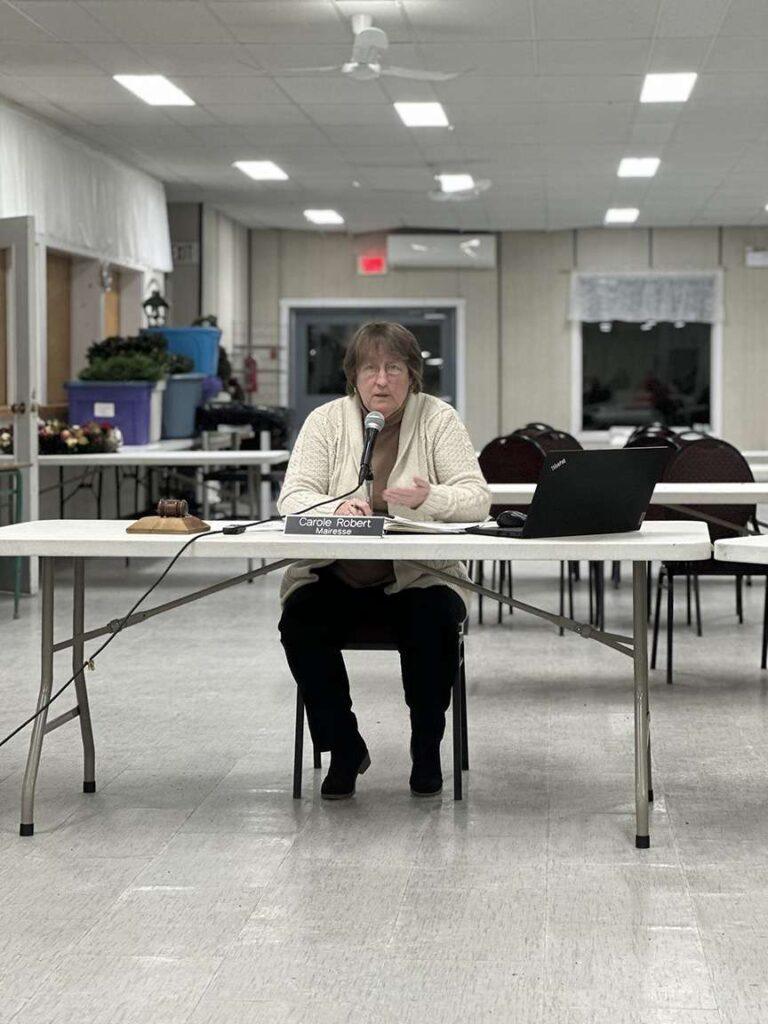
“How come it was two concerned citizens that put on a meeting and not council?” resident Ellen Rice-Hogan said to Mayor Carole Robert. She was referring to a Jan. 5 information session on mining activities, which was put on by Chemin Martindale residents Sylvie Ott and Martin Belanger. “If you’ve known yourself, Carol, since, what, September, give or take?”

Robert told the crowd that she has known about the mining claims since summer when a resident spotted a mining company representative on his land. She said mayors from the 17 municipalities that make up the MRC Vallée-de-la-Gatineau got together in September and passed a resolution to protect water sources across the region. That protection was accepted by the Ministère des Ressources naturelles et des Forêts and took effect in September. But the protection is only temporary and will expire in March.

That’s why, at its Jan. 8 council meeting, Low passed another resolution to protect “agriculture, forests, recreational properties, as well as lakes, streams and the Gatineau River,” from mining claims. The resolution will now go to the MRC, which is building a bigger protection pitch to protect much of the MRC from mining activities. Low also struck a mining committee and named councillors Maureen Rice and Maureen McAvoy to represent the town.

Robert said the mining claim boom in the region began with a massive claim near Manitou Lake, which was made on Crown land. Since then, claims have been popping up all over the region, most of them by mining companies Brunswick Exploration, Lomiko Metals and On Track Exploration.

By press time, 96 claims had been staked in Low, equaling close to 15,000 acres of land throughout the municipality.

“That’s 20 per cent of your municipality that is potentially going to be affected by this,” Rice-Hogan told the mayor.

Rice-Hogan told the Low Down that On Track Exploration has claimed 538 acres on her Low farm – claims that popped up sometime between September and December of 2023.

“It’s so scary,” said Rice-Hogan, flipping through maps to show where the claims have been staked. “It’s a large portion of the property.”

Resident Wally Brownrigg is another resident who has claims on his land. The longtime Low resident says he’s spent close to 50 years on his farm, developing forestry management plans, plantations and a trout pond that flows through the property.

“One inch of that area is equivalent to two million gallons of water going into my trout pond,” he said. “If they dig me up and do that mining, it’s not going to be too good. I own this property and have invested my life into this.”

The mining companies are targeting graphite and lithium used to produce EV car batteries. During the information session held by Ott and Belanger, landowners were encouraged to purchase mining claims on their own property. Anyone can purchase a mining claim using an online registry for as little as $75 – even if that land is owned by someone else. Land claimers are not obligated to notify a landowner if they purchase a claim.

This is what has happened to residents like Rice-Hogan and Brownrigg.

Mining claims are valid for up to three years. Quebec’s Mining Act states that landowners have the right to refuse exploration on their land, although in some cases, expropriation may be possible. Companies may use helicopters to carry out survey work, even without the landowner’s permission.

Low’s pitch to save its territory from mining will go to the MRC later this month before a full protection plan for the MRC is submitted to the ministry.

Mine your own business Read More »

Low arena turns 30 despite ‘90s ‘naysayers’

By Trevor Greenway

Every single nail that has been pounded into the Central Gatineau Arena has been hammered by a local volunteer. Every rivet drilled into the tin, every piece of glass installed into the arena boards, every rafter raised, every line on the ice painted by the hands of a Hills resident.

This Saturday, the arena celebrates its 30th anniversary – a culmination of the last three decades of blood, sweat and tears that volunteers have poured into every inch of the Low arena. From the many hands that helped erect it in 1994 to the scores of locals who keep the lights on today, everyone will be celebrated on Jan. 20.

“There’s gonna be some stuff for kids like sleigh rides and face painting and stuff like that,” said longtime volunteer Scott Mahoney about the anniversary party. He’s flipping through old photos of volunteers who put their lives and farm chores on hold to help build the arena. He pauses on one of a crew of locals posing on scaffolding as they install siding in 1993 – Roddy McCambley and Guy Monette, along with some of the other main builders of the arena. Both have since died but left a legacy in the form of an arena that has become a social hub for the municipality.

Mahoney has been sending these vintage images to family members over the last few days and shared a text message from Monette’s son Jamie:

“That was quite the crew,” wrote Jamie, who agreed to publish the message. “When I left for school that September, I couldn’t believe the progress they had made by Thanksgiving. I remember getting home, and every bale of hay was still in our fields. That crew made massive sacrifices to get that place built.”

The push for an indoor arena in Low began in the 1950s, when the former Gatineau Power Company offered land and money to build an arena, and there was interest from groups from Chelsea to Gracefield. All those pitches failed, including one group of municipal representatives that was one vote shy of kickstarting the arena build. The idea wasn’t reignited until 1991, when the Low Rec Association had plans to buy land and build an arena.

“There was no arena between Hull and Maniwaki,” said Morris O’Connor, former Low mayor, who also became chair of the Central Gatineau Arena Association (CGAA). He was instrumental in securing funding for the arena. After meeting with local politicians, he secured $215,000 in funding for the project.

One thing organizers did not want to have to rely on was municipal funding. Past pitches died on what volunteers called a “decades-long roadblock” as many feared that tax hikes would kill the project. It became a volunteer-driven project with fundraising as the primary source of revenue. In April 1993, the Low & District Lions Club came on board and chipped in another $100,000 for the project.

“It wasn’t easy at first,” said O’Connor, referring to how he convinced many to donate their money, time and equipment. He told the Low Down that “a lot of naysayers” told him that the project would fail like it did in the past. But as the project progressed, more volunteers began showing up, and things started happening. He said he remembers volunteers saying,“Give me something to do.”

“And then, as the thing started getting built, people started saying, ‘Oh, I think it’s looking like it’s going to happen,’” added O’Connor. “And then, just like that, we had 45 to 50 volunteers showing up at the same time.”

The amount of time, equipment and materials donated for the project is impressive. Over 2,800 hours were donated through various organizations, including the Low Rec Club, The Lions Club, the Low Youth Club, the Brennan’s Hill Sports Association and Senior Citizens groups in Low. Nine companies, including Aime Fleury Trucking, Wally Brownrigg and Ronald O’Connor Construction, donated more than 4,000 cubic yards of gravel. Over 100 volunteers showed up in May of 1993 to help prepare the site for the build, which took 10 full eight-hour days. More than 20 companies donated machinery to help prep the site.

Low resident Cecil Crites managed to convince 13 steel workers from Local 711 to volunteer their services to install steel beams, while electrician Aurele Normand, along with 15 fellow wire workers from Bourassa Electric, volunteered to oversee the electrical.

Even the bleachers that fans sit on were donated by the town of Lac-Ste-Marie, and were originally part of the Jarry Park Stadium, where the Montreal Expos home games were first played during the Jackie Robinson era.

Following nearly a full year of construction, the rink boards went up in early December of 1993, and a Zamboni was donated by Rene Mayer, a local, saving the arena another $50,000.

On Jan. 24, 1994, Brennan’s Hill resident and volunteer Yvon Fleury was the first to strap on skates and take a lap on the fresh, gleaming ice. O’Connor and volunteer builder McCambley later joined him – as did a roster of other helpers for an evening skate, which is rumoured to have lasted into the wee hours. The following day, on Jan. 25, the Central Gatineau Arena opened to the public, where more than 250 skaters showed up.

The Central Gatineau Arena has become the gem of the municipality, where local schools get free ice time, and kids get free hockey practices on Saturdays. It’s become a social hub where close to 600 hockey fans pack in every week to see their Paugan Falls Rapids take on their weekly foe; the place where seniors can stay active while getting their curl on; and where families are dazzled by their kids’ spins and twirls during the Gatineau Valley Skating Club’s year-end figure skating show.

“It’s a really important place for sports in the Gatineau,” added O’Connor. “And for the rest, it’s a social place for people to be – it’s great for the kids.”

The arena still operates without municipal funding today, and every person you see selling beer, cooking food or selling 50/50 tickets is not getting paid.

Saturday’s festivities will include a women’s hockey game, curling demonstrations and a food menu cooked by, you guessed it, volunteers. The celebration kicks off at 1 p.m.

Low arena turns 30 despite ‘90s ‘naysayers’ Read More »

Low passes modest budget with 5% hike

By Trevor Greenway

Residents in Low are facing a 5.61 per cent tax increase – a welcome hike compared to last year, in which taxes went up 20 per cent for the median homeowner.

Low councillors along with Mayor Carole Robert passed a $3.6 million budget in 2024, up from the $3.4 million budget in 2023, with the biggest increase coming in public works, which rose from just over $1 million in 2023 to $1.184 million this year.

Mayor Robert said that the public works budget is mostly eaten up by road maintenance, as the municipality has an extensive network of roads that the municipality is constantly working to stay on top of.

She told the Low Down that she was happy with the 2024 budget, touting that the increase this year for the median homeowner is just $42 on a home worth $176,900 – another welcome jump after property values increased by 40 per cent last year.

“So, really, the increase for the median homeowner is 42 bucks, but it will be more for some and less for others,” said Robert, scrolling through finance documents. She even stopped and mentioned her own property and how she will be paying a $77 increase.

“But I don’t mind. Last year was the worst because we got hit hard with the property assessments,” she said.

Robert and councillors increased the mill rate this year to $0.59434 per $100 of property evaluation. The mill rate is the municipal tax rate, which is based on the total value of property within a municipality’s jurisdiction to provide the necessary tax revenue to cover projected expenses.

Police services to the Sûreté du Québec increased by just over five per cent, while environment went up nearly eight per cent. Low’s contribution to the MRC Vallée-de-la-Gatineau rose by nearly 11 per cent, to $331,246.

One thing Robert said she was happy to report was that garbage fees came down this year, from $556 in 2023 to $525.20 per household in 2024. This was another item praised by residents, as some faced massive garbage hikes last year, including Brennan’s Hill owner Tara Shippers who saw a 400 per cent increase.

Robert and other councillors didn’t know how much debt Low has accumulated – or how much of this year’s budget will go to paying down the debt, and the interim director-general couldn’t find the information before press time.

Robert told the Low Down that the municipality is looking to add infrastructure for seniors and has big plans to build a new town hall and new fire station, but those are bigger, wish-list type projects she said she’d like to see realized.

“The fire station we have has been there since 1962,” said Robert. “Our fire department is growing out of it, and it just doesn’t make sense to add on to an older building.”

Projects on the books for this year include a new park at 400 Hwy 105 for kids and a new gazebo structure near the football fields so seniors can stay in the shade while enjoying local high school sports events.

“You know, things are starting to move,” said Robert. “And we’re happy to see things like that because it’s for the citizens and for kids. The gazebo in the back was important for me because I always thought that our seniors don’t go out to watch a game or whatever because of the sun. But just having this gazebo gives them a shady area to sit while they enjoy a football or softball game.”

Low passes modest budget with 5% hike Read More »

New short term mental health unit for those in crisis

By Trevor Greenway

A new short-term mental health unit in Gatineau is getting people get the help they need when they are in a crisis and it doesn’t matter what language they speak.

The new L’unité d’intervention brève en psychiatrie (UIBP) brief psychiatric intervention unit at the Centre intégré de santé et des services sociaux (CISSS) de l’Outaouais offers stays up to 72 hours for “any person aged 18 and over who is in a crisis situation with psychiatric components,” and whose daily life is affected to the point where “an episode of inpatient care is necessary to stabilize his or her state of health.”

The new service was launched in September last year, and 68 patients have already come through the program.

“Services are offered in both French and English,” said CISSS de l’Outaouais communications officer Quern Boua. “In addition, an interpreter can be called in if needed in another language.”

Boua said the new unit is “not linked to an increase in mental health calls/visits but rather to an initiative stemming from the interdepartmental mental health action plan.”

The new program is part of the Professional and Technical Health and Social Services Personnel Alliance’s (APTS) interministerial mental health action plan and aims to provide an alternative to lengthy hospital stays for those dealing with mental health issues. Boua said that those who are in crisis still need to first see an ER doctor at a hospital, who can then refer them to an on-call psychologist. This psychologist can then refer the patient to the UIBP, and they will be transferred to the mental health unit immediately, where they will receive care from a team of up to eight caregivers, including psychiatrists, nurses, psychiatric intervention officers and social workers.

“The person does not need to have a regular psychiatrist beforehand, but must be seen by a psychiatrist at the emergency level,” explained Boua.

She added that the program aims to “reduce the ‘revolving door’ phenomenon” around mental health treatment.

“The unit aims to overcome the limitations of traditional psychiatric hospitalization while reducing the length of hospital stay,” she said. “The expected length of hospitalization is around 48 to 72 hours.” She added that the unit’s objectives are to “stabilize the crisis, confirm or make a diagnosis, initiate treatment, strengthen coping skills for recovery in the community and ensure continuity of care after discharge.”

The program also includes support for families and at-home caregivers to “equip loved ones to facilitate their role with the patient.”

The new UIBP unit is located inside the Gatineau Hospital. For more information on the program, visit the CISSS de l’Outaouais at www.cisss-outaouais.gouv.qc.ca.

New short term mental health unit for those in crisis Read More »

Local IGA workers get 24% salary boost

By Madeline Kerr

Employees of IGA Famille Charles in Chelsea will see their salary increase by 24 per cent over the next seven years thanks to a new collective agreement signed with the local division of the United Food and Commercial Workers union (UFCW).

It’s a notable victory in an industry that has been under heavy scrutiny lately following reports that Canada’s top grocers made record profits of over $6 billion in 2023, while many grocery store workers’ wages haven’t even kept up with the pace of inflation.

Besides higher wages for all unionized employees, department supervisor bonuses will increase from $0.65 to $1 per hour worked. The union’s dental plan will continue to be fully paid for by the employer, and three new regular positions will be created. Spokesperson for UFCW Roxane Larouche told the Low Down that these improvements will help the store attract and retain workers.

Negotiations took place over just two meetings, which Larouche described as having “a harmonious climate.” She explained that approximately 80 employees will benefit from the collective agreement, which came into effect on Dec. 12, 2023.

IGA stores are supplied by Sobeys, the second largest grocer in Canada after Loblaws, and are owned by Empire Company Limited. Empire’s CEO Michael Medline made more than $8.6 million in total compensation in 2022, up from just over $7.4 million the year before, according to the Canadian private sector union Unifor.

Loblaws’ CEO Galen Weston Jr. made a staggering $11.9 million in compensation in 2022. Unifor concluded in a report published in April 2023 that the average grocery store employee – who at the time earned $18.97 per hour according to Statistics Canada – would have to work 340 years to earn Westen’s pay in just one year.

Local UFCW president Antonia Filato said in a statement that the latest salary raise for IGA Famille Charles workers is a good example of how “collective agreements ensure that our members obtain fair and equitable recognition for the work accomplished for their employer.”

Local IGA workers get 24% salary boost Read More »

Quarry bid too high

By Trevor Greenway

Chelsea Mayor Pierre Guénard says that if the municipality would have been successful in its bid to purchase 86 acres of land in the Déry Quarry, the group pushing for a new field hockey pitch, sports training centre and protected lands “would have been at the table.”

But the municipality bid 582 per cent more than it was allowed to when it tried to buy the quarry for $6 million – $5.1 million more than the land was valued at; the province’s Ministry of Municipal Affairs and Housing (MMAH) stepped in and said it wouldn’t fund a borrowing bylaw for that amount.

“When Mr. Déry suggested that the municipality buy his land, the municipality immediately showed an interest in this transaction with a view to creating social housing, improving the recreational offer and protecting the wetlands,” explained Chelsea spokesperson Maude Prud’homme-Séguin. “The municipality then contacted MMAH to find out about the financing conditions we would need to obtain the loan. MMAH replied that an assessment by a certified appraiser was required and that it would finance only the amount of this assessment plus 10 per cent. After negotiations with Mr. Déry, the municipality signed a promise to purchase for $6 million, including conditions related to financing with MMAH.”

According to a private land assessment from January, obtained through an access-to-information request last week, the quarry – 86 acres of land in Farm Point – was valued at $879,000 in January of this year. This proved a difference of $5.1 million between the assessment and the offer price, and the MMAH said no.

“The municipality subsequently received the appraiser’s report, which valued the land at $879,000,” she added. The municipality initially gave the Low Down incorrect figures, comparing the assessment to market value, when it should have given the munipality’s offer price. “Since the difference between the appraisal we received and the promise to purchase was 582 per cent, the promise to purchase was automatically cancelled.”

A 2023 MRC des Collines property assessment valued the land even lower – at $520,387.

Prud’homme-Seguin said the maximum the MMAH would finance in this deal would have been a $1 million bid for the property.

When asked why the municipality bid so high over the assessed value of the land, Guénard said that it was the price that Chelsea and landowner Laurent Déry had agreed upon when they made a promise to purchase the property in fall 2022. The municipality didn’t receive the private assessment until January 2023.

According to Guénard, council was supportive of former Olympian field hockey player Ian Bird’s idea to build a new field hockey pitch, training centre and a corridor of protected lands with Action Chelsea for the Respect of the Environment. But, because the deal fell through, so did the “dream project,” as some in the community have called it.

“We wanted to support some local groups and create the diversity and the offer of recreation,” said Guénard. “They would have been at the table to plan the whole thing.”

For his part, quarry owner Déry told the Low Down in late November that he is now in talks with private developers but wouldn’t talk about anything specific.

Quarry bid too high Read More »

Demand for food banks is up, but so is giving

By Madeline Kerr

If you want to give help to others, cash is king.

That’s the message from Cédric Tessier, the executive director for Centraide Outaouais, a local food aid organization, who told the Low Down: “At this time of the year, the best way to help us is to make a donation online.”

Marie-Pier Chaput, the director general of another local food aid organization, Le Grenier des Collines in Val-des-Monts, echoed that sentiment. She said her organization appreciates all of the food donations that it receives, but cash donations offer Le Grenier greater flexibility to purchase the food they need. She explained that often the food bank receives discounts for bulk purchases, meaning that a cash donation can go even further than you think.

“Inflation has caused real financial problems for people in the lower middle class and they now need services they didn’t need before,” Tessier said.

Centraide, which is often known as United Way in other parts of Canada, is a federation of nonprofit organizations that seeks to combat poverty and improve lives for some of the most vulnerable in society. It provides money and services to 88 community agencies, Tessier explained, which have all seen an increase in demand this year.

That increase means that this year the organization, which is headquartered in Gatineau, helped 88,000 people, according to Tessier – that’s roughly 20 per cent of the region’s population.

Tessier confirmed that supply has risen too.

“We collected 3.8 million dollars last year and this year, our goal is 4 million dollars,” he said. “We don’t know yet if we will reach that goal, but we’re on the right path to reach it.”

Tessier encouraged folks who want to give to Centraide Outaouais to consider entering the 50/50 draw on the organization’s website, where regular donations can also be made.

Linda Bardell, a volunteer with the Wakefield Food Pantry and Community Fridge, said that her organization, which runs out of the Shepherd of Good Hope church on Riverside Drive in Wakefield, has seen a lot of new faces this year, including an influx of young families.

While demand has gone up, Bardell said jokingly, “we don’t need crowd control yet.”

That’s because donations have been able to rise to meet the needs of the community. The Food Pantry was collecting cash and non-perishable donations on Dec. 9 at this year’s annual Wakefield Christmas Market and Bardell said, while she didn’t want to disclose the exact amount, “we did extremely well and we’re very happy.”

Food can be dropped off any time at the Wakefield Community Fridge located outside the Shepherd of Good Hope. The most desirable items are fresh fruits and vegetables, as well as commercially packaged meals and meat before its “best date.” Condiments, soups and homemade goods like jams and baking should not be donated to the Fridge.

Bardell said the organization is also welcoming donations by e-transfer to gsw@anglicansinthehills.ca. Be sure to write “food pantry: in the memo.

Food banks across the country are seeing an all-time high of people using their services. According to a recent study by Food Banks Canada, 2023 saw the highest food bank usage since the company began collecting data in 1989.

Demand for food banks is up, but so is giving Read More »

Unlimited teacher’s strike ‘in our back pocket’

By Trevor Greenway

Steven Le Sueur said it was “an easy decision” to reject the Quebec government’s latest offer, which would have seen teachers, nurses and public sector workers in the province get a 12.7 per cent raise over the next five years.

The head of the Quebec Provincial Association of Teachers (QPAT) told the Low Down that the offer was rejected immediately because it’s not retroactive to 2022.

“For cost of living, you look back a year,” said Le Sueur. “And they’re leaving [2022] out like it didn’t happen. It should have been 18 or 18.1 per cent, if we are looking at all the cost of living.”

Le Sueur confirmed that the demand from the Common Front union, which includes 420,000 teachers, social and health workers and public sector employees, is a 21 per cent increase over three years and said the latest offer “isn’t cutting it.”

Despite the low offer, Le Sueur said he is “optimistic” about negotiations, especially since there are new players at the table, including the French union, The Fédération des syndicats de l’enseignement (FSE), which represents 95,000 French teachers under 34 separate unions.

“I am hopeful, very optimistic. But you have to be realistic just the same,” said Le Sueur. “But yeah, we’re at a new table. It’s a combined table with the FSE and QPAT, and there are new players from the Treasury Board. And I think the real negotiations started as of [Dec. 7].”

Wakefield teacher and union rep Shannon Langlois was out on the picket line Dec. 8, as teachers with QPAT have launched a seven-day strike between Dec. 8 and 14. Langlois told the Low Down that, although parents are being impacted by the intermittent strikes, teachers are receiving a lot of support from passersby.

“I feel like every person I talked to, although definitely the parents are impacted because it’s really disruptive, but I think they still support us,” said Langlois, as she waved a green Common Front union flag that read, “With one voice.”

“And all the parent–teacher meetings are very encouraging,” she continued. “They understand what the conditions are and what we’re trying to fight for.” Langlois said that the latest offer doesn’t cover inflation, which has been predicted to raise by 17.7 per cent over the next five years, according to Quebec financial institution Desjardins.

“So it’s still a really low offer for all of the public service workers in our province, who are among the lowest paid in the country, I think,” added Langlois. She’s not wrong. According to Stats Canada data from October, Quebec teachers are, in fact, the lowest paid in the country. The base salary for a primary teacher in Quebec is $52,227. By comparison, Ontario teachers are paid $55,782. But where Quebec really lags is in salary increases. The Stats Canada data also reveals that, in Ontario, teachers with 10 years of experience get ​​$102,952, compared to just $70,197 here. Teacher’s salaries in Quebec top out at $88,652.

Le Sueur added that QPAT has an unlimited strike for January “in our back pocket,” but hopes an agreement is reached before that.

Union reps with the region’s French union, The Fédération autonome de l’enseignement (FAE), did not return the Low Down’s calls by press time.

Unlimited teacher’s strike ‘in our back pocket’ Read More »

Bill 15 adopted

By Trevor Greenway

An anglophone rights group is slamming the Quebec government for “thumbing its nose” at thousands of residents who have expressed serious concerns over the CAQ’s health reform, Bill 15.

Despite a petition calling for a halt to the bill, which garnered an impressive 6,400 signatures in less than a week, the ruling CAQ government invoked closure on the bill that the Quebec Community Groups Network (QCGN) says will “upend Quebec’s health and social-services network.”

“The enormous effort to centralize the health and social-services network, part of the CAQ government’s command-and-control strategy, will do nothing to ease the crises in our hospitals where people have died in overcrowded emergency rooms while waiting to see a doctor,” wrote QCGN president Eva Ludvig in a statement. “This same government made a solemn promise during debate on Bill 96 last year to not touch the English-speaking community’s access to health and social services in their own language.”

After failing to reach an agreement with opposition parties to extend the session on Dec. 8, the CAQ government invoked closure on the bill – a power enabling the party to end debate and fast track the bill’s adoption before the end of the legislative session.

The healthcare reform will see Quebec operate under a new centralized administration model, where one central authority – Santé Québec – will make decisions for the province’s 17 administrative regions.

Local health watchdogs from Vigi Santé say they are worried the healthcare reform bill will mean that English residents in the province could lose services in their first language. That fear sprung from an amendment tabled by Quebec Health Minister Christian Dubé last week that would give Santé Quebec the power to strip English services in places with less than 50 per cent anglophones. He later back-pedalled and tabled a new amendment that still gives the health authority the power to revoke the bilingual status of a health agency but will also require recommendations for such a move from a national health advisory committee and a regional committee.

Vigi Santé spokesperson Marcel Chartrand said that, while the new amendment is a “safeguard,” his health watchdog group isn’t convinced it will actually protect English rights.

“If the right people are on those advisory boards, I think we would be okay,” said Chartrand. “But again, the regional authority will have the last word; it won’t be the committee, so that’s a major concern.”

Chartrand said the amendment is a “slippery slope,” and has questions as to who would serve on these advisory boards – whether it would be the regional prefect or mayors from municipalities. He argued that there should be more local representatives called to sit on these committees.

“It has got to be more than that,” said Chartrand, referring to just professionals on the committees. “[The committees] must include community groups, not just professionals and not just politicians.”

Chartrand says his Vigi Santé group is campaigning for more services to be decentralized, especially mental health and social care initiatives.

In May, Premier François Legault told reporters that his government “will not refuse to treat a patient in English if it’s needed.” This statement no longer sits well with the QCGN, who took aim at the premier in its Dec. 8 statement, saying, “It is now crystal clear that no one can trust this government on anything.”

“From education to healthcare, from university tuition to trying to reduce the presence of unions in the management of the public service, the CAQ government wants to control everything it touches with as little public input as possible,” wrote Ludvig. “That should worry all of us as Quebecers very much indeed.”

Bill 15 adopted Read More »

Critics warn Bill 15 will mean no health care in English

By Trevor Greenway

Gatineau MNA Robert Bussière says that anyone who lives in Quebec before the government adopts Bill 15 will have their rights to English healthcare grandfathered in.

Anyone who moves to the province after his CAQ government passes its healthcare reform bill, well, he isn’t so sure.

His words come just days after Quebec Health Minister Christian Dubé tabled an amendment to Bill 15 that would give the province’s new health authority – Santé Quebec – the power to strip English services in places with less than 50 per cent anglophones. Critics were quick to call out the amendment, arguing that it would restrict English-speaking Quebecers’ right to healthcare in their first language, but Bussière defended the bill and said local, English-speaking residents have nothing to fear.

“Chelsea is a good example where [the population] is less than 50 per cent English speakers right now, and, if I remember well, the municipality keeps giving the services in English,” said Bussière. “I was in La Pêche for 28 years, and we were always under 50 per cent, but we chose as a municipality to keep giving English services, even though we were not obliged to.”

Chelsea passed a bilingual designation bylaw earlier this year, as did close to 90 cities, towns and villages throughout the province, to continue to provide English services to residents. La Pêche does not have bilingual status, as 58 per cent of residents list French as their first language, but the municipality still offers some English services to residents. In Chelsea, English speakers account for 47.8 per cent of the population, according to 2021 Census data.

“If you go to the hospital and you were born in Quebec, you’re entitled to your service in English, and that will continue forever,” said Bussière. “If you are here at the time when we adopt [Bill 15], you’re allowed to have your services, and we will continue giving them to you.”

When asked what happens if someone moves to Quebec after Bill 15 is tabled, he said he didn’t know.

However the MNA’s comments on the matter seem to be out of line with his own party. There has never been any talk from the CAQ government about grandfathering in English health rights, and healthcare watchdogs in the region say they aren’t convinced that the CAQ will protect them.

If Quebec decides to strip bilingual health services based on regional population numbers, which has been mentioned, all English speakers in the MRC des Collines region would be affected. According to 2021 census data, 39,545 residents in the region list French as their first language, compared to just 14,020 English speakers. That converts to just over 25 per cent of residents whose mother tongue is English.

This is what has healthcare advocates worried, as they say they aren’t clear on what data the government will use when defining populations and who will ultimately decide to revoke a health institution’s bilingual status.

“Of course, it affects the community. Our community is so bilingual. I live in Chelsea, you’re in Wakefield, and we know how important these services are,” said Marcel Chartrand, referring to where this reporter works out of. Chartrand’s a spokesperson for Vigi Santé, a healthcare watchdog group in the Outaouais.

“We try to maintain a level of services for anglophones as clearly as possible, especially in the health system. If that change occurs, it would impact everywhere in the MRC des Collines,” added Chartrand.

Quebecers from across the province have been fighting against the bill with more than 6,400 residents signing a petition against it in just six days. The Quebec Community Groups Network (QCGN) was expected to present the petition to the National Assembly Dec. 5.

A day after Dubé tabled his controversial motion, he back-pedalled and said he didn’t understand the impact the amendment could have on English-speaking communities. He is now awaiting further clarification from experts, namely the Office québécois de la langue française. He told reporters in Montreal on Dec. 4 that he is prepared to trash the amendment if it’s determined that it would threaten the bilingual status of hospitals or the possibility of obtaining services in English.

However, Quebec Liberal party Health Critic André Fortin said he and his party are “struggling to understand” how CAQ couldn’t have anticipated such an amendment would have a major impact on English speakers in Quebec. He said Dubé and his lawyers “downplayed” the impact during caucus discussions but then back-pedalled when he was called out publicly.

“It’s pretty plainly obvious to us and to a lot of English-speaking backers that removing bilingual status from any healthcare establishment is going to ensure or is going to make it so that some people just don’t have access,” Fortin told the Low Down. “People need healthcare in their own language; you have to understand what the prescriptions you are given entail; what your condition requires in terms of care; you have to be able to understand the healthcare professionals that are treating you; so for him to not see the impact and bring forward an amendment like this is shocking.”

Bill 15 is the province’s major healthcare reform bill and will centralize healthcare services, with one central body – Santé Quebec – making the decisions for the province’s 17 administrative regions.

QCGN president Eva Ludvig accused the government of rushing the bill through and said the latest amendment contributes to a “very nasty pattern” from the CAQ government to trample on one culture’s rights to boost another’s.

“We are shocked that Health Minister Christian Dubé would try to drop an amendment like this into Bill 15 at the last moment, days before the government is about to invoke closure to ram this bill through the National Assembly,” said Ludvig. “It seems the only way they feel they can protect and promote French in Quebec is to restrict or deny the rights and access to services of the English-speaking community here – even when those minority-language rights are guaranteed by law.”

Critics warn Bill 15 will mean no health care in English Read More »

Advo-cats drop pet-ition to save ferals

By Madeline Kerr

Everyone knows a cat has nine lives, but few may be aware that an unspayed female cat can have around 12 kittens in a single year.

This is part of the reason why some residents of La Pêche say they worry that if nothing is done to address the growing number of feral cats in the municipality, the issue could get out of hand, causing both cats and other local wildlife to seriously suffer.

A petition put forward by La Pêche resident Natasha Sabolotny is asking residents to show their support for a humane solution to the problem. At the time of publication, Sabolotny’s petition on Change.org has garnered 3,915 signatures.

In part, the petition states, “It’s time to demand that the municipality of La Pêche take responsibility for the ethical treatment of all pets.”

Part of the problem, Sabolotny’s petition explains, is the fact that the company employed by the municipality to deal with animal control does not provide services for stray cats. Starting in 2021, the municipality of La Pêche ended its former agreement with the SPCA and signed a two-year deal with a local company Anitek.

Unlike the SPCA, Anitek’s services are mostly limited to stray dogs, meaning there is little help available when it comes to stray cats.

Anitek’s services also come with a larger price tag: while the municipality spent a little more than $31,800 in 2019 to work with the SPCA, this year its contract with Anitek costs $41,900. La Pêche Mayor Guillaume Lamoureux justified the expense of Anitek’s services over SPCA saying that the number of dogs registered in the municipality has doubled thanks to Anitek’s services – namely his digital dog tag registrar, which helps offset the cost.

On Nov. 7, a group of residents, including Sabolotny, met with Lamoureux to discuss their concerns. Wakefield resident Justine Nolan attended the meeting, where she explained to the mayor the scope of the feral cat problem and put forward possible solutions to resolve it.

Nolan said that she and others believe there are close to 200 cats living in a colony near Burnt Hill in Edelweiss and another 35 cats at a colony in Lac-des-Loups. Feral cats are by nature skittish and hard to count, making it difficult to get exact numbers, she said, adding that there are likely to be several other pockets of feral cats throughout the municipality.

Part of the problem is that feral cats poach birds and other wildlife, which can have a negative impact on local ecosystems, Nolan explained. Unvaccinated cats can also spread disease to domesticated pets they come in contact with.

“Cruelty towards animals is also one of the biggest concerns,” Nolan said. “People put [kittens] in bags, suffocate them, drown them…the population getting out of control sadly means that [this kind of] behaviour is more likely.”

One solution, residents like Nolan and Sabolotny say, would be to implement a Trap, Neuter, Release and Maintain program (TNRM) through any area clinics offering neutering, ideally with funding from the municipality.

Another solution is to attract more veterinarians to the municipality, according to the group. Currently there is only one vet, Dr. Penny Wootton, working at the Wakefield veterinary clinic, who also works in Chelsea, meaning few can access vet services in the area.

Yet another possible solution, according to Nolan, includes discounts for La Pêche residents who want to spay or neuter a pet.

Lamoureux has said he recognizes that cats are underserved by the current arrangement. He told the Low Down the municipality has been in touch with the SPCA to enlist their help dealing with feral cats in the region but has been told that due to lack of human resources and limited space in their facility, they are unable to provide support.

“I am periodically in touch with the director of the SPCA to see if the situation evolves,” he added.

Advo-cats drop pet-ition to save ferals Read More »

Measuring contributions to Chelsea Foundation land

By Madeline Kerr

Hundreds of families, thousands of hours, hundreds of thousands of dollars.

These numbers represents just a slice of the community’s contributions to securing, building and maintaining the 20 acres of recreational land in the centre of Chelsea village, owned and operated by the Chelsea Foundation, according to its president, Fiona Duguid.

On Oct. 30, Chelsea council voted to move ahead with plans to try and acquire part of that land in order to build a new French-language elementary school, which the municipality and the local school service centre say is imminently needed.

One of The Chelsea Foundation’s first acts after its creation in the mid-1990s was to raise money and purchase a plot of land in Old Chelsea from Elizabeth Meredith, who hoped it would remain a recreational green space to be used by the community. The Foundation is a non-profit charitable organization that seeks to promote sport, culture and leisure, as well as foster a sense of community in the municipality.

After buying the land, Duguid said, “over $600,000 was fundraised from the community to cover land transfer costs, road development and field development. The in-kind donations of heavy equipment, landscaping expertise, project management and materials were also essential, along with the thousands of hours of sweat-equity provided by community members to literally break ground for the soccer fields to be developed.”

All of which contributed to the creation of a recreational hub that Chelsea families have been able to enjoy for the past 20 years.

“Every child in Chelsea has played on these fields with parents and grandparents coaching, cheering and playing too,” Duguid said. “In essence, it is an example of the community coming together for a common cause.”

Using registration data from 1998 to 2019, Duguid estimated that an average of 556 Soccer Chelsea players use the Foundations’ fields from May to September each year. This number does not include summer camps, tournaments or any other events held on the fields, she explained.

Besides this, Duguid listed a number of other uses of the fields on a regular basis, including: gym classes; orienteering; track and field meets and other special events by students at Chelsea Elementary and Chelsea Montessori; adult recreational soccer in the summer; and Vibrant Ultimate frisbee games from May through October each year.

Duguid said that the Foundation first heard about the municipality’s desire to acquire part of the land – specifically one of its soccer fields – on Aug. 16, 2023. On Sept. 6 the municipality informed the Foundation that it wanted to acquire approximately four acres of its 20 acres of land.

In an email to the Low Down, Chelsea municipal spokesperson Maude Prud’homme-Séguin explained that, “Very early on in the process, the municipality offered to relocate the soccer field, at its own expense, on one of its properties, in order to reach a win/win agreement, which the Foundation refused.”

At the council meeting on Oct. 30, Mayor Pierre Guénard explained that the municipality was asked to provide the local French school service centre (CSSPO) with a list of all lots in the urban perimeter with a surface area of over 25,000 square metres serviced by a water system.

He explained that the municipality made it clear they favoured other sites for the school building, including behind La Fab sur Mill on Mill Road, but this suggestion was rejected by CSSPO based on a lengthy list of criteria it uses to determine suitable sites for future schools.

Some residents at the meeting implored council to push back against CSSPO’s decision, but Mayor Guénard and several councillors made it clear they feel their hands are tied.

“We have to consider both the Foundation’s needs and those of the population,” Prud’homme-Séguin later explained. “This school will enable 300 students a year to continue their education in a modern school on Chelsea territory.”

On Oct. 30, the council voted to enlist the services of RPGL Lawyers in Gatineau to move ahead with acquiring the land.

Measuring contributions to Chelsea Foundation land Read More »

Chelsea approves more spending for River Road

By Madeline Kerr

Chelsea councillors have voted to approve more funding for further work on River Road, which has been undergoing a major renovation since July.

At a council meeting on Nov. 7, councillors voted in favour of additional spending to replace a culvert and install road slopes.

The total budget for the rehabilitation of the road is now $13.7 million, although Chelsea municipal spokesperson Maude Prud’homme-Séguin told the Low Down that, to date, the municipality has spent around only $5.5 million.

“Unless there’s a major surprise, we don’t expect any cost overruns by the end of the project, despite other additional expenses to come,” she said.

When it was initially announced early last year, Chelsea had earmarked $12.4 million to complete the entire project, which will include full reconstruction of over six kilometres of road from the border with La Pêche to Hwy 105, as well as widening the road near the Cascades Club and upgrading more than 20 culverts.

The council meeting on Nov. 7 was not live streamed or recorded due to a power failure, according to the municipality’s website. The minutes of the meeting will become publicly available after they are officially adopted at a future council meeting.

Chelsea approves more spending for River Road Read More »

No surprises’ for regional schools this year numbers-wise

By Madeline Kerr

After years of uncertainty during the pandemic, regional schools are breathing a sigh of relief that enrolment numbers are steady and predictable this year.

According to George Singfield, the director-general of the Western Quebec School Board (WQSB), the slight increase in the number of students registered with his board’s 31 schools was no surprise. Singfield reported that the WQSB welcomed 7,990 students from K4 through Grade 11 this year, up from 7,909 last year.

Homeschooling numbers, which Singfield said used to hover around 70 students who were registered with the school board but receiving their education at home, jumped up to 300 during the pandemic but have settled to 117 this year.

“There’s always a little bit of fluctuation,” said Singfield. “The ministry gives us good projections.”

The region’s French school board, the Centre de services scolaire des Portages-de-l’Outaouais (CSSPO), has seen similar growth across its 25 schools, with an increase of 352 students this year. CSSPO communications coordinator Maude Hébert told the Low Down that the jump to 18,261 total students across the region was expected.

Recently, Chelsea municipality announced that it was one step closer to building a new French language elementary school, which it hopes to do by 2026. A spokesperson for the municipality told the Low Down that the number of students requiring placement in a French school in Chelsea will climb by 300 by 2026. Until then, CSSPO plans to accommodate surplus students at Grande Boisé, currently Chelsea’s only French elementary school.

Both WQSB and CSSPO report that all schools in the region are currently fully staffed, despite an announcement by Quebec’s Education Ministry at the start of the school year that the province faced widespread teacher shortages.

Earlier this month, news outlets reported that violent incidents were on the rise in Quebec schools. Regionally, that is not the case, according to local school authorities. Neither Singfield nor Hébert reported heightened concerns regarding violence in their schools.

“Thank goodness we have not seen this [increase in violence] at our school,” added Hadley Junior and Philemon Wright High School principal Dodie Payne.

No surprises’ for regional schools this year numbers-wise Read More »

Tugging at Chelsea’s heartstrings

By Madeline Kerr

Pic II, the tugboat-turned play-structure that’s sat outside Chelsea Elementary school for the last 30 years, briefly took flight on the morning of Friday, Sept. 29.

Before the school day began, Roy’s Crane Service from Gatineau was gearing up to hoist the 60-year-old, 15-tonne boat onto a flatbed truck to be moved to a designated spot in Morrison’s Quarry — a temporary resting place before it is moved to a more permanent location along the community trail in north Chelsea sometime next year.

The move was paid for and coordinated by the Western Quebec School Board. Former Chelsea Elementary principal, Andrea Gage, was instrumental in ensuring the historic boat would be preserved, after the school board deemed it unsafe to stay on the school playground, where it was beloved by generations of children.

Pic II was originally used to help the log driving that took place along the Gatineau River until the early 1990s. When the log drive ended, a group of parents at Chelsea Elementary worked to have the boat saved and brought to the school grounds. This past June, students gave a heartfelt farewell to the old boat with a school-wide ceremony.

Cynthia Boyko is a former student of Chelsea Elementary and now the parent to third-grader Gabriel. She said her son loved the boat and was sad to see it go. Boyko took videos of the Pic II being raised into the air to show her son later. “It meant a lot to the students here,” she said.

Sentier Chelsea Trails board member and Les Amis de la Voie Verte Chelsea president Sandy Foote was present as well and remarked that his two grown-up children also had fond memories of playing on the boat when they were young. He said he is pleased that Pic II, emblematic of the region’s history, will remain in the community.

The Pic II has seen it all now: from water to land to flight. After so many years of service, it’s easy to imagine the old boat is looking forward to its retirement overlooking the Gatineau River from the edge of the Chelsea trail.

Tugging at Chelsea’s heartstrings Read More »

Heritage gets women’s hockey

By Trevor Greenway

Heritage College is looking for the next female hockey star.

Or, rather, 23 female hockey stars who can don the Hurricanes jersey next season and make history as the school’s first-ever women’s collegiate hockey team.

“We’re very excited,” said Julie Knerr, coordinator of student services at Heritage College a few days after the school’s bid to ice a women’s hockey team in 2024 was accepted by the Réseau du sport étudiant du Québec (RSEQ), the province’s college sport governing body. “It’s a big push for not only the school but for the community and hockey in the area,” added Knerr.

Most of the region’s elite female hockey players – from Gatineau to Maniwaki – don’t have any options locally to play collegiate hockey, unless they make the hop to Ottawa or move to Montreal to play at John Abbott or Dawson College. But a new team at Heritage means that prospective players won’t have to move to play at that level. Knerr said the school will be recruiting from multiple leagues over the next several months — from the AAA leagues in Gatineau to elite hockey programs in Ottawa and beyond.

“There’s a lot of talent up here, and all those girls who would have had to go to Montreal in order to play collegiate hockey, they can now play in their backyard,” added Knerr. “We’re going to look across the river as well for Ontario players that might want to look at continuing their education and playing hockey at the same time.” She added that the school is inclusive to players outside the region as well.

The school’s new women’s hockey team is part of a major boost in athletics at Heritage College. The school is just putting the finishing touches on a new, $2.2 million state-of-the-art sports field that boasts soccer and football fields, multi-sport courts and outdoor training facilities.

The new women’s hockey team will get the “full hockey experience,” said Knerr, adding that the team will have its own dressing room and practice facility at Arena Cholette, just minutes from campus.

Knerr and Heritage College director of students services Julie Goulet said that the timing for a new women’s team is perfect, given that the new Professional Women’s Hockey League (PWHL) is launching its inaugural season in 2024.

“Now that we have the PWHL coming into town, and with the positivity within women’s hockey and the growth, the timing couldn’t be any better,” added Knerr. “We saw an opportunity to make a bid with the RSEQ, and we are super happy to have the program.”

The Heritage Hurricanes women’s hockey team will play in Division 2 of the RSEQ collegiate league along with five other teams, including fellow expansion team the Lynx from Cégep Édouard Montpetit. The Hurricanes team will play its first game in the 2024/25 school year.

Heritage gets women’s hockey Read More »

Choose well-made, local goods over Amazon this Xmas

By Trevor Greenway

If there is one thing Pamela Falkner wants you to do this holiday season, it’s to forget about Amazon.

Skip the mass-produced plastic toys, the gimmicky gadgets and the cheaply-made gifts, and instead get your loved one something truly unique, something handmade, something local.

You’ll have lots of time to browse for such goods at the Des Collines Health Foundation Craft Fair this year, as more than 70 artisans will be setting up inside the Meredith Centre Nov. 4-5 to sell their wares.

The Craft Fair is usually held at Vorlage, but it’s being moved to Chelsea this year because the Meredith Centre is more accessible, as it has elevators.

Falkner said that this year’s list of artisans has been “curated” to ensure the goods being sold are local, handmade or by artists who are “transforming” something.

“So we took applications in, and then had a committee curate to focus on local craft people either handmade or transforming,” said Falkner, director at the Foundation. “Not somebody that was just reselling goods.”

And there will be tons of these local crafts to browse — everything from local art courtesy of artists Jane Macmillan and Celine Moriset to handmade gifts from Mud Pies PotteryZola Handmade Goods, including toques from Knots & Purls and much more.

“When you look at the breadth of talent around here, it’s incredible,” added Falkner. “Traditional art potteries, clothing, leather goods, lots of food people. There’s skincare products, candles and all sorts of things.”

The Craft Fair is one of the premiere fundraising events for the Des Collines Health Foundation, and organizers would like to bring in $20,000 from this year’s event. Falkner said the Craft Fair average is usually around $18,000, but they’re hoping to push it over the top. The Foundation is a non-profit health organization located in the Gatineau Hills region, which fundraises for healthcare.

This year’s money will go towards purchasing automated chairs, a bladder ultrasound machine, a chair lift and television sets for patients in the short-term care unit at the Wakefield Hospital, among other items.

Falkner said she and her fellow volunteers at the Foundation have been “blown away” by the support they’ve received from the community this year — both from shoppers and volunteers looking to help out. Through such events as the Masquerade Ball, the curling bonspiel, golf tournament and garden party, the Foundation has brought in an impressive $36,700. These past events have helped the Foundation purchase things like a Bladder Scan for the CHSLD (resident and long-term care centres), bariatric beds (heavy-duty beds, typically wider than standard hospital beds), sit-to-stand aids and hydraulic and shower chairs for the region’s long-term and palliative care homes.

The Craft Fair takes over the Meredith Centre on Nov. 4 and 5, both days beginning at 10 a.m. On Saturday, the fair runs until 4 p.m. and on Sunday, it runs until 3 p.m. For more information or to browse the list of vendors, check the Des Collines Health Foundation website.

Choose well-made, local goods over Amazon this Xmas Read More »

Fire smokes out seniors residence

By Madeline Kerr

Three separate fire-related incidents displaced 17 residents from Le Manoir seniors residence and shut down Wakefield village on Oct. 11.

At around 9:30 a.m. the fire department first visited Le Manoir, located at 775 Riverside Dr., after a small electrical fire in the building’s laundry room was detected. The first was deemed under control at the time, but a couple of hours later, firefighters returned following a report that thick smoke had begun to spread through part of the building.

MRC-des-Collines Police spokesperson Martin Fournel told the Low Down that there are approximately 60 residents housed in the building who were all safely evacuated. No injuries were reported and a statement released by the municipality of La Pêche said that Le Manoir’s emergency plan was implemented effectively.

Nine fire trucks, multiple police cars and an ambulance made the road impassable until mid-afternoon. Residents of three out of four sections of the building were allowed to return to their rooms later that same day, but 17 residents from one section of the building had to be temporarily relocated as their rooms required clearing after having been filled with smoke.

Health authorities with Centre intégré de santé et des services sociaux de l’Outaouais (CISSSO) took charge of caring for the displaced residents.

That evening, fire trucks once again returned to Le Manoir following a report that someone in the building smelled smoke. No fire was detected at that time, and residents were able to remain in the building without incident.

The cause of the fire has been deemed accidental and electrical in origin.

Le Manoir first opened in 1997, but part of the building is well over 150 years old. Once the site of the Wakefield Hospital – prior to its move up the hill on Burnside Drive – the original building was a manor house built by the MacLaren family in the 1860s, according to the Gatineau Valley Historical Society.

Fire smokes out seniors residence Read More »

Deep well of history

By Madeline Kerr

It’s been called “magical,” “iconic” and “essential.” It’s a destination for out-of-towners and indispensable for numerous locals. It’s been threatened and defended and discussed more times in the pages of this newspaper than we can count. And, at the time of publication, it remains under a boil-water advisory that has stretched on for months.

It’s a local truism: Wakefielders love their spring. The natural water source is fed by the hills that surround it, and thousands of residents have come to rely on its steady flow as their main source of water, either year-round or during power outages, which have become increasingly frequent.

The spring, located on Valley Drive near the Hwy 105 roundabout, was closed through much of this summer due to contamination from coliforms, and since Aug. 18 it’s been under a boil-water advisory that La Pêche Mayor Guillaume Lamoureux said cannot be lifted until two back-to-back tests confirm a total absence of coliform particles. Coliform bacteria, which includes e-coli, are organisms that are present in the environment and in the feces of all warm-blooded animals and humans. Testing for coliforms, including for e-coli, is conducted twice a month; the results are made public via the municipality website.

Although the cause of this specific contamination is unknown, many have worried about – and some have fought fiercely to protect – the spring’s health over the years. To bring newcomers up-to-date and to give long-timers a refresher, here is a brief history of Wakefield’s love affair with its spring.

The spring is moved, 1986

Few seem to know that the spring is officially named “The Lorne Shouldice Spring” after the late municipal councillor who helped secure its safe relocation when the source was threatened by road construction on Hwy 105 in the 1980s. Shouldice and others worried that the spring was being contaminated by pollutants seeping from the construction site and also feared it would be paved over by the Ministry of Transportation Quebec (MTQ) if it wasn’t routed elsewhere. Shouldice’s resolution was ultimately successful and in 1986 the MTQ agreed to move the spring to its current location on Valley Drive using pipes that fed it under the road for approximately 100 metres.

Save our Spring, 2009

The extension of Hwy 5 posed serious concerns for environmentalists in the Hills during the 2000s. Around 2009, well-known photographer Helene Anne Fortin founded Save our Spring (SOS) Wakefield, a committee that pledged to, well, save the spring. At that time, locals feared that the rock blasting required to extend the highway would pollute the aquifer that feeds the spring and many nearby wells. In 2010, Natural Resources Canada concluded that the dynamiting would have an impact, which SOS used to put pressure on the council and MTQ to carry out more environmental studies. The report also estimated that the highway development would decrease the aquifer’s supply by 25 per cent.

Mock funeral, 2012

In 2012, SOS organized a mock funeral to protest the “death of the spring,” which they feared would be the result of excavation of the sandpit near Rockhurst Road. Around 50 locals, dressed in black, formed a procession behind a black wooden casket, carried by six young pallbearers. Masham resident Bettina Koschade attended the funeral with her whole family. She recalled there was a shared feeling that “the [spring] is a vital source for a lot of people, and community forms out of gathering places that are open to everyone…what would we do if it was gone? We were protesting the reckless treatment of something so essential.”

Bussière sees dollar signs, 2014

Two years later, former La Pêche mayor and current MNA, Robert Bussière put forward a plan to bring in an outside company to bottle some of the water from the spring. He said that funds raised from selling the water could be put towards community projects. SOS sprung into action again and protested the idea. Speaking to CBC News at the time, SOS chair Peter Andrée said he believed “some things should be kept in common…and celebrated in common as our common resource.” Eventually the notion was rejected and a resolution was adopted that included many of SOS’s proposals, such as keeping the spring free for all to access, prohibiting the use of de-icing calcium on Valley Drive upstream of the spring, maintaining the structure surrounding the spring and carrying out regular testing of the water.

A deluge of stories

The spring has sourced countless rumours over the years. One, divulged by Wakefield Coun. Claude Giroux with the caveat that it may only be an “urban legend” is that a regional wine-maker used to drive up to the spring at night and take away 450 gallons of water to supply all of his wine-making. In 2015, the Low Down reported that two individuals alleged they saw the spring, which has had a constant flow for as long as anyone can remember, stop running for several minutes. And of course, the rumour that Wakefield’s spring is the freshest, best-tasting water around (when it isn’t under a boil advisory) has reached to far-off places, bringing in an estimated 300 cars a day at times from Ottawa and beyond. Although, as locals know, that isn’t just a rumour — it’s the truth, and it’s worth protecting.

Deep well of history Read More »

Go slow for the kiddos

By Madeline Kerr

A notice to all lead-footed Chelsealites: the stretch of Hwy 105 that runs in front of the Chelsea Montessori school has officially been reduced to 30 km/h during the school day.

Notice signs were installed on Aug. 22 to warn road users of the change, which was adopted by the Chelsea municipal council during a regular meeting on Sept. 5 this year.

In a press release, the municipality explained that: “following the recommendations of the Public Works and Infrastructures advisory committee and the Active and Sustainable Mobility committee, the municipal council officially adopted the bylaw modifying the speed limit on this section of the road.”

The 30 km/h speed limit will be in effect from Monday to Friday between 7 a.m. and 6 p.m., from Aug. 15 to June 30 each year.

Chelsea Montessori is a private elementary and preschool that has been operating in the village since 1997. The school’s director-general, Nancy Courchesne, told the Low Down that, although the school did not advocate to the municipality for the speed change, she is glad that it’s been made.

“Because some of our kids walk to the library and they have to cross that road, I think it’s a great thing,” she said.

Speed limits along various sections of Chelsea’s Hwy 105 have been a point of contention for years. In February 2022, the Chelsea Ward 2 Residents’ Association and Sustainable, Active, Fun, Equitable (SAFE) Chelsea conducted a study of 20 crosswalks along Old Chelsea Road, Kingsmere Road near Old Chelsea, Scott Road, and part of Hwy 105 and found problems with most of them. The report also provided suggestions on how to make the crossings more visible to drivers and therefore safer.

In March this year, the death of 74-year-old Emilian Dragulescu from Burnett, who was struck by a car while walking his dog along the highway, sparked an outcry from the community and led to a petition asking the government and Chelsea council to lower the road’s speed limit. The petition garnered 389 signatures and helped lead to the council’s adoption on May 2 of a reduced speed limit – from 70 km/h to 50 km/h – along the stretch of Hwy 105 within Chelsea’s boundaries.

At the time, councillors said that Hwy 105 had transitioned from a highway to a residential road, explaining that the road’s dynamics have changed as well. Speed changes are one way to reflect that the road is now frequently used by pedestrians and cyclists.

Go slow for the kiddos Read More »

Sexting talk for parents and teens this week

By Trevor Greenway

Parents looking for advice on how to talk to their kids about sexting, social media and online security can show up to the Wakefield community centre Oct. 19 for an Online Safety Presentation for Families.

The presentation is being put on by Paul Davis, an IT expert and social media critic who has been speaking to students and parents across the country over the past decade. Davis has presented to over 780,000 students from Grades 4 to 12 across North America and is bringing his important discussion to Wakefield. The presentation will cover the dangers of “sexting” among teens, digital trails, smart phones and online security.

The session is geared towards students in Grade 7 and up and their parents. The talk starts at 6 p.m. and is free for everyone. More information can be found on the Wakefield Activities for Youth (WAY) Facebook page.

Sexting talk for parents and teens this week Read More »
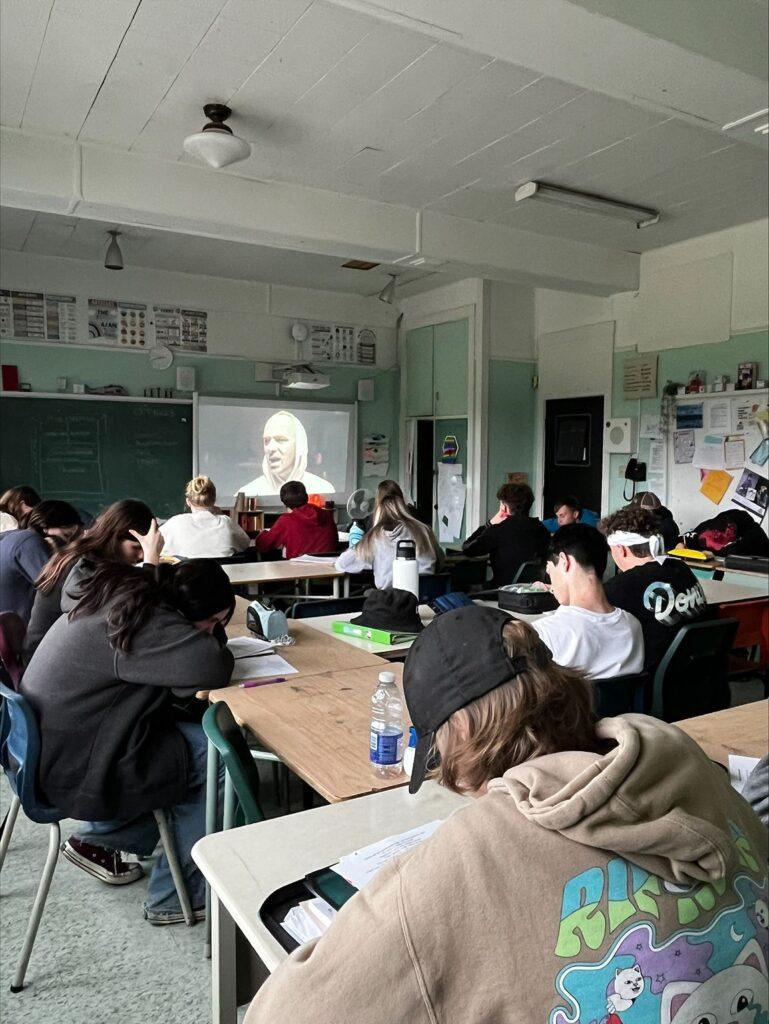
students bring local journalism into school

By Trevor Greenway

Getting teenagers engaged in anything these days is a feat on its own. Getting them excited about local journalism, newspapers and cutting through misinformation is perhaps and even greater challenge.

But the Low Down’s fearless editor-in-chief Trevor Greenway was up for the challenge and spent an afternoon workshopping story ideas with Grade 10 students at St. Mike’s High School in Low in late September.

The workshops were a collaboration between the Fairbairn House Heritage Centre and the Low Down and were designed to help students develop story ideas, cut through misinformation, take compelling photographs and learn the importance of fact-based reporting in today’s media landscape. Editors at the Low Down worked with the students throughout the process, editing their work and ultimately preparing it for publication in a St. Mike’s Student Page in the Low Down’s Oct. 18 edition.

The story ideas that flowed from the student’s minds involved everything from women’s rights and sports to drug use, homelessness and conspiracy theories around the Hawaii fires. There was even a listicle on different types of pasta.

And it wasn’t difficult to get the kids talking about the world around them. The kids at St. Mike’s are naturally curious and want their voices heard.

Below you will find stories that the students wrote themselves. They took time to interview subjects, dive into research and craft, in most cases, their first published pieces of work.

students bring local journalism into school Read More »

Chelsea property values up 46 per cent

By Madeline Kerr

Property values are going up an average of 46 per cent in Chelsea, according to the latest triennial assessment roll in the MRC des Collines.

The latest assessment, released Oct. 19, is based on the region’s real estate market as of July 1, 2022, and although the increase is high, Chelsea is assuring residents not to expect a similar increase on their tax bills next year..

“Council has not yet determined the tax rate, but we would like to reassure residents that this does not mean they will be taxed to the extent of the roll increase,” Chelsea Spokesperson Maude Prud’homme-Séguin told the Low Down. “Council will adjust the tax rate downwards to remain reasonable and strike a balance between the increase of the assessment roll, the cost of living, and the needs of the municipality.”

The property assessment roll is a summary of the inventory of buildings and vacant land located within a municipality, assessed on the same basis and on the same date. The assessment roll, which is in effect for three municipal fiscal years beginning on Jan. 1 of the year after the assessment is completed, is the basic tool for calculating the amount of municipal and school taxes in a municipality.

An information session will be held on Oct. 27 at 7:00 p.m in the basement of 220 Old Chelsea Road to explain the reasons for the increase, outline the process for requesting a review and answer questions residents may have, according to municipal Prud’homme-Séguin

She added that “the Municipality is in the middle of the budgetary period. The tax rate will be announced in December when the budget is officially adopted.”

Vacant land values in Chelsea saw the greatest increase, rising in value 54 per cent, while condominiums rose 37 per cent in value. Single-dwelling houses rose 46 per cent in value – the same as the average across all properties in the municipality. The average price of a single-dwelling house in Chelsea is now $663,800.

Chelsea property values up 46 per cent Read More »

Return your king cans for maximum bottle return

By Trevor Greenway

Got a mountain of empty, king-size beer cans piling up in the garage?

If you return them to a bottle exchange depot before Nov. 15, you’ll get the maximum return of 20 cents per can, but after that date, you’ll only get half that amount, as the province is reforming its returnable container deposit-refund program this fall.

The new reformed program will phase in on Nov. 1 with all returnable containers, except for glass bottles between 500 millilitres and two litres, adjusting to a 10-cent return. This translates into an increase in the deposit-refund price for all aluminium cans — except king cans, which will drop from 20 to 10 cents. Regular-sized cans, such as soft drinks, will see their deposit price increase by five cents.

The Association québécoise de récupération des contenants de boissons (AQRCB), the organization designated by Recycle to carry out the reform, said that the new measures aim to increase the number of recycled containers and simplify the deposit system.

According to AQRCB president and CEO Normand Bisson, some 2.5 billion beer and soft-drink containers are redeemable under the new reformed program, and 100 per cent of recovered containers are recycled. When the new phased-in program is complete in 2025, the number of redeemable containers will have increased to around 5 billion.

“Quebecers have been actively taking part in this circular-economy initiative for nearly 40 years,” said Bisson in a statement. “Thanks to their efforts, we have achieved a recovery rate of 73 per cent, which is substantial. With the changes introduced as part of deposit-refund system modernization and expansion, we are targeting a rate of 90 per cent by 2032.”

Phase 2 of the program, which will launch in March 2025, will extend the recycling program to all glass, plastic and multi-layer beverage containers between 100 millilitres and two litres. For more information, visit www.consignaction.ca.

Return your king cans for maximum bottle return Read More »

Phase 2 of Chelsea Creek development finally approved

By Madeline Kerr

A housing development that was first proposed in 2019 has finally been approved by Chelsea council, but how much of it will be considered affordable is still up for debate.

During the Oct. 3 council meeting, Chelsea Mayor Pierre Guénard told the crowd that up to 15 per cent of the new units in Phase 2 of the Chelsea Creek development, which will add 72 multi-residential units and 16 semi-detached houses, would be set aside as “affordable” housing.

Municipal communications officer Stéphanie Deforges explained after the meeting that the definition of affordable “remains to be determined officially as part of a future affordable housing policy.”

“Affordable usually means the rental cost is equal or less than 80 per cent of the regular market rental price, or that the housing cost represents less than 30 per cent of an individual’s monthly expenses,” she added.

Multivesco CEO François Juneau, the company behind Phase 2 at Chelsea Creek, said that his company intends to make a percentage of the units affordable by such definitions, but ultimately “it will be the decision of the builder and owner of the multi-residentials. It is not Multivesco’s final decision.”

Deforges told the Low Down that the municipality “will encourage the project’s builders to uphold the developer’s promise,” but did not specify how it would do so. She added that the municipality is waiting to receive funding from the Canada Mortgage and Housing Corporation’s Housing Accelerator Fund before developing an affordable housing policy that will impact future projects.

The results of a triennial assessment of taxable property values in Chelsea, made public on Oct. 19, show that the average cost of all property types has increased by 46 per cent. The average taxable value of a single-family dwelling in Chelsea is $663,800.

Currently, there are 164 single-family and semi-detached homes in the Chelsea Creek subdivision, which sits behind Isabelle Ménard Pharmacy on Old Chelsea Road.

‘Frustration’ over back and forth requests (Text break)

The process of approving the Chelsea Creek development has involved “back and forth” discussions between the developers, the municipality and residents, according to Juneau.

Three public consultations have been held, during which Multivesco heard from residents and business owners and made modifications to their plans based on feedback, Juneau said.

Key elements of that feedback, according to Juneau, included ensuring accessible housing for seniors, so they can remain in their community; integrating seniors’ units into the design of each building (originally seniors were going to be separated); and ensuring that young families could find housing in the village that’s less expensive than a single-family home.

“We were implored to include multi-residential units in the project, which we agreed to do, based on the idea of being inter-generational,” Juneau explained.

Density was another priority.

“A lot of comments we received were geared toward the environment; people wanted a lot of greenspace,” said Juneau, who added that this resulted in the decision to include underground parking beneath some of the buildings.

“People recognize the need for density,” he said, “but there was a real resistance to offering buildings more than three [stories high].” He said his company eventually gave up on planning taller than three stories because “it seems there was no social acceptance of it.”

Following more delays due to the pandemic and the municipality’s new master plan, which was completed in November 2022, Juneau said his company finally approached the current council with their plans and received yet more feedback and requests.

“This is why, at the presentation [on Oct. 3] you might have seen a certain level of frustration because of all this back and forth…we asked the council to take a position and decide if they want the project or not.”

Juneau said the project could take some time — up to a year just to bring power to the subdivision.

“Hopefully we’ll see some work by the second half of 2024,” he said.

Juneau said that it is too soon for his company to estimate the average rental or sale price of units in the new Chelsea Creek development, and he also could not confirm the size of the units, although plans show that there will be a combination of two and three bedroom, single and multi-story apartments.

“We know there is a housing crisis,” said Juneau, “but it’s taking much longer to work with municipalities nowadays. And this is a project that is 100 per cent compliant [with bylaws], so for projects that are not compliant, it can take even longer.”

Phase 2 of Chelsea Creek development finally approved Read More »

Scroll to Top