

Andrew McClelland
The Advocate
Canada’s agricultural industry used to be a place where only farm kids worked. You grew up on the farm, you maybe went to college, and then returned to the family farm.
After all, who else but young folks raised on a farm were tough enough to put in the long hours? Certainly not some college grad who had never milked cows at dawn growing up.
But that’s all changed in the past 30-odd years. Increased enrolment in ag colleges from students without a farming background, and the real labour shortage in the industry, have changed the face of who farms in Canada.
Eighteen-year-old Florence Bolduc benefits from that change. Growing up in the town of St. Louis de Gonzague, in the MRC of Beauharnois-Salaberry, southwest of Montreal, to a father who works for Desjardins and a mother who advocates for workers in the daycare industry, Bolduc wasn’t a typical “farm kid.” But she is now.
“When I was 14, I started to go work with a friend at their farm and I fell immediately in love with that world,” Bolduc explained. “I’d visit the barn and help with chores every weekend. That’s how I came to understand that farming was something that could help the world.”
Loved it from the start
That farm is “Ferme Iceberg” in St. Stanislas de Kostka, the next town over. A Holstein-herd dairy operation owned by David Cecyre, Ferme Iceberg gave Bolduc her first glimpse into farm life and the joys of working with animals.
“Everything I know about agriculture is mostly because of my boss David,” Bolduc explained. “He taught me everything he knows — from the field work to the impact of it in the barn.”
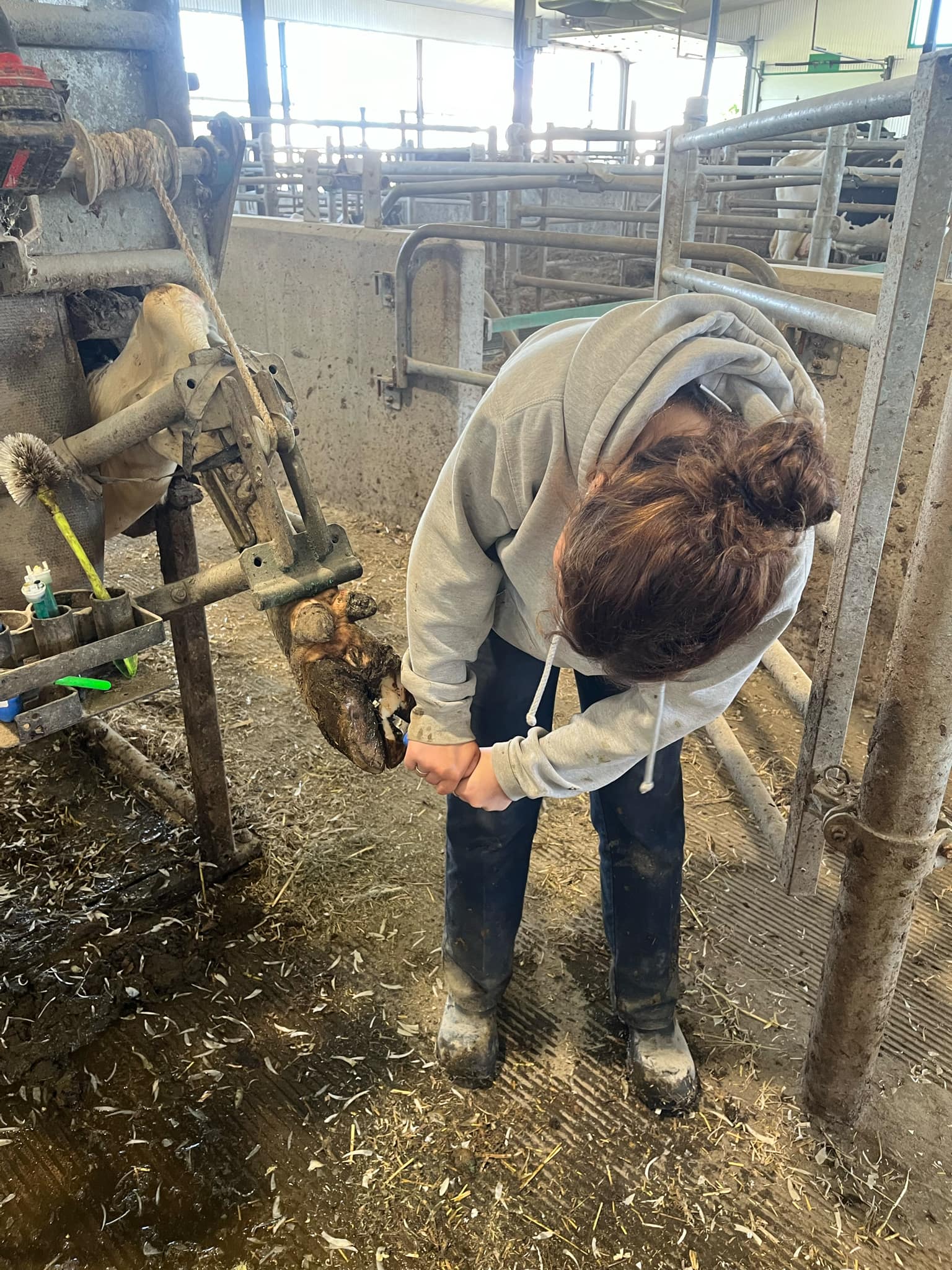
Starting off helping with basic chores, Bolduc’s enthusiastic volunteering on Ferme Iceberg grew into an employee relationship over the years. Equipped with a 3 Lely A4 robot to milk the cows and a milk taxi to feed the calves, the farm keeps a herd of 150 lactating Holsteins – and Bolduc is now essential to their upkeep.
“I mostly do barn work — any and every task that needs to be done during the time we’re in the barn,” Bolduc said. “We have multiple vaccines that we need to give the calves, heifers and cows for different reasons, so I created the computer files to help us keep track of which animal needs which vaccine and when.”
Enrolled at Mac
That’s a lot of responsibility for a young producer entrusted to working on a family friend’s operation, not to mention that Bolduc also monitors the health of the herd and handles their registration with Holstein Canada. That’s why Bolduc enrolled in Macdonald Campus’ Farm Management and Technology program in 2023, hoping to gain theoretical knowledge behind the hands-on training she learned at Ferme Iceberg.
Bolduc gained that and more. She was one of five students to win a Warren Grapes Agricultural Scholarship awarded by the Quebec Farmers’ Association at the organization’s 2024 annual general meeting last November. Now, her plans are to move on to a degree in agronomy at McGill University or Université Laval after graduating from FMT.
“I want to stay in the industry and help farmers,” Bolduc said. “And there’s still not that many female agronomes out there.”
Future might be more female
Having a female presence in agriculture is important for the future of farming, Bolduc said. While she describes her experience as a female producer as positive, she realizes that’s not always the case.
“I’ve always been welcomed where I work and have never had any issues with male employees being unwelcome to women,” she explained. “My boss makes sure that we are comfortable and makes an environment safe for us. But the industry in general should promote agriculture to young girls like me, who are not born on a home farm and want to explore this beautiful industry that feeds the world.”
Not being born on a farm but loving agriculture is something Bolduc knows much about. But this articulate young producer is hopeful that Canadian farms in the future are learning to invest in young workers – regardless of whether they’re “born and raised” there or not.
“The cost of land is high and interest rates are climbing, which often makes it impossible for a non-farmer to borrow enough money from a bank to buy a farm,” she said.
“But if farms are making plans for the future and want to invest their money in the right place, future farmers will be able to continue and find a place in agriculture.”