

Tashi Farmilo
LOCAL JOURNALISM INITIATIVE
GATINEAU – Pontiac seniors are experiencing the realities of an aging population sooner than others. According to a newly released public health report, the Outaouais stands out in several key ways: a high concentration of English-speaking seniors, a significant Indigenous population, and low levels of formal education among older adults.
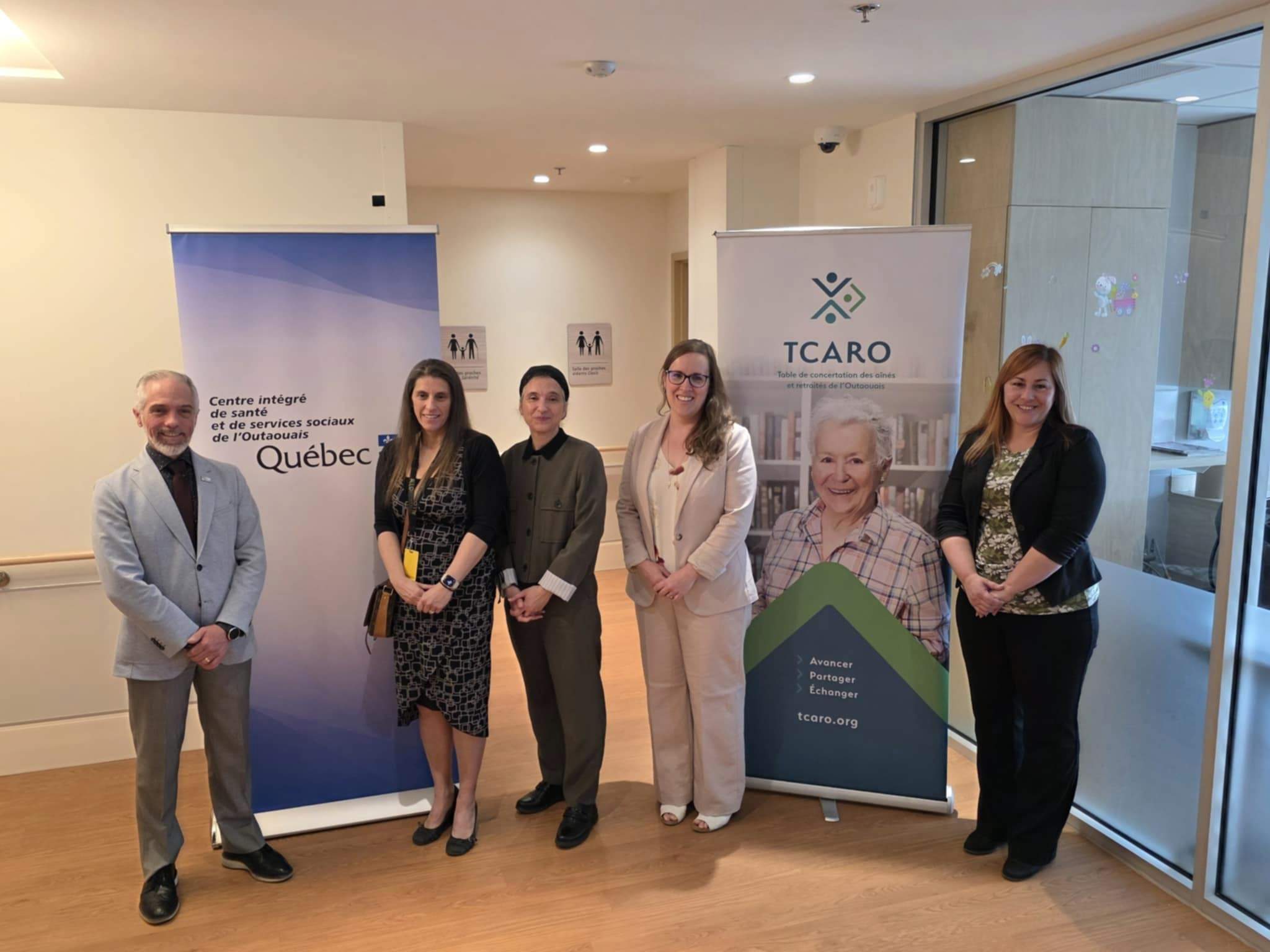
The report, État de santé de la population âgée de 65 ans et plus en Outaouais, published by the CISSS de l’Outaouais, was launched April 29 at a press conference in Gatineau, where the speakers included Dr. Marc Bilodeau, Isabelle Léger, Dr. Brigitte Pinard, Dr. Camille Paquette, and Patricia Gougeon. During the event, the public health officials emphasized that Pontiac represents one of the few areas where demographic thresholds—like having nearly one in four residents aged 65 and older—have already been reached. The rest of the Outaouais isn’t expected to reach that level for several more years, making Pontiac a critical test case for the region’s ability to support healthy aging.
Speakers stressed that while Pontiac’s demographic profile is distinct, its challenges are emblematic of broader regional issues. In Pontiac, 64% of people over 65 speak English most often at home, far above regional averages, and 12% of seniors identify as Indigenous—more than double of what’s seen across the wider Outaouais. Nearly 39% of older Pontiac adults don’t hold a high school diploma, one of the highest rates among the region’s five health networks.
These characteristics intersect with several challenges highlighted in the report. Across the Outaouais, more than 64% of seniors are classified as physically inactive, and one in four have diabetes. Hypertension affects half of the region’s older population, rates of psychological distress remain concerning, and nearly one in ten seniors report feeling socially isolated.
Access to basic needs continues to be a significant concern: 18% of senior-led rental households face serious housing challenges, and one in ten seniors in the region reported experiencing food insecurity in 2022.
Dr. Pinard acknowledged that data specific to Pontiac remains limited for some health indicators. Targeted local consultations are planned for May. They will be part of a series of regional meetings focused on identifying community-specific priorities and advancing report recommendations to create environments that are healthy, inclusive, and supportive of ageing at home.
The report concludes that supporting healthy aging across the Outaouais will require sustained coordination between health services, municipal leaders, community organizations, and seniors.
Photo – At a press conference in Gatineau, Dr. Marc Bilodeau, Isabelle Léger, Dr. Brigitte Pinard, Dr. Camille Paquette and Patricia Gougeon presented a new public health report highlighting Pontiac’s unique aging challenges and the need for community-based action. (TF)