

Cathedral of the Holy Trinity shares treasures during Archeology Month
Cassandra Kerwin, Local Journalism Initiative reporter
cassandra@qctonline.com
Quebec City celebrates its rich history by dedicat- ing the month of August to archeology. From Aug. 1 to 31, the public can discover and rediscover the secrets, skeletons and stories of this UNESCO World Heritage Site.
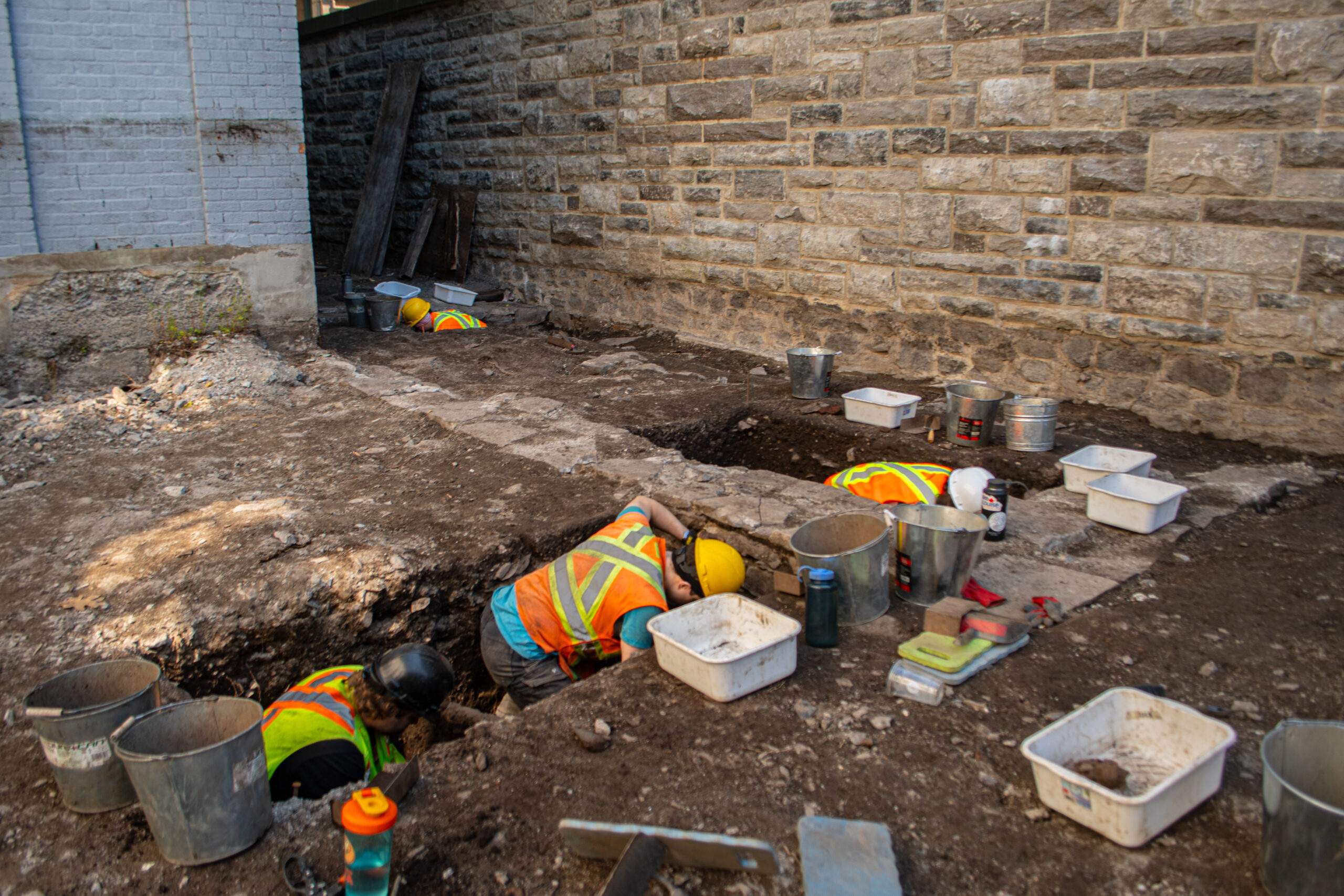
As the QCT reported in June, major excavations are currently underway at the Cathedral of the Holy Trinity as part of the Cathedral Gardens project and of ongoing renovations to shore up a centuries-old wall surrounding the cathedral complex. As part of Archeology Month, residents have an opportunity to meet archeologists and learn more about the dig. “Before any construction can happen in and around historic sites like the Old City, archeologists and their team do the initial digs to retrieve any and every item from past dwellers and users,” said the assistant archeologist at the Cathedral of the Holy Trinity site, Eli Blouin Rondeau. “One man’s trash is another man’s treasure cannot be any truer. Behind the presbytery and the church hall, we are digging through [what would have been] the garbage pit.
“It is hard to distinguish items from the New France era and the British era without further analysis and research, because they ate similar meats, just slightly different cuts. Some of their dishes are similar, too,” said Blouin Rondeau. “It is these subtle differences that fascinate me and tell us so much about these everyday people of a different age.”
Speaking with Blouin Rondeau, people can learn that this site was originally used as a hospice by the Récollet order. It later became a monastery and a general hospital for just over a century, when the British took over. By the time they were evicted, they had constructed a church and a monastery that were both destroyed during the Conquest of 1759. Buildings were reconstructed for military usage and as a prison for invading American soldiers. The site then burned down, leaving space for the construction of the Anglican Cathedral of the Holy Trinity, the presbytery, the church hall and the courthouse, which still stand today.
While the dig sites are not generally open to the public, passersby are invited to discover some of the artifacts at the display table near the main entrance of the cathedral from 8 a.m. to 4 p.m., except during lunch hour. The archeology-related activities at the cathedral are part of a long list of free activities organized by or in partnership with the Ville de Québec for Archeology Month. Although the activities are open to the public, many require registration in advance because of space limitations. Visit blogue.ville.quebec.qc.ca/decouvrir/plongez-dans-le-passe-de-quebec-avec-le-mois-de-larcheologie (in French only) to learn more.
On Aug. 29 and 30, people can learn about the archaeo- logical site on the Rue de Buade. On Sept. 20, the City offers a tour of the Cathedral-Basilica Notre-Dame de Québec and its funeral crypt. There’s also a talk on the his- tory of cemeteries, 17th- and 18th-century funeral rites and this archaeological site given by archaeologist Paul- Gaston Langlais.
The Îlot des Palais has an ongoing special exhibit, and the Maison des Jésuites has a day dedicated to aspiring archeologists on Aug. 23. There is so much to discover within the walls and ground of Quebec City.