

By Dan Laxer
The Suburban
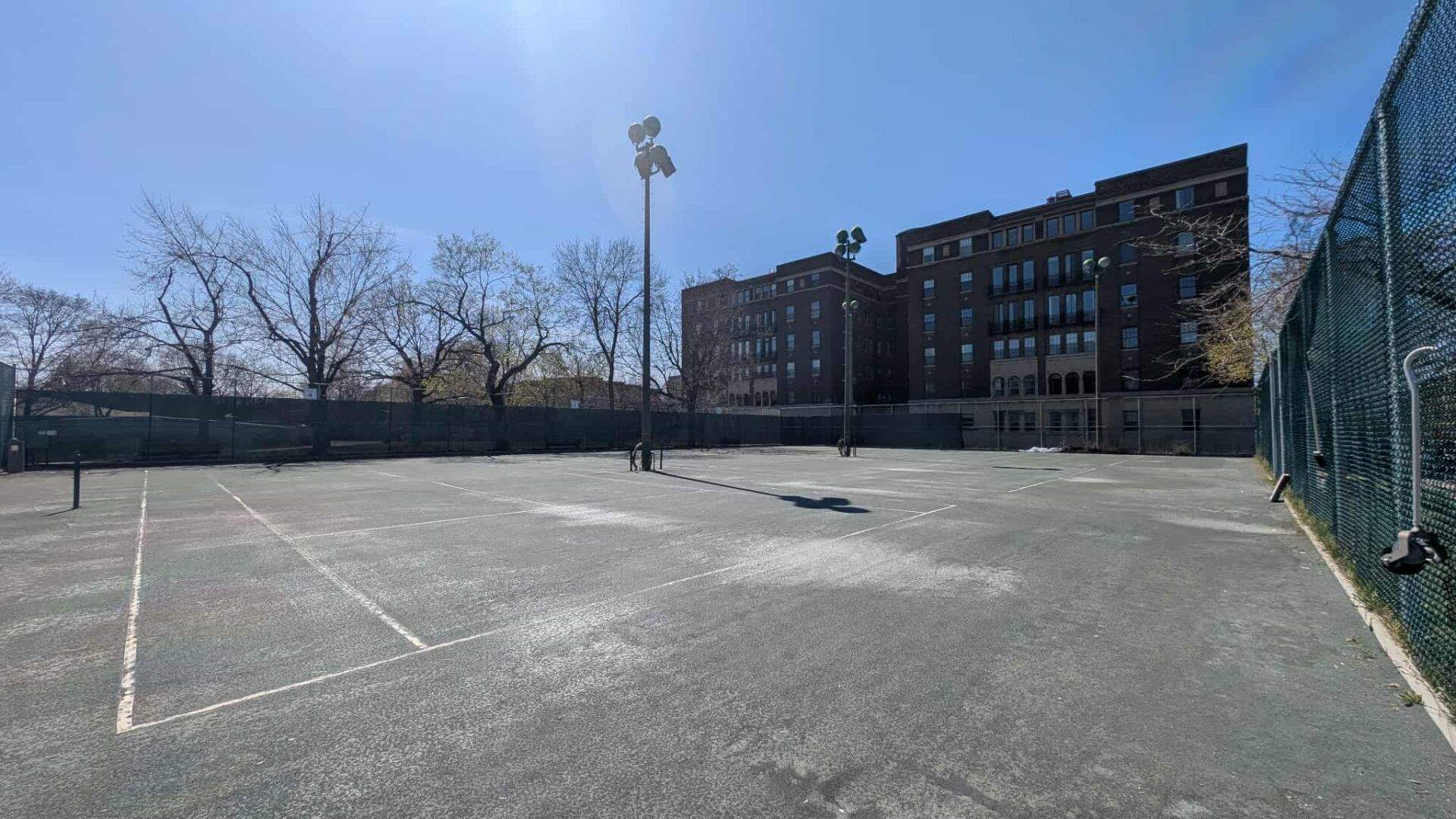
The NDG Tennis Club is one of several in the city that have closed temporarily in the past week due to the possibility of asbestos in the court surface materials.
The worry began after the City of Saint Sauveur found traces of asbestos in samples of the clay used in tennis court surfaces. However, it is important to note that samples taken from the actual tennis court contained no asbestos.
The clay in question is made with materials from Har-Tru, a company based in Troy, Virginia. According to its website, Har-Tru is made from billion-year-old Pre-Cambrian metabasalt, which is not known to contain asbestos, although a 2015 safety data sheet put out by the company does show trace amounts of asbestiform in the product.
The NDG Tennis Club has been closed by order of the City of Montreal (the club received notice of closure Monday evening). Club President Ghislain Lessard tells The Suburban that he does not know how long the club will be closed for, or if the city will be doing any testing or analysis of the its courts.
The Côte St. Luc tennis club also uses Har-Tru clay in its court surfaces. However, that club has not closed, but club officials say “the city is taking steps to determine” if the club can stay open.
In an email to The Suburban, a Har-Tru spokesperson says the company has received the results of testing done at the facility in Saint-Sauveur. The testing was done by Lab’Eau-Air-Sol, a testing facility in Joliette. “We are evaluating to determine if different quantification techniques would yield different conclusions in the testing process,” the company says. “We are also reviewing test protocols and results with consideration of the nuanced word differences between U.S. and Canadian standards.” It is also conducting its own set of independent tests on samples from its Canadian distributors.
While Har-Tru says it will look into a temporary hold on the import, sale, and use of its materials in Canada, the company stands by its product. “Har-Tru does not have a basis for concluding that our material does not meet the standards we publish on our U.S. based safety data sheet.”
“We are hopeful new testing, re-testing, and a collaborative process across the U.S./Canadian border will make this a brief disruption.”