

William Crooks
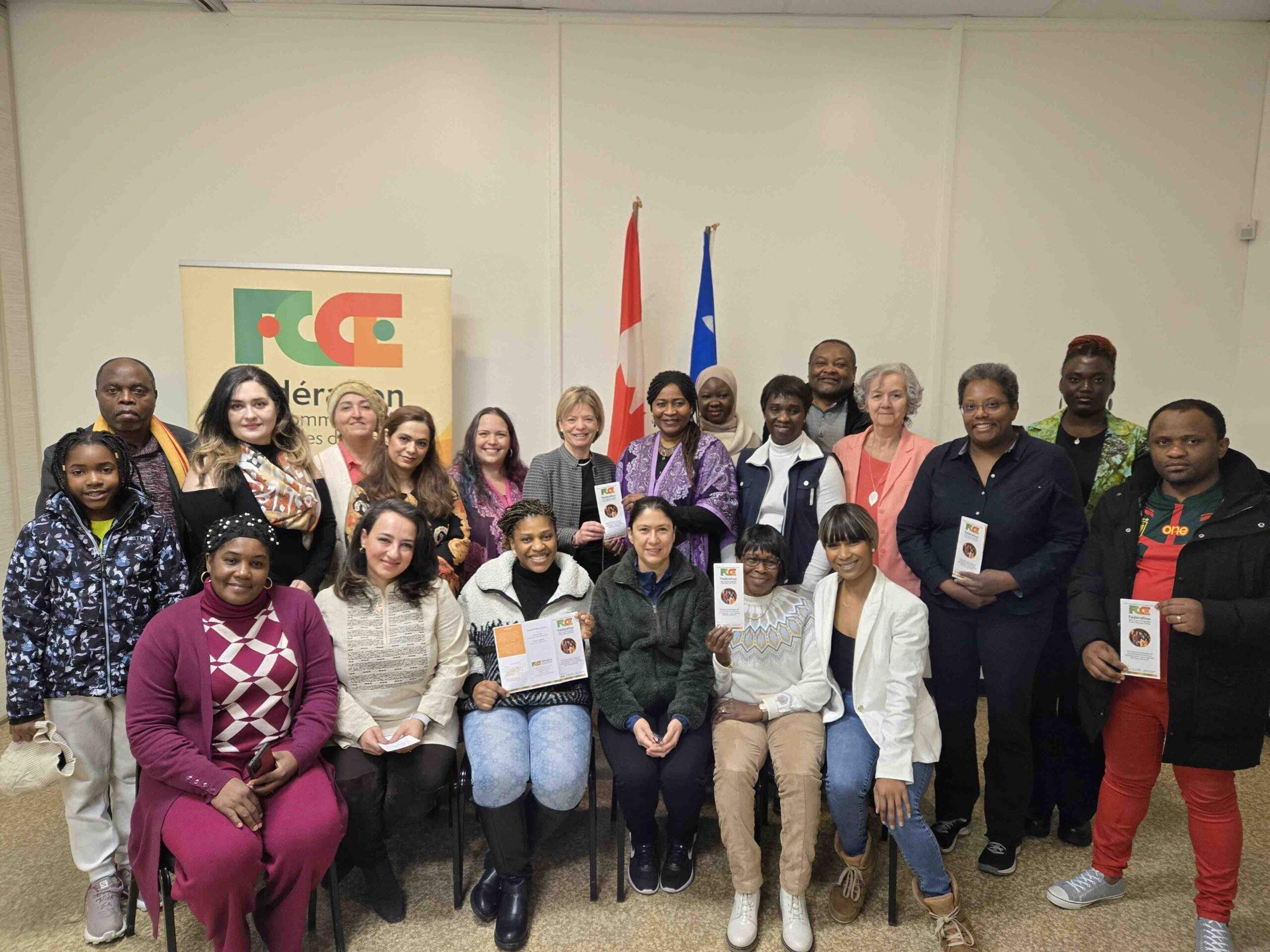
Sherbrooke MP and Minister of National Revenue Élisabeth Brière joins members of the Fédération des communautés culturelles de l’Estrie (FCCE) and project partners at a press conference on Feb. 6 to announce federal funding aimed at improving economic security for immigrant and racialized women in Estrie
By William Crooks
Local Journalism Initiative
The federal government is investing $287,639 in a new initiative aimed at improving the economic security of immigrant and racialized women in Estrie. The funding, announced by Sherbrooke MP and Minister of National Revenue Élisabeth Brière, will support a two-year project led by the Fédération des communautés culturelles de l’Estrie (FCCE).
“This project is essential for breaking down systemic barriers that prevent immigrant and racialized women from achieving financial independence and taking their place in the economic landscape,” Brière said at a press conference on Feb. 6. She emphasized that the funding will help reduce gender-based economic inequalities and create lasting change in the region.
The initiative, titled Sécurité économique et prospérité des femmes immigrantes: Vers l’égalité femmes-hommes, will focus on systemic change by working directly with local organizations in sectors such as education, career counselling, entrepreneurship, advocacy, and financial literacy. The project includes the formation of a committee to assess the needs of immigrant women, an analysis of how existing services meet those needs, and recommendations for improving accessibility and effectiveness.
Mariame Cissé, FCCE’s assistant director and head of its women’s committee, stressed at the conference the importance of collaborative efforts. “We want to ensure that the services available truly meet the needs of immigrant women,” she said. “This project will bring together key partners, including economic sector representatives, to develop concrete solutions.”
A key component of the initiative is the involvement of a gender-based analysis consultant to evaluate the impact of existing services and help develop adaptation strategies. The project will also undergo an external evaluation to measure its effectiveness in creating long-term structural change.
The FCCE has a long history of supporting immigrant women in Estrie. Cissé highlighted previous initiatives, including financial education programs, awareness campaigns, and advocacy efforts aimed at improving gender equality. “Our federation has worked for years to support the integration of immigrant women in our region, but sustainable change requires ongoing financial backing,” she said, thanking the federal government for its continued support.
Brière noted that the funding aligns with the federal government’s broader commitment to gender equality and economic opportunity. “It’s crucial that all women, regardless of their background, have the tools and support they need to thrive,” she said. “By addressing these systemic barriers, we’re ensuring that immigrant and racialized women have a fair chance at economic success.”
The project’s structure includes several strategic components, such as assessing existing gaps in services, creating partnerships with local economic organizations, and implementing strategies to ensure better access for immigrant women.
“This initiative is not just about research,” Cissé said. “It’s about real, tangible change. We will work with businesses, service providers, and government agencies to make sure these women are not just participants in the economy, but leaders and contributors.”
One of the main challenges immigrant women face is a lack of accessible financial resources and mentorship opportunities. The FCCE’s initiative will aim to address these issues by working with financial institutions and education providers to develop targeted programs. “Security leads to prosperity,” Cissé explained. “You can’t think about long-term financial success if you’re struggling just to make ends meet. That’s why this initiative starts by ensuring basic financial security and builds from there.”
A key aspect of the project is its advisory committee, which will include representatives from financial institutions and immigrant advocacy groups. Among them are two immigrant women—one of Haitian origin and another of Mexican descent—who will provide first-hand insights into the challenges faced by those the project seeks to support.
Cissé emphasized the importance of community engagement in making the initiative a success. “We are not doing this alone,” she said. “We need the help of all stakeholders—government bodies, businesses, and the wider community—to ensure these changes are implemented in a meaningful way.”
The funding comes from the federal government’s Economic Opportunities and Leadership Fund for Women, which supports projects designed to foster systemic change and expand leadership opportunities for women. Brière expressed confidence that the project would have a long-term impact.
The project is set to run until August 2026, with updates and evaluations expected throughout its duration. Cissé encouraged continued support and awareness of the initiative. “Our goal is to make sure that by the time this project ends, we have put systems in place that will continue to benefit immigrant women for years to come.”
The FCCE will be holding further consultations and information sessions for community members interested in contributing to the initiative. Those interested in participating or learning more can contact the organization directly.