Author name: The Quebec Chronicle Telegraph

Champagne may be ‘quality candidate’ Quebec Liberals need 

Peter Black

Local Journalism Initiative reporter

peterblack@qctonline.com 

If there is a byproduct of Denis Coderre’s Quebec Liberal Party (QLP) leadership water-testing tour, it is that it may encourage other “quality” candidates to ponder a run.

We put “quality” in quotes because that is the diplomatic word interim Liberal leader Marc Tanguay used in relation to Coderre’s potential bid: “For me, this is confirmation that people of quality are thinking about the leadership.”

Coderre, a one-term Montreal mayor, former longtime Liberal MP and former minister of various portfolios under prime ministers Jean Chrétien and Paul Martin, says he won’t decide until May whether or not he’ll run. So it’s too early to say whether an ABC (Anybody But Coderre) movement will emerge.

To date, few people have openly expressed an interest in leading the Libs back to the promised land, one they have ruled for about 70 of the past 120 years. 

Quebec Liberal MP Joël Lightbound (Louis-Hébert), who two years ago dimmed his rising star wattage with criticism of his government’s pandemic policy, was mulling the idea about a year ago. He recently told Radio-Canada he has not closed the door necessarily, but needs more time to reflect.

The other known interested party is Montreal MNA Fréderic Beauchemin, who recently returned to the Liberal caucus after he was suspended pending an investigation into a dispute with a party official.

Another rising star in the mix potentially is charismatic MNA Marwah Rizqy, the darling of several media commentators. Pregnant with her second child, she has said the timing is just not right for a contest that will take place next year.

As a sideshow that at least got the QLP in the news, Coderre and Rizqy traded barbs over the relative merit of their respective political careers.

Then there is federal Innovation, Science and Industry Minister François-Philippe Champagne. According to a revealing report last week in The Hill Times, the energetic minister was not quite emphatic enough in denying his interest in the provincial Liberal leadership, and therefore he was declared to be interested.

 What he actually said when asked “if it would be accurate to say he’s not ruling out the possibility [of running]” was: “Listen, I have a job. I’m always amazed at people, people always ask me if I want another job. I have a job, and I’m pretty happy with that, and I’m pretty busy.”

Of course, leading Quebec’s Liberals is not just another job. In fact, one might argue if there ever was a job crying for a “quality” candidate of Champagne’s ilk, it’s Quebec Liberal leader at a time when the Coalition Avenir Québec government could be on the way out in the 2026 election, with no federalist alternative.

As former Liberal premier Jean Charest put it in a CBC Radio interview last week, the QLP “is the only federalist party in the National Assembly. … There needs to be a strong federalist voice that brings people together.”

Champagne is surely aware of the political stars aligning. With Justin Trudeau seemingly sincere about leading the Liberals into the 2025 federal election, he either faces exile to opposition if the Grits lose to Pierre Poilievre’s Conservatives, or another stint as a minister in what, in the most optimistic scenario, would be another Liberal minority. 

Even if and when Trudeau decides to leave, Champagne’s odds to succeed him would be slim against the likes of Chrystia Freeland, Anita Anand, Sean Fraser, Mélanie Joly or Mark Carney. 

The QLP executive has decided the leadership vote will be in the spring of 2025, although it is not clear when the deadline for entering the race might be. 

It seems clear the QLP leadership would be Champagne’s for the asking, except, according to the Hill Times report, no one from the party has officially asked him yet.

While Champagne’s departure from the Trudeau cabinet would be a mighty blow, it might be seen as a sacrifice for the greater good of the country.

One thinks of Jean Lesage, who spent 13 years as a federal Liberal MP, including four years as minister, before taking on the leadership of the QLP in 1958, in opposition to Union Nationale premier Maurice Duplessis (comparisons to François Legault optional).

Lesage, as we know, ushered in the Quiet Revolution modernizing Quebec. Champagne has the same opportunity – to lead Quebec’s 21st-century transformation.

30 

Champagne may be ‘quality candidate’ Quebec Liberals need  Read More »

English-language prostate cancer support group goes provincewide

English-language prostate cancer support group goes provincewide

Ruby Pratka, Local Journalism Initiative reporter

ruby@qctonline.com

Montreal resident John Warren didn’t suspect anything before he was diagnosed with prostate cancer in 2016. “I knew I had a prostate, but I never really thought about prostate cancer – it’s a big learning curve when you’re first diagnosed,” he said. A blood test during a routine physical exam found an elevated level of prostate-specific antigen; Warren’s next steps were a rectal exam, a biopsy and an operation to remove the organ.

“It’s not perfect, and there are side effects – I have urinary incontinence and I’ve had to get a separate operation to address that – but as one of the guys on our steering committee said, you’re still alive, aren’t you?”

Since then, in his own words, he’s been “living with cancer.

“I go for a blood test about three times a year, and if the [PSA] levels are elevated, I have to go for treatment, but I’m not worried about it [from day to day].”

According to the Canadian Cancer Society, one in eight Canadian men will be diagnosed with prostate cancer over the course of their lives, and one in 30 will die from it. Warren began getting an idea of how common the disease is when he learned that two of his neighbours had had it.

The early stages of the disease often have no obvious symptoms, which, Warren observed, makes getting tested at an annual physical even more important. Annual testing is recommended for men 50 and older, although, as Warren pointed out, men in their 40s can also get the disease – Karl Tremblay, lead singer of the Québécois pop-folk band Les Cowboys Fringants, was 47 when he died from complications of prostate cancer last November. “There are cases where men in their 40s should get checked out, especially if you have a history of prostate, breast or ovarian cancer in your family – there’s about a 20 per cent chance that you’ll get a diagnosis,” Warren said.

Warren is sharing his own story to destigmatize and encourage prostate cancer test- ing, and encourage men who have already been diagnosed with the disease to join the hybrid (in-person and Zoom- based) peer support group for English-speaking Quebecers he co- ordinates with Prostate Cancer Support Montreal & West Island. The group is leading an outreach campaign in the Quebec City and Sherbrooke regions to help “break the isolation” of English-speaking cancer patients.

“We’re not doctors, so we’re very careful about medical advice, but we share information about the treatments and the experiences we’ve had,” Warren said. The group also offers one-on-one peer support meetings and a voicemail box where men can leave messages and get answers to their questions within 24 hours. He said being part of the group, of which he’s now vice-president, allowed him to “give back, reach out and to let people know that there’s a group out here.”

To learn more about Prostate Cancer Support Montreal & West Island, visit pcsgmontrealwestisland.org.

English-language prostate cancer support group goes provincewide Read More »

City to require additional certification for short-term rentals under new proposal

Ruby Pratka, Local Journalism Initiative reporter

editor@qctonline.com

Quebec City residents who plan to rent out their principal residence on Airbnb or similar sites for part of the year will need to get an official authorization from the city starting in April if new proposed regulations are enforced.

The city permit, which will cost $250, will be in addition to the permit required by the Corporation de l’industrie du tourisme du Québec (CITQ) which costs $51.50 for a primary residence. The city has also expanded its short-term rental inspection squad from three inspectors to five. Coun. Mélissa Coulombe-Leduc, member of the executive committee responsible for housing, said she believed the new certification requirement would cushion the impact of short-term rentals on the city’s long-term rental housing shortage, as July 1 looms on the horizon with long- term vacancy rates around 1 per cent.

In the past year, the city has moved to protect long- term rental housing by making short-term rentals in secondary residences and investment properties in large swaths of the city, particularly in Lower Town, illegal. However, people can still rent out their primary residences on Airbnb and similar sites for short stays.

Coulombe-Leduc said the current rules allowed unscrupulous real estate investors to rent out secondary residences or investment properties by passing them off as their primary residence.

“There is a lot of illegal tourist housing, where people claim a place that they are renting out is their primary residence when it’s not,” she said. Under the new rules, “people will have to prove the address of their primary residence by submitting their notice of assessment from Revenu Québec.”

Nicole Dionne is the co- ordinator of the Bureau d’animation et information logement (BAIL), a Saint- Roch-based renters’ rights organization serving the greater Quebec City region. “Ninety- eight or 99 per cent of the housing units [in the busy sector of Lower Town along Rue Saint-Joseph] have been protected under the current rules, and from now on there will be a more attentive look at conversions … but as long as vacancy rates are under three per cent, we would have liked for there to be a complete freeze,” she said.

Dionne added that invest- ment properties that were converted for short-term rental use before the bans came into effect are “grandfathered in,” reducing the rental housing stock for the foreseeable future. Guillaume Béliveau-Côté, co-ordinator of the Comité des citoyens et citoyennes de Saint- Sauveur, said an estimated 100 rental units in the Lower Town neighbourhood are being used for short-term rentals – about the same number of units as there are families on the social housing waiting list, he said. (The QCT could not independently verify these numbers.)

Saint-Roch neighbourhood council president Alexia Oman said she is “grateful for any- thing put in place to protect [housing for] residents.”

“Short-term rentals are not the only cause of the housing crisis, but they are a factor,” she said. “There’s definitely more stress looking for a home this year than past years. We’re in a very tight position as renters.”

The Ville de Québec is hold- ing a public consultation about the proposed regulations on Feb. 19 at 7:30 p.m. at the Club Social Victoria in Limoilou (170 Rue du Cardinal-Maurice- Roy). People who are unable to attend the event in person can participate on Zoom.

City to require additional certification for short-term rentals under new proposal Read More »

Housing shortage stops hundreds from taking jobs in regions

By Ruby Pratka

Local Journalism Initiative

At least 700 young professionals across the province had to decline job offers outside of major cities in 2023 due to the ongoing housing crisis, according to a recent report by Quebec City-based, provincewide nonprofit Place aux Jeunes en région. The Estrie, Mauricie, Laurentides and Chaudière-Appalaches regions were the most affected.

Place aux Jeunes supports young professionals in a wide range of fields who live in Montreal, Quebec City, Gatineau or Sherbrooke and want to move to more rural parts of the province, explained director general Frédéric Raymond. “We work with everyone from vocational school graduates to people with graduate degrees. There are needs in every sector, including health, education and skilled trades,” he said.

Raymond said the housing shortage was “starting to become a brake” on workers’ mobility plans, resulting in “jobs that haven’t been filled.” An estimated 500 people cancelled their moves in 2022.

“Before the pandemic, we were starting to hear of some [cancellations] but it wasn’t a generalized thing,” Raymond said. He attributed the crisis to a multitude of factors – inflation, short-term rentals, an influx of newly arrived and temporary workers and rising house prices which lead people who would otherwise buy homes to rent longer. Inability to find a place to live sometimes forces families to put off major life decisions. “We hope they just pause their plans, but timing is everything, especially with a couple who both find jobs at the same time – they might not have that timing ever again, or not for a long time. It has a major impact on the local economy – jobs are going unfilled and these people aren’t spending money in the region either.”

Marc-André Lacroix is the director general of the Chambre de commerce Brome-Missisquoi. “We know [housing] is a concern, and there is talent that’s not coming into the region [because of it]. We don’t know how deep the problem goes,” he said.

He noted that some companies had solved the problem by allowing new hires to work remotely, at least temporarily. “If it’s a web-based job, the person can work pretty much anywhere, but they don’t know as much about the culture of the company and its impact in the community – there are intangibles that you lose. Factory workers can’t work remotely. In the case of an engineer, who would need to come on site [occasionally], the company has to pay to put them in a hotel.

Nonprofits in the region have also been affected. Sutton Museum director general Charles Constantin hired a Sherbrooke-based curator. “We ended up giving him a transportation allocation for whenever he has to come here … advance planning is the key.”

Former Sutton councillor Patricia Lefèvre is the director general of the Parc d’environnement naturel de Sutton. She explained that in July 2022 the park hired an activities co-ordinator. “We said we would help her find housing, and at the beginning we were very confident, but we just kept finding temporary solutions for a few months here and there. After a year and a half, she said it just wasn’t going to work. We knew we were going to lose her.” The co-ordinator ultimately stepped down and moved to Montreal. Lefèvre said the organization also “lost our chief landscaper” because he couldn’t find a house in Sutton for his growing family. The park organization has already decided to shelve its popular day camp program this summer because of fears that out-of-town camp staff won’t be able to find housing. “The people working here now are the ones that already have housing,” she said.

Lefevre suggested a variety of partial solutions, including employers “clubbing up” to rent out houses for staff, and cities providing tax incentives for landlords who choose to rent their properties to local workers instead of tourists, facilitating construction of social or affordable housing or group-owned housing trusts, and blunting the impact of galloping property values on taxpayers by applying the new values only to newly sold homes. She observed that municipal financing relies heavily on property taxes, which incentivizes municipalities to build more summer homes – “high-value properties which don’t require a lot of services” – than homes for local workers. “Companies, municipalities and individuals can put little band-aids on the problem, but the real solutions will have to come from the federal government,” she said.

“We can’t destroy the habitat of the chorus frog, but we can destroy the habitat of the local worker – and that’s what we’re doing,” she concluded.

Housing shortage stops hundreds from taking jobs in regions Read More »

City launches subsidy program for environmentally friendly hygiene products

Ruby Pratka, Local Journalism Initiative reporter

editor@qctonline.com

Quebec City residents who buy reusable diapers or menstrual products can now have a portion of the cost covered by the Ville de Québec through a subsidy program, launched Jan. 30. Those who take advantage of the subsidy can have 60 per cent of the purchase price of each pack of reusable products reimbursed, up to an annual ceiling of $100 for menstrual products and $200 per child for diapers. If the products are purchased from local businesses, up to 75 per cent of the cost is reimbursed. The program was first announced in December, but has since been revised to allow participants to apply more often. People can submit two applications every five years.

“For many, this program will provide the necessary boost to take action,” said Coun. Marie- Josée Asselin, the member of the city executive committee responsible for waste management. “A person could, for example, equip themselves at a reduced price with a set of washable diapers, or a menstrual cup and panties, depending on their needs. It’s one more tool toward a sustainable lifestyle.” In a statement, Asselin added that encouraging the use of reusable products is also expected to reduce waste and boost local businesses.

Limoilou Coun. Jackie Smith and her party, Transition Québec, championed the program alongside Coun. Alicia Despins (Vanier–Les Rivières; Québec d’abord) and the Regroupement des femmes de la Capitale-Nationale. Smith said it’s “amazing that it took so long” to put the program in place.

She said she pitched the proposal in May 2022. “There was a multi-party committee that was put in place; we all agreed it should happen, but then nothing happened for a really long time. The city did not want to manage it [directly] … they asked a few community organizations and then found an organization in Montreal [the Groupe de recommandations et d’actions pour un meilleur environnement (GRAME)] who manages it for a bunch of municipalities.” Lévis, Sherbrooke, Cowansville and the Sud-Ouest borough of Montreal have similar subsidy programs.

According to the GRAME, a person who uses disposable menstrual products will use about 15,000 tampons or pads over the course of a lifetime, and each disposable pad takes about 450 years to decompose.

Every year in Canada, 771 million disposable hygiene products are thrown out. Smith said while the “startup costs” are relatively significant for people who replace dispos- able diapers and menstrual products with reusable ones, the environmental benefits are significant. Pads and diapers “are used briefly and then thrown out and sent to the incinerator when they’re wet, so they reduce the efficiency of the incinerator, and it’s a lot of waste in terms of kilos.”

Smith said many local organic grocery stores, zero-waste stores and stores that sell baby products also sell reusable diapers or other hygiene products. Quebec-based companies Mme L’Ovary and Marie fil sell reusable menstrual products which can be found online or in select stores.

To learn more or apply for the subsidy, visit grame.org/protection-hygienique-lavable-subvention-grame.

City launches subsidy program for environmentally friendly hygiene products Read More »

Civilian employees at Valcartier military base join strike movement

Ruby Pratka, Local Journalism Initiative reporter

editor@qctonline.com

About 100 civilian employees at CFB Valcartier have been on strike since Jan. 22.

Non-public funds (NPF) staff at the base, represented by the Public Service Alliance of Canada (PSAC), include ac- countants, financial services personnel and gym and reha- bilitation staff including kine- siologists, receptionists and equipment rental managers. According to Capt. Hermione Wilson, public affairs officer at CFB Valcartier, daytime, pre- and postnatal and advanced classes at the base’s fitness centre are cancelled due to the strike. The Clement-Boulanger Arena on the base is closed and the Centre Castor outdoor centre has reduced hours with no access to the restaurant or equipment rental facility. Three of the four messes are closed, and the on-base store and dépanneur are operating on reduced hours.

The strike is part of an On- tario- and Quebec-wide move- ment. Along with Valcartier employees, NPF staff at bases in Bagotville, Kingston, Mon- treal, Ottawa, Petawawa and Saint-Jean-sur-Richelieu are also on strike. A total of 500 NPF workers are on the picket line.

PSAC executive vice president for Quebec Yvon Barrière said the current collective agreement expired in 2022, and the union hopes to cor- rect a longstanding imbalance. “Our members in Valcartier are paid 30 per cent less than those in Ottawa for the exact same tasks,” Barrière said. “We also have staff working 31.5 hours per week because at 32 hours a week, the federal govern- ment has to pay insurance costs. There are inappropriate salary differences between us, military members and federal civil servants…. We are the least well paid in the federal government. There are a lot of obsolete elements in our agreement.”

Barrière also accused the federal government of attempting to hire strikebreakers, an allegation which Wilson did not address.

The union made headlines after blocking the entrance to CFB Valcartier on Route de la Bravoure on Jan. 22 and 23. Workers moved the picket line after the Ville de Shannon asked the Sûreté du Québec to intervene. “It’s true that traffic slowed down, but if we don’t cause disruption, we don’t have an impact,” Barrière said.

“Although the city respects workers’ rights, it asked stakeholders to quickly find solutions to stop obstructing the entrances to Base Valcartier and restore access to the Route de la Bravoure to the population of Shannon and surrounding areas,” Shannon communications director Marie-France Lambert said in a statement. “Rest assured that the city will keep citizens informed of any developments of which it is informed in connection with this situation.”

Civilian employees at Valcartier military base join strike movement Read More »

Negotiations progressing between province, nurses’ union

Ruby Pratka, Local Journalism Initiative reporter

editor@qctonline.com

The president of Quebec’s main nurses’ union has said negotiations with the provincial government are going “pretty well.

“We’re no longer talking to a wall like we were a few weeks ago; we’re no longer in a situation where they’re discussing their solutions and ignoring ours,” said Julie Bouchard, president of the Fédération interprofessionnelle de la santé du Québec (FIQ) at an online round table on Jan. 22.

The FIQ represents 80,000 health-care professionals across the province, including nurses, nursing assistants and respiratory therapists. It has been negotiating separately from the massive Front Commun bloc, which reached an agreement in principle with the government just before the New Year (see below). The FIQ has yet to reach an agreement.

In October, about 95 per cent of FIQ members voted for an escalating sequence of strikes, potentially leading to an unlimited general strike. In November and December, the union went on strike for eight non-continuous days before requesting the appointment of a mediator. Although progress has been made since then, according to the union, major sticking points remain.

Contentious issues include obligatory movement of staff, professional-patient ratios and financial incentives. “We want a salary [increase] that has an impact on our retirement – with bonuses and other cash incentives, we get more money, but it doesn’t impact our retire- ment; we want salaries, not bonuses,” FIQ negotiations spokesperson Marc-André Courchesne explained. The union also wants to end forced reassignment of staff – “You would never ask a heart surgeon to work in a CHSLD because that’s not the best use of their expertise … but the government seems to think one nurse or nursing assistant is as good as another,” said Courchesne.

“We are still far from an agreement, but it’s very respectful and we are even seeing a certain openness to our demands,” Bouchard said. “We

will take the time to present [members] with a proposal that will make a difference to our working conditions.” No further strike days are planned as of this writing.

Front Commun votes progressing; FAE agreement hangs in the balance

The Front Commun bloc, which represents more than 400,000 public sector work- ers in health, education and social services, announced an agreement in principle in late December; individual union locals are now voting on the main agreement and sectoral agreements for their fields. Voting began two weeks ago, and results will continue to roll in until mid-February. “I can’t give [detailed] results for the moment, but for the moment, we’re optimistic [the agreement will pass],” Yves De Repentigny, vice president responsible for CEGEPs at the Fédération des enseignants et enseignantes du Québec (FNE- EQ), affiliated with the CSN, of which the CEGEP Champlain- St. Lawrence teachers’ union is a member, told the QCT. “We recommended sending the agreement to a vote, but we don’t recommend people vote one way or another. That said, we wouldn’t send it to a vote if we thought it was terrible.”

St. Lawrence union president Stéphanie Plante said St. Lawrence teachers voted 91.7 per cent in favour of the deal. The Central Québec Teachers’ Association, also affiliated with the Front Commun through the Quebec Provincial Association of Teachers and the CSN, approved its sectoral agreement by a 59.3 per cent margin and the main agreement by 75.8 per cent.

The Fédération autonome de l’enseignement (FAE), whose members returned from a monthlong general strike after the holidays, is facing a make-or-break moment with its own agreement. So far, four member unions have voted for it and four (including the union representing teachers in the Quebec City region) have turned it down. The Syndicat d’enseignement Haute-Yamaska, in the Eastern Townships, casts the deciding vote Jan. 31.

Negotiations progressing between province, nurses’ union Read More »

Jean Chrétien at 90: The uncertain legacy of a populist PM

Peter Black

Local Journalism Initiative reporter

peterblack@qctonline.com

Jean Chrétien, at 90, seems a safe distance from having a foot in the grave. He even boasts he is in better shape than 81-year-old U.S. President Joe Biden. Indeed, there’s a famous video of Chrétien slalom water-skiing when he was the same age as Biden is now.

So, while it may be premature to roll out the obituary reflections on the long career of Canada’s 20th prime minister, his public birthday appearances, media interviews and a big Parliament Hill party have prompted some reflections on his legacy, some of them harsh.

Perhaps the most scathing came from the National Post’s Chris Selley, one of the newspaper’s stable of generally Liberal-loathing, Pierre Poilievre-loving columnists.

In a Jan. 16 piece titled “More pearls of nonsense from Jean Chrétien,” Selley takes apart the words and deeds of le petit gars de Shawinigan with gleeful viciousness. Quite frankly, though, one would be hard-pressed to dispute much of his criticism.

Selley takes specific aim at Chrétien’s handling of Indigenous issues, particularly residential schools. Chrétien has claimed that as minister for “Indian Affairs,” as it was called during his tenure in the late 1960s, he knew nothing about anything amiss going on, contrary to the recollections of other officials involved in the issue back in the day.

Selley referred to a 2021 appearance Chrétien made on Radio-Canada’s Tout le Monde en Parle, where “[h]e likened abuse at the residential schools to his own at the academically elite Joliette Seminary. He made light of child sexual abuse, suggesting he mightn’t have been interfered with at Joliette because he hadn’t been ‘pretty enough.’”

“It was disgusting,” Selley writes.

Maybe so, but it was vintage Chrétien, whose 10 years and 38 days as prime minister, on top of the 23 years he spent as MP for Shawingan and minister in Pierre Trudeau’s and briefly rival John Turner’s government, was rich in controversy sparked by his cocky attitude and street fighter reputation.

Look up the “Shawinigan handshake” for one example. There’s even a beer named for it.

It seems implausible now, but Chrétien won three consecutive majorities, a feat bested only by Canada’s first francophone PM, Sir Wilfrid Laurier, who won four straight. Even his mentor Trudeau the Elder managed only three, with a minority and a defeat between 1968 and 1980.

This unlikely prime minister, who cultivated his rough-hewn image yet was an aficionado of classical music, had the great timing to arrive at the helm of the Liberal Party when the voting public was bone-weary of nine years of Brian Mulroney’s Progressive Conservatives.

The 1993 election saw the utter demolition and fragmentation of the once proud and intermittently progressive conservative movement into the western-based Reform Party, the tiny surviving PC rump (hello Jean Charest) and the Bloc Québécois under Mulroney’s star Quebec recruit Lucien Bouchard.

Such was Chrétien’s good fortune that the opposition forces at the time were almost numerically incapable of forming a government. Hence you had the wacky situation of Bouchard, a fiery separatist, as leader of Her Majesty’s loyal opposition, the Bloc having won the second most seats – 54 to Reform’s 52.

In various birthday interviews, Chrétien said his proudest achievements were balanced budgets, not joining the U.S.-led invasion of Iraq and the Clarity Act. The latter was the response to the razor-thin federalist win in the 1995 referendum, which, depending on who you believe, could have gone the other way were it not for some shady tactics on the Non side.

Mired in scandal (Shawinigate, the sponsorship mess) and hounded by the impatient mutinous forces of Paul Martin, Chrétien read the room and retired from politics in November 2003.

What advice does the Liberal éminence grise offer Trudeau the Younger with a federal election possibly a mere 18 months away? Stay or go? You’d be at a loss trying to glean a straight answer from the man whose autobiography is titled Straight from the Heart.

All this carping about Chrétien’s legacy aside, it’s quite possible this enduringly popular populist prime minister could have won a fourth straight election in 2004, although probably not a majority.

After all, his less charismatic successor Martin, hobbled by the sponsorship scandal, still pulled off a win over new Conservative leader Stephen Harper in the election that first brought Pierre Poilievre to Parliament, nearly 20 years ago.

30

Jean Chrétien at 90: The uncertain legacy of a populist PM Read More »

Visit to QC building site prompts Poilievre ‘incompetent mayors’ barb

Peter Black

Local Journalism Initiative reporter

peterblack@qctonline.com

Conservative Leader Pierre Poilievre’s condemnation of the mayors of Montreal and Quebec City as “incompetent” in promoting housing development appears to have been prompted in part by a tour of a Quebec City construction site with a prominent developer.

Poilievre sparked an uproar last week with an attack on Montreal Mayor Valerie Plante and Quebec City Mayor Bruno Marchand in a Jan. 18 message on X (formerly Twitter).

The Conservative leader decried a “massive drop in construction in Quebec, while [Prime Minister Justin] Trudeau pays billions to incompetent mayors, Marchand and Plante, who block construction sites. Federal money for cities will be linked to the number of houses and apartments built when I am PM.”

On Jan. 16, Poilievre posted on X several pictures of himself touring the construction site on the Place Fleur de Lys shopping centre property in Vanier.

The text says, “The family business Trudel Construction is building 3,500 housing units in the heart of Quebec City by repurposing a former shopping centre. It’s time to break down bureaucratic barriers so innovative builders like William [Trudel] and his team can build more affordable housing.”

Poilievre’s Quebec lieutenant and Charlesbourg–Haute-Saint-Charles MP Pierre Paul-Hus reposted the X message the same day. Paul-Hus’s constituency office had not replied by press time to a QCT request for comment on his leader’s “incompetent” attack.

The Trudel Alliance project does not involve “repurposing” the shopping centre, but rather building housing units, a hotel and other structures around the upgraded mall.

The Quebec government agency, Investissement Québec, has contributed $43 million in a repayable loan to the developers, on the condition the project provides a certain level of social housing. The plan calls for 15 per cent “affordable” units and 250 social housing units.

On Jan. 19, William Trudel was making headlines by denouncing government delays as an obstacle to building projects. In a Radio-Canada report, Trudel said it’s taken more than five years to begin construction on the first phase of the Fleur de Lys development, a 480-unit housing project.
Trudel said the city’s regulatory framework is too cumbersome, especially when a project requires a zoning change to move forward.

“It will take political and administrative leadership in Quebec City to shorten deadlines and make decisions more quickly.… The development model in Quebec currently is not sustainable,” Trudel said.

Whatever prompted Poilievre’s attack on Plante and Marchand, reaction was harsh and swift from many political players, particularly the primary targets.

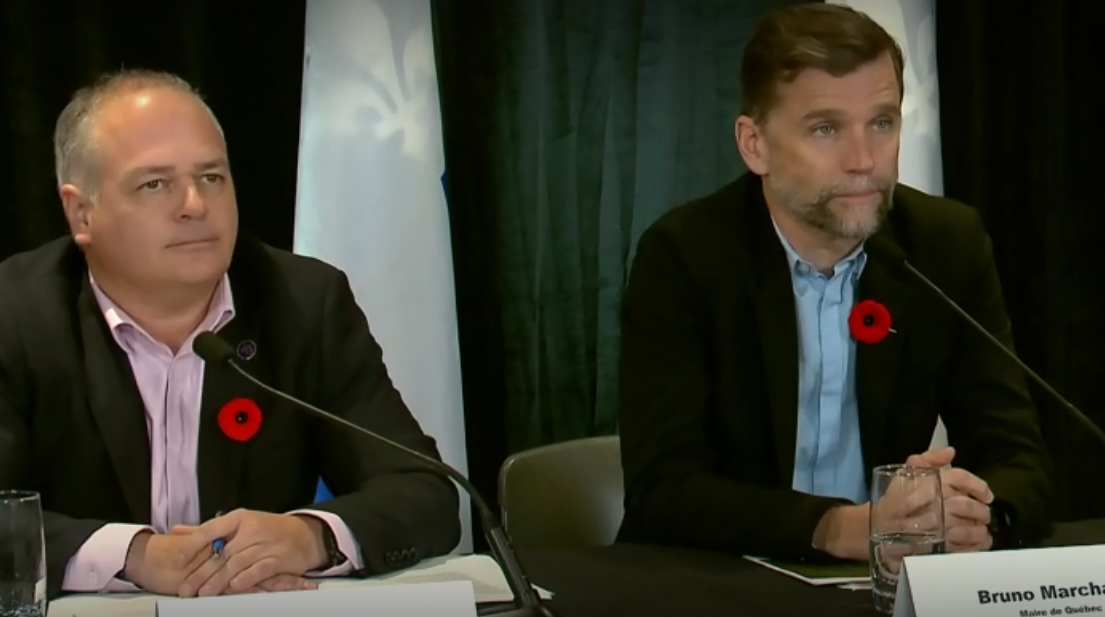
Marchand responded initially on X, saying, “Poilievre’s ‘common sense’ is to insult the elected representatives of Quebec. Frankly, this is not only contempt for elected officials, but for all those who work on housing issues in our city. This is petty politics. Quebec does not deserve this contempt.”

Marchand later added in a media scrum, “For a man who wants to be prime minister, to act like this … is not at all common sense. Common sense is to respect people.”

Plante, meanwhile, responded to Poilievre, offering a lesson in how Ottawa-Quebec relations work. The Conservative leader, she said on X, does not understand “that in Quebec, federal funding for housing does not go through the cities. Common sense is also to understand the financing mechanisms specific to each province.”

Trudeau, in Nunavut for a land transfer ceremony, told reporters Poilievre’s comments showed “condescension” to Quebec’s political leaders and an “ignorance for how things work between the federal government and the provinces.”

It was not the first time Poilievre has used the word “incompetent” to describe Quebec politicians.

In September, while in Quebec City for a party convention, the Conservative leader, referring to the rising cost of the city’s tramway project, said, “The federal government should not pay for cost overruns. Zero. It’s not my money; this money belongs to the taxpayers and I’m not going to continue throwing billions of dollars into projects poorly managed by incompetent politicians.”

30

William Trudel (left) gives Conservative Leader Pierre Poilievre a tour of the Place Fleur de Lys construction site.

Photo from Pierre Poilievre via X

Visit to QC building site prompts Poilievre ‘incompetent mayors’ barb Read More »

City councillors want to see women’s pro hockey team in Quebec City

Peter Black

Local Journalism Initiative reporter

peterblack@qctonline.com

There’s nothing official about expanding the league yet, but there’s a desire among the players at Quebec City Hall to have a Professional Women’s Hockey League (PWHL) team in the city.

In what might be called a faceoff, Coun. Anne Corriveau of Québec D’Abord, the official opposition party at City Hall, proposed in a statement at the very end of the Jan. 16 city council meeting that the city “encourage” the acquisition of a PWHL team.

At 7:30 the following morning, Limoilou Coun. and Transition Québec leader Jackie Smith sent out a notice of a news conference later that morning to discuss “the return of professional hockey to Quebec City.”

Regardless of which city councillor won possession of the political puck, the city executive committee member responsible for sports, Coun. Jean-François Gosselin, a one-time professional hockey player, was quick to jump into the play.

Gosselin told a media scrum, “It’s a good idea. If there is a promoter who comes forward, we will respond.” He added, “Quebec is a hotbed of talent and it would help boost women’s hockey, which is very intense and very physical even if there is no body checking.”

In a statement, Smith said, “A PWHL team would only be positive for Quebec City. It would be good for hockey fans, good for our young girls, good for the local economy and the Videotron Centre.” She added, “The revival of the historic rivalry between Quebec and Montreal would be a major asset for this emerging league and the players would play in a modern and certainly noisy arena.”

While there are still some die-hards, such as the Coalition Avenir Québec government, who believe in the eventual return of a National Hockey League team to the Quebec capital, Smith said she believed it was time to move on.

“I hope that politicians will tell citizens the truth: the NHL will never return to Quebec; economic reality does not allow it; the league does not see the point in it.… Let’s leave the past behind us – the future of professional hockey in Quebec is female. Let’s open our arms to the PWHL, and I am convinced that before long, we will have a professional hockey team in Quebec,” Smith said.

In her proposal, Corriveau, noting the Montreal PWHL team sold out its home opening game at the Verdun Auditorium on Jan. 13, said, “Given that the female representation in a predominantly male sport helps eliminate discrimination in sport … the creation of a PWHL team in Quebec would be an opportunity to encourage the sport and once again demonstrate the passion of the people of Quebec for professional hockey.”

Despite the enthusiasm at City Hall and elsewhere, the wait may be a long one for an interested promoter to formally apply for a PWHL franchise.

In an email to the QCT, PWHL communications director Paul Krotz said, “We are gratified by, and deeply appreciative of, the enthusiastic response our league has received from our founding fans and business partners. The PWHL community has been growing daily since our launch this month, and we are committed to extending that growth and momentum as we go forward.”

Regarding new franchises, Krotz said, “To this point, our focus has been on sharing the stories of our athletes and on creating an environment in which they can excel and entertain. While a time may come when the expressions of interest we’ve received from other markets can be given the attention they deserve, that time has not been identified. We launched our league on a remarkably aggressive timeline, and our current priority is to serve our inaugural six markets to the best of our ability.”

The PWHL, created in August 2023, currently has six teams – Ottawa, Montreal, Toronto, Boston, New York and Minnesota – all owned by the league, which is backed by American billionaire Mark Walters, owner of the Los Angeles Dodgers.

Players earn between $35,000 and $80,000 US, plus bonuses. Those amounts will rise by three per cent annually over the course of the eight-year deal. The salary cap is $1.26 million US.

The teams do not have names other than those of their host cities. The inaugural season, which began on Jan. 1, will have 24 games; next year’s full schedule, beginning in November, will have 32.

There is speculation that a March 16 game between Toronto and Montreal, currently marked “to be determined” on the PWHL schedule, may be staged in Quebec City.

The Montreal PWHL team salutes the fans at the club’s sold-out home opener on Jan. 13 at the Verdun Auditorium.

Photo courtesy of the PWHL

City councillors want to see women’s pro hockey team in Quebec City Read More »

Gabrielle-Roy Library to add outreach specialist for homeless

Ruby Pratka, Local Journalism Initiative reporter

When the expanded and renovated Gabrielle- Roy Library reopens in March, it will be more than a place to study and borrow books. People experiencing homelessness, many of whom rely on city libraries to warm up, charge their devices and enjoy a few hours of peace and quiet, will be able to access social support and housing support resources at the library through the work of a designated resource person. “There have always been vulnerable people in Saint-Roch; there’s nothing new about that,” said Montcalm-Saint- Sacrement Coun. Catherine Vallières-Roland, the city’s point person on the library project. “With the pandemic and the housing crisis, homelessness is on the rise…and we want the library to remain an open and inclusive place where both homeless and housed people will feel safe.”

Vallières-Roland said the resource person, whose hiring has not been announced as of this writing, would have a background in social work and be in a position to “build trust and de-escalate certain situations” which might lead to conflict between library users. “A significant part of their work will be to support tolerance and calm the social climate,” Vallières-Roland said. The resource person will also connect vulnerable people with other services in the community. A security officer will be on duty in the library.

At least nine Canadian cities, including Winnipeg and Edmonton, have hired or announced plans to hire staff dedicated to homelessness outreach within the past several years; Vallières-Roland said the initiative at the Gabrielle- Roy Library was inspired by a project in Drummondville.

The decades-old library was closed for major repairs in August 2019 and was initially scheduled to reopen in 2021, but the pandemic, the labour shortage and construction problems led to major delays. As previously reported in the QCT, the four-storey library will be 25 per cent larger than its predecessor. The space will be organized for “harmonious cohabitation” and easy monitoring by library staff. Its collections will be organized into thematic areas (children’s space, culinary space, city life space, comic book space, language and literature space, creative space, travel space, music and film space, society and culture space, nature space and science and technology space) bringing together books and magazines, multimedia content and areas to watch and listen to that content, and collaborative workspaces. The glass-fronted building will include exhibition rooms, recording and broadcasting facilities and a creative hub with publicly accessible digital tools for artists and community organizations. It will also feature a “culinary hall” and a collection of 10,000 books in languages other than French, mainly English and Spanish. Vallières-Roland said she intends for the library to serve as an “entry door to the community” for new immigrants, people experiencing homelessness and anyone else who is as-yet unfamiliar with what the library has to offer.

Gabrielle-Roy Library to add outreach specialist for homeless Read More »

Coptic congregation plans to buy Église Saint-Jean-Baptiste

Ruby Pratka, Local Journalism Initiative reporter

editor@qctonline.com

A historic Quebec City church which has sat empty for nearly a decade is expected to become a place of worship again after a landmark agreement between the Catholic parish which oversees it and a local Coptic Orthodox congregation.

The Église Saint-Jean-Baptiste, the hulking 1880s church on Rue Saint-Jean which gives the surrounding Faubourg Saint-Jean-Baptiste its name, held its last mass in 2015 after years of declining attendance and rising maintenance costs. In the intervening years, community groups and successive city administrations floated various uses for the vast building, including a community centre, a training centre for woodcarvers and stained- glass artisans and a centre for French-Canadian genealogy. Most recently, at the request of the Ville de Québec, the Institut canadien de Québec presented a “pre-feasibility study” for a cultural centre and artists’ workspace inside the church.

However, according to André Bernier, director general of Saint-Jean-Baptiste parish, the Coptic Orthodox congregation of the Virgin Mary, St. Mina and Pope Cyril was the only organization to submit a formal offer to buy the building. Although the QCT could not independently confirm this information at press time, various sources say the parish intends to sell the church to the Coptic congregation for a symbolic sum of $1.

The Saint-Jean-Baptiste parish council, the bishops of the respective churches and the Quebec Ministry of Culture and Communications must approve the sale before it can be finalized. Bernier said the parish council is “super happy” at the prospect of the church building being used for worship again. He added that the church has been carefully maintained since its closure and could reopen “tomorrow.”

“We’re delighted that the sale of Église Saint-Jean-Baptiste to the Coptic community will allow Christian worship to continue in the building,” commented parish council president Serge Savaria in a statement, pointing out that the sale was announced during the worldwide Week of Prayer for Christian Unity.

Members of Saint-Jean- Baptiste parish were consulted at a meeting on Jan. 21 at Église Saints-Martyrs-Canadiens, where representatives of both the Catholic and Coptic congregations spoke. “Even though the proposal is very recent, the parties wish to pro- ceed rapidly – the Coptic community is forced to move and the [parish council] wishes to be relieved of its financial burden,” said parishioner Paul Mackey, who attended the meeting. “During the question and comment period, most people expressed their sup- port for the sale and for the continued use of the church as a worship centre.” Speakers at the meeting, including Coun. Mélissa Coulombe-Leduc, indicated that church space may also be used for some community activities.

The Coptic Orthodox Church is an ancient branch of Christianity with roots in Egypt. The Coptic Orthodox congregation of the Virgin Mary, St. Mina and Pope Cyril is a multilingual (English-, French-, Coptic- and Arabic-speaking) congregation that has been based out of the former St. Stephen Catholic Church in Sillery for many years; it currently has about 60 members. “The Coptic community will be very happy to continue its activi- ties in this church, which is a jewel of Quebec City’s religious heritage,” said Nabila Nassif, a member of the Coptic congregation’s parish committee. “St. John the Baptist is a very important saint in the Coptic church, so the church will keep its name.”

Coptic congregation plans to buy Église Saint-Jean-Baptiste Read More »

Was NatAss vote to abolish lieutenant-governorship an insult to new LG?

Peter Black

Local Journalism Initiative reporter

peterblack@qctonline.com

On Dec. 7, Prime Minister Justin Trudeau announced the appointment of a new lieutenant-governor of Quebec, Manon Jeannotte, a woman of many accomplishments, not the least of which is serving as chief and councillor of the Gespeg Micmac nation in the Gaspé.

When Jeannotte is sworn in on Jan. 25, she will succeed J. Michel Doyon, a distinguished lawyer who has held the position since 2015. Jeannotte is the first Indigenous person to be appointed to the position in Quebec, and the second woman, following the regrettable 10-year tenure of Lise Thibault (convicted of fraud, served six months in prison. Another first).

In a Radio-Canada interview on the day her appointment was announced, Jeannotte, a graduate of the McGill/HEC executive MBA program, said about the vice-regal gig, “It is a source of pride, a recognition. For me, the priority has always been reconciliation, working together, being there for everyone. I want us to find a way, as a society, to progress together, to understand each other better.”

Gaspé Mayor Daniel Coté said about Jeannotte, “She carries this culture, this background, and with her qualities as a leader and visionary … I can tell you that I am terribly proud. It’s incredible.”

“Incredible” might be one way to describe, in a less complimentary way, how the National Assembly reacted the very day after Jeannotte’s nomination.

On a motion proposed by Sol Zanetti, the Québec Solidaire MNA for the Quebec City riding of Jean-Lesage, the National Assembly voted unanimously, all 100 of the deputies in the chamber that sleepy Friday morning, to abolish the office of lieutenant-governor. That includes all 15 purportedly federalist Liberals in attendance. Premier François Legault had exited before the vote.

The motion reads: “With all respect for the person who occupies this position, may the National Assembly note that the function of lieutenant-governor has no democratic legitimacy and that its origins remind us of a colonial period in our history which no longer has anchoring in modern Quebec; Let it take note of the very weak attachment of Quebecers to monarchical institutions; That the National Assembly expresses the wish that the position of lieutenant-governor be replaced by a democratic institution.”

The motion, seconded by the Parti Québécois, will be sent to the federal government and the Coalition pour l’abolition de la monarchie au Québec.

No debate, no speeches … and of course, no actual legislative impact, aside from the symbolic statement of rejection of the monarchy.

One wonders, despite the “all respect” bit, how the incoming LG feels about such a rebuff in the immediate aftermath of an appointment she accepted with pride, knowing its historic baggage.

The reference to the “colonial period” surely must seem to her a bit rich coming from a body of lawmakers containing precisely one Indigenous member (CAQ MNA Kateri Champagne Jourdain, who voted for the abolition). There has been only one other Indigenous MNA in Quebec history.

How does such a motion rank on the wokeness scale, where knee-jerk abhorrence of the monarchy trumps the implied gratuitous insult to a prominent Indigenous woman appointed to an important, though largely symbolic post?

There is, of course, no suggestion in the motion of how exactly the “position of lieutenant-governor be replaced by a democratic institution.”

As those who inform themselves on such matters would know, it’s not that Canadians embrace the monarchy – indeed polls show most folks across the country would rather give King Charles III and the royal firm the heave-ho. The problem is finding the political will, the constitutional means and a workable alternative to the current admittedly archaic system.

The constitutional bit might be the easy part, requiring a majority vote of the House, the Senate and all 10 provincial legislatures. And then what?

The most recent – and rare – example of a subject nation abolishing the British monarchy is Barbados, where all that it took to do the deed in 2021 was a two-thirds majority vote of both houses of parliament.

The new president of the Republic of Barbados, incidentally, is Sandra Mason, elected by a majority vote of parliament. Mason had been the previous governor-general of the country.

Neither the abolition of the monarchy nor the selection of head of state involved a vote of the people. Not exactly “democratically legitimate.”

Here in Canada, we are stuck with Chuck for the foreseeable future, and so folks might as well embrace Manon Jeannotte, his esteemed and historic vice-regal rep.

30

Was NatAss vote to abolish lieutenant-governorship an insult to new LG? Read More »

Tramway

Year-end shows mock QC transit woes but 2024 promises action

Peter Black

Local Journalism Initiative reporter

peterblack@qctonline.com

Although both the “third link” tunnel plan and Quebec City’s tramway project stalled in confusion in the past year, they did provide hilarious fodder for Radio-Canada’s popular year-end shows, Infoman and Bye Bye 2023.

Both sketch comedy shows devoted elaborate segments to the Coalition Avenir Québec (CAQ) government’s flip-flopping on the cross-river connection and its decision to freeze the tramway project while the Caisse de dépôt et placement du Quebec’s infrastructure department takes six months to study it.

The Infoman bit, titled “La Re-résurrection du troisième lien,” began with an image from the movie Ice Age, where the resignation of CAQ MNA Joëlle Boutin provoked a catastrophic byelection loss for the government in the Jean-Talon riding and sparked Premier François Legault to revive the plan to build a “third link” abandoned only a few months before by his government.

The segment contained a scene in CAQ MNA Bernard Drainville’s office where he unveiled a model for the link, a bridge seemingly made with a child’s play kit. Quebec City Mayor Bruno Marchand welcomed host Jean-René Dufort to his office, where stacks of tramway studies were piled high on his desk.

“How will the Caisse go through these in six months when it would take an army of people to read them in that time?” Marchand said.

What followed was a parody of a “bad film,” in the words of interim Liberal Leader Marc Tanguay, the Jesus of Nazareth series from 1977. Using actual scenes from the series, the faces of Quebec politicians and media figures were cleverly inserted, with the premier as a Roman ruler and Marchand nailed to a cross as the Messiah of Limoilou.

Afterwards, Dufort and Marchand wrote on slips of paper who they thought was the “Judas” of the tramway project. The two seemed to agree, and then Dufort ate the pieces of paper to keep the secret.

Bye Bye featured a parody of the TV series Plan B, whereby Legault, played by Claude Legault (no relation), prodded by his wife, played by Guylaine Tremblay, repeatedly goes back in time to change the plan for the “third link.” His final idea is a gondola ride between Quebec and Lévis.

All joking aside, 2024 promises to be a year of decisions on the two key transit projects in the Quebec capital. Ironically, it appears the fate of both the tramway and the “third link” may be determined by the Caisse’s study of the global picture of Quebec City and Lévis’ transit needs.

The clock is ticking on federal financing of the tramway and potentially the cross-river project, with Jean-Yves Duclos, the MP for Québec and powerful minister of public services and procurement, warning Ottawa can’t and won’t wait forever while Quebec dithers on major infrastructure projects.

Duclos will be front and centre on another major regional transportation issue, with a settlement possibly imminent on the decades-long dispute over the Quebec Bridge.

Just prior to the holiday break, Duclos, in year-end interviews, said the federal government’s “final” offer to purchase the 100-year-old span is currently on the desk at Canadian National, the owner of the bridge.

Once the ownership issue is settled, there remains the question of who pays to complete the paint job which began several years ago. The government of Quebec, as a major user of the bridge, will inevitably be asked to contribute.

At the moment, the Quebec transport ministry is undertaking major work at the approaches to the bridges, forcing reduced lane access during the day and nighttime closures.

CN has not made any public statement on the federal offer as of this writing.

30

Year-end shows mock QC transit woes but 2024 promises action Read More »

Limoilou to Charlesbourg is next big bike path project

Peter Black

Local Journalism Initiative reporter

peterblack@qctonline.com

With residents still adjusting to and businesses coping with the implementation of year-round bike lanes along Chemin Sainte-Foy, the city is moving forward with a plan for a similar project to extend a path from Limoilou to Charlesbourg.

The plan, unveiled before Christmas, would see a north-south path created along 6.7 kilometres of streets, with a connecting 2.3 km “antenna” on 3ème Ave. Ouest. The path would pass along 3ème Ave. Est and 4ème Ave. Est, with one stretch through Limoilou along a trajectory to be determined.

The path network would be built in six sections beginning this year, with completion expected in 2026. The Charlesbourg line is part of the sweeping Corridor Vélo Cité (CVC) plan to vastly increase the extent of the city’s bike path system. After Charlesbourg, networks serving Beauport to the east and Lebourgneuf in the west are in the works.

Coun. Pierre-Luc Lachance, the executive committee member responsible for transport and mobility, said in a Dec. 12 release, “We chose the Charlesbourg/city centre axis as the first official Vélo Cité corridor because it corresponds to the axis with strong current and anticipated cycling potential in this sector.

“This is an important step in our vision of building an integrated, continuous and connected cycling network, thus promoting sustainable and inclusive mobility for all.”

While the Charlesbourg project may be the first official CVC, the path implemented along Chemin Sainte-Foy the past summer was the first local test case of the insertion of permanently designated bicycle lanes in a dense urban street.

To create the two-km path, with lanes on either side of the street, some 136 parking spots needed to be eliminated, provoking some consternation among business owners along the route.

There are plans afoot to extend the Chemin Sainte-Foy path east to Place D’Youville in the Old City. Mayor Bruno Marchand made the commitment at the official opening of the Chemin Sainte-Foy bike paths in September. The city is studying options for the route, but merchants have already raised concerns about the impact the path might have on parking and accessibility.

The city plans to hold consultations on a key section of the Charlesbourg corridor through Vieux-Limoilou. The choices offered for the stretch between de la Canardiere and 22e Rue, are 3ème Ave and Boul. Benoit-XV, or 4ème Ave. The city will organize a vote by residents on the choices.

Full details on other issues for consultation on the CVC plan are available on the city’s website, as well as the map of the proposed routes. Work is set to begin in the spring on at least three of the six sections of the Charlesbourg bike path.

By 2027, the city hopes to have expanded its “active mobility” network by 100 km, for a total of 500 km. A budget of $95 million has been designated for the project, of which $50 million comes from the provincial government.

-30-

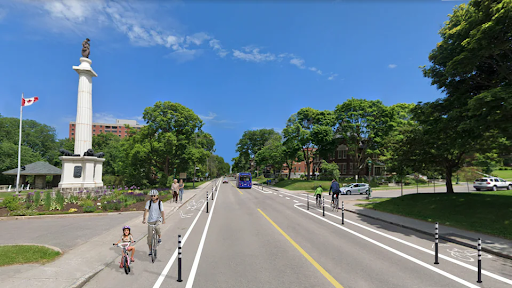
A bike path opened last summer along Chemin Sainte-Foy. Work is expected to begin on a similar path between Limoilou and Charlesbourg this summer.

Image from Ville de Québec

Limoilou to Charlesbourg is next big bike path project Read More »

Aftermath of Quebec teacher strikes: Is there a better way?

Peter Black

Local Journalism Initiative Reporter

peterblack@qctonline.com

Snow days notwithstanding, students are returning to public schools and CEGEPs across the province, in the wake of the storm of teacher strikes.

When all is tallied up – an estimated $11 billion in wage increases each year of the five-year deal; a $300 million catch-up plan; incalculable impact on the learning of affected students, particularly kids with disabilities; and parental frustration and anger – what conclusions can we draw about how unions and government handle negotiations in Quebec’s education sector?

We’ll leave the question of whether the strikes were worth it for the strikers themselves. One thing seems clear: the settlement reached might bring the salaries paid to teachers in Quebec closer to what teachers are paid in other provinces.

According to Statistics Canada, teachers in Quebec are the lowest paid in the country by a considerable margin. The numbers for 2019-20 show the average entry-level salary for both elementary and secondary teachers here is $42,431. The next lowest is British Columbia with $52,300. Ontario is $54,648, and the highest – excepting the territories, where salaries reflect the far higher cost of living – is Manitoba at $60,806. The national average is $52,975.

Quebec teachers nudge ahead of their New Brunswick counterparts by a few bucks after 15 years of service, at $82,585 versus $81,480, but are way behind Ontario at $100,925 and the national average of $93,646.

One can conclude there was some catching up to do during the recent negotiations with the Coalition Avenir Québec (CAQ) government, hence the 17.4 per cent hike over five years. Benefits and working conditions are too complicated for this space to compare to other provinces.

Despite the significant salary increase, one must feel some pity or something like it for the members of the Fédération autonome de l’enseignement (FAE), who stayed out the longest, without the benefit of a strike fund (how is that even legal?). The increase they won may compensate somewhat for a large chunk of lost income in 2023.

Is all this strike damage necessary? For a partial answer, we turn to the United States, a country one assumes to be a pro-union bastion, but not when it comes to teachers. According to a recent report on the Education Week website, 37 of the 50 states ban teacher strikes, including two of the three most populous, Texas and New York – one red, one blue. California, notably, allows teacher strikes, and there were several in 2023.

Despite the restriction of such drastic labour tactics, teacher salaries in the U.S. have kept pace with the rest of the Western world. The average starting salary for a public school teacher in the U.S. is $42,723 US vs. $40,722 US in Canada; the top rate is $74,214 vs. $70,331 in Canada.

If you want to make your fortune as a schoolteacher, by the way, head to Luxembourg, where the starting salary is $71,812 US, topping out at $126,000.

Clearly in a place like Quebec, where big unions have serious clout, it’s unlikely any government, especially one afraid of its own shadow like the CAQ regime is these days, is going to dare take up the cause of declaring teaching an essential service and protecting the enshrined right of children to an education.

In any event, with a hard-won five-year deal now in place – barring a rejection in ratification – both parties are surely in no mood to engage in a battle over the right to strike.

Parents, though, are not likely to be so complacent in ensuring their children’s education isn’t put in peril by future labour disruptions. The current trend to send kids to Quebec’s network of government-subsidized private schools is likely to accelerate.

According to one recent study of Quebec’s education system, enrolment in public elementary and secondary schools has dropped by four per cent and five per cent respectively over the past two decades, while enrolment in private schools has surged by 20 per cent over the same period.

The point has been made, in the debate over teachers’ strikes, that educators take to the picket lines not just for more money, but to improve working conditions and thus provide better education for children.

That notion will be put to the test as hundreds of thousands of Quebec students try to catch up on many days of learning lost to strikes.

30

Aftermath of Quebec teacher strikes: Is there a better way? Read More »

Héma-Québec seeks blood donors after storm cancellations

Ruby Pratka, Local Journalism Initiative reporter

editor@qctonline.com

Héma-Québec is calling on Quebecers, especially those with type O+ and O- blood, to sign up for their local blood drive after snowstorms over the past week have led to a wave of cancellations. “Blood donations are often down during the holiday season, while demand for blood from hospitals is up. Though Héma-Québec has a solid blood supply overall, the need for donations from these two blood types has grown in the last few days, partly because many potential donors have cancelled their appointments due to the weather,” Héma- Québec spokesperson Josée Larivée said in a statement.

Type O is the most common of the four main blood types, and people of any blood type can safely receive type O blood, hence the high demand for it.

“We can’t expect anyone to come donate blood when they would be putting their safety in danger, or when they feel uncomfortable, but if you can’t attend your scheduled appoint- ment, please take the time to cancel, so someone who lives close by or decides to donate on the spur of the moment can take your appointment,” Larivée said.

“Héma-Québec has existed for 25 years and we’ve never lacked blood during that time …but we don’t want to get in a position where we have a critical shortage, so, preventively, we’re doing a public callout,” she said.

She pointed out that many longstanding restrictions keeping people from giving blood based on their travel history and past sexual experiences have been rescinded in recent years. For decades, people who had lived or spent time in the United Kingdom between 1980 and 1996, or in the Republic of Ireland or France between 1980 and 2001, could not donate blood in Canada due to concerns about Creutzfeldt- Jakob disease, and men who had had sex with men were ineligible to donate – both blanket bans have since been lifted. Also, contrary to popular belief according to Larivée, people with diabetes can be blood donors, and people with tattoos can donate as long as their most recent tattoo was done at least three months ago.

First-time donors can expect to take a finger-prick hemoglobin test and answer a health questionnaire before getting in the chair. The process of donating blood itself lasts about 10 minutes, and about a pint of blood is taken with each donation. “Tell [the nurses] it’s your first donation, and they’ll give you a lot of love,” said Larivée. “Then you’ll get your sugary, salty snacks and spend a nice moment in the company of other donors.”

Héma-Québec invites first- time donors to make donating part of their regular routine. As a general rule, men can donate every two months, and women can donate every three months unless they are pregnant or have recently given birth. Young people can donate as soon as they turn 18.

Each blood donation can save up to three lives. “If you ever have to be at the hospital with a loved one and you watch the blood bags arrive, then you understand the impact of all the people who took an hour out of their day to donate,” Larivée said.

Visit the Héma-Québec online reservation platform at jedonne.hema-quebec.qc.ca to book an appointment at a blood drive or Globule donation centre near you. Although Héma-Québec can’t guarantee that all staff are bilingual, every effort will be made to ensure donors get explanations in their preferred language.

Héma-Québec seeks blood donors after storm cancellations Read More »

Tutoring, free summer school part of post-strike catchup plan

Ruby Pratka, Local Journalism Initiative reporter

editor@qctonline.com

Students across the province affected by teachers’ strikes will have access to additional tutoring, ministry exams will be delayed and organi- zations working with at-risk youth will receive additional financial support as part of a $300-million “catch-up plan” announced Jan. 9 by Education Minister Bernard Drainville. Secondary 4 and 5 students who fail a ministry exam and must retake it to graduate will also attend summer school for free.

Dozens of French-language public schools across Quebec, including those in the Centre des services scolaire (CSS) de la Capitale and CSS des Premières-Seigneuries service areas in Quebec City, closed from Nov. 23 through the holidays after the Fédération autonome de l’enseignement (FAE) declared an indefinite general strike. The rest of Quebec’s public school teachers, including those in English-language schools, are affiliated through regional unions with the Centrale des syndicats du Québec (CSQ). Students in those schools missed eight non-consecutive days of school due to strikes. Although the agreements-in- principle reached between the unions and the government have yet to be ratified, school resumed Jan. 9.

Drainville said the funding would be made available to all affected schools, although further information on how it would be divided among schools and regions was not available at press time.

He emphasized that the ministry “did not want to make a wall-to-wall plan” and intended to distribute the funding to individual schools through boards and service centres, to allow schools to use it as they saw fit. “The needs are different from one student, one service centre and one school to another; the students’ needs will guide us and the schools are best placed to understand those needs,” he said.

Drainville said service centres would be responsible for organizing tutoring and enrichment activities outside school hours for students needing additional support. These activities, he said, would be led by teachers and other professionals who would sign up voluntarily and be paid for the extra hours according to their collective agreement. Student teachers and retired teachers might also be asked to pitch in. Activities are expected to start Jan. 29.

January ministry exams will take place a week later than scheduled, and June exams will also be rescheduled with new dates to be announced. The exams will count for a smaller part of students’ final grades (10 per cent instead of 20 per cent for primary school and Secondary 2 students; 20 per cent instead of 50 per cent for Secondary 4 and 5).

“We don’t know how the funding will be divided – the [schools] that lost more time to the strike will probably get more – but we’ll be happy with whatever share of the funding we get,” said Central Québec School Board (CQSB) chairperson Stephen Burke.

Burke said school teams have been asked to identify students who are struggling and teachers who are willing to work extra hours to tutor those who have fallen behind.

Parents of children targeted for extra intervention should receive letters in the coming week. “The parents have to agree to the extra effort being asked of their children and themselves,” Burke said.

Steven Le Sueur, president of the Quebec Provincial Association of Teachers (QPAT), said he expected teachers to “do the best [they] can” to identify and support students who needed additional help, and many would appreciate the extra paid hours after taking a financial hit from the strike. “It would have been nice if [Drainville] injected the extra funding before the strike,” he added.

Katherine Korakakis is president of the English Parents’ Committee Association of Quebec (EPCA), one of the organizations consulted during the plan’s development. “It’s good to have extra hours of tutoring, but a lot of it is going to depend on parents,” she said, pointing out that many parents had to “rearrange their entire life” during the strike, and some may have to do so again, arranging transportation around after-school tutoring. She noted that the strike placed students from poorer or less educated backgrounds, students with disabilities and older students – who might have been tempted to drop out – at a disadvantage.

Burke said he didn’t see the eight days of missed class as an insurmountable obstacle. “If we had missed 24 days of class I wouldn’t be as optimistic, but we have until June to make up 40 hours,” he said.

Drainville said March Break would go ahead as scheduled – although schools could decide to open their doors for enrichment activities – and no exams would take place after June 23.

Tutoring, free summer school part of post-strike catchup plan Read More »

Critics say budget hits businesses hard

Reaction to the city’s 2024 budget predictably focused on the hefty tax increases, particularly on commercial property.

Coun. Alicia Despins of the official opposition Québec D’Abord party told the QCT, “We regret the 4.7 per cent increase in taxes for small business owners. They are already burdened with the impact of COVID and this only mires them further in financial difficulties.”

On the positive side, Despins said, “We are supportive of the new eco-fiscal measures, particularly the tax on vacant land,” but she said the city could have gone further. “In Montreal, it is currently 25 per cent, but in Quebec City, it’s only four per cent.”

Despins, who represents the Lower Town district of Vanier, said she was disappointed the city administration did not accept her party’s suggestions for diversifying revenue sources. “The burden cannot fall entirely on the shoulders of property owners.”

Steeve Lavoie, president and CEO of the Quebec Chamber of Commerce and Industry, said in a statement Mayor Bruno Marchand “is moving dangerously away from his 2021 election promise” to reduce taxes on business.

Lavoie said, “Quebec [City] is one of the cities where merchants are taxed the most in Canada. Mr. Marchand said he wanted local companies to be among the 50 per cent least taxed in the country before the end of his mandate. We’re moving away from it.”

Coun. Jackie Smith, leader of Transition Québec and councillor for Limoilou, said in a news release, “I am satisfied that the city is embarking on the path of eco-taxation, a concept that I was already hammering home during the electoral campaign and that I took up again when presenting the 2023 budget.

“The variation in taxes based on energy consumption, water and waste production in non-residential areas, taxation on surface parking in the city centre and the increase in [parking] sticker fees are in line with my requests.”

“However,” Smith said, “I believe the city must go further with these types of measures. I agree that the ideal way to change behaviour is to do it gradually, but unfortunately, I don’t believe that this is what the environmental context requires.”

30

Coun. Alicia Despins of Québec D’Abord says she believes tax measures in the 2024 budget represent a burden for businesses.

Photo from Ville de Québec

Critics say budget hits businesses hard Read More »

Two biotech companies pick up pieces of Medicago

Peter Black, Local Journalism Initiative reporter

peterblack@qctonline.com

Ten months after the sudden shutdown of vaccine manufacturer Medicago, two Quebec biotech companies are bringing new life to some of the defunct company’s abandoned facilities.

Last week, the federal government announced a deal to secure Medicago’s technology and research from its Japanese parent company, Mitsubishi, and transfer it to a new company formed by 14 former Medicago employees.

The deal also includes $40 million recovered from Mitsubishi from the $170 million the federal government had contributed to building the huge new facility for Medicago in Beauport.

According to a news release, the deal with the new company, Aramis Biotechnologies, will “maintain Medicago’s intellectual property and critical research assets in Canada; ensure a Canadian company retains the technology platform, talent and expertise; and identify third-party investors that could help maintain and expand Medicago’s platform capabilities in-country. This is to enhance domestic pandemic preparedness capabilities and ensure that a promising technology platform remains in Canada.”

Aramis president Frederic Ors told the Journal de Québec, “If all goes well, in three years we will have 130 or 150 employees. We have set up a business model which ensures that future employees will also become shareholders. We also have private investors because we could not have done this alone. With private investors and employees, we will invest nearly $40 million in the coming years.”

Aramis will resume operations at Medicago’s former facility in the city’s industrial park, which, according to Ors, could be expanded.

Meanwhile, Montreal-based Linearis Labs Inc., which bills itself as “an innovative company at the intersection of AI and biomarker analysis,” has taken over the laboratory space formerly occupied by Medicago on Route de l’Eglise.

In a Nov. 28 release, Linearis said it has acquired “over 650 scientific instruments and hired some of [Medicago’s] most seasoned specialized personnel in mass spectrometry, quality assurance and laboratory management.”

Company president and CEO Alexandre Le Bouthillier said, “[We] are grateful for the support from Medicago during this transaction enabling the creation of this innovative and collaborative laboratory. The identification of disease signatures not only makes prevention accessible, but it also contributes to improving the prevention, screening, discovery of treatments, and acceleration of precision medicine.”

In a Journal de Québec report, Le Bouthillier said the company may eventually be interested in taking over some space at the now vacant, newly constructed facility in Beauport.

A spokesperson for Innovation, Science and Industry Minister Francois-Philippe Champagne had not replied to an inquiry about the future of the Beauport facility by press time.

Medicago ended operations in February after its COVID-19 vaccine failed to make it to market before the end of the pandemic. The federal government had approved the vaccine, but the World Health Organization refused to authorize it because of Medicago’s association with tobacco giant Philip Morris.

-30-

The future is still uncertain for the shuttered Medicago facility in Beauport.

Photo from QCT archives via CBC

Two biotech companies pick up pieces of Medicago Read More »

Attachez vos tuques for possible second coming of ‘Orange Jesus’

Peter Black

Local Journalism Initiative reporter

peterblack@qctonline.com

“The things we do for Orange Jesus.”

Let’s put that in nomination for best quote of 2023. It comes from the book Oath and Honor by Liz Cheney, former Republican congresswoman for Wyoming; daughter of Dick, the notorious George W. Bush operative; and co-chairperson of the Congressional committee which investigated the events of Jan. 6, 2021– in case you’ve forgotten, that’s the day the United States of America came within a crazed yahoo’s whisker of being thrown into insurrectionist chaos and violence.

Cheney was quoting Tennessee Congressman Mark Green as he lined up with other Republican lawmakers to sign electoral vote objection sheets, obeying the ousted president’s edict to defy and deny the election of Joe Biden.

As we head into 2024, one suspects many people around the planet are wondering just what exactly American voters are prepared to do for Orange Jesus. Is this woebegotten world about to witness his second coming? Will the rough beast of Mar-a-Lago slouch once again towards Washington?

Sorry for these dark thoughts amidst the New Year’s well-wishing and expressions of hope for humanity, but it may behoove all of us, from Quebec to Qatar, to pay close attention to the political spectacle about to unfold in the United States.

Visitors arriving from another planet might be surprised to learn the human who lost the election to lead the most powerful empire on Earth, who organized and inflamed an attempt to overthrow the duly elected government, who faces 91 criminal charges in four cases and who has already received a civil conviction for sexual abuse, whose business dealings have been found by a court to be fraudulent, who has openly declared he’d be a dictator if re-elected and use the power of the state to “come after” his enemies – is a serious contender for president, and by far, the leading candidate for ​the Republican nomination.

He ​would face Biden, who often looks every bit the frail 81-year-old he is. Despite concerns about his stamina and focus, Biden has racked up a remarkable record of achievements, wrangling progressive legislation from a hostile Republican opposition. However, whatever good he is doing is not getting him traction in the polls.

Nervous Democrats are running out of time to replace Biden with any one of a slate of wholly acceptable (and younger) candidates, including California Governor Gavin Newsom and Michigan Governor Gretchen Whitmer. You can include Vice-President Kamala Harris in the group if you wish.

There is some speculation Biden, whose already crushing burden of office now includes his son Hunter’s serious legal woes and a less-serious impeachment campaign by Republican members of Congress, may ring in the New Year with a decision to stand down.

Either way, barring the truly unforeseeable – for example, fleeing to a country with no extradition treaty with the U.S. – Orange Jesus will dominate the political agenda in 2024 and onwards, and the debate over whether a convicted felon can serve as president will intensify.

Here, in the Great White North, ​folks on the Hill will watch next year’s American election with a mixture of dread and intrigue. The Trudeau government endured four years of a MAGA administration and certainly does not relish more and worse of the same.

Yet, politics being a blood sport, the Liberals undoubtedly must be very privately relishing the prospect of having Orange Jesus around to help frame their Conservative opponents as mini-MAGAs. There is even talk that the threat down south may change the stakes and the timing of the next federal election, which is still in Prime Minister Justin Trudeau’s hands.

Conservative MP and former minister Michelle Rempel Garner, whether thinking wishfully or not, speculated, “A MAGA-messaging-reliant Liberal campaign narrative with Justin Trudeau still at the helm has only one optimal window for an election: the October before a Biden vs Trump presidential election day.”

The Liberals, in essence, may be wondering, “What can Orange Jesus do for us?” as they look for a path to a fourth straight mandate.

Happy New Year, and as former prime minister Jean Chrétien would say, attachez vos tuques!

30

Attachez vos tuques for possible second coming of ‘Orange Jesus’ Read More »

City to transform historic buildings in Old City into housing

The Ville de Québec plans to convert the Foyer Nazareth building, at left, and the former Saint-Louis-de-Gonzague school in Vieux-Québec into housing.

Peter Black

Local Journalism Initiative Reporter

peterblack@qctonline.com

The city has reached a deal to purchase a former boys school and a one-time boys orphanage in a prime spot in Old Quebec, and convert both buildings into housing.

The two buildings, situated on a large lot at the intersection of Rue Richelieu and Rue des Glacis, are the former home of private boys school Saint-Louis-de-Gonzague and the once-associated orphanage, whose last vocation was as Foyer Nazareth, a seniors residence operated by the Sisters of Charity.

Both buildings were built in the 1800s and are considered of high heritage value.

The city made an offer of $8.275 million to purchase the 14,164-square-metre property from the Centre hospitalier universitaire de Québec (CHUQ), well below its $9.460-million municipal valuation. Neither building had been occupied since 2010, although a hair products supplier is listed as an occupant of the former school.

In a Dec. 1 news release, the city said, “By restoring the two buildings, more than 150 housing units could be created, which corresponds to approximately 225 to 250 new residents.”

Coun. Mélissa Coulombe-Leduc, city executive committee member and councillor for the Cap-Aux-Diamants district, said, “This acquisition will also make it possible to give back to citizens one of the most interesting green spaces in the area, the former primary school courtyard. The land could also accommodate other projects dear to citizens, including a community garden.”

The project is part of Mayor Bruno Marchand’s administration’s plan to bring in more residents and improve the quality of life in the Old City. Figures from the city and Statistics Canada show the residential population within the walls of the Old City is in free fall. In 2006 there were 5,278 residents; according to the latest figures, there are 4,600.

The city revealed no details on how it would proceed with the conversion of the two buildings, or the parameters of the proposed project.

The city’s acquisition of the prized site comes in the wake of a project aborted in 2022. The GM Development company had proposed a plan to preserve both buildings and add a 12-storey building on the site, creating some 250 housing units in total. The project was iced when the CHUQ decided, in the middle of the pandemic, to hold onto the buildings.

The school building became vacant in 2009 when Académie Saint-Louis, a subsidized private school, acquired École Saint-Louis-de-Gonzague, and the two schools merged at the latter’s facilities in Lebourgneuf. Académie Saint-Louis moved from Ave. des Érables in Montcalm in 1995.

The structure had been built in 1898 as a boarding school for boys and had been expanded over the years. Foyer Nazareth, situated on the site of an embankment fortification built by the French army, was built by the British army as quarters for married soldiers and their families.

When the British garrison left the city in 1871, the building was handed over to the Sisters of Charity, who turned it into an orphanage for boys. It was enlarged twice by raising the roof and adding an extension. The orphanage closed in 1915, and the building later became a seniors residence. It was operated by the sisters as Foyer Nazareth until 2010 when it was acquired by the CHUQ.

The city announced other measures to boost residential life within the walls. One is “a complete inventory of buildings located on Rue Saint-Jean and Côte de la Fabrique with the aim of analyzing the sector and improving existing subsidy programs to stimulate the creation of housing in vacant spaces.”

The subsidy for such conversions, provided through a provincial program, can reach $85,000 per unit. The city says the program could create about 30 new housing units.

30

Photo by Peter Black

City to transform historic buildings in Old City into housing Read More »

Honorary Spanish consul pens book about colourful predecessor

Tommy Byrne holds a copy of Premio-Real’s book of musical compositions at the book launch at the Cathedral of the Holy Trinity.

Peter Black, Local Journalism Initiative reporter

peterblack@qctonline.com

A phone call out of the blue from a historian in Spain launched Tommy Byrne, the honorary Spanish consul in Quebec City, on a quest that culminated in a book about his predecessor from 140 years ago, whose remarkable story is all but forgotten.

Byrne hosted an elegant launch party for the book, Premio-Real Dans La Capitale, on Oct. 26 at the Cathedral of the Holy Trinity in Old Quebec. It would have been familiar terrain for the Spanish diplomat, who was a prominent figure in Quebec City society in the late 1800s.

A week later, Byrne flew to Spain to present his book to the Royal Society in Jerez de la Frontera, the home of the historian whose call ended up inspiring Byrne to write the book.

Byrne, the former historical curator at the cathedral, who has a background in international relations, began unearthing the amazing story of the Count Premio-Real, Jose Antonio de Lavalle, when he received an inquiry from the historian wanting to confirm the diplomat’s burial place.

Thanks to a helpful staffer at Notre-Dame-de-Belmont cemetery who found an 1888 obituary of the count in a local newspaper, Byrne’s interest was piqued. He decided to dig into the count’s story and write a book about it.

Five years and a six-month research sabbatical in Spain later, Byrne’s profoundly researched and richly documented 248-page book is now available in French, through legendary Quebec City historical publishers Septentrion.

What Byrne has assembled is not simply a biography of a captivating character, but a fascinating history and analysis of the role of consuls – both honorary and remunerated – dating back to the early days of Canada. As Byrne notes, since 1855, the Spanish representative in Quebec City has been “four times a vice-consul, three times a consul, following which, were civil servants either honorary, career (diplomat) [or] in between.”

Premio-Real, for his part, was a full-blown diplomat, responsible for Spanish relations with all British and French possessions in North America at the time, including Newfoundland and the islands of Saint-Pierre and Miquelon.

Byrne said the count was “kind of a bridge between the two communities [French and English] as a diplomat.”

Born into a noble but not “grand” family, the newly anointed count, having inherited the title from his deceased father, joined the Spanish diplomatic corps at age 17. Prior to his posting in Quebec in 1874, Premio-Real served stints in Wales, Malta, Philadelphia, Naples and Hong Kong.

However, Quebec is where he thrived as a man of letters, composer, architect, mathematician, naturalist and general social butterfly. As the book’s subtitle suggests, Premio-Real’s 14-year stint in the Quebec capital was a “sentimental journey.”

Byrne said perhaps the most surprising thing he learned about Premio-Real is that he was “one of the greatest patrons of the arts” in the city, supporting artists, writers and musicians and often giving them their first exposure.

The artists he supported were mostly French-Canadians, Byrne said, but also included English-speaking talents. He co-wrote a book with Annie Howells Frechette, the daughter of then-U.S. consul William C. Howells, called Popular Sayings from Old Iberia.

Byrne writes that Premio-Real was “in his element” in the intellectual and scientific circles in the city, including the Literary and Historical Society of Quebec, in whose rare book collection one finds a copy of one of the count’s publications, dedicated to the Society.

The count was a close friend of governor generals Lord Dufferin and Lorne, as well as George Stewart Jr., the editor of the Morning Chronicle, a predecessor of the QCT.

Alas, mounting debts, failing health and being stripped of his post ultimately drove the count to suicide on Oct. 16, 1888. A report in the New York Times indelicately noted he blew “his brains out with a pistol.” The report said “the Count was a bon vivant and had a great deal of trouble in consequence.”

Upon Premio-Real’s passing, the book cover notes, “several of his contemporaries paid tribute to him by dedicating works to him, notably Louis Fréchette, Calixa Lavallée and Joseph Vézina.”

Byrne’s account of the life and times of this colourful character is brimming with fascinating detail and depicts a vibrant cultural and political society in Quebec’s post-Confederation history. The preface by Lt.-Gov. Michel Doyon provides some interesting diplomatic context.

The author said he did not set out to glorify the count, but simply to tell a compelling story that’s been lost to time. Premio-Real would surely be pleased.

Byrne said he feels a lot of satisfaction “at having started and finished an undertaking” that began as a New Year’s resolution.

Byrne, honorary consul since 2017, lived in Spain for several years working on a United Nations project, and met his “half-Russian, half-Spanish” wife, Veronica Biriucov González, in Madrid. The community of Spanish expats under his watch numbers about 800.

30

Photo by Peter Black

Honorary Spanish consul pens book about colourful predecessor Read More »

Mayor on budget: Tax hike less than inflation ‘a gift’ to residents

Peter Black, Local Journalism Initiative reporter

Street parkers, parking lot owners, cat owners and anyone who owns a house or a business will feel the pinch of a city budget coping with persistent inflation and other rising costs.

On Dec. 6, the Québec Forte et Fière administration of Mayor Bruno Marchand unveiled its third budget since taking office in 2021, featuring a $131.9-million increase in spending for an overall budget of $1.9 billion.

To help keep a cap on spending, the city is raising taxes and fees on a sweeping array of services, ranging from an average of 3.9 per cent on residential housing property taxes to a new $11 charge for a cat licence.

For a house valued at $293,000, for example, the increase will amount to $120. The property tax increase is the largest since 1991.

The tax bite for non-residential properties, largely commercial and industrial, is even deeper, at 4.7 percent.

One per cent of the property tax hike is designated for the management of water and waste, and is projected to bring in an additional $19 million. A new charge on some 400 outdoor asphalt parking lots, deemed by the city as an environmentally unfriendly drain on municipal services, should raise $1.7 million.

Billing the budget at the City Hall briefing as “a gift” to residents because it kept tax increases below inflation, Marchand said, “Despite a particularly difficult economic situation, we are succeeding in maintaining the quality of services offered, accelerating our investments to respond to the housing crisis and continuing to build up a reserve to enable us to better respond to climate change.”

He added, “I am proud that we have succeeded in doing this by limiting the increase in residential and non-residential tax charges below inflation, for a second consecutive year, in addition to maintaining the priority objective of continuing to reduce the city’s debt.”

The budget is intended to moderate the impact of inflation pegged at 5.6 per cent over the last two years, for a total hike of 11.2 per cent. Two examples the city gives are increases of about 40 per cent in the cost of fuel and natural gas over the past two years.

Cat owners, as of next year, will be required to get a licence for their pet, at a cost of $11. The city said the revenue will help compensate for the cost of disposing of cat litter thrown into garbage collected. The city estimates there are some 12,000 cats on city territory and it costs $5 per cat per year to treat disposed litter.

The tramway project may be on hold, but that doesn’t mean the city isn’t still paying for it. According to city officials, about $613 million will have been spent by the end of the year on preparatory work. Because of the freeze imposed by the provincial government while the Caisse de dépôt et placement studies the issue, the city has budgeted $300 million rather than $600 million to pay for already scheduled work and land acquisition in 2024.

In that regard, a report in Le Soleil confirmed the city concluded on Dec. 1 the single largest property purchase for the tramway, $37 million for land belonging to Industrial Alliance on Route de l’Église which would be used for a proposed exchange hub.

Other budget highlights include:

  • $255 million invested in various housing and renovation programs, including $3 million for new social housing in partnership with Desjardins and the Fonds de Solidarité FTQ.
  • The cost of street parking stickers will jump from $120 to $150 per year, and the cost of a second vehicle registered to the same address leaps from $120 to $225.
  • Under sports and culture spending, $17.2 million will go to tennis and pickleball courts and $8.2 million to two (new?) refrigerated rinks.
  • A slight decrease in overall spending on salaries, from 33.5 per cent of the budget to 33.3 per cent, will be achieved through attrition and not filling vacant positions.

30

Mayor Bruno Marchand has called the 2024 city budget a “gift” to residents.

Photo from Ville de Québec

Mayor on budget: Tax hike less than inflation ‘a gift’ to residents Read More »

Napoleonic thoughts: Muscleman’s murder theory and Louisiana Purchase

Peter Black, Local Journalism Initiative reporter

peterblack@qctonline.com

I have a small laminated copy of Jacques-Louis David’s famous portrait of Napoleon Bonaparte, purchased many years ago from the gift shop of the National Gallery of Art in Washington, D.C.

Why, of all possible souvenirs of works of art on offer, your scribe chose a portrait of Napoleon, escapes me. There just must have been something about it, or him (or was it in the bargain bin of historical portraits?).

In any event, that little Napoleon memento comes to mind as British director Ridley Scott’s cinematic opus about the French emperor hits theatres with a three-hour thump – a running time longer, as one critic noted, than Bonaparte’s coronation ceremony.

The latest surge of Boney-mania also brings to mind a certain Montreal muscleman whose passion – beyond bodybuilding and nutrition – was everything Napoleonic.

Ben Weider, with his brother Joe, built a successful global business publishing fitness and health magazines, selling nutritional products and staging body-building competitions. For example, the Mr. Olympia contest, going, um … strong since 1965, famously brought to world attention, Hollywood stardom and the California governorship seven-time champion Arnold Schwarzenegger.

Napoleon may have been a strongman, but he was no muscleman. Yet Weider had a lifelong fascination with the Little Corporal, amassing a collection of some 100 items of memorabilia, many of them owned by the emperor himself. One Napoleonic keepsake, a lock of the emperor’s hair, became key to Weider’s campaign to prove Bonaparte, 51 years old at the time, did not die of stomach cancer, as the generally accepted version states, but was poisoned by monarchist plotters fearing another comeback.

Weider wrote a 1982 best-seller titled The Murder of Napoleon, in which he makes the case, based on reams of personal accounts and forensic science, that Napoleon succumbed to arsenic poisoning. The most convincing proof was the analysis of hair shaved from his head the day after he died in May 1821.

Weider donated his collection to the Montreal Museum of Fine Art in 2008. A ceremony to accept the Napoleonic treasures, with a Bonaparte descendant in attendance, took place eight days after Weider died that year at age 85.

Weider’s interest in Napoleon ran deeper than simple fascination with an epic historical figure. As cited in one tribute, Weider “often said that one of the chief reasons he so admired Bonaparte was because he was ahead of his time in extending rights to Jews and other minorities; he emancipated Jews from the ghettos and lifted restrictions on their freedoms in the European countries he conquered, and even proposed a Jewish state in Palestine.”

When his plan for a Jewish state in the Middle East failed, following his brutal invasion of Egypt and Palestine in 1798, Napoleon declared France to be the homeland of the Jews.

He was somewhat less tolerant when it came to other types of human beings. His mission in 1801 to suppress a slave revolt in Hispaniola, now Haiti, ended in disaster, with only a fraction of his 35,000-man expeditionary force surviving death in battle or by disease.

As a result, Napoleon had to abandon his plan to reinforce the massive swath of territory in the American midwest he had acquired from Spain in exchange for Tuscany in Italy, creating a French territory to replace Canada – Voltaire’s “few acres of snow” lost in the Seven Years War.

Desperate for cash to fill his war chest to take on the British once again, Napoleon eagerly agreed to sell the Louisiana territory to the United States, for the equivalent of about $350 million US in today’s money.

The Americans had originally only wanted to buy New Orleans, but ended up getting some 828,000 square miles west of the Mississippi River, most of which had never seen a French visitor and was occupied only by Indigenous tribes.

Napoleon’s vision of a French-speaking empire in North America ended when the Americans took possession of Louisiana on Dec. 20, 1803, and promptly started making plans to extend slavery to the new possession, sowing the seeds of the Civil War.

Who knows what would have happened had Napoleon not met his Caribbean Waterloo on Hispaniola, and instead been able to muster a massive expeditionary force to claim this huge and sparsely populated territory – running all the way up to the border with British North America – for France?

It certainly would have given new meaning to the dreaded “Louisianization” of Quebec.

-30-

Napoleonic thoughts: Muscleman’s murder theory and Louisiana Purchase Read More »

Public sector workers to vote on proposed collective agreements

Ruby Pratka, Local Journalism Initiative reporter

editor@qctonline.com

Leaders of Quebec’s four largest public sector unions, the Confédération des syndicats nationaux (CSN), the Centrale des syndicats du Québec (CSQ), the Fédération des travail- leurs du Québec (FTQ) and the Alliance du personnel professionnel et technique de la santé et des services sociaux (APTS), said at a Jan. 2 press conference that they have reached an agreement in principle with the government, aimed at ending several months of labour strife and securing a five-year collective agreement.

The four unions represent about 420,000 workers across the health, education and social services sector, including Central Québec School Board (CQSB) teachers, CEGEP Champlain-St. Lawrence staff and technical and maintenance staff at public health facilities. Since last year, they have been negotiating with the government as a single bloc, the Front Commun.

CSQ president Éric Gingras told reporters the agreement includes a 17.4 per cent salary increase over five years, with possible additional one per cent increases in the last three years of the contract, tied to the rate of inflation. Other gains included an additional week of paid vacation for workers with at least 19 years’ seniority, a 15 per cent signing bonus for certain specialized workers and a 10 per cent salary increase across the board for psychologists in the health and education sectors. Other changes specific to certain professions are expected to come to light in the coming weeks, as sector-specific bar- gaining units conclude their own agreements. Members will then be asked to vote yes or no on the full agreements, which will be approved or rejected through a double simple majority system – over 50 per cent of locals must show that over 50 per cent of their members approved the agreement. Local votes are expected to finish no later than Feb. 20.

Although Gingras emphasized that the last few months of negotiation had won some concessions – “the initial [salary increase] offer was nine per cent, and we doubled that” – he stopped short of formally recommending that CSQ members vote in favour. FTQ president Magali Picard, whose federation was the last of the four to reach an agree- ment, recommended that FTQ members vote in favour. “We made gains at all the [sectorial] tables, which is why we feel comfortable recommend- ing this agreement,” she said.

“We will wait until Feb. 20 to make sure our members think it’s a good deal,” Gingras said. “It’s up to them now.”

Reactions to the agreement on social media were mixed, with some public sector work- ers applauding it while others called for it to be rejected. CSN vice-president François Énault said there were “several scenarios” if the agreement wasn’t approved by all four federations, including federation-specific strikes. Picard said a general strike was now “very unlikely.”

Steven Le Sueur is the president of the Quebec Provincial Association of Teachers (QPAT), a CSQ-affiliated federation which represents teachers in the province’s English public schools. Although he could not share details of the sector-specific agreement that teachers will vote on, he said said it contained steps forward on salary, workload and class composition. “We haven’t lost anything and we have made some gains – maybe not as much as we would have liked, but there are some gains,” he said.

The Fédération autonome d’enseignement (FAE) which represents about 60,000 teachers at French-language public schools around the province, including in Quebec City, reached an agreement in principle on Dec. 28, ending a month-long general strike. Details have yet to be made public. FAE president Mélanie Hubert said in a statement that individual unions would meet to vote on the agree- ment “after the holidays.” The FAE recommended that its members vote in favour of the agreement, although Hubert said the final decision was in their hands. Students returned to class Jan. 9.

The other major public sector union currently in negotiation with the government, the Fédération interprofessionnelle de la santé du Québec (FIQ), which represents more than 80,000 health professionals, mostly nurses, has not reached an agreement as of this writing. Shortly before Christmas, Labour Minister Jean Boulet appointed a mediator to assist in negotiations. A FIQ source told the QCT that the two sides are “in intensive negotiations” and no further public statements would be made until Jan. 15. FIQ members held a seven-day strike from Dec. 8-14, and the union warned at the time that the next step would be a general strike.

Public sector workers to vote on proposed collective agreements Read More »

GASPÉ TALES: Light at the end the tunnel for Canada’s largest lighthouse

Ruby Pratka, Local Journalism Initiative reporter

editor@qctonline.com

On July 13, Quebec Lighthouse Day, Lucie Bergeron was hoping to welcome hundreds of tourists to the Cap-des-Rosiers Lighthouse to climb the 122 steps up the lighthouse tower and admire the giant electric lantern and the breathtaking views of the Gulf of St. Lawrence. Instead, she and about 100 other Gaspesians showed up at the lighthouse with picket signs. Perhaps fittingly, it was a damp, foggy day. The historic site, Canada’s tallest lighthouse (at 34.1 metres tall) and one of its oldest, had been hastily surrounded with security fencing the day before; Fisheries and Oceans Canada (FOC), which oversees the lighthouse, had closed it for security reasons.

The lighthouse has stood sentry to nearly 150 years of Canadian maritime history. It was completed in 1858, 10 years after the brig Carricks ran aground off Cap-des-Rosiers; at least 120 people, mostly desperate refugees fleeing the Great Famine in Ireland, drowned in the freezing water, and a memorial visible from the lighthouse commemorates their lives. After the tragedy, the British colonial administration funded the construction of the lighthouse, built from grey sandstone and brick later replaced with gleam- ing white marble. “It’s older than Canada,” commented Bergeron, the president of the volunteer-run Société historique maritime de Cap-des- Rosiers (SHMCR), which oversees the historic site. Twelve lighthouse keepers, usually political appointees, lived and worked on the site from 1858 to 1981; lighthouse keeper Joseph Ferguson entered local legend in 1942 after spotting a German U-Boat from the top of the tower. Now automated, its light can still be seen for miles, its distinctive blinking pattern supplementing modern GPS systems to help sea captains find their way.

The lighthouse has been classified as a national historic site since 1973. Starting in the 1980s, descendants of the lighthouse keepers gave informal tours; later, that duty was taken over by the Cap-des- Rosiers chamber of commerce and the Musée de la Gaspésie before falling to the SHMCR.

“We make minor repairs, but we’re a small organization, and major repairs are done by FOC,” Bergeron said. “There have been no major repairs since 1994. There’s water coming in, the cupola needs to be repainted, and the steps are wooden and wood rots. We can’t do everything.” Bergeron said that in 2017, the SHMCR was told complete repairs would cost $6.5 million. Six years of wear and tear, two prolonged closures (during the COVID-19 pandemic and more recently for safety) and rising construction costs have done nothing to decrease that number. “The more we wait, the more it will deteriorate,” said Bergeron. “Why should we let a jewel like this rot?”

Bergeron said the closure was announced “kind of cavalierly” on July 11 and a series of inspections were conducted by DPO personnel. Gaspé MP Diane LeBouthiller, appointed Fisheries and Oceans minister in this summer’s Cabinet shuffle, has assured Gaspesians that the closure is “temporary” although no reopening date has been announced. Calls for tenders were launched in late September for medium-term repairs aimed at filling cracks in the structure and replacing faulty wooden steps, according to Bergeron. “It’s a good start, because before, we had nothing,” she said.

“We’ve called for serious investment in the lighthouse, but so far, all we’ve had are cosmetic investments to secure it, and it’s stopped there,” Gaspé Mayor Daniel Côté told the QCT.

Since the QCT spoke to Côté this fall, FOC has launched several calls for tenders and a Quebec City-based company has been mandated to secure the windows and seal cracks in the centuries-old building. That work is expected to finish before the end of the year.

The long-term future of the lighthouse is still up in the air. Bergeron and Côté believe incorporating the lighthouse into Forillon National Park is one potential solution – the park’s north entrance is less than 300 metres from the site. However, Parks Canada “doesn’t have the intention” to acquire the site, spokesperson Anne-Marie Laliberté said.

“Parks Canada has as part of its mission to maintain heritage buildings, while FOC doesn’t,” Côté argued. “There’s an argument between the two ministries. I even told [Prime Minister] Justin Trudeau about it when he visited in 2017. I said, your father designated this a historic site and you have the chance to save it. He looked me in the eye with that charisma of his and said he’d talk to Diane [LeBouthillier] about it.”

LeBouthillier, for her part, left Côté and Bergeron with the impression that the lighthouse “wasn’t a priority” until recently, something that Bergeron found “extremely painful.

“It’s an extraordinary tower, and we want the federal government to free up funds to repair it,” Bergeron said. “Now we’re going in the right direction.”

GASPÉ TALES: Light at the end the tunnel for Canada’s largest lighthouse Read More »

Front Commun, teachers’ unions hope for end to strikes before holidays

Ruby Pratka, Local Journalism Initiative reporter

editor@qctonline.com

Students around the province had an un- scheduled vacation from Dec. 8 to 14 due to a wave of strikes organized by the Front Commun bloc involving more than 420,000 public sector employees across the province, including teachers and support staff in CEGEPS and English-language public schools around the region. Students in French-language public schools in Quebec City, whose teachers are represented by the Fédération autonome de l’enseignement (FAE), have been out of school since Nov. 23, when their teachers began an indefinite general strike.

Both union and government leaders have said they hope to reach agreements to end the strikes before Christmas.

Éric Gingras is the president of the Confédération des syndicats du Québec (CSQ), a member of the Front Commun. The CSQ’s educational arm, the Fédération des syndicats de l’enseignement (FSE) represents teachers at Quebec’s English public schools through its member association, the Quebec Provincial Association of Teachers (QPAT). Gingras said the government has walked back some of its demands in the past week, and the Front Commun has indicated its willingness to accept a longer agreement instead of renegotiating after three years. “We are far from an agreement but we are moving forward,” he said. “The strategy we chose – not going out on an indefinite strike right away – gives us breathing room. Our strike ended [Dec. 14] and we want to negotiate and reach an agreement.”

FAE members rallied in front of Education Minister Bernard Drainville’s office to “denounce the unacceptable and coun- terproductive attitude of the Legault government.” Gingras said Front Commun members would meet Dec. 19 to discuss the movement’s future. In the fall, member unions voted for pressure tactics up to and including a general strike. “I’m an eternal optimist, and I believe a general strike can be avoided. We want to avoid it,” said Gingras. Striking teachers’ major concerns include salary increases, support for early-career teachers and class composition.

Performing arts teacher Tess LeBlanc is the teachers’ union representative at Quebec High School (QHS). “I kind of hoped that after a five-day strike we would be closer to seeing this end, and we may be, but I don’t know,” she said.

“There have been agreements on the smaller points but not on some of the larger points. It’s been a roller-coaster ride.” LeBlanc said she had “fingers and toes crossed” an agreement would be reached before Christmas.

“If the government doesn’t invest in public services, the quality will just keep deteriorating,” added Lisa Birch, a CEGEP Champlain-St. Lawrence professor represented by a CSQ-affiliated union. St. Lawrence teachers and staff participated in the Front Commun strikes. “What they’re offering support staff is ridiculous … schools don’t work without these people, and many of them aren’t making the highest salaries to begin with, and being hit the hardest by inflation. I don’t know why the government isn’t moving on this.”

QPAT members, like FAE members, do not have a strike fund. “I know it hasn’t been easy for a lot of teachers – especially early-career teachers and people in two-teacher households,” said LeBlanc. “Some have had to get part- time work in cafés or tutoring. It’s not easy to go on strike and give up your pay, but we’re doing it because we have valid reasons.” Two other large unions, Unifor-Québec and the Syndicat des Métallos, have clubbed together to raise a combined $170,000 for striking teachers, much of it handed out as grocery gift cards, and at least one local school parents’ committee has also chipped in.

On Dec. 6, about 100 QHS students held a protest in solidarity with their teachers. “That was really commendable and touching,” LeBlanc said, clearly moved. “They’re our future, and they’re the ones standing up for our rights and trying to make a better world.”

Front Commun, teachers’ unions hope for end to strikes before holidays Read More »

Historic paintings of Quebec City on display in Montreal

This painting of an improvised skating rink overlooking Dufferin Terrace by Newfoundland-born painter Robert Wakeham Pilot is part of Paysages de Québec (Quebec City Landscapes), an exhibit of historic paintings of the city from the Power Corporation collection, on display until Jan. 7 at the Château Ramezay Museum and Historic Site in Montreal. Art lovers passing through La Métropole this holiday season can look at some of their favourite Quebec City landmarks through artists’ eyes and discover parts of the city that have been lost to history.

Historic paintings of Quebec City on display in Montreal Read More »

Meet the QCT’s newest contributing writer, Alphonsine Sefu

Ruby Pratka, Local Journalism Initiative reporter

editor@qctonline.com

Alphonsine Sefu is a student in the international journalism master’s degree program at Université Laval, currently on exchange in Lille, France. She is also the QCT’s newest freelance writer. Ruby Pratka set up a trans-Atlantic Zoom chat for readers to get to know her a little better.

Ruby Pratka (RP): So tell us a little about yourself – did you grow up in Quebec City?

Alphonsine Sefu (AS): Yes! I was born in St-François- d’Assise Hospital, if I’m not mistaken, and I’ve lived [in Quebec City] all my life, except for this semester.

RP: How did you get interested in working in English?

AS: My parents aren’t anglophone, but I have family in the States, in New Brunswick and in England. I naturally had an interest in English when I was younger. I would watch English shows or movies and take notes of the words that I didn’t understand, and try and translate them. I em- braced anything that had to do with English-speaking culture, initially American but also English-Canadian and British culture. From Grade 5 through Secondary 5, I was in intensive English classes. I feel like every time you learn a new language, you have a different perspective because the people who speak that language come from different countries and you have access to a different mentality as well.

RP: You’ve travelled around a lot – England, Italy, the Democratic Republic of the Congo, different places. Where does your passion for travel come from?

AS: I’m very curious, and I’ve also had opportunities in my life. Sometimes it’s school trips. Sometimes I’m visiting a friend in another country, and this time, I’m studying abroad.

RP: What’s the most memorable trip you’ve taken so far?

AS: Italy last year was one of the most memorable, be- cause it was the first time I was travelling totally on my own. Before, it was always either organized trips or with friends. I really like the way I managed to travel alone in a country where I didn’t speak the main language at all. The first city I visited was Lucca, a little city in Tuscany where I don’t think there are a lot of tourists. I came there thinking people would speak English, but that wasn’t necessarily the case, and I didn’t have Inter- net service, so I had to use a physical map! I saw that I could manage to adapt in different or uncomfortable situations, and I liked the independence of going places when I could because I wanted to.

RP: I saw that you also travelled to Kinshasa, in the Democratic Republic of the Congo, which is also one of my favourite cities – what’s the story there?

AS: I have a lot of family there. I only went there for two weeks, but they made a big im- pression because it was my first time in Africa. The stress levels were so much lower – the way people carried themselves and the way people saw their way of life was very different from North America. I realized we didn’t really need that much of the go-go-go sort of mentality we have.

RP: What kind of stories are you most looking forward to writing for the QCT?

AS: I like anything that has to do with social justice, with minorities, especially religious and racial minorities. I think it’s very important to have their point of view in the media. Now we’re getting more and more of it, but I’d like to contribute to this effort. I’d also like to implement some international stories into local events. Anything that has to do with culture or consumer rights is very interesting to me as well.

This interview has been edited and condensed.

Meet the QCT’s newest contributing writer, Alphonsine Sefu Read More »

Health reform passes amid widespread skepticism

Ruby Pratka, Local Journalism Initiative reporter

editor@qctonline.com

The sweeping reform of the Quebec health-care system steered by Health Minister Christian Dubé was voted into law a few hours before sunrise on Dec. 9 after an all-night debate.

The law, expected to go into effect in six months, will create a single Crown corporation, Santé Québec, responsible for the administration of the entire health system, merging local health administrations and hospitals into the provincial body.

This centralization has been widely criticized by unions, patient advocates and politicians, including six former premiers – Liberals Daniel Johnson Jr., Jean Charest and Philippe Couillard and péquistes Pierre Marc Johnson, Lucien Bouchard and Pauline Marois – who argued in an open letter that the centralization was a “dangerous step away from the reform’s objective of making the health and social services network more efficient.” Dubé, for his part, has argued that the creation of a single agency would increase flexibility, creating a uniform system for employee seniority and allowing patients to get around long waiting lists by choosing to be treated in another region or at a private facility on the public dime.

At more than 1,200 pages long, featuring more than 1,000 articles and hundreds of amendments, the law is one of the densest in Quebec history. It was passed through closure, a procedure that allows the National Assembly to cut short debate and fast-track the passage of a bill. Some articles had yet to be fully analyzed in committee, despite well over 200 hours of debate.

Advocates for English-language health care have raised concerns about the bill. The Quebec Community Groups Network (QCGN) wrote a petition against the bill that gathered more than 6,400 sig- natures. “This bill centralizes everything in Santé Quebec and eliminates all [individual] institution boards. One board of directors will be responsible for everything. There goes community input,” said QCGN president Eva Ludvig. “It’s an ill-thought-out bill to start with, and it doesn’t address the major issues, like backup in ERs and lack of access to family doctors.”

Dubé caused alarm in the English-speaking community last week by proposing an amendment that would allow the Santé Québec board to withdraw bilingual status from health facilities that provide less than 50 per cent of their services in English after consulting with provincial and regional health-care access committees and the Office québécois de la langue française. He later modified the amendment so the access committees must recommend – not only be consulted on – the change and a regional access committee must ap- prove removal of status by a two-thirds vote.

“We are confused about why the amendment needs to be there in the first place, since [the government is] saying they don’t want to touch ac- cess to health care in English,” Ludvig said.

“If regional access committees are active and functioning and the provincial access committee is kept abreast of the community’s needs, [the new amendment] should be sufficient to prevent the removal of bilingual status, but it all depends on the final wording,” said Jennifer Johnson, executive director of the Community Health and Social Services Network (CHSSN), who spoke to the QCT the day before the bill was passed. “If they’re asking for a decision [from the access committees] it’s acceptable, but if they’re just asking for our opinion, it’s not. This bill is not supposed to affect an English-speaking person’s ability to access health and social services; that is the guarantee that we have had since the outset, although I am a little skeptical. We’re not satisfied until we’ve seen the final wording.”

Both Ludvig and Johnson said they would keep a close eye on the regulations devised by the Ministry of Health and Social Services as part of the bill’s implementation process in the coming months. The regulatory process is “where the rubber hits the road,” Ludvig said. “We are going to be watching and trying to bring to Quebecers’ attention when we see things that aren’t in their interest.”

Health reform passes amid widespread skepticism Read More »

Canada’s debt crisis – or the credit grinch that’s stealing Christmas

Peter Black, Local Journalism Initiative reporter

peterblack@qctonline.com

Ebenezer Scrooge gets a bum rap. What was his crime, other than practising sensible spending restraint? Sure, he could have forked over a few shillings to the charity drive gents to help “buy the poor some meat and drink and means of warmth,” but surely he deserves a little credit for sticking to his principles of fiscal prudence.

Did we just say “credit”? Let’s talk about credit, then, but the not-so-beneficial kind. These days, there may not be treadmill jails and workhouses for the poor as there were in Charles Dickens’s time, but there is arguably a prison of another kind – and definitely not just for the poor. That’s the credit and debt trap.

With Black Friday becoming Black Month, and merging with the consumer orgy of Christmas “giving,” an alarming number of Canadians are facing financial stress of unprecedented proportions. Many will be hard-pressed to provide themselves with meat, drink and warmth.

The Equifax consumer credit reporting agency put out a release in September saying Canadian consumer debt had reached $2.4 trillion dollars by the second quarter of 2023 alone. The average non-mortgage debt among credit card users was $21,131.

The company said, “Many Canadians are slowing down their credit card spending, but lower-income households are having a harder time curbing spending, and fewer consumers were able to pay their monthly credit card balance in full during the second quarter.”

Some folks may find that paying off the balance notion laughable, as making the minimum payment may be beyond the means of many credit junkies.

When you add to the credit debt what Canadians as a whole owe on their mortgages, the crunch is truly staggering. In a report earlier this year, the Canada Mortgage and Housing Corporation (CMHC) said, “Canadian households are more in debt than those in any other G7 country, and the amount they owe is now more than the value of the country’s entire economy.”

Household debt currently amounts to 107 per cent of the economy, whereas it was a mere 80 per cent in 2008, when the world economy tanked.

In her recent fall economic statement, Finance Minister Chrystia Freeland acknowledged the “squeeze” many Canadians are feeling as a result of the inflated cost of most consumer goods and the rise in interest rates. She did promise a Canada Mortgage Charter to provide some measures targeted at helping vulnerable mortgage holders.

Thanks, but Canada’s credit and debt addiction goes way beyond pretty much anything any government can do, short of erasing all indebtedness at the stroke of some magic economic wand.

Sorry, Canadians, as much as inflation (among the lowest in the G7) and interest rates (also among the lowest in the G7) are causing the current squeeze, the fact is we all spend too much, and way too much of that spending is with borrowed money.

An economist was on the radio the other day saying that the average percentage of income folks pay to put a roof over their heads has not changed dramatically in the past several decades – about 30 per cent.

What has changed is the pressure, the need, the impulse, the whim of spending on a bunch of other things people consider to be essential for modern life – things they must have now.

There’s the car (or cars), the cell phone plan, the high-speed internet (all multiplied by the number of family members) and the trip to the Dominican Republic, Cuba or Costa Rica. There’s the summer vacay and camps for the kids, sports for the kids, lift tickets, those shoes, that suit, that restaurant meal, that game, movie, play or concert. Charge, charge, charge.

Not to sound too Scrooge-like here, but it would seem the affordability crisis is not just a product of inflation, but also of a lack of individual discipline, discretion, patience and sacrifice when it comes to spending.

Humbug to credit.

Canada’s debt crisis – or the credit grinch that’s stealing Christmas Read More »

Caisse to include ‘third link’ in study of Quebec transit system

Peter Black

Local Journalism Initiative reporter

peterblack@qctonline.com

The so-called “third link” idea is not dead. Indeed, the Coalition Avenir Québec (CAQ) government wants to see its recently abandoned notion of another river crossing re-examined in the study of a transit system for Quebec City which it ordered the Caisse de dépôt et placement du Québec (CDPQ) to undertake.

Details of the mandate the Legault government handed the Caisse’s infrastructure division were made public last week, confirming reports a connection to the South Shore would be included. The CAQ gave the Caisse six months to come up with what it believes to be the best and most cost-efficient system.

The basic mandate is “to identify a structuring transportation project to improve public transportation for Quebec City [and] to improve mobility and fluidity in the Metropolitan Community of Quebec, particularly between the two shores.”

In a media release, Jean-Marc Arbaud, the head of the Caisse’s infrastructure arm, said, “To achieve this mandate, CDPQ Infra will draw on the experience and expertise of its teams in the analysis and planning of large transportation projects acquired in Quebec and elsewhere in the world, while relying on essential collaboration [from] the ministry of transport and sustainable mobility and the Ville de Québec.”

The Legault government announced the abandonment of its plan to build a tunnel between Quebec City and Lévis in April. Since then, it’s been unclear what the next move would be in finding an alternative.

While the Caisse examines options, the office created for the initial tramway project will remain open and continue to work on various “essential” aspects of the system. According to media reports, transport ministry officials have asked the office for a report on work undertaken and underway. The office is also asked to work closely with the Caisse study.

Radio-Canada obtained a copy of a letter from the Ministry of Transport to the city saying it “wants the city to maintain the required teams in order to collaborate with CDPQ Infra in carrying out its mandate and to preserve the expertise developed.”

Radio-Canada also reported that the Caisse may be paid for its study of Quebec’s transit needs, depending on what plan is decided. If it turns out the Caisse will manage the project, the cost would be included in the project’s costs. If the project is handed off to another entity, the Caisse would be reimbursed.

Various interest groups are asking the Caisse to be heard during the process of exploring transit options. According to the 2015 agreement the Caisse had to plan and build Montreal’s REM system, it is required to consult with interested parties. Radio-Canada reports at least one group, Accès Transports Viables, has received an invitation from the Caisse.

Another citizens’ group, Québec Désire son Tramway, had yet to be contacted. Co-founder Nora Loreto told the QCT the group had sent an official request to the Caisse to be heard. The group recently staged a march in support of the tramway that drew thousands.

Meanwhile, a new political party fiercely opposed to the tramway is also asking to be consulted on the future transit project. Respect Citoyens, whose co-founder is former Quebec Conservative Party candidate Stéphane Lachance, wants to propose alternatives to the tramway plan, including reconverting a railway line into a suburban train route.

Photo from CDPQ Infra website

Caisse Infra head Jean-Marc Arbaud.

Caisse to include ‘third link’ in study of Quebec transit system Read More »

Developer has ‘no plans’ for Samuel Holland housing expansion

The 2021 plan for expanding the Samuel Holland complex on Ave. Ernest-Gagnon by Cargo Architectes.

Image from Cargo Architectes

Peter Black

Local Journalism Initiative reporter

peterblack@qctonline.com

After nearly four months of ignored and deflected inquiries with the city and the property owner, the QCT has learned a major project to expand the Samuel Holland housing complex in the Saint-Sacrement district is either dead or indefinitely on ice.

The property is currently a fenced-off field adjacent to Holland Elementary School on Ave. Ernest-Gagnon. Snow now covers vegetation that has grown and thickened in the two years since contractors demolished the building that used to be on the site, the former Quebec City RCMP headquarters.

The owner of the field, according to the city’s tax rolls, is officially registered as Samuel Holland Holdings Company, with an office listed in Halifax. That company is a division of Toronto-based CAPREIT (Canadian Apartment Properties Real Estate Trust), one of the country’s largest rental property landlords.

CAPREIT had acquired the Samuel Holland complex in July 2012 from GE Capital, which had in turn bought the six-building site from the real estate wing of insurance giant SSQ (now Beneva) in 2007.

According to media reports, in 2002 SSQ had proposed building a 150-unit housing project on the site, incorporating the former Mountie building, but abandoned the plan in the face of objections by occupants of the nearby Holland apartment complex concerned about losing their view.

When CAPREIT took over, it revived the project on Ave. Ernest-Gagnon, submitting a plan in 2017 to the city which exceeded zoning height restrictions. In August 2021, CAPREIT returned with a revised project for 168 units of housing, with a row of two-storey townhouse units along the street and an eight-storey building in the back.

This version, according to an August 2021 report in Le Soleil, conformed to local zoning bylaws.

In that Le Soleil report, CAPREIT president and CEO Mark Kenney said, “CAPREIT is refining the details of the project design with its team of consultants and expects to submit its construction permit application in early 2022.” He estimated the cost of the project as “between $40 and $50 million.”

In September 2021, demolition work began on the former RCMP building, which had been abandoned in 1995 and was badly deteriorating. Since then, apart from the installation of a fence around the 2,400 square-metre property, there has been no activity.

Inquiries with the city, beginning in August, revealed that no building permit had been issued for the site and that any inquiry about the status of the project was to be referred to the property owner.

The QCT contacted Cargo Architecture, the Quebec City company that had drawn up the plans for the Samuel Holland expansion, and was told they were no longer involved in the project and were not aware of its status.

Numerous calls and emails to CAPREIT officials, including Kenney, received no response. A receptionist invited the QCT to contact the company’s investor relations or media service, neither of which responded.

On Nov. 8, CAPREIT executives convened a conference call with reporters to discuss company quarterly results, during which the QCT’s request to ask a question was somehow not registered. Afterward, a media relations representative returned a call, apologized for the missed question and promised to look into the Samuel Holland situation.

Two weeks and two more inquiries later, CAPREIT’s anonymous media team sent a response. It said, “We have no development plans currently for this property, and as such, will not be providing additional comment at this time.”

In the absence of more information, official or otherwise, what happened to the 870 Ernest-Gagnon project in the CAPREIT boardroom between August 2021 and the present is open to speculation.

In the Le Soleil interview, Kenney made comments about the obstacles to development, especially zoning regulations slowing down construction projects. “The problem is we need more housing.… The desire to build is there, but it takes years and years because it is a municipal responsibility,” he said.

He also said real estate developers face rising material costs, such as the increase in land prices, so they must be able to build bigger projects to make their investments profitable.

In an August opinion piece in the Hill Times, Kenney wrote about Canada’s housing situation, “The legacies of this era of inaction are many: more burdensome zoning laws, higher development costs, more aggressive and successful “not in my backyard” (NIMBY) interests and fewer Canadians with access to housing that meets their needs and budgets.”

The Ville de Québec had not responded by press time to a request for comment on the icing of the Samuel Holland expansion project.

Including the Samuel Holland complex, CAPREIT has 2,777 units in its Quebec City rental portfolio. Overall the company has $16.5 billion in assets, including 64,500 rental units in Canada and the Netherlands.

The former site of the RCMP building on Ave. Ernest-Gagnon, adjacent to Holland Elementary School, remains vacant as plans for a housing project are suspended.

Photo by Peter Black

Developer has ‘no plans’ for Samuel Holland housing expansion Read More »

Some bright Quebec stars shed light on the mysteries of space

Peter Black

Local Journalism Initiative reporter

peterblack@qctonline.com

Marc Garneau is not known as the most poetic of Canadian astronauts, deep thoughts not being an essential requirement of a naval engineer for flying a space mission. But at a recent speaking engagement at the Morrin Centre, the first Canadian in space mesmerized the audience with a profound, nearly spiritual reflection on the vastness of the cosmos and humanity’s presumption of significance in it.

“From Earth, our perspective goes out to the horizon – 10 or 15 kilometres around. When you see the entire planet, your perspective starts to change. You see that this planet is the cradle of humanity … there’s nowhere else to go, and we have to find a way to get along with each other.”

One supposes that’s what sets astronauts – and now commercial space travellers – apart from more Earth-bound folk: The unique experience, as the poem goes, of slipping the surly bonds of Earth, and being alone with one’s soul and intellect at the doorstep of the unknowable universe.

Garneau, a proud francophone son of Quebec City, made his first of three voyages into space in 1984, a highlight of the remarkable role Quebecers have played and continue to play in exploring the secrets of the heavens.

There are, of course, Garneau’s fellow Quebec astronauts, David Saint-Jacques, who holds the Canadian record of 204 continuous days in space, and Julie Payette, who took part in two space shuttle missions, in 1999 and 2009.

Garneau went on from the astronaut program to become president of the Canadian Space Agency, whose first president in 1989 was physicist Larkin Kerwin of Quebec City, a former rector of Université Laval and head of the National Research Council. Kerwin is credited with naming the famous space Swiss army knife, the Canadarm.

Though, like Kerwin, he never made it into space, one of those remarkable Quebec space explorers, alas, recently “joined the stars” as his family put it – Quebec astrophysicist and science media “star” Hubert Reeves.

Educated at both Université de Montréal and McGill University, Reeves, who died at 91 in October, authored more than 40 books and countless articles about the mysteries of the universe and Earth’s environment.

An adviser to NASA in its early years, Reeves, who, with his white beard looked every inch the wizard professor, was also a serious researcher. He created several TV series to shed light on topics of astronomy and other scientific matters, earning accolades and awards from around the planet.

About his twin passions, he wrote, “Astronomy, by telling us the story of the universe, tells us where we came from, how we came to be here today. Ecology, by making us aware of the threats to our future, aims to tell us how to stay there.”

At the other end of the age spectrum is a remarkable young astrophysicist, Laurie Rousseau-Nepton, who, coincidentally was a recipient of a Hubert Reeves fellowship in 2010. She is also the subject of a newly released five-part National Film Board documentary, called North Star, about her life and career.

Rousseau-Nepton, who grew up and looked up at the stars in the Innu community of Mashteuiatsh in the Saguenay-Lac Saint-Jean region, is described as Canada’s first female Indigenous astrophysicist. She was a resident astronomer for six years at the Canada-France-Hawaii Telescope in Hawaii, forming an international group called SIGNALS “designed to investigate massive star formation in numerous galaxies close to the Milky Way.”

Currently an associate professor at the Dunlap Institute of the University of Toronto, Rousseau-Nepton, like Reeves, has become a popular communicator of the wonders of the stars, with an added Indigenous touch.

As she says in the documentary, “In the Innu culture and many cultures in Canada, we come from the stars and we also return to the stars – and it’s a cycle. For me, it makes sense that I’m doing this. It’s something that I’ve actually learned all of my life: to study where we come from.”

Based on these and other individual contributions, Quebec, with the world-class observatory at Mont Mégantic and the Canadian Space Agency in Longueuil, might rightly claim to be the centre of Canada’s universe in terms of the study and exploration of space.

30

Some bright Quebec stars shed light on the mysteries of space Read More »

Microbrasserie Griendel moving to former Cochon Dingue site in Montcalm

Peter Black, Local Journalism Initiative reporter

peterblack@qctonline.com

A popular microbrewery in the Saint-Sauveur district is hopping up to the Upper Town Montcalm district come the spring, taking over the space formerly occupied by the popular restaurant Le Cochon Dingue (now located on Rue Saint-Jean in the Old City).

The owners of Microbrasserie Griendel, faced with various obstacles at its current site at the corner of Rue Saint-Vallier and Rue Des Oblats, sought out another location, and settled on the space on Boul. René-Lévesque near Ave. Cartier.

Martin Parrot, one of Griendel’s co-founders, explained the move from Saint-Sauveur, where the resto-pub has been a neighbourhood fixture for eight years, also involves moving the actual brewing operation to the small town of Saint-Jacques-de-Leeds on the South Shore, where Parrot lives.

The move has been in the works for months, Parrot said. He explained that the restaurant faced the realities of fewer customers in Saint-Sauveur, plus the impact of major roadwork in the coming year. The busy intersection is also not ideal to attract terrasse customers.

The company has bought a building in Saint-Jacques-de-Leeds for the brewery, which will also include a small pub to sample the suds and a modest restaurant menu.

Parrot said the former Cochon Dingue space is ideal for Griendel’s expansion, with its large seating areas and its terrasse which can accommodate 70 customers.

He said the pub plans to continue activities like quiz nights and featured beer specials that made Griendel a popular spot in Saint-Sauveur.

Parrot’s path to ambitious micro-brewer has been an unusual one. After doing a postgraduate degree in humanities at York University in Toronto – specializing in the history and philosophy of witchcraft in England and Scotland – he found himself producing a documentary film about the emergence of the craft brewing business in Quebec.

The film, titled Brasseurs, focused on four microbreweries in the province, including La Souche in Limoilou, and was shown in theatres in Quebec City and Montreal. It can be viewed on YouTube with English subtitles.

During the making of the film, Parrot, who has been a “beer geek” and home brewer for years, said he had already started making plans to open his own microbrewery, which he did in 2015.

“Most of our clientele was in Saint-Sauveur, but I think that a large part of the people will come to see us [in Upper Town] because of the quality of what we were able to offer, both in terms of beer and in terms of dishes, and in terms of activities too,” he said.

Griendel will remain open in Saint-Sauveur while the new location is being prepared. Parrot said Griendel will be leasing the former Cochon Dingue premises with plans to eventually purchase the building with “one of the best terrasses in the city.”

“For us,” Parrot said, “it’s a stepping stone.”

As for the name, Parrot explains, “Griendel is a German name, an ex-monk from the early 18th century. He was a tinkerer and a travelling scientist. We liked the visual of the name, the German reference (casual German beer culture) and the tinkerer bit (we like to try out stuff, both in the brewery and in the kitchen).”

Cochon Dingue, meanwhile, has far from disappeared after leaving Montcalm. There are now six restaurants bearing the catchy name in the Quebec City region, including the newest in Le Concorde Hotel on Grande Allée. The parent company is also making plans to bring the brand to Montreal.

30

NE

Griendel co-founder Martin Parrot samples one of the microbrewery’s products at its current location in Saint-Sauveur.

Photo courtesy of Martin Parrot

The former home of the Cochon Dingue restaurant on Boul. René-Lévesque will become the new Griendel microbrewery and restaurant.

Photo by Peter Black

Microbrasserie Griendel moving to former Cochon Dingue site in Montcalm Read More »

Health reform bill amendment could put bilingual services at risk, advocates say

Ruby Pratka, Local Journalism Initiative reporter

editor@qctonline.com

Advocates for health-care access in English are alarmed by a proposed amendment to the Coalition Avenir Québec (CAQ) government’s health-care reform bill, Bill 15, that would give Santé Québec, the Crown corporation created to manage the health system, the power to remove bilingual status from health-care institutions.

Health Minister Christian Dubé tabled Amendment 111.1 before the health and social services committee of the National Assembly on Nov. 28. It would give the Santé Québec board the power to revoke bilingual status from health facilities which provide less than 50 per cent of their services in English. The board would be able to request withdrawal of a facility’s status after consulting with the provincial and regional health-care access committees and the Office québécois de la langue française (OQLF).

Dubé tabled four language-related “transitional” amendments before the committee, including one that would ensure institutions with bilingual status are recognized as such by Santé Québec, another to prolong the validity of existing regional health-care access plans for anglophones until Santé Québec approves new ones and a third to authorize Santé Québec to communicate with recognized bilingual institutions in English.

The fourth, Amendment 111.1, would create “a process of removal of status” for health facilities that want to remove their own bilingual status obligations, Dubé told committee members.

Liberal health critic André Fortin raised concerns about the amendment. He wondered aloud how the 50 per cent threshold would be determined, for which Dubé and the civil servants testifying alongside him, lawyer Mathieu Paquin and associate deputy minister Daniel Desharnais, provided no immediate specific answer. Fortin also mentioned that bilingual municipalities where the English-speaking population had fallen below 50 per cent had the opportunity under Bill 96 to vote to keep their bilingual status – an opportunity that doesn’t appear to be available to bilingual health facilities under the proposed law. Fortin called on Dubé to create a mechanism where communities could refuse the removal of bilingual status from “their” health facility.

Debate on the amendment was ultimately suspended to give ministry officials more time to consult with the OQLF and outside experts. He has since said he is open to withdrawing the amendment if it undermines the government’s commitment to maintain access to health care in English.

“I do want to reassure the people watching that there won’t be any change [to access to services in English],” Dubé said during the committee hearing, which was livestreamed.

Antoine De La Durantaye, a spokesperson for Dubé, maintained that Bill 15 “would have no impact on access to care for English-speaking people. Everything is maintained – access plans and access to interpreters. There will be no change in services offered to anglophones or in the status of their hospitals.”

Despite those reassurances, the proposed amendment caused alarm in the English- speaking community. “I’m not sure where this is going to go, but we are very concerned about it,” said Richard Walling, president of the Jeffery Hale – Saint Brigid’s advisory committee.

Jeffery Hale – Saint Brigid’s is the only designated bilingual health institution in the Quebec City area. Walling said “maybe 10 or 20 per cent” of the combined clientele of Jeffery Hale Hospital and Saint Brigid’s Home is anglophone, and the hospital’s minor emergency clinic and CLSC serve thousands of people from the surrounding neighbourhoods – mainly francophones. “It all depends on how [the proportion of anglophones] will be applied and assessed. If they count everyone who comes into the minor emergency clinic and CLSC, I have no idea how they’ll check that.” Walling said he would be watching future developments “as closely as possible.”

For Quebec Community Groups Network (QCGN) president Eva Ludvig, the debate around Amendment 111.1 reflects wider problems with Bill 15, which Dubé has said he hopes to adopt before Christmas. “Its flaws are numerous and its implications far-reaching; the government appears to be still making it up as it goes along,” she said in a statement. “This is part of a very nasty pattern with the CAQ: it seems the only way they feel they can protect and promote French is to restrict or deny the rights and access to services of the English-speak- ing community here – even when those minority-language rights are guaranteed by law.” A QCGN petition against Bill 15, available on the National Assembly website, has gathered over 6,400 signatures.

Health reform bill amendment could put bilingual services at risk, advocates say Read More »

Strikes to close English schools, CEGEPs next week if no agreement reached

Ruby Pratka, Local Journalism Initiative reporter

editor@qctonline.com

English and French public schools and CEGEPs around the region will be closed from Dec. 8-14 unless 11th-hour agreements are reached to end two separate strikes.

Teachers in Central Québec School Board (CQSB) schools are represented by the Central Québec Teachers’ Association (CQTA), part of the Quebec Provincial Association of Teachers (QPAT), itself a member of the teachers’ wing of the Centrale des syndicats du Québec (CSQ). CEGEP teachers and staff in the Quebec City region are represented by the educational wings of the CSQ and the Confédération des syndicats nationaux (CSN). Both the CSQ and CSN are members of the Front Commun negotiating bloc, along with the Fédération des travailleurs du Québec (FTQ) and the Alliance du personnel professionnel et technique de la santé et des services sociaux (APTS). The Front Commun, which represents a total of more than 420,000 workers, has declared a weeklong strike next week.

Performing arts teacher Tess LeBlanc is a CQTA union representative at Quebec High School. “What this [strike] means is that there’s no school. The school will be locked,” she said.

LeBlanc said she was aware the closure was an inconvenience for parents. “A lot of [CQTA] members are parents, and they’re having to make daycare arrangements and call grandparents to babysit. We know it’s a juggle. It’s worth it, but that doesn’t take away the difficulties.”

She said teachers’ demands included not only better pay, but smaller class sizes, especially for the youngest students, more attention paid to class composition (“We can’t have 32 kids in a classroom without taking into consideration their diverse needs”) and more support for early- career teachers. According to QPAT, 50 per cent of newly certified teachers leave the profession after five years.

Yves De Repentigny is vice president responsible for CEGEPs at the Fédération des enseignants et enseignantes du Québec (FNEEQ), affiliated with the CSN. Teachers’ unions at CEGEP Champlain- St. Lawrence and several local French CEGEPs are FNEEQ affiliates; others are affiliated with the CSQ.

He said the proposed salary increase of 10.3 per cent over five years offered to public French CEGEPs are FNEEQ affiliates; others are affiliated with the CSQ.

He said the proposed salary increase of 10.3 per cent over five years offered to public sector workers is “clearly in- sufficient” but that CEGEP teachers are also concerned about increased workload, large class sizes and job insecurity for early- and mid-career teachers, which he referred to as “permanent precarity.”

The impact of the strikes on the school calendar is yet to be determined. St. Lawrence spokesperson Emma Lawrence said the college will be closed on strike days, except for evening non-credit courses and extracurriculars. Exams that were meant to take place during strike days are being rescheduled, and the calendar will be extended until Dec. 22.

LeBlanc and De Repentigny said they hoped an agreement would be reached before the holidays, removing the threat of an indefinite general strike in the new year.

Many participating unions have no strike fund. “We’re not happy [to be on strike] and we’re depriving ourselves of our salary, but we want to have the conditions that allow us to do our best as teachers,” De Repentigny said.

French-language school service centres on strike

Teachers at the main French-language public school service centres in the region are represented by a separate union, the Fédération autonome de l’enseignement (FAE). FAE members began an unlimited general strike Nov. 23, halting classes in the Centre de services scolaire de la Capitale (CSSC) and Centre de services scolaire des Premières-Seigneuries (CSSPS) service areas. The FAE submit- ted a counter-offer to Treasury Board president Sonia LeBel Dec. 1. As of this writing, LeBel hasn’t addressed the specifics of the offer. “We’re continuing our efforts [to reach an agree- ment] as soon as possible,” she tweeted.

Premier François Legault has publicly pleaded with FAE members to “think of the children” and end the strike – a gesture that the union denounced as emotional blackmail.

“When the premier told our FAE colleagues, ‘Go back to work’ – well, yes, but not under any conditions. Invest in the kids, invest in making schools a better place and improve working conditions, and that will impact the students,” LeBlanc said.

Strikes to close English schools, CEGEPs next week if no agreement reached Read More »

A walk in the snow? Speculation grows on Trudeau’s future

Peter Black, Local Journalism Initiative reporter

peterblack@qctonline.com

“Things could change, of course.” Ah, the escape hatch for the prediction-hedging columnist.

Those words were written in a July piece in which your scribe predicted a rough ride ahead for the leader of the Conservative Party of Canada.

We boldly continued, “Given the beating the Liberals have endured over the past several months (yaddah yaddah) … not to mention the usual fatigue with a government now in power for nearly eight years, one would think the Grits would be tanking hopelessly.”

So, yes, one would think that. But things did change this summer. Perhaps the rising price of hamburger for the barbecue, or the raging forest fires, or raging about a Nazi being applauded in Parliament, or just general raging against anything Liberal, the Grits under Justin Trudeau are indeed “tanking” in the polls. The question, of course, is how “hopelessly.”

The degree of hopelessness has inevitably ignited rampant speculation in the media and at the dinner table about the future of the current prime minister, whose level of public loathing has reached new heights (depths?).

The latest surge of pontification amongst the punditry on the subject, what might be called the “walk in the snow” debate, was sparked by a recent op-ed from Senator Percy Downe, who used to be chief of staff to Jean Chrétien, a politician who knew a thing or two about winning.

Downe writes about future Liberal prospects: “There is a possibility that under our first-past-the-post electoral system, Justin and the NDP could squeeze enough seats to form a minority government. The questions for Justin Trudeau are: given the divisions in our country, is that the best result for Canada, and is it the best result for Justin personally?

“The prudent course of action is for another Liberal leader to rise from the impressive Liberal caucus and … if the next Liberal leader is able to bring the party back to the centre of the political spectrum, Liberals have a chance of being re-elected.”

Downe, incidentally, doesn’t offer a specific diagnosis of the Liberals’ summer swoon in the polls, save “a lack of fiscal responsibility in the Trudeau government, and the damage it caused our economy is now showing up.”

So, in Downe’s opinion, Trudeau needs to take that famous walk in the snow like his father did in February 1984 and call it quits.

Downe’s plea came at just about the same time another voice entered the fray in the person of Mark Carney, former head of the Bank of Canada and the Bank of England – and, even more politically sexy, a bilingual Albertan.

Carney, a card-carrying Liberal, gave an interview to the Globe & Mail in early November where he did not dismiss outright the notion of being interested in the Liberal leadership. As Max Fawcett of the National Observer put it, “in the dialect of aspiring political leaders, that’s as close an answer to ‘hell yes’ as you’re going to get.”

The Liberals still have the gift of time, assuming NDP Leader Jagmeet Singh does not put his precious balance-of-power gig at risk and pull the plug on his party’s deal with the Liberals in the coming months.

Trudeau and his brain trust may make the calculation that they will eventually bottom out in the polls and have nowhere to go but up.

With inflation easing, interest rates dropping and a mercifully brief recession to be endured, some of the anger and bitterness may drain off and put the Liberals back in contention come 2025. Canadians may also become fatigued with the discourse of the Conservative leader.

If, however, defeat does seem inevitable no matter what the Liberals do – the assumption being Trudeau himself is the party’s biggest liability – then perhaps Liberals would ask, “Why would we burn a new leader on a lost cause, and why not let Justin have his round in the ring with his Conservative tormenter in a final, epic campaign?”

There is also the Joe Clark scenario in which the Conservatives win a minority, but voters quickly regret what they did and return the Liberals to power quicker than you can say “Ax the Tax.”

Unlike in 1979, when the Liberals begged a defeated Pierre Trudeau to renounce his resignation and return to lead them into the February 1980 election, one would think the Liberals would allow Justin to stay retired.

Of course, things could change.

A walk in the snow? Speculation grows on Trudeau’s future Read More »

CAQ delays tramway, asks Caisse to decide best transit project in six months

Peter Black, Local Journalism Initiative reporter

peterblack@qctonline.com

The Coalition Avenir Québec government has forced yet another delay in Quebec City’s project to build a tramway system, leading some to wonder if it’s the end of the line for the current plan.

Premier François Legault informed Mayor Bruno Marchand at a Nov. 8 meeting in the premier’s National Assembly office that he was rejecting the $8.4-billion plan the mayor had presented the week before.

Instead, the premier has tasked the infrastructure wing of the Caisse de dépôt et placement du Québec (CDPQ Infra) to “study over a six-month period the best project for a structured transport system for Quebec [City]. Quebec deserves a transport system worthy of a great capital.”

At a Montreal press conference two days later, Legault said, “What I want first of all is a beautiful, structured transport project that will please people,” whether that be a “tram, a metro or light train.”

He said, “We are asking experts from the Caisse de dépôt to evaluate the Quebec tramway project, which went from $3.4 billion to more than $8 billion, to look at other possible projects.”

In announcing the revised cost of the tramway project last week, Marchand had also said the city would take over the management of the infrastructure construction of the tram line, since no private bidder was able to meet the financing or deadline conditions.

Marchand said the city had the in-house expertise to manage the project and has handled the preparatory work for the tramlines so far.

CDPQ Infra has just completed its first major undertaking, Montreal’s 67-kilometre Réseau Express Métropolitain (REM), a suburban commuter train project for which construction began in 2018. The premier said he had spoken with the head of the Caisse, but as of this writing, according to media reports, no mandate letter had been sent to the pension manager.

Upon leaving the meeting with Legault, Marchand told reporters, “I had a very good discussion with the premier, where we both spoke face to face, alone, he and I, where I presented the plan for the city to carry out the structuring transport project that is the tramway. This is not the option he will choose. Obviously, I’m disappointed.”

Two days later, Marchand, appearing at an announcement with Jonatan Julien, minister for infrastructure and the national capital region, told reporters “all questions related to this project will be redirected to the minister. You may ask me 50 questions, but in the coming months, I won’t answer them. It’s a government decision – they took the ball, they will respond, they will lead the process and we will talk about it again.”

Opposition Leader Coun. Claude Villeneuve, whose Québec D’Abord party ran on a pro-tramway platform, was present at the same announcement. He said, “It is humiliating for the mayor, and through that, it is humiliating for all the citizens of Quebec, the sequence [of events], what we are experiencing, to have the project withdrawn. This is a very hard blow for everyone. Whether we are for or against the tram project, it is certain that it is not a party [the CAQ] for Quebec [City]. I try to imagine [former mayors] Jean-Paul L’Allier, Andrée Boucher or Régis Labeaume putting themselves in that situation, and I don’t believe it.”

Despite the apparent freeze and takeover of the tramway project by the Quebec government, work continues. City spokesperson Miriam Bard-Dumont told Le Soleil, “The project office is continuing to carry out the preparatory work as planned in the various contracts awarded to suppliers.”

It was unclear what the consequences of the Quebec government’s action might have on the contract with Alstom to build the cars for the tramway, mostly at its plant in La Pocatière. The contract called for manufacturing to begin in 2025.

30

Mayor Bruno Marchand, right, is shown at a press conference with Jonatan Julien, minister for the capital region, at a news conference two days after the Caisse announcement.

Photo from Radio-Canada

CAQ delays tramway, asks Caisse to decide best transit project in six months Read More »

‘Sabotage’ and ‘Groundhog Day’: CAQ Caisse plan draws strong reaction

Peter Black, Local Journalism Initiative reporter

peterblack@qctonline.com

Jean-Yves Duclos had some uncharacteristically harsh words for the Legault government’s decision to hand Quebec City’s tramway project over to the Caisse de dépôt et placement du Québec (CDPQ).

The powerful federal procurement minister and MP for the downtown Québec riding called the move a “sabotage attempt” by the Coalition Avenir Québec (CAQ) government.

Questioned by reporters on Parliament Hill in Ottawa the day after the Nov. 8 announcement, Duclos said, “I think that the Quebec government sabotaged the community’s efforts yesterday because the tramway project has been under study and discussion for 15 years.”

Duclos did not say whether the CAQ decision puts federal funding for an eventual transit project at risk. Last week, Duclos said the Liberal government would financially support the city’s “Plan B” option, with a revised budget of $8.4 billion.

Noting that Quebec City is the only city of its size in North America not to have a modern and electric public transit system, Duclos said the CAQ government is putting at risk “the largest Canadian investment in Quebec in history.”

He said, “The only way the Canadian government can exercise leadership is if the leadership of the Quebec government is also present. I’m sad about yesterday’s result, but I think we have to continue. We can’t afford to stay behind. We must invest in people’s quality of life and people’s health.”

Nora Loreto, cofounder of the group Québec désire son Tramway (QDST; Quebec wants its tramway), said in a statement to the QCT, “This is a really disappointing move from François Legault. Projects like these take years, and by delaying it, the costs will only increase. At the same time, car traffic will also increase, exacerbating an already difficult situation within the national capital region.”

She said, “If the CAQ thinks that delaying this project will hand them the next election, they’re wrong. This decision is a gift to Québec Solidaire and the Parti Québécois, both parties who support the project, and also to the Conservatives, who can cynically use this flip-flopping to try and win a riding or two in the region.”

A post on the QDST Facebook page speculated on the potential impact of the CAQ-Caisse decision on the current project office. William Gagnon-Moisan, who says he’s an engineer specializing in urban transit who’s worked at the office for three years, said, “This project will always have been complicated and strewn with upheavals. But this evening I have difficulty being positive, seeing hope, to still perceive light. So much hard work (and money spent) by so many competent people, to end up like this.” He said, “87 people at the [project office] will lose their jobs … I would have liked to be one of those who will have positively changed the face of our city; unfortunately, it seems that this will not be the case … let’s just hope that the CDPQ will be able to take over.”

The city’s neighbourhood councils, which had, the week before, issued a collective message of support for the city’s plan, reacted with anger and disappointment to the CAQ government’s move. Alexia Oman, president of the Saint-Roch council, told the local news website Mon Quartier that “the CAQ’s recent abandonment of the Quebec City tram project is more than a disappointment; it is a betrayal of citizens and a regression for the future of our city. By refusing a structuring transport system, the government is turning its back not only on residents of central neighbourhoods but also on anyone who dreams of a modern, ecological and efficient capital.”

Veteran municipal columnist François Bourque of Le Soleil wrote, “The good news here, if there is any, is that the government says it is committed to a structuring transport project – for what its word is still worth. Concretely, the scenario of a tram remains possible. However, it will be put back into the balance with others. As if the exercise had never been done. As if the Caisse was going to be able to do better in six months than what has been analyzed for 10 years. The difference is that the bill will have continued to rise and the federal funding may no longer be there when Groundhog Day returns.”

‘Sabotage’ and ‘Groundhog Day’: CAQ Caisse plan draws strong reaction Read More »

St. Lawrence prof Bleau’s research included in new JFK assassination book

Peter Black, Local Journalism Initiative reporter

peterblack@qctonline.com

As the 60th anniversary of the Nov. 22 assassination of John F. Kennedy is marked, CEGEP Champlain-St. Lawrence business professor and assassination researcher Paul Bleau found himself at the scene of the crime in Dallas, Texas.

Bleau is one of the five authors who contributed 10 chapters to a new compendium of research into the president’s killing, titled The JFK Assassination Chokeholds. The title refers to what the authors deem to be examples of incontestable proof “lone gunman” Lee Harvey Oswald was innocent and that there was a conspiracy to kill Kennedy.

Last year, Bleau’s research drew national attention when he was featured in Oscar-winning director Oliver Stone’s documentary, JFK Revisited: Through the Looking Glass. Stone screened the documentary in Quebec City at packed events in June 2022. (The documentary is running again at this time on the Crave channel.)

The release of Chokeholds comes in the wake of the recent stunning revelations from former Secret Service agent Paul Landis, “whose new evidence,” according to Bleau, “seriously calls into question the chain of custody and truth surrounding the alleged ‘magic bullet’ (which is the foundation of the ‘lone nut assassin’ fable of the Warren Commission).”

Besides Bleau, the other contributors are James DiEugenio, who wrote the script for the Stone documentary and is considered the “pre-eminent scholar” of assassination history, and lawyers Matt Crumpton, Andrew Iler and Mark Adamcyk.

Bleau flew last week to Dallas to present the book and his research at a conference and give at least five interviews to local media. It’s a place he has visited previously in the context of his JFK investigations. He confesses he got a souvenir of the famous Dealey Plaza site – a tiny piece of the picket fence behind the famous grassy knoll where some witnesses say they heard shots that did not come from the Texas Book Repository from where Oswald was alleged to have shot the president.

The longtime St. Lawrence business professor came to the attention of the assassination research community with an article he wrote, inspired by his access to education texts through his work at the college, about how the Kennedy assassination is taught to students.

It found that while some books acknowledged there was controversy, readers would conclude that the “lone nut” theory – that former Soviet defector Lee Harvey Oswald acted alone – was the established historical version of what happened.

Bleau’s contribution to the Stone documentary was based on another article he wrote looking into possible prior plots to kill Kennedy in Chicago, Tampa and Los Angeles in the months and weeks leading up to the Dallas killing.

Bleau said the goal of Chokeholds was not to suggest who might have committed the crime but to lay out a series of indisputable, meticulously researched facts that debunk the so-called official version.

Bleau said he is “particularly proud” of his opening chapter of the book which picks apart the inconsistencies, contradictions and omissions of the Warren Commission report.

In a release accompanying the launch of the book, Bleau said, “There is now an overwhelming mountain of evidence that would give a jury more than a reasonable doubt of Oswald’s guilt, and that there is clear and convincing evidence that there was indeed a conspiracy to assassinate the president and to cover up the true nature of the assassination, which has resulted in 60 years of obstruction of justice.”

He said the most recent example of obstruction is “the decisions of both presidents Trump and Biden to keep hidden the thousands of records about the assassination that remain held in secret by the CIA, FBI and other recalcitrant agencies.”
He said, “We’re getting down to the ‘smoking gun’ documents. We kind of know what the documents they are not releasing are about. Many people suspect they would be very, very troubling.”

As for Bleau personally, his JFK assassination curiosity and research have taken him not only to Dallas but to England where there is a community of interest in the mysterious, unsolved killing, what Bleau calls “the greatest whodunit of the 20th century.”

Chokeholds is available online and in bookstores.

30

What is the source of this image?


Chokeholds compiles evidence contradicting the official version of who killed JFK.

St. Lawrence prof Bleau’s research included in new JFK assassination book Read More »

JFK and me: Reflections 60 years after assassination

Peter Black, Local Journalism Initiative reporter

peterblack@qctonline.com

Those who were old enough to remember, remember.

We were in class that Friday morning, itching for the noon bell to send us home for lunch. Someone came to the door and whispered something to the teacher. He settled us down and told us President Kennedy had been shot in Dallas, Texas.

We went home and watched coverage on our small black-and-white TVs. We all knew, children though we were, that the world had changed, and likely not for the better.

What followed in the ensuing days were the indelible images: Oswald’s murder; Jackie’s grief; Bobby comforting the family, the weight of destiny already upon him; John-John saluting his father’s coffin. The Kennedy clan, cursed by tragedy and folly, at its most dire moment.

Years later, having read one of the early books exposing factual improbabilities surrounding the lone gunman theory of who killed Kennedy, I became a low-level JFK assassination buff and followed the various revelations as they cast more and more doubt on the official version.

I have a modest collection of works about the event, including a copy of the debunked and ridiculed Warren Commission report.

There’s also William Manchester’s The Death of a President, which, though rich in fascinating detail and featuring exclusive interviews with Jackie Kennedy – revealing she was a smoker! – still unquestioningly accepted the notion Oswald acted alone. “Oswald was correctly identified as the assassin; the absence of a cabal was established.”

In 1991, the world of JFK assassination skeptics changed with the release of Oliver Stone’s controversial movie JFK, starring Kevin Costner as Jim Garrison, the dogged DA investigating the murder, and Gary Oldman as the “patsy” Oswald.

The movie was so compelling in its destruction of the lone gunman theory that it influenced the U.S. Congress to set up a committee to investigate the assassination.

As circumstances would have it, the assassination buff in me had three opportunities later in life to have a brush with folks familiar with the epic drama 60 years ago.

One was interviewing Stone himself last year when he came to Quebec City to present his documentary updating research into the assassination.

A few years earlier, I had a chance to interview the director of another important film about the assassination, Parkland, which dramatized the shock, chaos and conflict behind the scenes in the immediate aftermath of the shooting, especially at Parkland Hospital, where Kennedy was rushed.

In one scene there is literally a stand-off, with guns at the ready, over who would take possession of the slain president’s body. Another scene depicts Oswald’s lonely funeral.

Coincidentally, there is a brand new documentary series out featuring the testimony of doctors at Parkland, several of whom are still alive.

The documentary concludes, “The government did everything it could do to negate, intimidate and threaten the Parkland doctors, because their observations contradicted the single ‘magic bullet’ theory of the Warren Commission.”

The other brush with the JFK saga was more personal, and frankly, astonishing. I wrote a column about an aspect of the tale last year on the 60th anniversary of the death of Marilyn Monroe, one of Kennedy’s not-so-secret affairs.

In 2013, for the 50th anniversary of the assassination, I interviewed and did a radio documentary about Charles Foster, Monroe’s one-time publicist and subsequent friend, TV scriptwriter and later Moncton-based newspaperman. Foster claimed Kennedy first met Monroe in the flesh by crazy coincidence in his Hollywood apartment when JFK was in Los Angeles in June 1960, to accept the Democratic Party nomination.

Foster had recounted his adventures with MM before in a story published in a local seniors’ magazine, but never revealed the nature of his relationship with Kennedy that followed that chance encounter in his apartment.

He said he was a confidant to the president and from time to time would get personal calls from Kennedy seeking his advice.

Why did he keep the full story of his friendship with Kennedy and Monroe to himself for so many years? “I think mainly I was unhappy with the ending. I cried twice. And I lost two great friends … I want to remember two remarkable people who were very good people and very kind people, and living their own lives at a time when both of them needed to live their own lives.”

For a lifelong assassination buff, hearing Foster’s intimate memories of Kennedy was about as close to the slain president as one could ever dream of getting.

JFK and me: Reflections 60 years after assassination Read More »

Marchand to co-operate; Duclos warns funds at risk

Premier François Legault (right) met with Caisse head Charles Émond Nov. 15 to discuss the tramway study.

Peter Black, Local Journalism Initiative reporter

peterblack@qctonline.com

Events are in motion in the wake of the Quebec government’s surprise decision Nov. 9 to ask the Caisse de dépôt et placement du Québec to choose the best option for Quebec City’s “structured” transit system.

Premier François Legault met Nov. 15 with Charles Émond, head of the Caisse, to formally deliver the mandate to the pension fund manager.

The Journal de Québec reported the CAQ government plans to mandate the Caisse to expand its scope beyond Quebec City to include Lévis, according to Legault’s press secretary, Ewan Sauves. It also learned, according to government sources, that the infrastructure wing of the Caisse may be asked to manage whatever project is decided, as it did with Montreal’s newly opened REM (light rail) system.

Mayor Bruno Marchand, stung by the Legault government’s dismissal of his plan to have the city manage the project he had announced a week earlier, has now promised to cooperate with the Caisse mission.

He told reporters at a fundraiser for his Québec Forte et Fière party Nov. 15 that while he was disappointed by the government’s decision, “We are going to collaborate in writing the mandate [for the Caisse] … to ensure the best project possible.”

He said he is not “sulking in my corner” and that “the city will win even though my ego may be bruised.”

Marchand said, “We are going to collaborate, but that does not mean that we are going to accept any boboche [shabby, improvised] project or any postponement in time.”

Marchand’s comments came at the same time as reports said the Legault government had discussions with the Caisse about 10 days before Marchand made his “Plan B” announcement with a new price estimate of $8.4 billion for the tramway.

Meanwhile, Jean-Yves Duclos, federal minister of procurement and MP for Québec, issued a subtle warning that delaying the tramway project puts federal financing at risk.

Duclos told reporters at a Nov. 15 news conference for another announcement in Quebec City, “There are already many studies that have circulated on this project. We are talking about six months [for the Caisse mandate]. Can we do it a little faster?”

Duclos said, “The objective now is to maintain the momentum of the project … so that in Quebec we continue to have the expertise to implement the project in the event that the Caisse de dépôt rules that the tramway continues to be the right project.”

Duclos also said if the Caisse becomes the project manager, the nature of federal funding would need to change. “The government of Canada’s infrastructure funds are not there to generate profits and returns. This is why the assistance from the government of Canada for the REM was in the form of a loan,” he said.

On a lighter tramway note, the popular Radio-Canada news satire program Infoman took a scathing look at the saga in a five-minute segment titled “Le Vaudeville du tramway,” in which “we go forward three steps and go back four.”

Marchand to co-operate; Duclos warns funds at risk Read More »
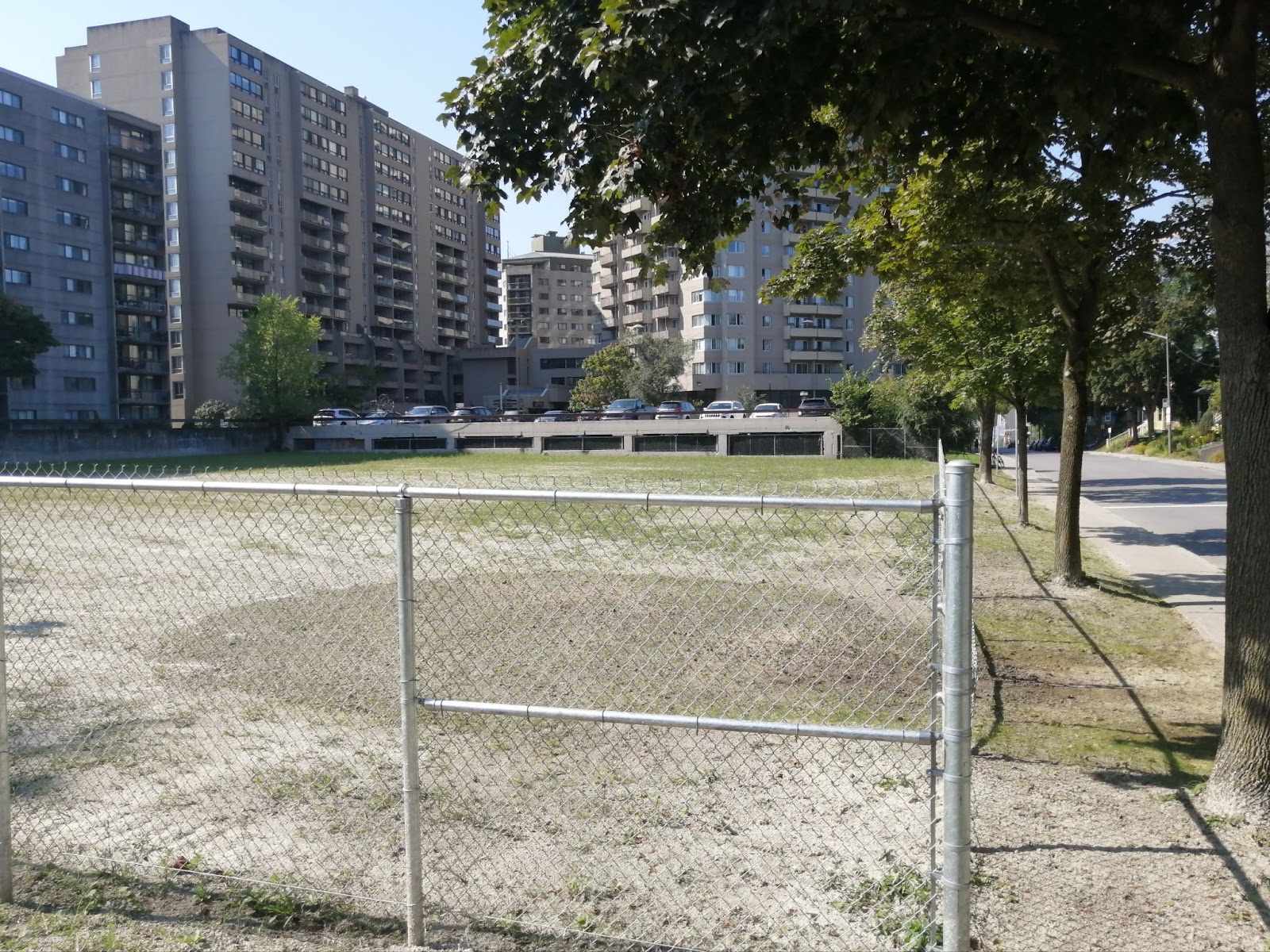
Never again? Second World War did not end anti-Semitism

According to Statistics Canada, there are about 877,000 people living in this country who are between the ages of 85 and 100. Whoever they are, wherever they live now or lived in the past, they all have one thing in common: They lived through the six years of the Second World War.

Of that number, several thousand are among the approximately one million Canadians who enlisted to fight what was generally accepted to be a direct and real threat to the lives and liberty of freedom-loving people all over the world. Canada’s population was 11 million in 1939. Do the math.

Hundreds of thousands more took on civilian tasks in the all-out war effort, from women working in factories to families growing Victory Gardens.

Of the one million in uniform, 45,000 died and 55,000 were wounded in the wars in Europe or Asia and even close to these shores.

Remembrance Day is the time when people, while honouring the war dead, perhaps should be seized with the fact that living among us today – our parents, grandparents and great-grandparents – are people who endured what was undeniably the worst of all human times. They remember. How could they forget?

It’s also worth remembering that, were it not for a few twists of circumstances, such as the steely and canny resistance of the Brits in the Battle of Britain, the United Kingdom could well have been an early and special prize for Hitler – and then what?

Eighty years ago, the tide was turning on what had seemed a near-hopeless situation in Europe. By the spring of 1943, the Allies had gained the upper hand in the Battle of the Atlantic, opening the passage of troops and munitions from Canada and the United States to Europe.

Until then, Nazi submarines had even roamed into the St. Lawrence River and Gulf, torpedoing ships and claiming the lives of hundreds of Canadian and Newfoundland seamen and civilians.

With the Americans now engaged in the war in Europe as well as the Pacific, the Allies pushed the Nazis from North Africa, then in July 1943 began the long and bloody battle to liberate Italy in which Canadians played a key role. That campaign weakened the Nazi fortress and set the stage for D-Day in June 1944.

On the eastern front, Hitler’s assault on former ally Russia ended in catastrophe in the frozen hell of Stalingrad and drained Nazi forces for the defence of western Europe.

The Nazis were defeated and with the liberation of Europe, the vast horror of the extermination camps was revealed to the world.

Eighty-four years after the start of the Second World War and 90 years after Hitler seized power in Germany with his plan to rid the world of Jews, there’s another assault on the Jewish people, this time in their own state.

The perpetrator this time is Hamas, and its members are less discreet than the Nazis were in their ambition to wipe out Jews. Though word leaked out about the Nazi death camps, they were operated in secret, to the extent that the locals could claim ignorance of what was going on with all those trains full of people passing by and the smoke from the crematorium stacks.

How times have changed. Now the modern exterminators of the Jews proudly post videos of the horrific slaughter on Oct. 7 on social media for all to see.

Those who really remember on Remembrance Day, those who were there and knew firsthand the unimaginable pain and sacrifice of the Second World War, may have thought the disease of anti-Semitism had been stamped out for all time.

Never again, they may have thought. Those defiant words come from a 1927 poem about the suicidal Jewish resistance to the Roman siege at Masada more than 2,000 years ago. It next appears on signs scrawled by liberated death camp survivors in 1945.

Never again? More like again and again, always.

30

Never again? Second World War did not end anti-Semitism Read More »

Tramway costs soar to $8.4 billion, but Marchand still ‘all in’

Mayor Bruno Marchand announced the revised cost of the tramway system at a Nov. 1 news conference at City Hall.

Photo by Peter Black

Though the projected $8.365-billion cost is more than double the initial estimate five years ago, Mayor Bruno Marchand has said the city is still “all in” on the tramway project.

The mayor, in often impassioned language, unveiled the updated cost of the system at a Nov. 1 City Hall news conference, just days after being informed the only consortium bidding for the infrastructure contract, Mobilité de la Capitale, was unable to meet the deadline or guarantee financing.

Marchand said the city would now pursue the Plan B that’s been in the works for months, whereby the municipality itself would take over the infrastructure component of the system, acting as project manager and hiring the expertise to do the job. Marchand said the in-house management would save billions.

“We are not looking for profit and not dealing with the same risks as consortiums [so] we are able to reduce the price, and reduce it to a level which is acceptable in the context,” the mayor said. The budget projected with a consortium handling infrastructure could have reached $13 or $14 billion, he said.

According to a city release, the infrastructure work is essentially the entire design and construction of the 11.9-kilometre tramway line, including “tram platforms; stations; interchange hubs; the tunnel; the operation and maintenance centre; modal, operation and mobility systems; as well as certain municipal infrastructure, including underground networks, roads and urban developments.”

The mayor said the city has taken on multiple complex projects in the past, such as water treatment plants, the biomethanization plant, the new police station and even the Videotron Centre.

“Our employees are good. They’re at a high level. We have a lot of expertise. We have people who are very efficient. We have other companies that are ready to bring to the table what they offered us to do. We have the knowledge; we are able to do it, to deliver it on time and [on budget]. We think it’s the right amount of money to put in this project.”

The mayor said the Quebec government has known about the backup option since July, when the city presented a business plan. He said he plans to meet with Coalition Avenir Québec government ministers in the near future to discuss the project. Asked whether he believes he can convince the Legault government to get on board, Marchand said, “I hope so.”

He said he had spoken with Jean-Yves Duclos, the federal minister for procurement and MP for Québec, the morning of the announcement and was assured of the Liberal government’s commitment to fund 40 per cent of the project. Duclos said in a media report from Ottawa that there is money on the table to go toward the tramway’s increased cost, but if Quebec City doesn’t take advantage of it, other cities will.

Marchand played a video during the news conference which laid out the vision of the next phases of the tramway project, including routes serving the Charlesbourg and Lebourgneuf areas. It noted that by 2041, the city is projected to have 75,000 more residents making 100,000 additional trips around the city.

The mayor said the tramway would be built in three stages, the first and most complex being the section between Université Laval and the Le Gendre terminus in Cap-Rouge. The service garage is already under construction at the western terminus. About $500 million has been spent to date on tramway preparatory work and installations, the mayor said.

The subsequent phases would be the Saint-Roch to Université Laval line and then the Saint-Roch to D’Estimauville stretch.

Marchand said it is possible people will be able to use the first stage of the tramway line while the two other stretches are still under construction. He said the first phase of the project could be completed before the current target date of 2029.

Asked whether he was confident the project would come to fruition in the next decade, he said, “I am totally confident that this is the project we need. This is a solution to our challenges, so we need to do it, and it’s the only one we can do.

“It’s not a matter of months, it’s a matter of years if we wait or if we build a new project. We take the pragmatic solution. We build a good project, the best project we could build, the project that the federal [government] is into and we need the government of Quebec to be into it as much as we are and to start it as soon as possible.”

Tramway costs soar to $8.4 billion, but Marchand still ‘all in’ Read More »

Mayor announces tramway lines to Charlesbourg, Lebourgneuf

Peter Black, Local Journalism Initiative reporter

In revealing the revised cost of the current tramway project, Mayor Bruno Marchand also set a target of 15 years for building tramway lines to the northern crown of the city.

As presented in a video, the first line would run to Charlesbourg, presumably along a route which had been part of the initial tramway proposal under the administration of Marchand’s predecessor, Régis Labeaume. At the insistence of the Coalition Avenir Québec government, that leg was changed for the line to the Beauport district of D’Estimauville.

The other line would pass through the Vanier district, with a hub at Les Galeries Fleur de Lys, and then head off to the Lebourgneuf sector and terminate at the Galeries de la Capitale.

The mayor’s first public commitment to the next phases of the tramway vision comes on the heels of a poll showing the tramway is far from popular in the suburbs. In Charlesbourg, according to the Leger poll, only 35 per cent of respondents had a position view of the plan; in the Les Rivières district it was 29 per cent.

Transition Québec Leader and Limoilou Coun. Jackie Smith said in a Nov. 3 release the city needs to get moving on the next phases. “We cannot wait for the tram to roll to D’Estimauville before starting to debate what happens next. Our city is in transition and this must include all boroughs as quickly as possible. The tramway is not just a toy for people in the city centre.”

Smith has launched an online survey to gather opinions on four scenarios for the Phase 2 line, all of which would connect with the hub in Saint-Roch. Last year, she urged the city to establish a project office to begin planning for the next phase of the tramway.

Marchand echoed the urgency, saying, “We have to think about this right now. If we wait, we’re going to hit a wall.” He noted the lines would be built to address an anticipated demand for transit based on population projections showing some 75,000 more residents by 2041.

30

This map shows possible routes for Phase 2 and 3 of the Quebec City tramway plan, with one line running to Charlesbourg and one to Lebourgneuf.

Image from Ville de Québec

Mayor announces tramway lines to Charlesbourg, Lebourgneuf Read More »

Revised tramway cost draws mixed reaction

Peter Black, Local Journalism Initiative reporter

Quebec City’s tramway plan is at a crossroads. That’s the consensus after last week’s announcement by Mayor Bruno Marchand of the revised cost of the system and the city’s decision to manage construction itself.

As the city put it in a press release, the ball is now in the court of the federal and provincial governments. The federal government, via MP and minister Jean-Yves Duclos, is “all in” according to Marchand, but the support of the Coalition Avenir Québec government is less certain.

Premier François Legault, asked about the new cost shortly after Marchand’s announcement, said, “That’s a lot of money. It’s worrying. It’s expensive, very expensive.”

According to Marchand, the Quebec government has known about “Plan B” and its $8.4-billion estimate since July. Legault said he and his relevant ministers, notably Transport Minister Geneviève Guilbault and Infrastructure and National Capital Minister Jonatan Julien, need to meet with the city to discuss the way forward.

As for the potential future federal government, Charlesbourg MP and Quebec lieutenant Pierre Paul-Hus repeated Conservative Party Leader Pierre Poilievre’s vow to not put any extra funding into the tramway. “Pierre Poilievre was clear that we would not pay any cost overruns.”

At the Conservative convention in Quebec City in September, Poilievre said he would not spend “billions on projects mismanaged by incompetent politicians” if he became prime minister.

At city hall itself, the revised plan earned the support of Claude Villeneuve, leader of the Official Opposition party, Québec D’Abord, the successor to the party of former mayor Régis Labeaume that first proposed the current plan six years ago.

Villeneuve told reporters there didn’t seem to be much communication between the city and the Quebec government. “You’re adults. Talk to each other.” He said if the project does die, the mayor needs to reconsider his political future.

For Patrick Paquette, interim leader of Équipe Priorité Québec, which has always opposed the tramway, Marchand has already failed and should resign. Paquette said the project should be halted immediately to “stop the bleeding.” In an open letter, Paquette said his party favours an improved system of electric buses.

Transition Québec Leader and Limoilou Coun. Jackie Smith said she would have preferred Plan B to Plan A to begin with. “At some point we have to move forward, have a vision and continue with a project that is already too late,” she said.

Donald Charette, spokesperson for the Québec Merite Mieux group opposed to the tramway, told Radio-Canada, “If consortia withdraw because they are not capable of delivering at a reasonable price, I don’t see how the city can do it. The CAQ must draw the right conclusions.”

Christian Savard of Vivre en Ville said in a statement, “Finally, we have the facts on how we can succeed with the tramway project in Quebec. The route that had been taken through the call for tenders was not the right one. We see that the prices would have been much higher.”

For François Bourque, veteran city hall columnist for Le Soleil, the wavering of the CAQ government’s support for the tramway, “makes the question unavoidable: Is this the end of the tramway?”

He wrote in a Nov. 3 analysis of the status of the project: “For a government that has often felt uncomfortable with the tramway project in recent years, the excuses to get out of it are piling up … explosion of costs, insufficient social acceptability, decline in public transit ridership since the pandemic, withdrawal of the only consortium still in the running for the major tram infrastructure contract, complexity of management if the city becomes project manager instead of a consortium.”

Bourque asks, however, if it kills the current tramway plan, “Will the Legault government have anything else to offer? A more unifying, less expensive project, achievable within a reasonable time frame and with financial support from the federal government?”

30

Premier François Legault’s immediate reaction to Mayor Bruno Marchand’s revised tramway cost estimate of $8.4 million was, “That’s a lot of money.”

Photo from National Assembly website

Revised tramway cost draws mixed reaction Read More »

Subsidy for L.A. Kings games draws political backlash

Ruby Pratka, Local Journalism Initiative reporter

editor@qctonline.com

At a press conference on Nov. 15 announcing plans to stage two Los Angeles Kings preseason games at the Videotron Centre in October 2024 (see article in this edition), Martin Tremblay, chief operating officer of Quebecor Sports and Entertainment and president of Gestev, said the Kings’ visit would be a “festival of hockey.” However, opposition parties across the political spectrum are not celebrating.

La Presse revealed on Oct. 17 that the subsidy of up to $7 million provided to Gestev by the provincial government to stage the event was taken from a regional development fund overseen by the province but normally managed by the Ville de Québec and surrounding regional county municipalities – without consulting the city. “There’s no more breathing room in the state’s coffers [but] this morning, we learn that to subsidize two NHL games in Quebec City, the government is using a regional development fund for local businesses and nonprofits,” interim Liberal leader Marc Tanguay tweeted Nov. 18.

“In order to give a gift of $5 to $7 million to hockey billionaires, the government used a fund intended for local nonprofits … and bypassed the fund’s rules of operation. Is this a prudent use of public funds?” tweeted Parti Québécois MNA Pascal Paradis, the party’s point person for the Capitale- Nationale region. Québec Solidaire, for its part, announced plans to ask the province’s auditor general to investigate, with Jean-Talon MNA Étienne Grandmont saying a local food bank needed the money more – a suggestion echoed at the municipal level by Limoilou Coun. Jackie Smith.

Quebec Conservative Party leader Éric Duhaime called on the government to cancel the subsidy, saying, “I understand the CAQ is trying by all means to win back Quebec City voters … but it’s not by trying to buy them with tickets for a preseason Kings game that it will succeed.”

Mayor Bruno Marchand has said his administration “wasn’t involved” in the province’s decision.

Quebec City has been without an NHL team since 1995. “We lost our team and we’d like it back one day,” Lévis MNA Bernard Drainville told Radio-Canada. He said he believed the government had made the right choice to invite the Kings “to send a signal to the NHL” that Quebec City was ready for a team, but that the “timing wasn’t ideal.”

Subsidy for L.A. Kings games draws political backlash Read More »

Get up-to-date vaccines before holiday season, Boileau advises

Ruby Pratka, Local Journalism Initiative reporter

editor@qctonline.com

As the holiday party season approaches, Quebec public health director Dr. Luc Boileau is advising people in high-risk groups to get updated COVID and flu vaccinations.

“The situation is different from previous years, and that’s for the better, but there are a few worrisome elements,” Boileau said at a press conference on Nov. 15, pointing out that COVID, seasonal flu and respiratory syncytial virus (RSV) – the “cocktail” of viruses which filled emergency rooms last winter – are still circulating in Quebec. He mentioned that data indicated that seasonal flu infections are likely to peak around Christmas. “We’re not in flu season yet, but it’s inevitable, it’s on its way and it might be on its way quickly … it’s better to get vaccinated now than to wait for the wave to come,” he said. He added that RSV infections are also on the rise, although a wave of infections on the scale of last year is not expected.

“Then, of course, there’s COVID,” he said. “It is still around and circulating very actively in the community … we’re not in a wave, but we’re in a period of relative stability. It’s still here.” He said about 100 Quebecers are being hospitalized for the virus every day, and 50 – mostly seniors – are dying every week.

Boileau specifically encouraged people 70 and older, health workers, people with chronic illnesses, pregnant women and people who share a home with someone in a high-risk group to get up-to- date vaccinations. He pointed out that a flu shot given to a pregnant woman also provides some protection to the newborn baby. Boileau said vaccination was available to everyone in the province, but particularly recommended for people at high risk. He said over one million Quebecers have received a COVID booster this fall.

“It’s getting colder outside, there are going to be more and more gatherings and crowds in shops and so forth, and we’re heading for a time of year where, every year, there are a lot of infections,” Boileau said. He encouraged people to wash their hands frequently, stay home when sick and wear masks if they must go out while experiencing cold- or flu-like symptoms, even if they have tested negative for COVID. He noted that getting vaccinated reduces the risk of complications leading to hospitalization, helps prevent premature deaths and reduces the burden on the province’s health-care system. “Vaccines don’t prevent us from getting sick, but they prevent us from having to deal with the heaviest [consequences] of an illness, and avoid us having to go to hospital, or to the funeral home,” he said.

COVID and seasonal flu vaccinations are available at health clinics and at most pharmacies, and can be given at the same time. Anyone who wishes to get vaccinated can make an appointment online on the ClicSanté portal or call the province’s bilingual vaccine hotline at 1-877-644-4545 (from 8 a.m. to 6 p.m.). Those who have recently had a COVID infection or been vaccinated are advised to wait three to six months before getting a new shot.

Get up-to-date vaccines before holiday season, Boileau advises Read More »

Scroll to Top